16 Mar
ZDHC Compliant Chemicals for Denim Washing in Modern Garment Production
Learn about ZDHC compliant chemicals for denim washing. Understand the enzyme wash process and solutions to reduce denim washing defects and indigo dye washing problems.
ZDHC Compliant Chemicals for Denim Washing
Global fashion brands demand strict environmental and chemical safety standards in textile manufacturing. The Zero Discharge of Hazardous Chemicals program sets clear guidelines for chemical usage across textile supply chains.
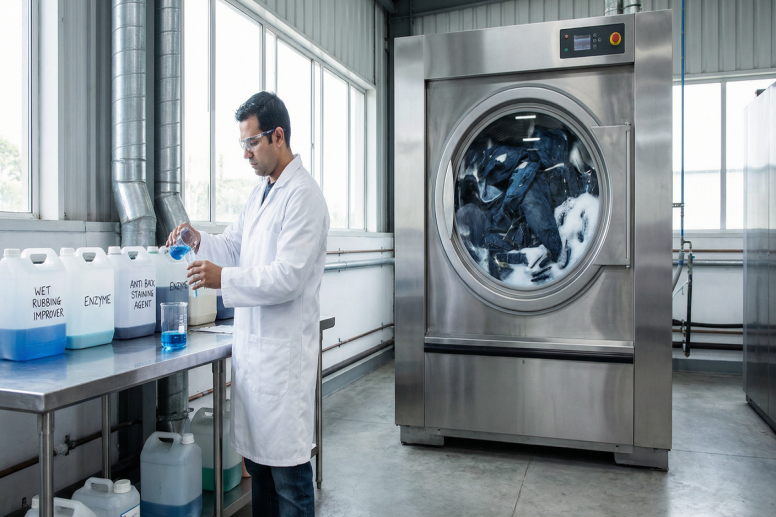
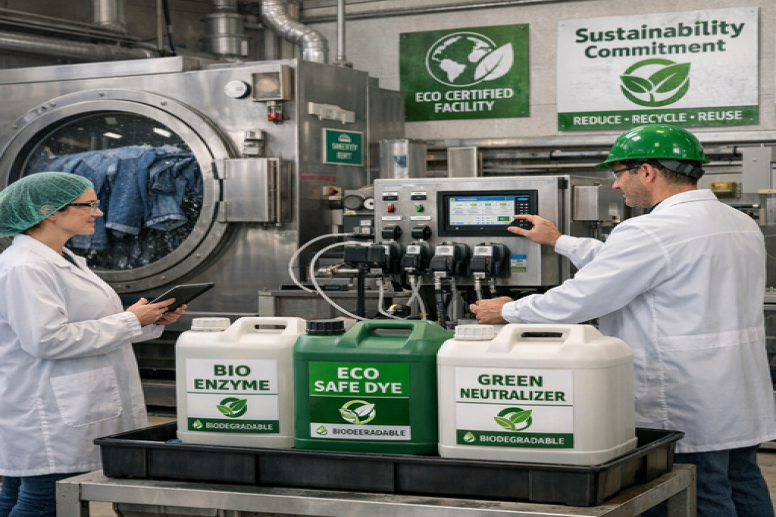
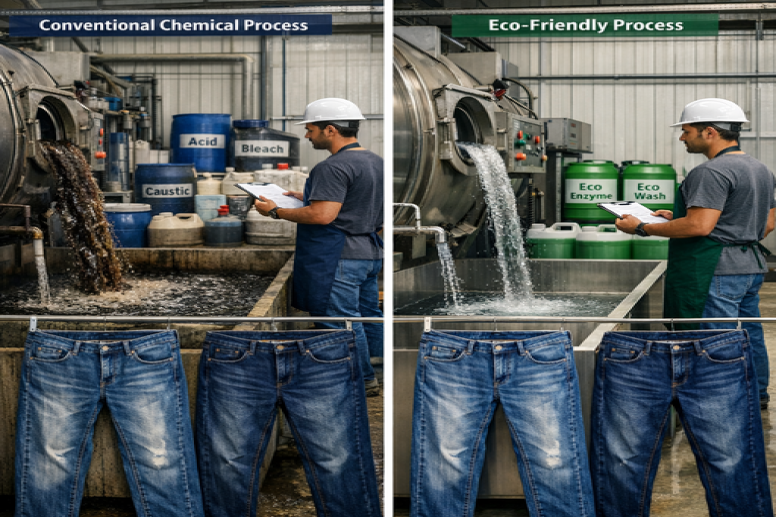
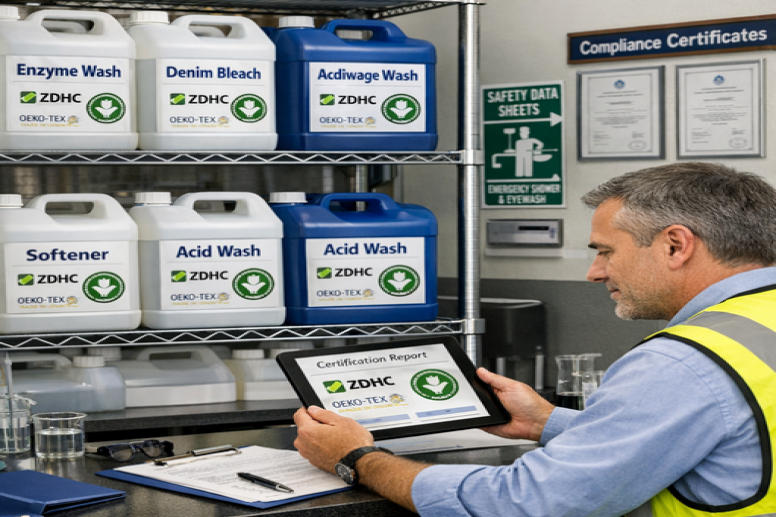
Garment washing factories adopt ZDHC compliant chemicals to meet buyer requirements and improve environmental performance. These auxiliaries help reduce harmful substances in textile processing while maintaining washing quality and preventing denim washing defects.
What Is ZDHC in Textile Processing
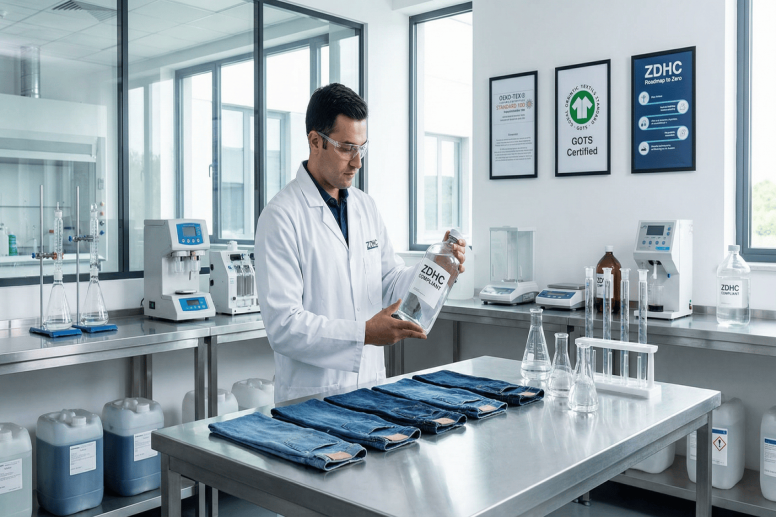
The Zero Discharge of Hazardous Chemicals program promotes responsible chemical management across textile production. The program provides guidelines through the Manufacturing Restricted Substances List, known as MRSL.
ZDHC compliance ensures textile chemicals do not contain restricted hazardous substances. Washing factories use approved auxiliaries to maintain safe production and reduce environmental risk.
Many international apparel brands require ZDHC compliant chemicals across dyeing and garment washing operations.
Importance of ZDHC Compliance in Denim Washing
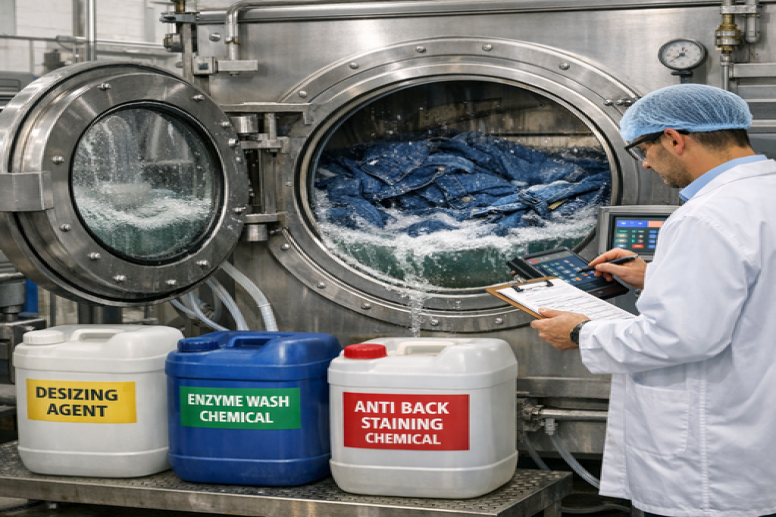
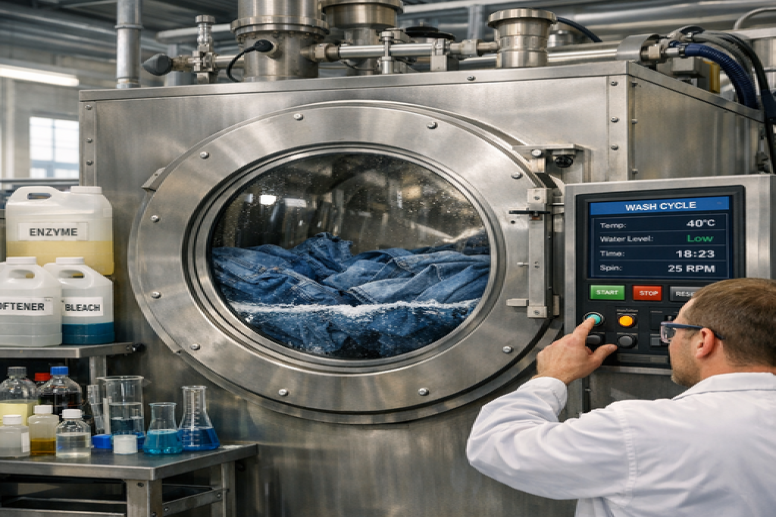
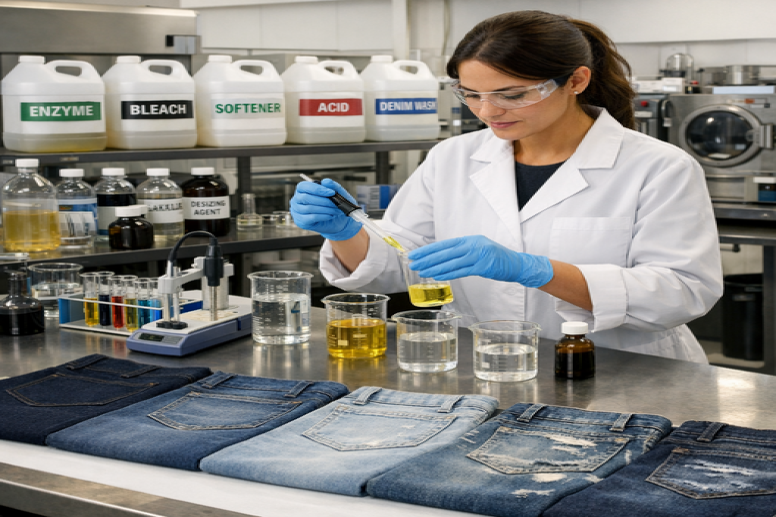
Denim garment washing involves multiple chemical treatments. These include desizing, the enzyme wash process, bleaching, neutralization, and finishing.
Using non compliant chemicals increases environmental risk and may create production challenges.
ZDHC compliant auxiliaries support:
safer wastewater discharge
reduced hazardous chemical exposure
compliance with buyer sustainability requirements
stable washing performance
Responsible chemical management also helps control indigo dye washing problems during garment processing.
Common ZDHC Compliant Chemicals Used in Denim Washing
Garment washing plants use several approved auxiliaries that meet ZDHC compliance standards.
Enzymes for Fading Effects
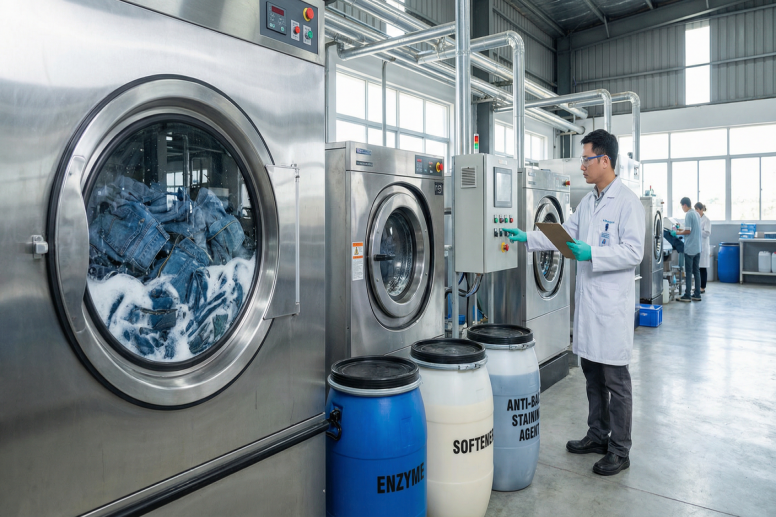
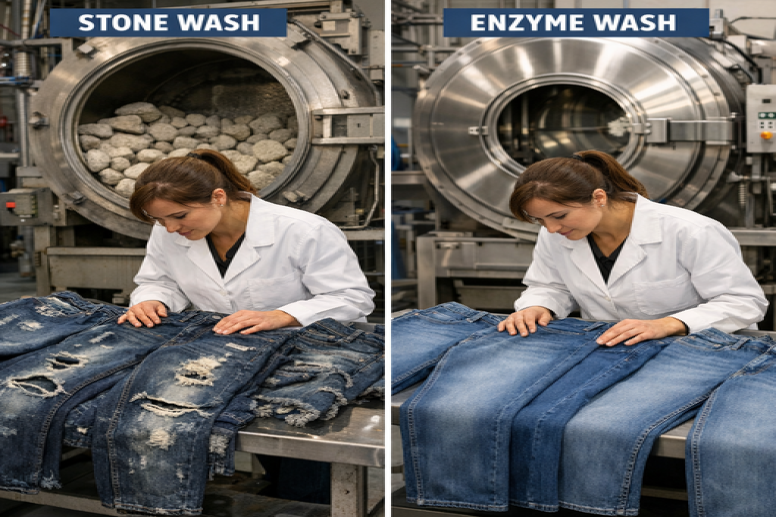
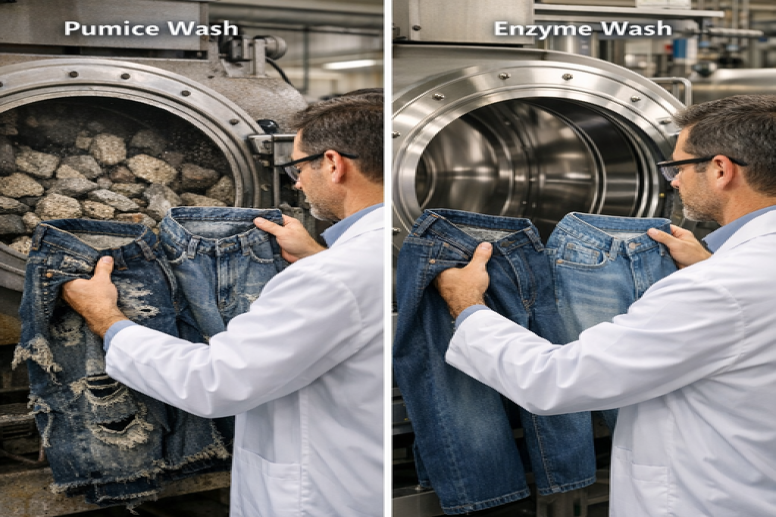
Cellulase enzymes play a major role in the enzyme wash process. These biological catalysts create controlled fading while minimizing mechanical damage.
Dispersing Agents
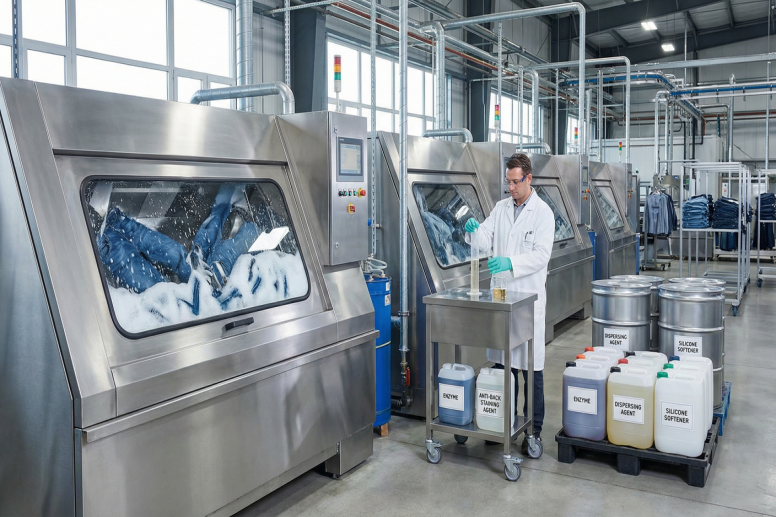
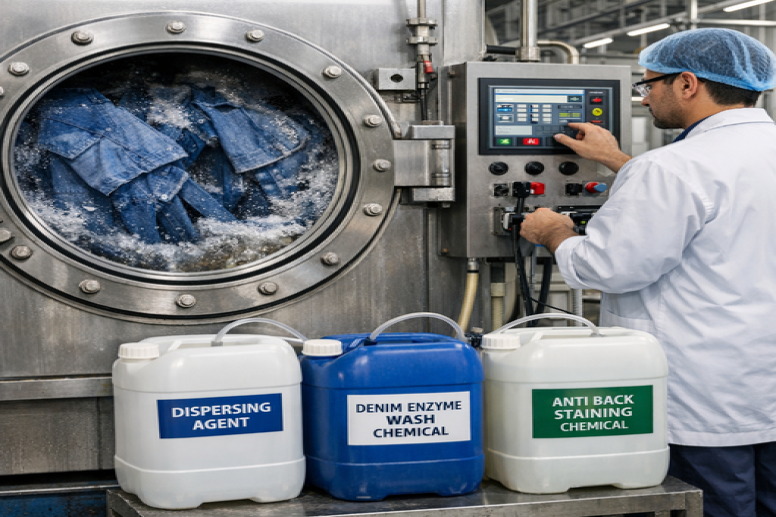
Dispersing agents keep loose indigo dye particles suspended in washing liquor and prevent redeposition on garments.
Anti Back Staining Chemicals
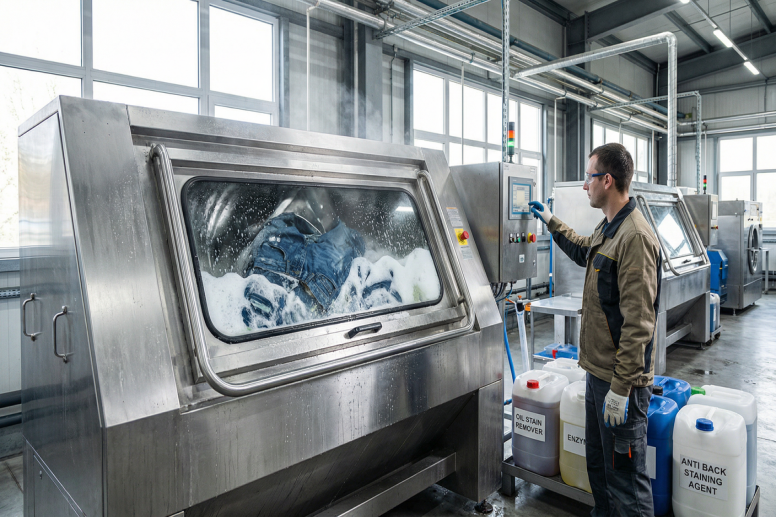
These auxiliaries prevent dye particles from reattaching to garment surfaces during washing treatments.
Eco Friendly Detergents
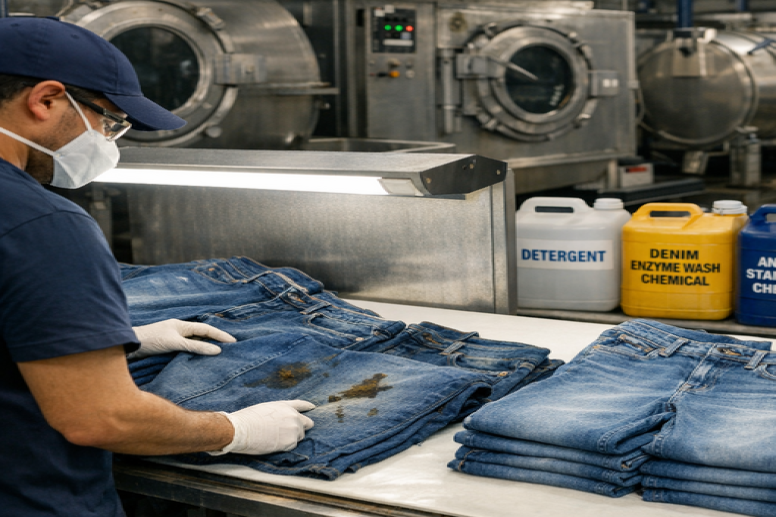
Biodegradable detergents remove oils and impurities without introducing harmful substances into wastewater streams.
Softening Agents
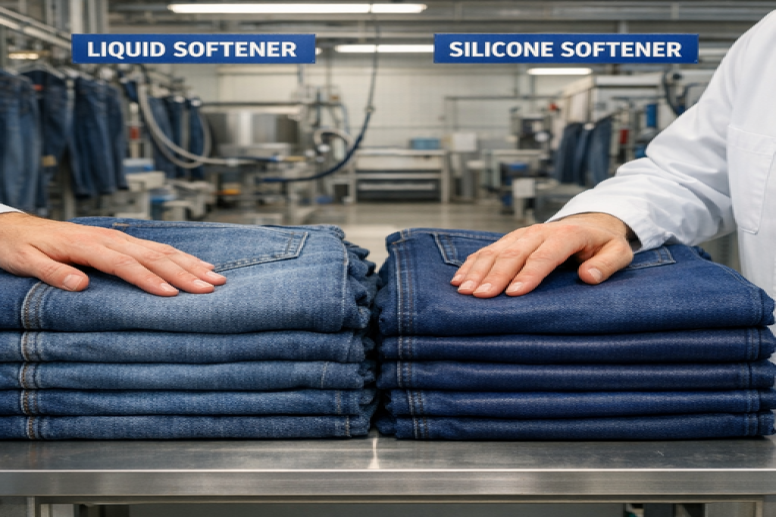
Modern softeners improve fabric softness and surface smoothness while maintaining chemical safety standards.
ZDHC Compliance and Washing Quality
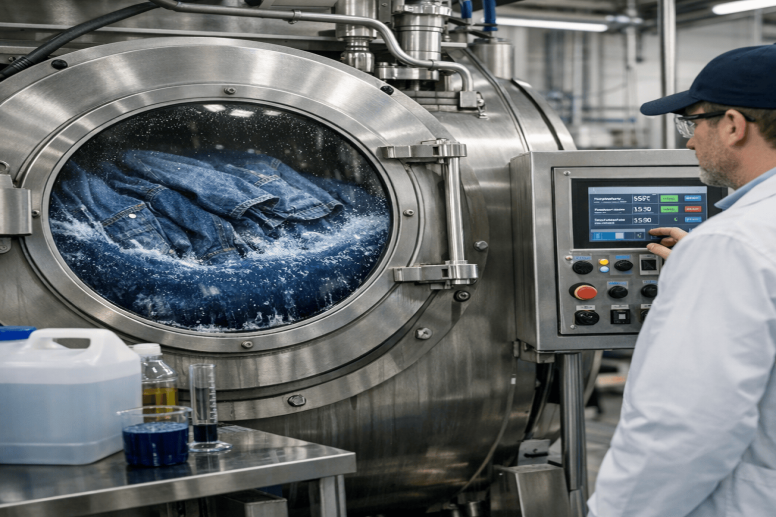
Proper chemical selection helps washing factories maintain garment quality while meeting compliance requirements.
ZDHC compliant auxiliaries assist in controlling:
denim washing defects during garment processing
indigo dye washing problems during washing cycles
uneven fading during the enzyme wash process
redeposition of dye particles on garment surfaces
Consistent chemical quality improves washing performance and production stability.
Benefits for Denim Manufacturers
Adopting ZDHC compliant chemicals provides operational and environmental advantages.
Key benefits include:
improved compliance with international buyer standards
safer chemical handling in washing plants
reduced environmental impact
improved control of denim washing defects
stronger reputation with global apparel brands
These advantages strengthen supply chain reliability and market competitiveness.
Conclusion
ZDHC compliant chemicals support safe and sustainable denim garment washing operations. By following international chemical safety guidelines, washing factories reduce environmental impact and improve production transparency.
Proper use of approved auxiliaries during the enzyme wash process helps prevent indigo dye washing problems and maintain stable garment quality. Responsible chemical management ensures denim manufacturers meet global compliance requirements while maintaining efficient production.