14 Mar
Desizing Agent for Denim Processing: Function, Benefits, and Application
Learn about desizing agents for denim processing. Complete guide covering functions, benefits, and application in garment washing auxiliaries for denim washing.
Desizing Agent for Denim Processing: Function and Benefits
Desizing represents the first and most important step in denim garment washing. During weaving, denim yarn receives starch or synthetic sizing materials to strengthen yarn structure and improve weaving efficiency. These materials remain on the fabric surface and must be removed before further washing treatments.
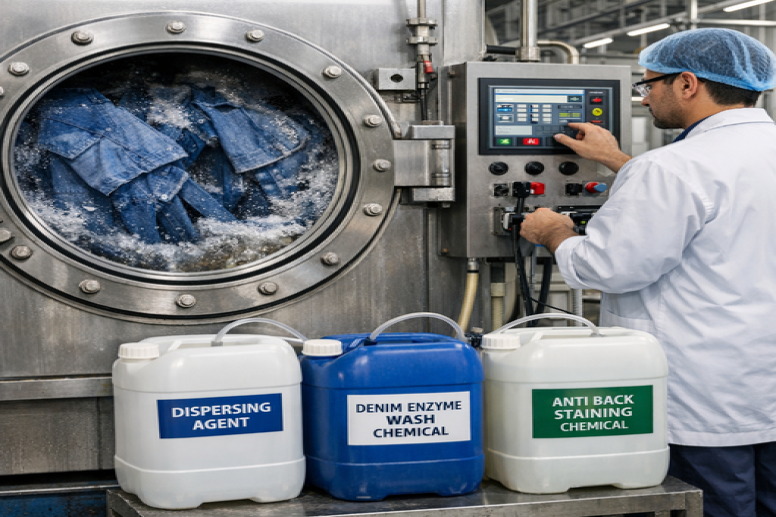
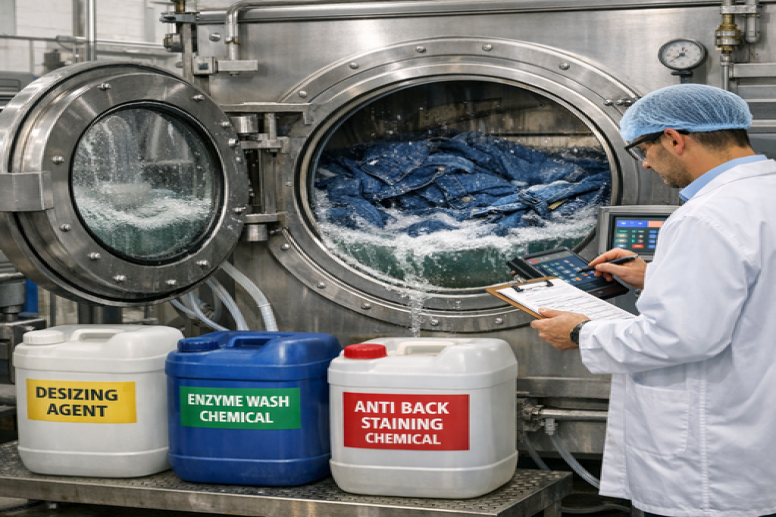
A desizing agent for denim processing removes these size materials and prepares the fabric for enzyme washing, bleaching, and finishing. Without proper desizing, chemicals such as denim enzyme wash chemical or anti back staining chemical cannot penetrate the fabric effectively.
Garment washing factories rely on desizing agents as essential garment washing auxiliaries to ensure uniform washing results and high garment quality.
What Is a Desizing Agent
A desizing agent is a textile auxiliary designed to break down and remove sizing materials applied during the weaving process. Denim fabrics usually contain starch, polyvinyl alcohol, or other synthetic sizes.
Primary functions include:
removal of starch and synthetic sizing materials
improvement of fabric absorbency
preparation for further washing processes
enhancement of chemical penetration during washing
Effective desizing ensures the success of subsequent denim washing treatments.
Importance of Desizing in Denim Processing
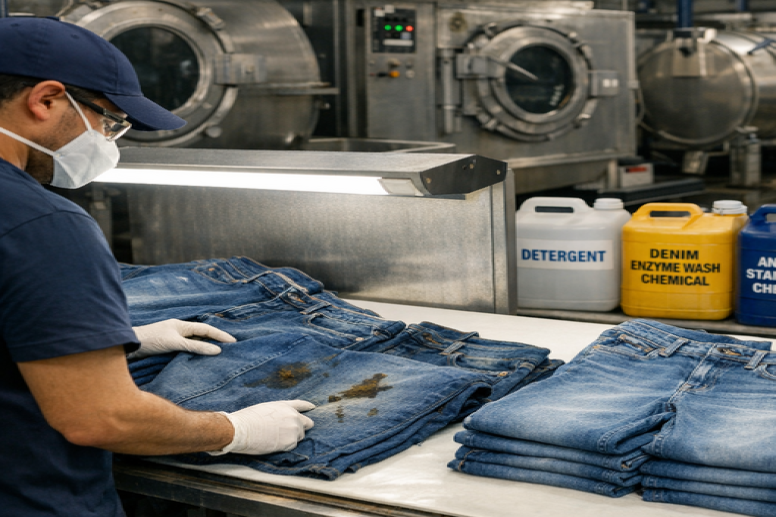
Denim fabrics with remaining size materials resist water and chemical penetration. This prevents proper action of garment washing auxiliaries.
Proper desizing provides several advantages:
uniform enzyme washing results
improved fading effects
better chemical efficiency
reduced washing defects
Factories that perform proper desizing achieve more consistent denim finishing results.
Role of Desizing Agents in Denim Washing Process
Desizing agents support the first stage of garment washing and influence the entire washing process.
Removal of Size Materials
The chemical breaks down starch and other sizing compounds present on yarn surface. This cleaning step improves fabric absorbency.
Improved Chemical Penetration
After desizing, other washing chemicals such as denim enzyme wash chemical penetrate the fabric structure more easily.
Washing Uniformity
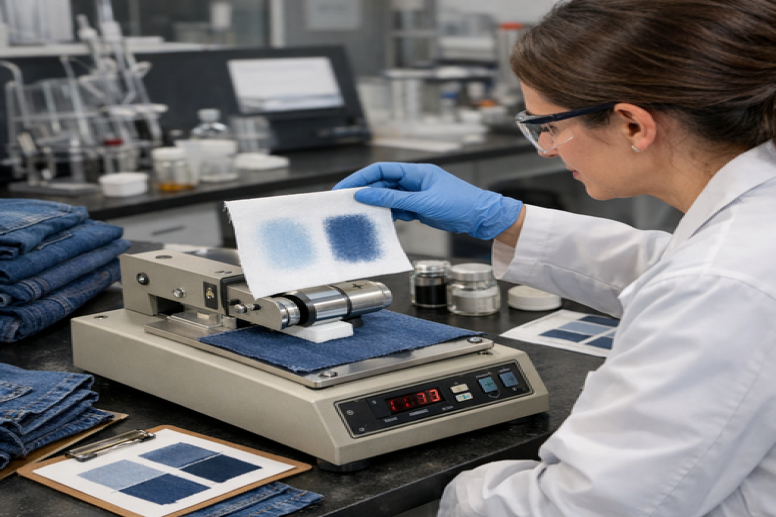
Desized garments absorb chemicals evenly, which produces consistent fading and finishing effects.
Process Efficiency
Proper desizing reduces processing time and improves the effectiveness of subsequent washing stages.
Benefits of Using Desizing Agents
Denim washing plants gain several operational advantages when using proper desizing auxiliaries.
Main benefits include:
improved fabric absorbency
uniform enzyme washing results
reduced washing defects
better fading and finishing effects
improved performance of anti back staining chemical
higher production efficiency
These benefits help garment washing factories maintain consistent product quality.
Application in Denim Washing Process
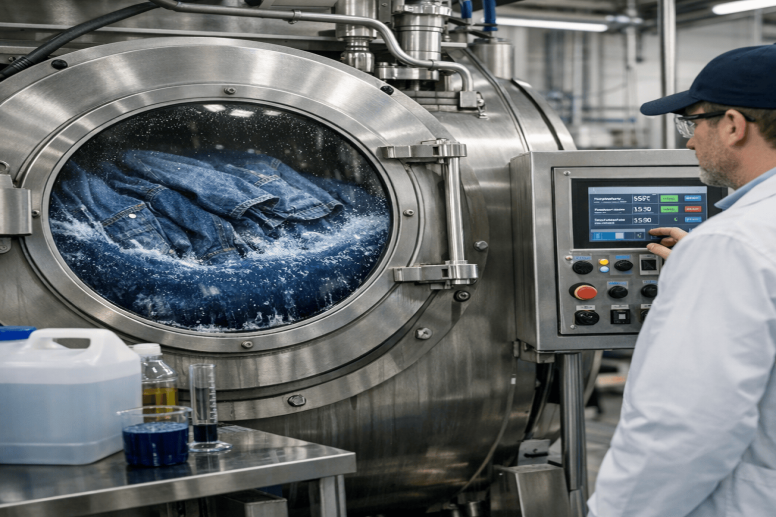
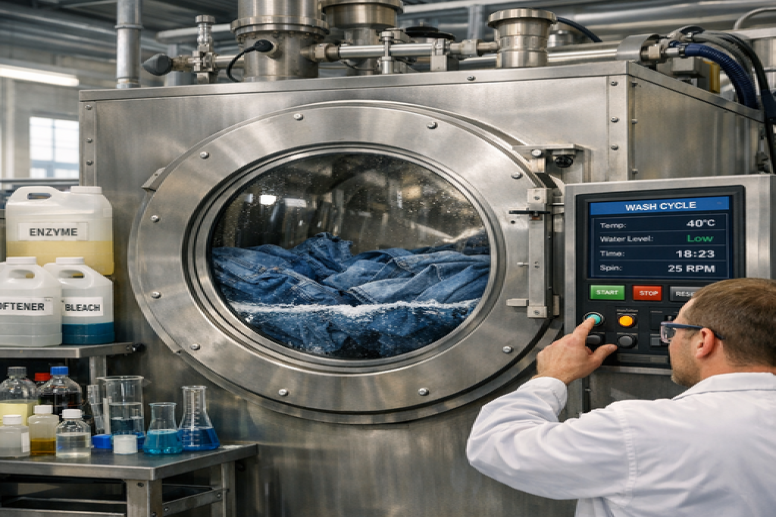
Desizing agents are applied during the first stage of garment washing before enzyme treatments.
Typical denim washing sequence:
Desizing with desizing agent and wetting agent
Enzyme washing using denim enzyme wash chemical
Addition of anti back staining chemical
Rinsing
Bleaching if required
Neutralization
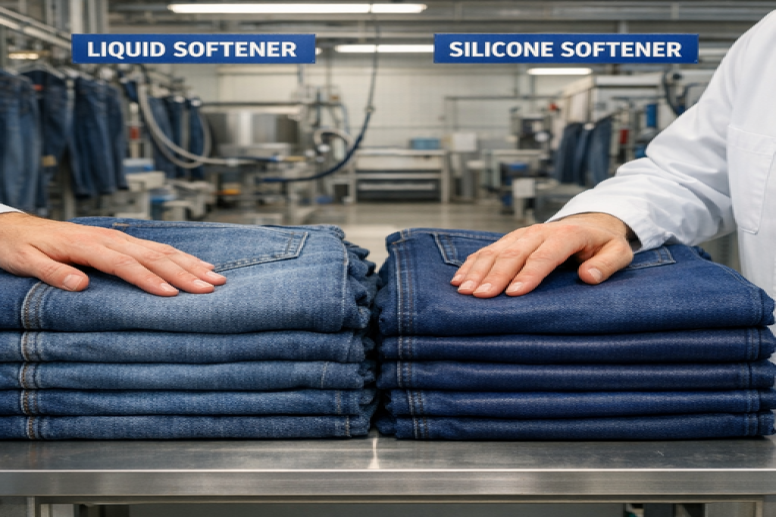
Softening with denim softener chemical
Correct dosage, washing temperature, and time are necessary to ensure complete size removal.
Problems Without Proper Desizing
Improper desizing leads to several washing defects in denim processing.
Common problems include:
uneven enzyme wash effects
patchy fading appearance
poor chemical penetration
inefficient performance of garment washing auxiliaries
inconsistent garment quality
These issues increase reprocessing cost and reduce factory productivity.
Conclusion
A desizing agent for denim processing is a critical auxiliary in garment washing operations. It removes sizing materials, improves fabric absorbency, and prepares denim garments for further chemical treatments.
Denim washing factories achieve consistent results when desizing agents work together with other garment washing auxiliaries such as denim enzyme wash chemical, anti back staining chemical, and denim softener chemical. Proper desizing ensures uniform fading effects, improved garment quality, and efficient production performance.