15 Mar
Case Study. Indigo Dye Bleeding Control in Denim Garment Washing
Learn how denim washing factories control indigo dye bleeding. Case study covering root cause, chemical solution, dosage, and production results using garment washing auxiliaries.
Indigo Dye Bleeding Control in Denim Washing. Factory Case Study
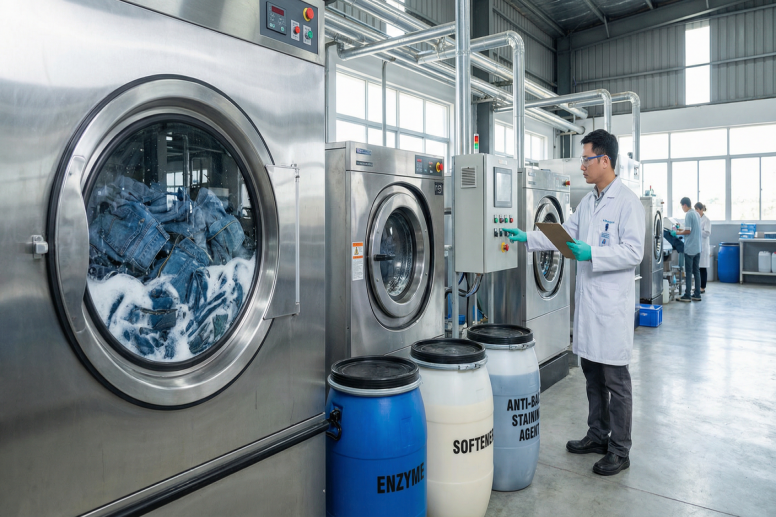
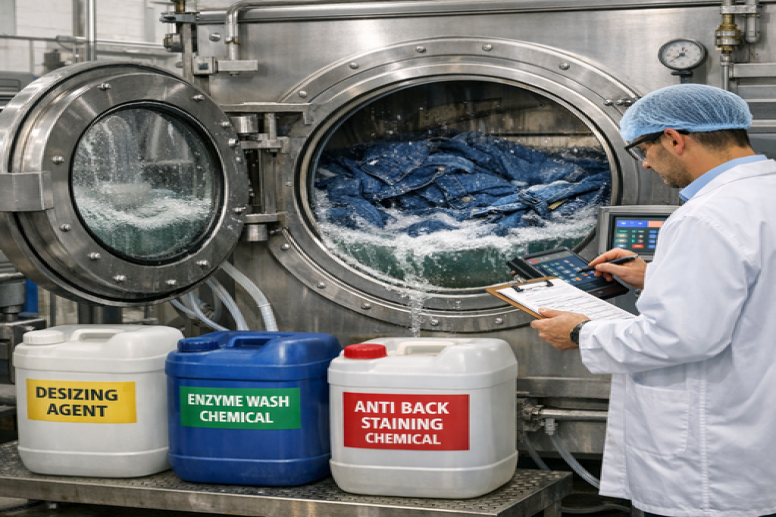
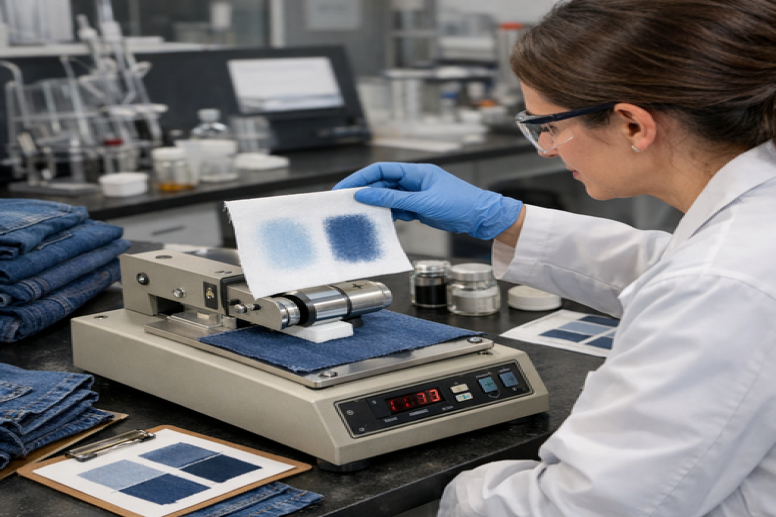
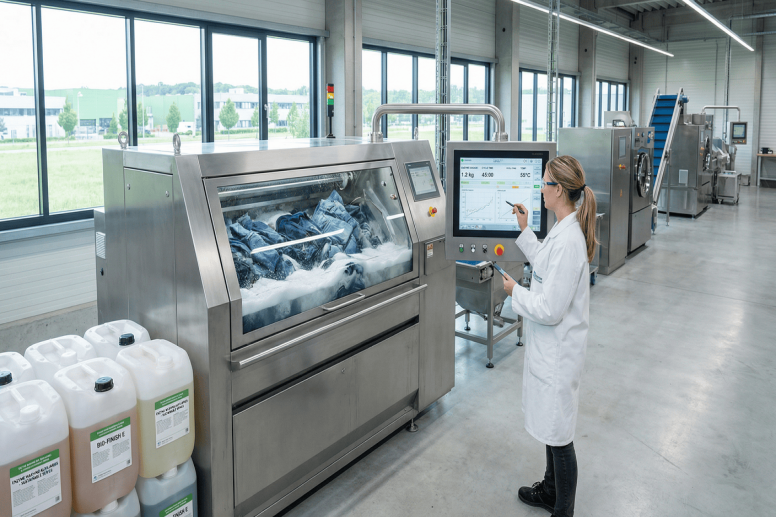
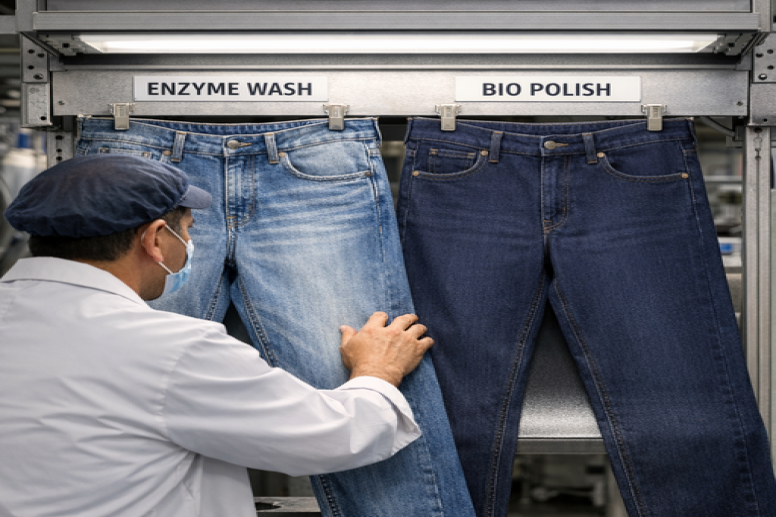
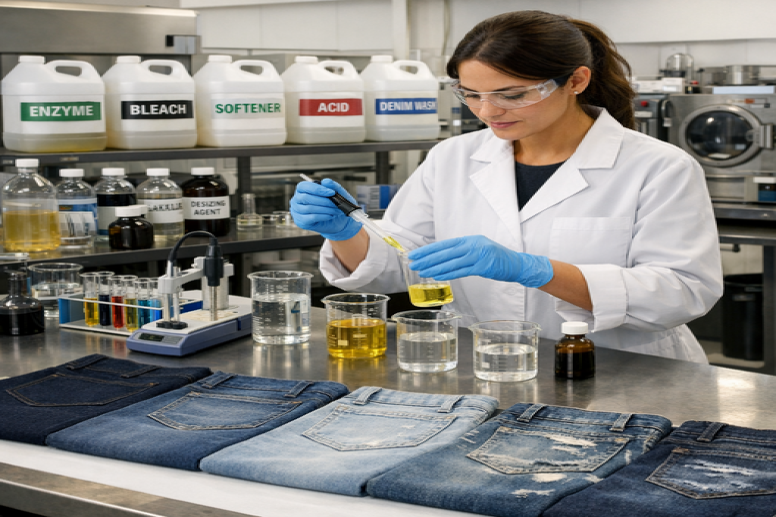
Indigo dye bleeding represents a frequent challenge in denim garment washing. During enzyme treatment and mechanical agitation, loose indigo dye particles detach from the denim surface and spread into the washing liquor. These particles stain pocket bags, labels, and other light colored fabric parts.
Denim washing factories must control indigo dye bleeding to maintain garment appearance and meet buyer quality requirements. This case study explains how a factory solved dye bleeding issues using proper garment washing auxiliaries and controlled washing parameters.
Problem in Factory
A garment washing factory producing enzyme washed denim jeans experienced severe indigo dye bleeding during washing operations.
Quality inspection reported several defects:
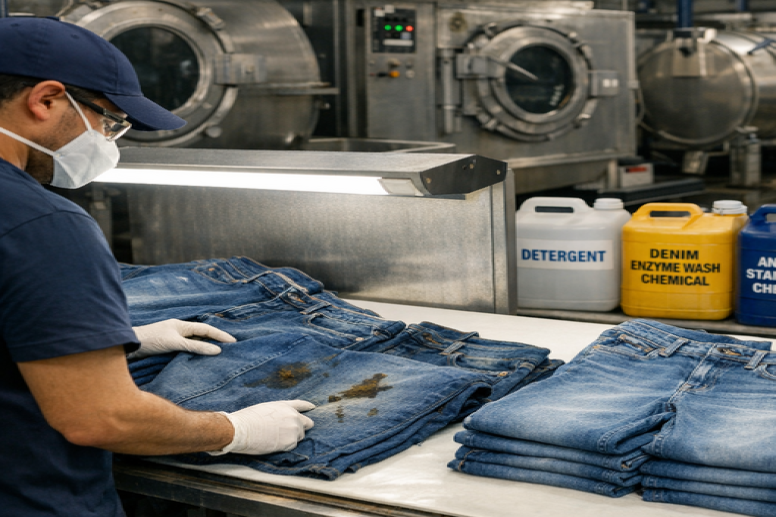
blue staining on pocket bags and sewing threads
color bleeding on garment labels
uneven shade appearance on finished garments
increased garment rejection during quality inspection
Approximately 16 percent of garments in each washing batch showed dye bleeding defects.
Root Cause
Technical investigation identified several reasons behind indigo dye bleeding during garment washing.
Key root causes included:
high amount of loose indigo dye released during denim enzyme wash chemical treatment
lack of effective anti back staining chemical in the washing bath
insufficient dispersion of dye particles in wash liquor
redeposition of dye particles onto garment surface and accessories
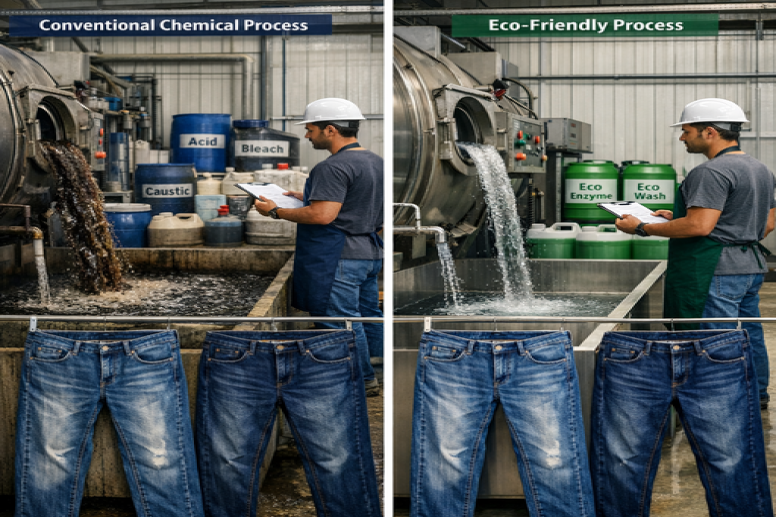
Without proper chemical control, indigo dye particles easily spread and stain other fabric parts.
Chemical Solution
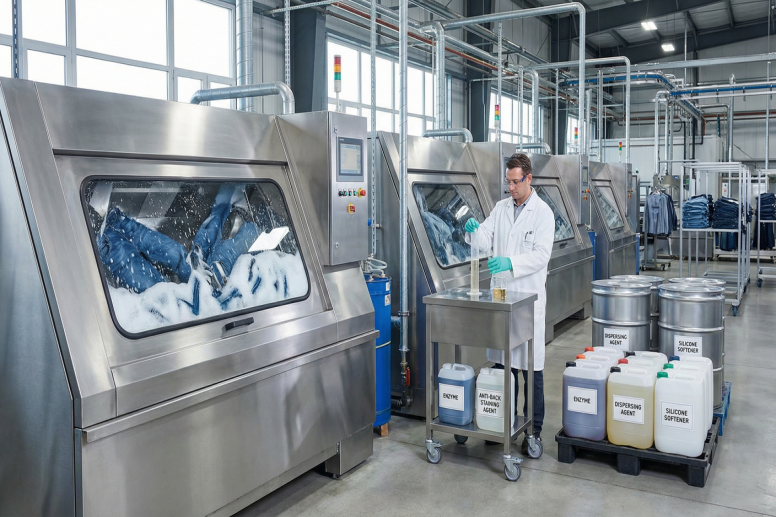
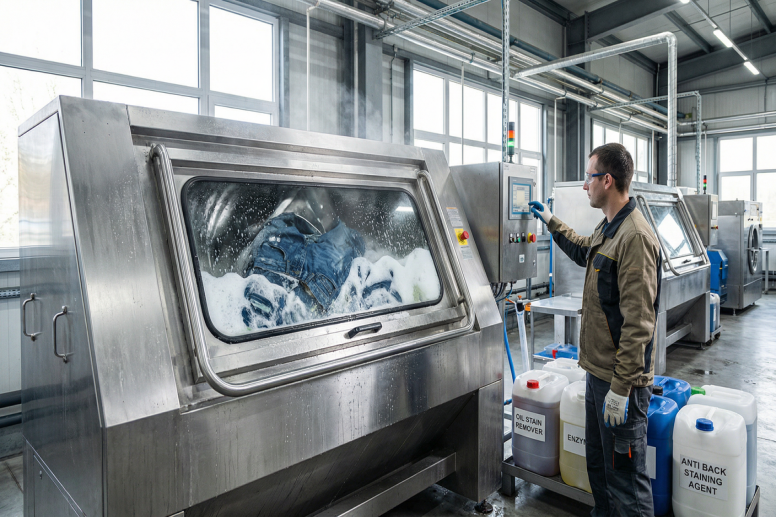
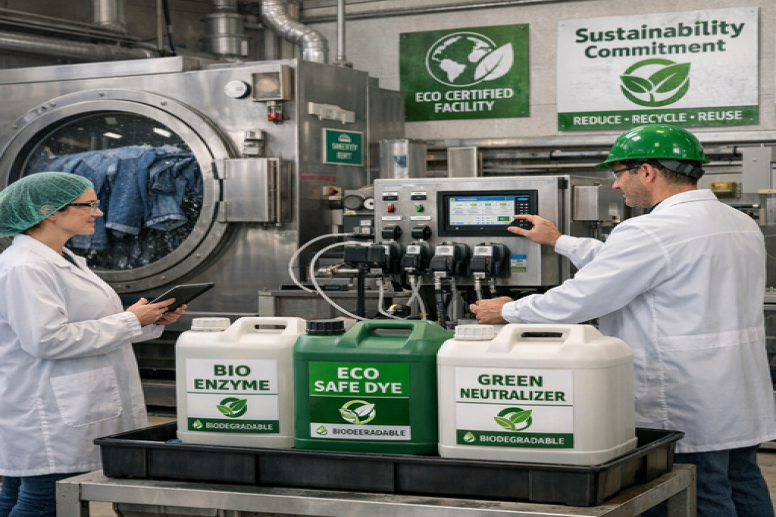
The factory implemented a controlled washing process using specialized garment washing auxiliaries.
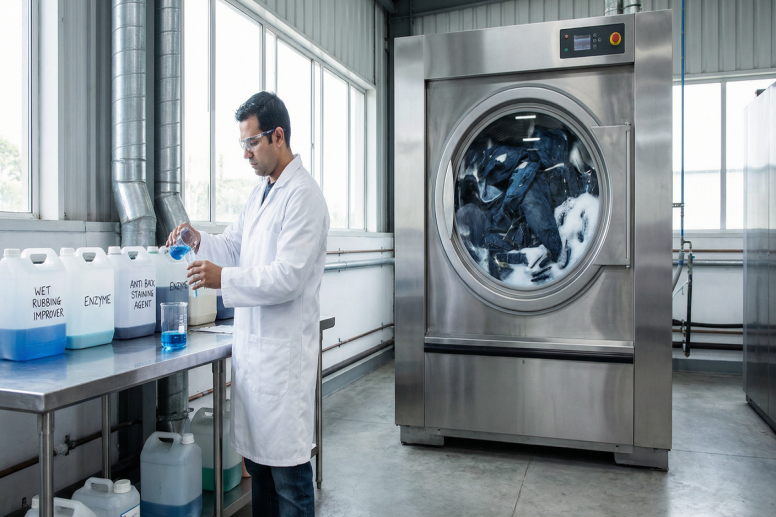
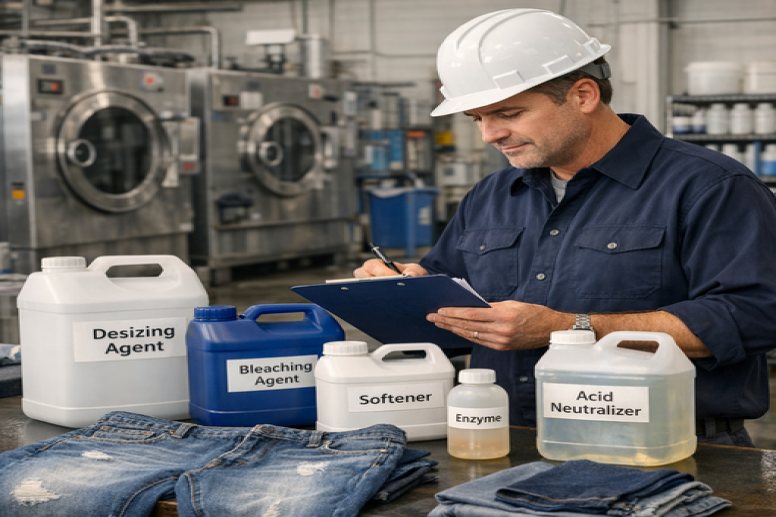
The chemical solution included:
addition of anti back staining chemical to prevent dye redeposition
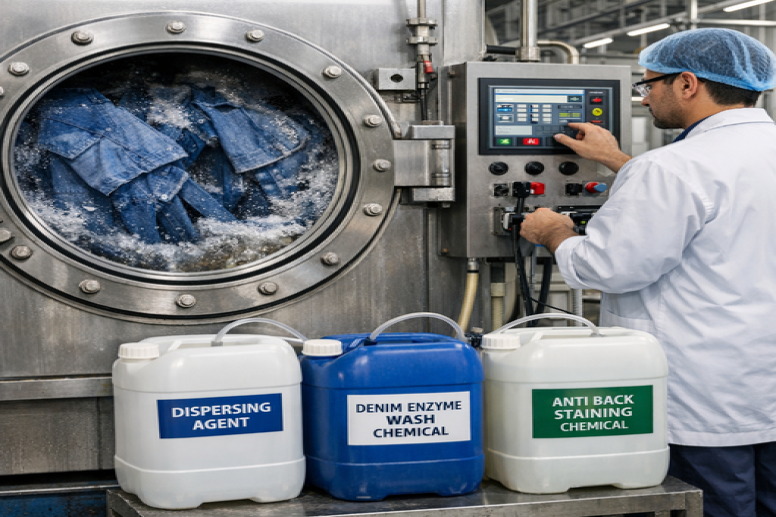
use of dispersing agents to stabilize indigo particles in washing liquor
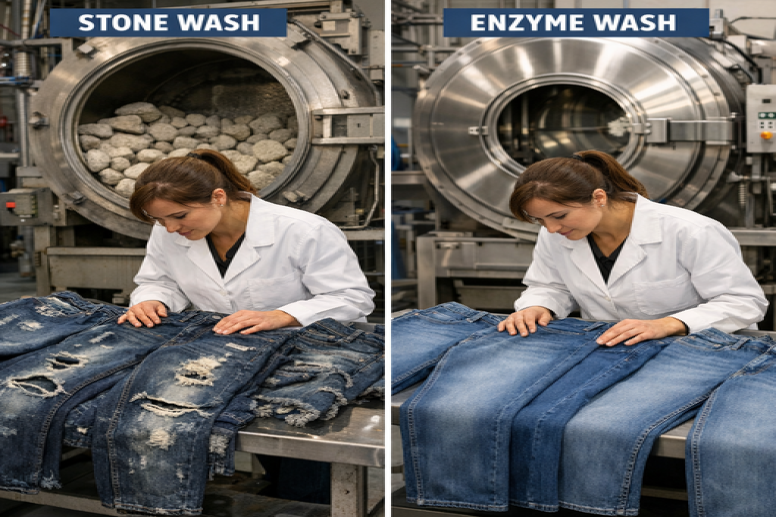
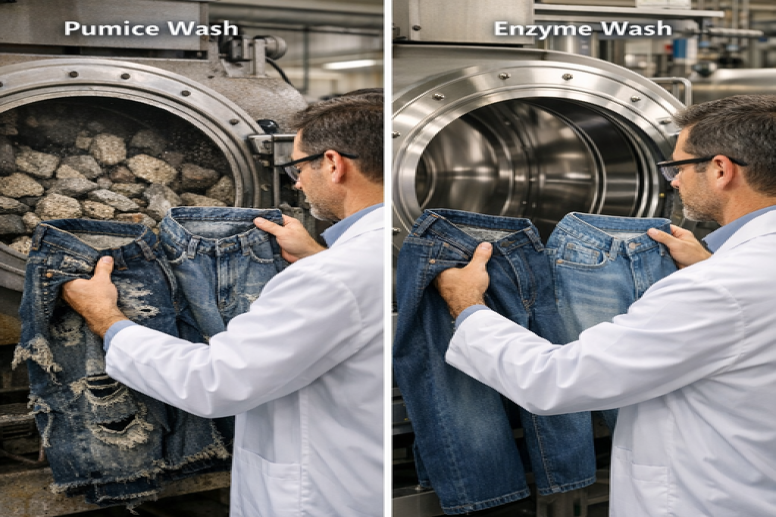
optimized dosage of denim enzyme wash chemical to control dye release
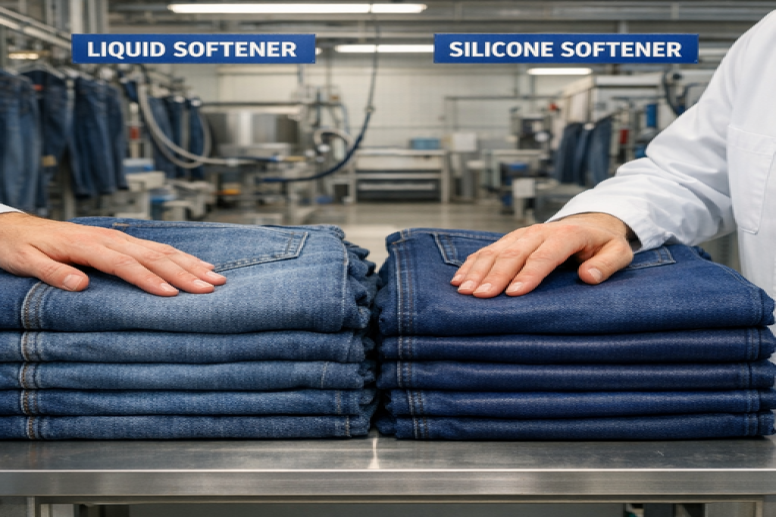
finishing treatment using denim softener chemical for fabric conditioning
These auxiliaries prevented dye particles from attaching to garment surfaces during washing.
Dosage and Method
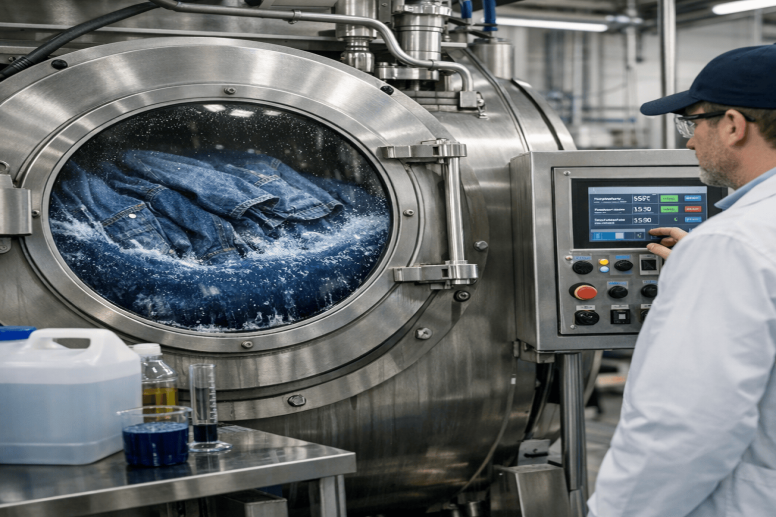
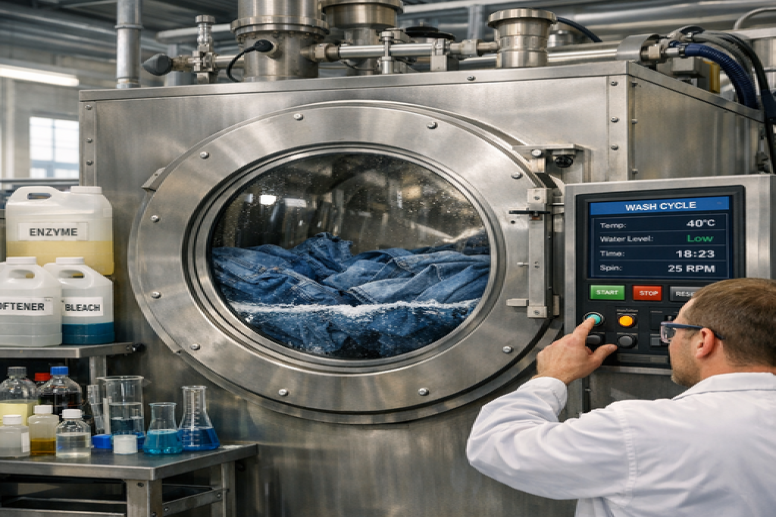
The factory introduced the following washing recipe for enzyme washing.
Process parameters:
liquor ratio: 1:8
temperature: 50 to 55°C
washing time: 35 minutes
Chemical dosage:
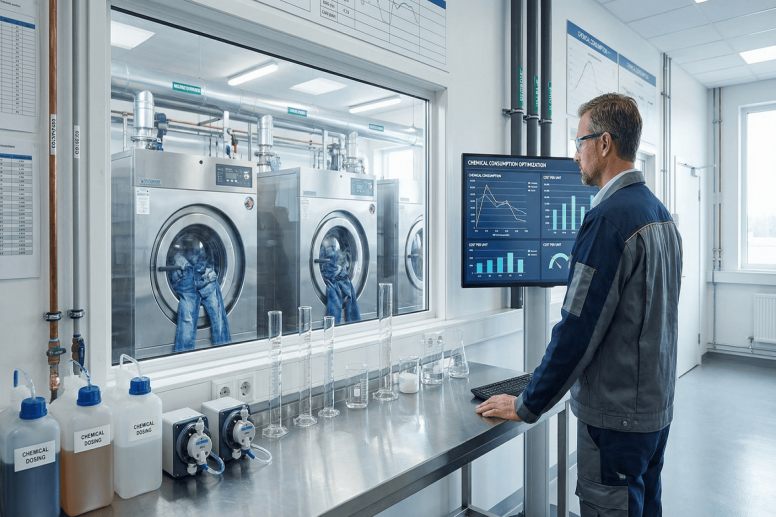
denim enzyme wash chemical: 0.7 to 0.9 g per liter
anti back staining chemical: 1.0 to 1.5 g per liter
dispersing agent: 0.5 g per liter
denim softener chemical: 2.0 g per liter during finishing
Process method:
Load garments into washing machine
Add water and adjust washing temperature
Add denim enzyme wash chemical and anti back staining chemical
Maintain controlled washing cycle
Drain wash liquor and rinse garments thoroughly
Apply finishing treatment using denim softener chemical
Hydro extract and dry garments
Controlled washing conditions ensured effective dye particle management.
Result in Production
After implementing the optimized washing process, the factory achieved significant quality improvement.
Production results included:
dye bleeding defects reduced from 16 percent to less than 2 percent
cleaner pocket bags and garment accessories
uniform shade across garments in production batches
improved buyer approval during quality inspection
reduced reprocessing cost and improved production efficiency
The factory maintained consistent washing quality in subsequent production cycles.
Conclusion
Indigo dye bleeding control in denim washing requires proper management of loose dye particles released during enzyme treatment. Without proper chemical control, these particles stain garment surfaces and accessories.
Denim washing factories achieve reliable production results when garment washing auxiliaries such as denim enzyme wash chemical, anti back staining chemical, dispersing agents, and denim softener chemical are applied with correct dosage and process control.