16 Mar
Troubleshooting Denim Washing Problems for Production Managers
Learn practical methods for troubleshooting denim washing problems. Improve the enzyme wash process and reduce denim washing defects and indigo dye washing problems.
Troubleshooting Denim Washing Problems
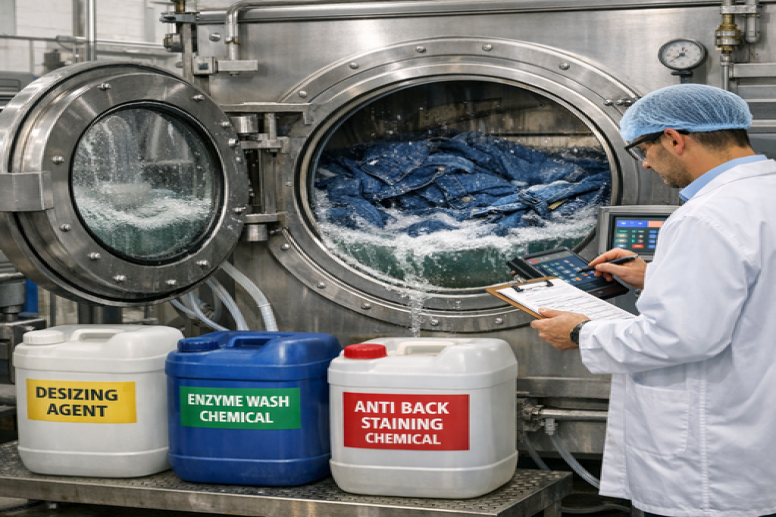
Denim washing plants face daily production challenges. Shade variation, back staining, uneven fading, and rewash increase cost and reduce efficiency. Production managers must identify root causes quickly and apply corrective actions.
Effective troubleshooting improves stability in the enzyme wash process and reduces indigo dye washing problems. Structured problem solving helps control denim washing defects and maintain first pass quality.
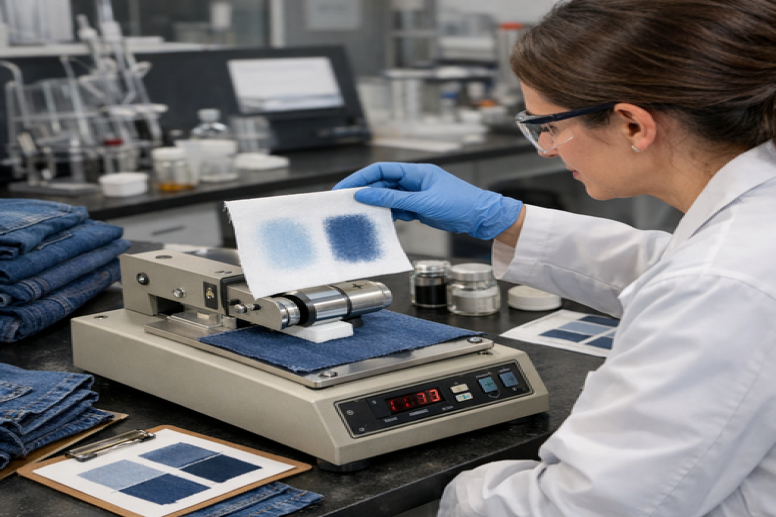
Step 1. Identify the Exact Defect
Accurate identification saves time and resources. Managers should classify the issue before taking action.
Common problems include:
back staining
uneven fading
excessive shade loss
indigo dye transfer
poor rubbing fastness
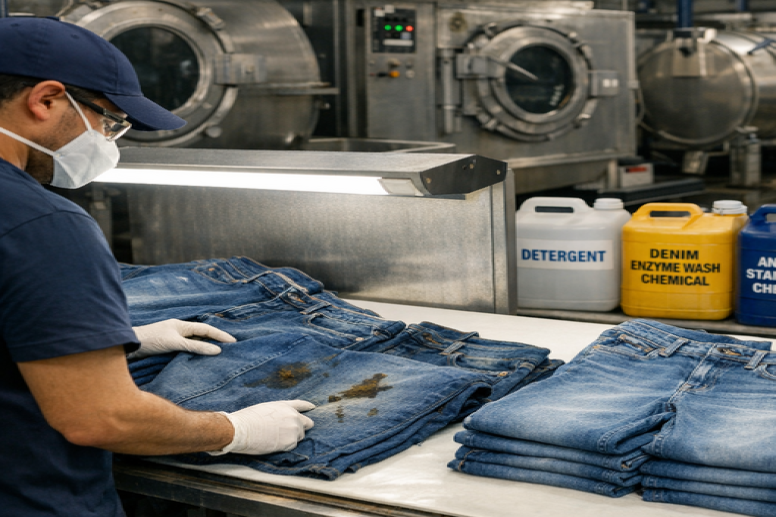
oil stains on garments
Clear defect identification leads to targeted solutions.
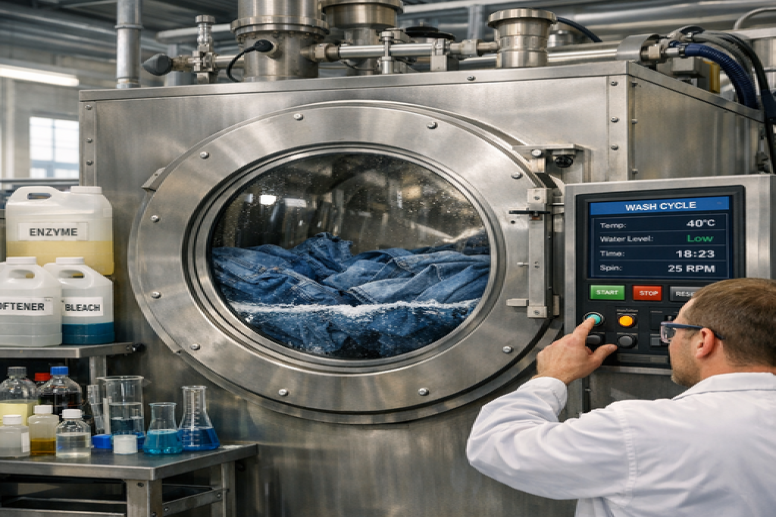
Step 2. Check the Enzyme Wash Process
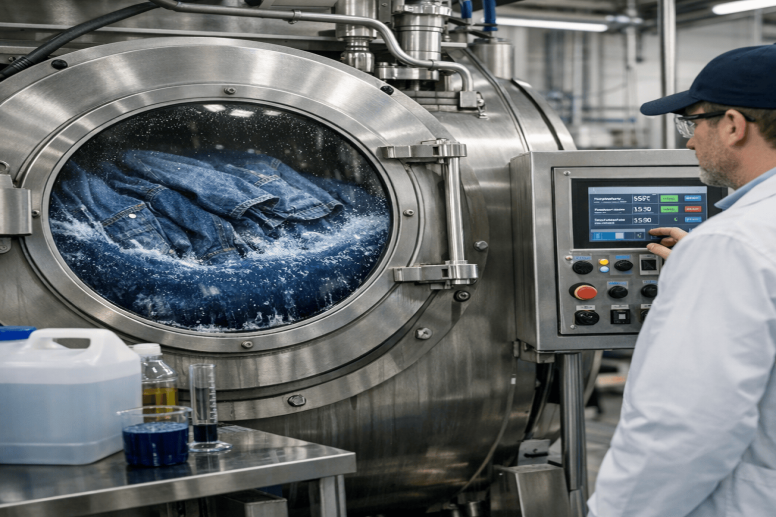
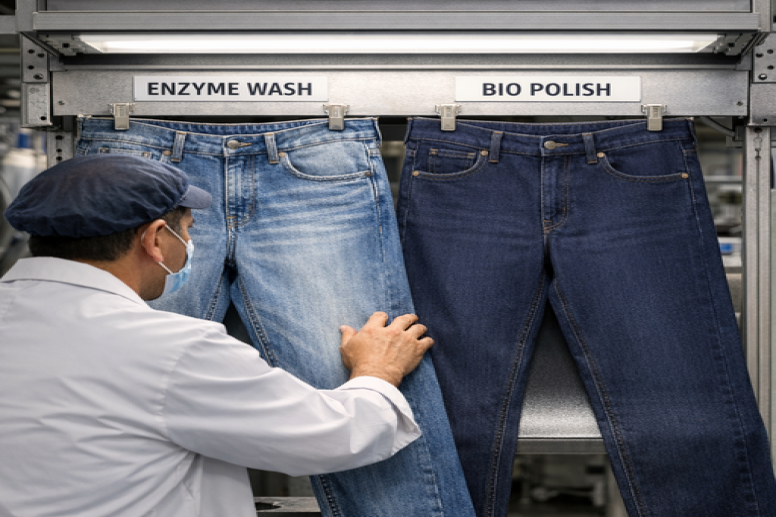
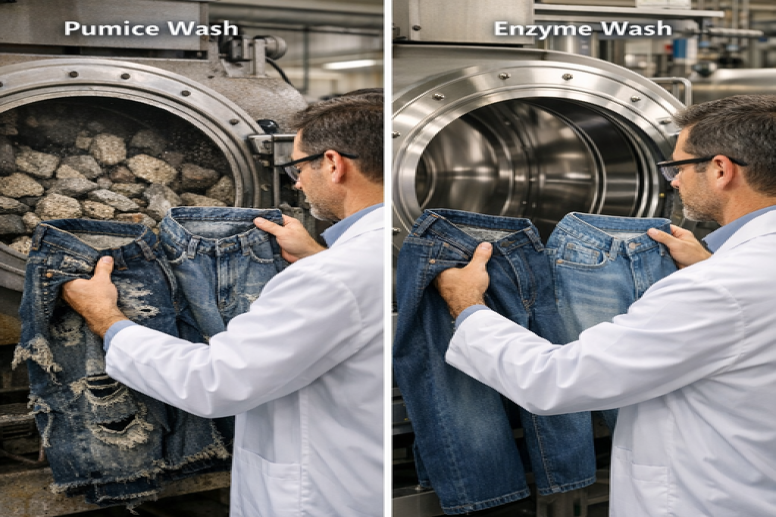
Many denim washing defects originate from improper enzyme control.
Review the following parameters:
enzyme dosage
washing temperature
processing time
liquor ratio
mechanical agitation
Incorrect settings often create indigo dye washing problems and fabric damage. Adjusting these variables improves consistency and reduces rewash.
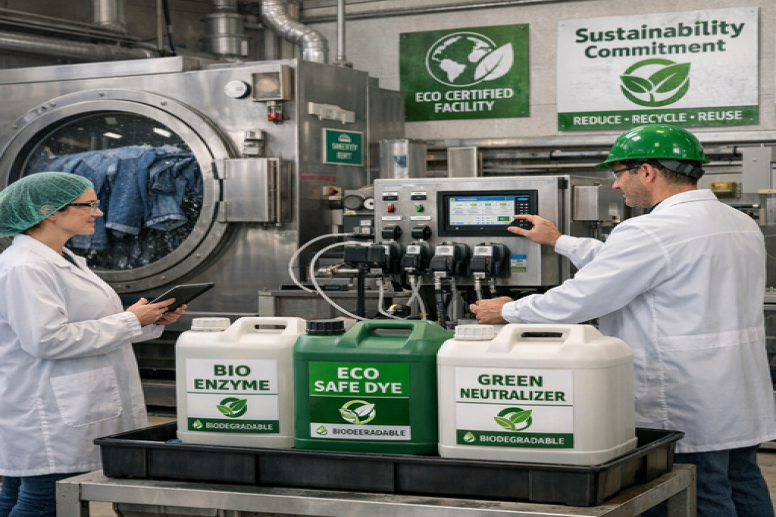
Step 3. Review Chemical Dosing Accuracy
Chemical imbalance causes unstable results.
Production managers should verify:
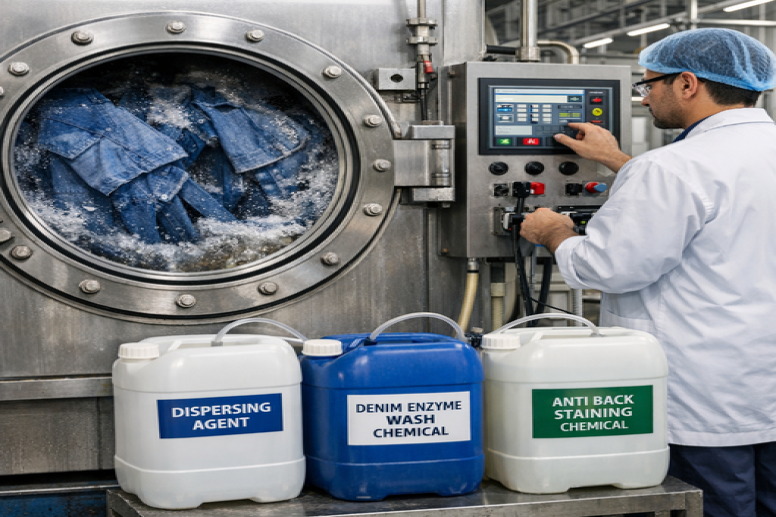
dispersing agent dosage
anti back staining chemical level
detergent concentration
softener application rate
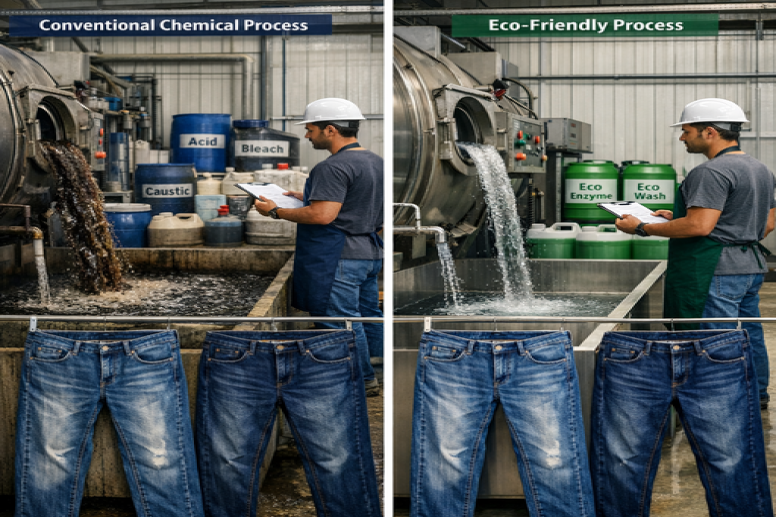
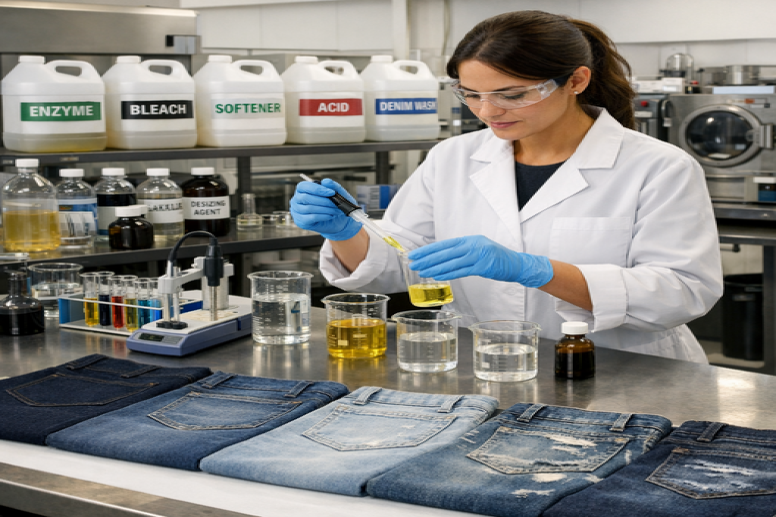
Use calibrated dosing systems to prevent overuse or underuse. Proper chemical control reduces denim washing defects and improves process stability.
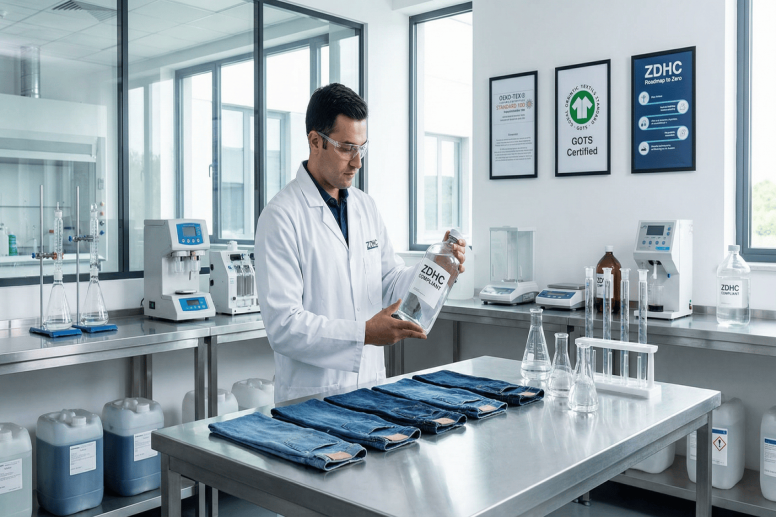
Step 4. Inspect Water Quality and Rinsing
Poor water quality affects washing performance. High hardness or contamination reduces chemical efficiency.
Check:
water hardness level
rinsing efficiency
drainage system performance
Insufficient rinsing leaves loose dye particles in garments. This increases indigo dye washing problems and staining risk.
Step 5. Evaluate Machine Condition
Machine performance directly impacts washing quality.
Inspect:
drum rotation speed
loading capacity
maintenance condition
temperature control system
Regular preventive maintenance prevents unexpected variation and improves batch consistency.
Step 6. Train Operators for Consistent Results
Operator discipline reduces process errors.
Training should include:
accurate chemical measurement
standard operating procedures
defect recognition
process monitoring skills
Skilled teams reduce production losses and improve troubleshooting efficiency.
Benefits of Systematic Troubleshooting
Structured problem solving provides strong advantages for production managers.
Key benefits include:
reduced rewash rate
lower chemical waste
improved machine utilization
better control of enzyme wash process
fewer denim washing defects
stable control of indigo dye washing problems
higher productivity
Consistent troubleshooting builds reliable production systems.
Conclusion
Troubleshooting denim washing problems requires systematic inspection of process parameters, chemical dosing, machine performance, and water quality. Proper management of the enzyme wash process reduces defects and improves quality consistency.
Production managers who implement structured problem solving reduce costs, minimize indigo dye washing problems, and improve overall plant efficiency in denim garment processing.