14 Mar
Dispersing Agent in Denim Washing: Function, Benefits, and Application
Learn how dispersing agents work in denim washing. Complete guide covering functions, benefits, and application in garment washing auxiliaries for denim processing.
Dispersing Agent in Denim Washing: Function and Benefits
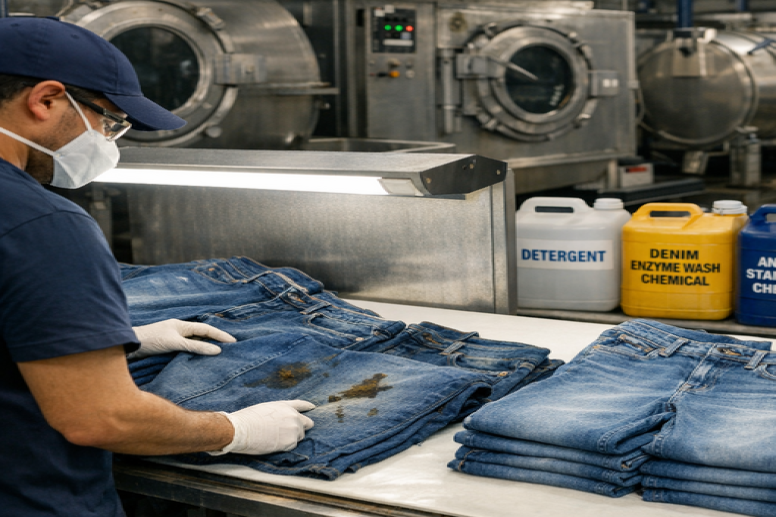
Denim garment washing releases large amounts of indigo dye particles into the wash liquor. These particles tend to agglomerate and redeposit on the garment surface, which causes back staining and uneven shade. A dispersing agent in denim washing prevents this problem by keeping dye particles suspended in the washing bath.
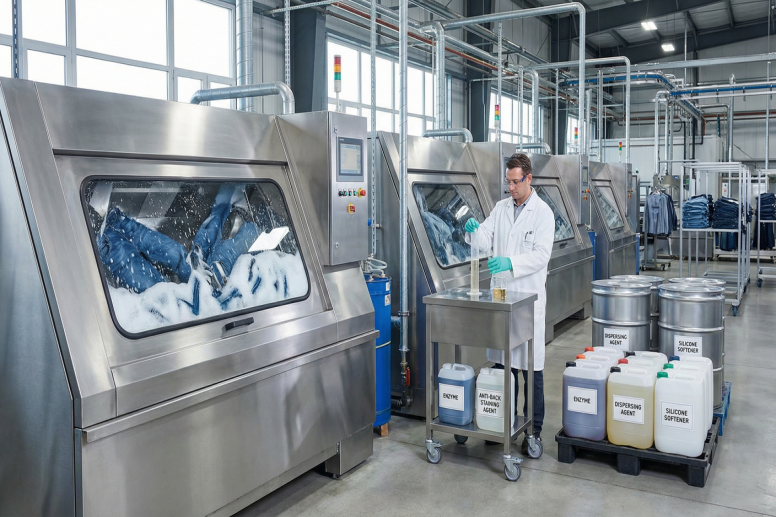
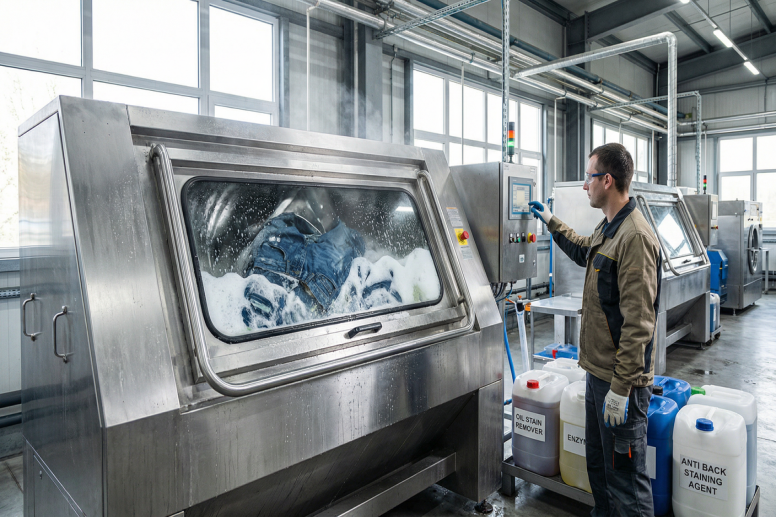
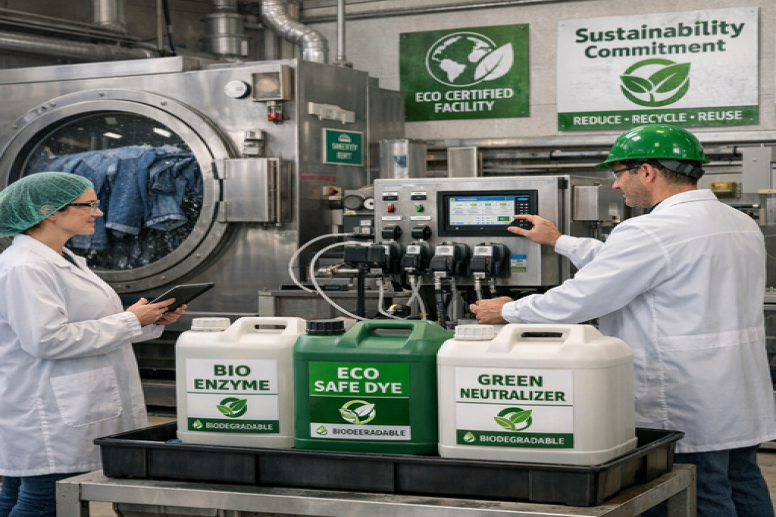
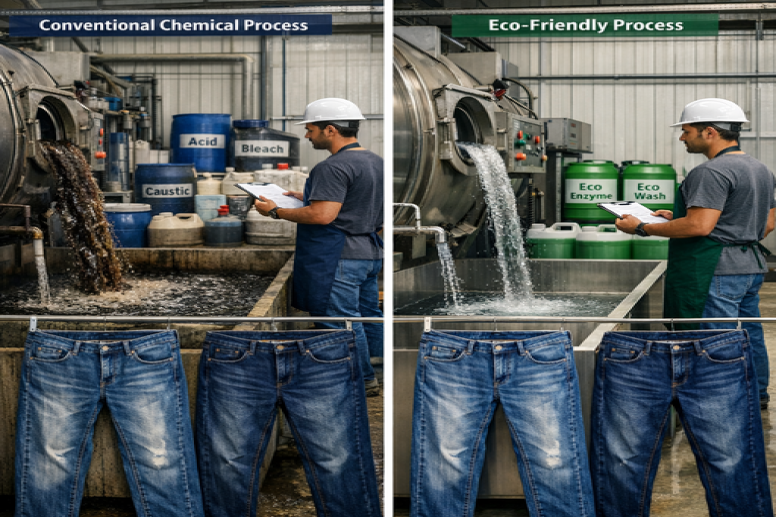
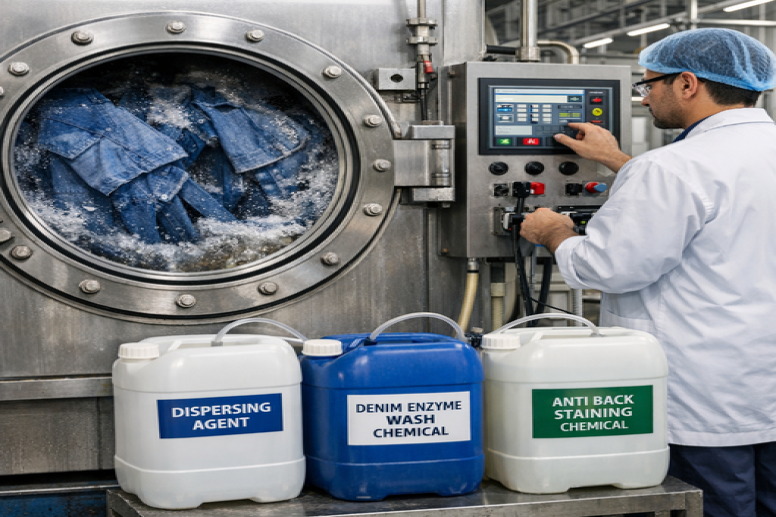
Garment washing factories depend on dispersing agents as important garment washing auxiliaries to maintain clean garment appearance and uniform fading effects. These auxiliaries work together with chemicals such as denim enzyme wash chemical and anti back staining chemical to ensure stable washing performance.
What Is a Dispersing Agent
A dispersing agent is a textile auxiliary designed to stabilize dye particles in wash liquor. The chemical breaks up dye aggregates and maintains fine dispersion of indigo particles during the washing process.
Main functions include:
suspension of indigo dye particles
prevention of dye aggregation
reduction of dye redeposition
improvement of washing uniformity
These auxiliaries play a critical role during enzyme washing and bleaching stages.
Importance of Dispersing Agents in Denim Washing
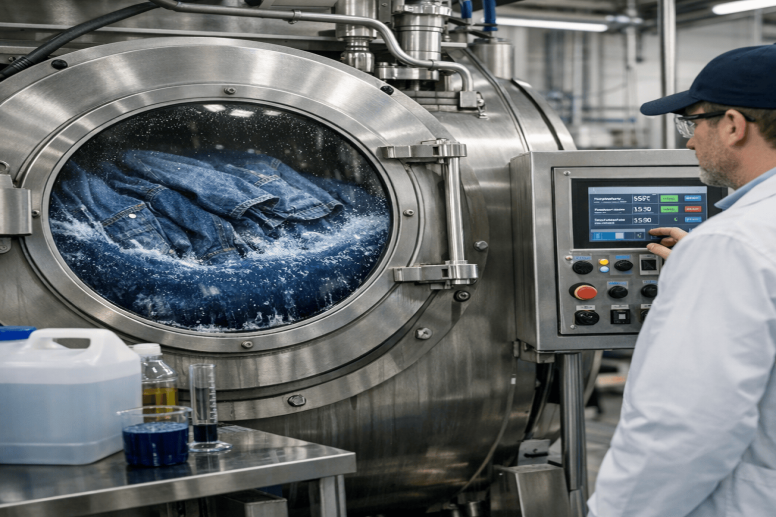
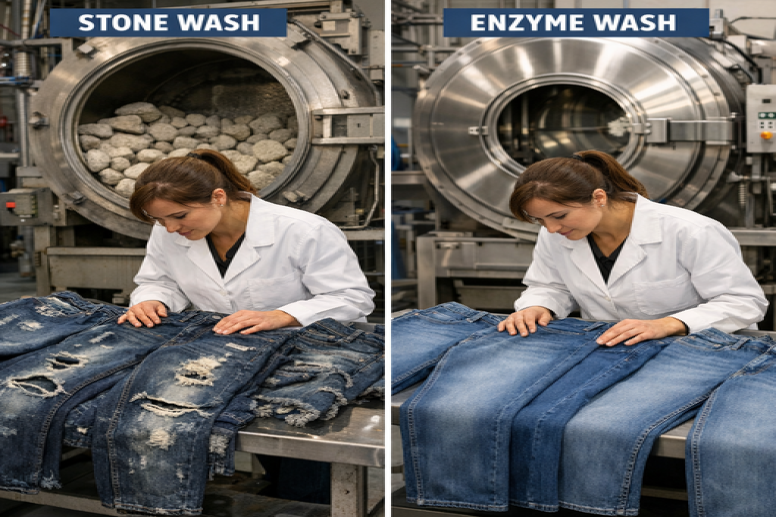
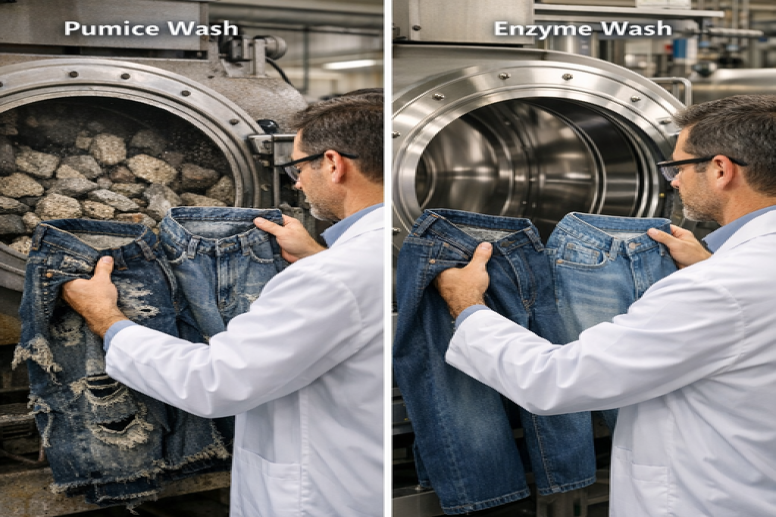
During enzyme washing, denim enzyme wash chemical removes surface fibers and releases indigo dye particles into the wash liquor. Without chemical control, these particles accumulate and attach again to garments.
Dispersing agents solve this issue by maintaining dye particles in suspension.
Key advantages include:
clean garment surface
consistent fading effects
reduction of washing defects
improved washing efficiency
Denim washing plants rely on these auxiliaries to maintain stable production results.
Role of Dispersing Agents in Denim Washing Process
Dispersing agents influence several stages of the denim washing process.
Dye Particle Stabilization
The chemical surrounds indigo dye particles and prevents them from joining together. This stabilizes the washing bath.
Prevention of Back Staining
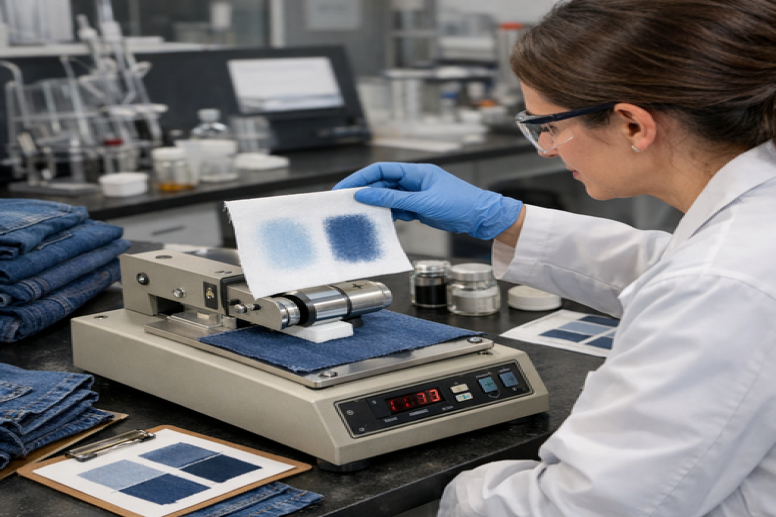
By keeping dye particles dispersed, the auxiliary reduces the risk of redeposition on garment surface. This supports the action of anti back staining chemical.
Improved Enzyme Washing Performance
Dispersing agents help denim enzyme wash chemical perform more efficiently by keeping the washing liquor clean and stable.
Uniform Shade Development
Stable dispersion of dye particles allows garments to develop even fading effects during washing.
Benefits of Using Dispersing Agents
Garment washing factories gain several production benefits when dispersing agents are used properly.
Main advantages include:
prevention of uneven shade
reduction of back staining defects
improved garment appearance
better washing consistency
improved performance of garment washing auxiliaries
higher production efficiency
These benefits reduce reprocessing cost and improve product quality.
Application in Denim Washing Process
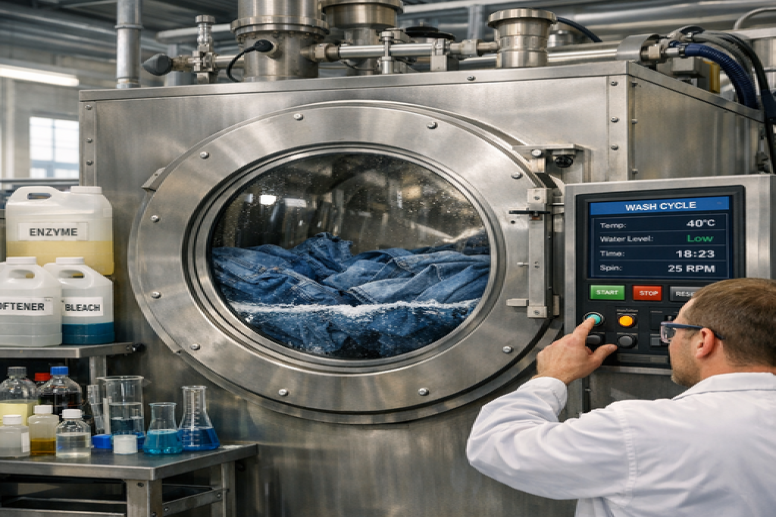
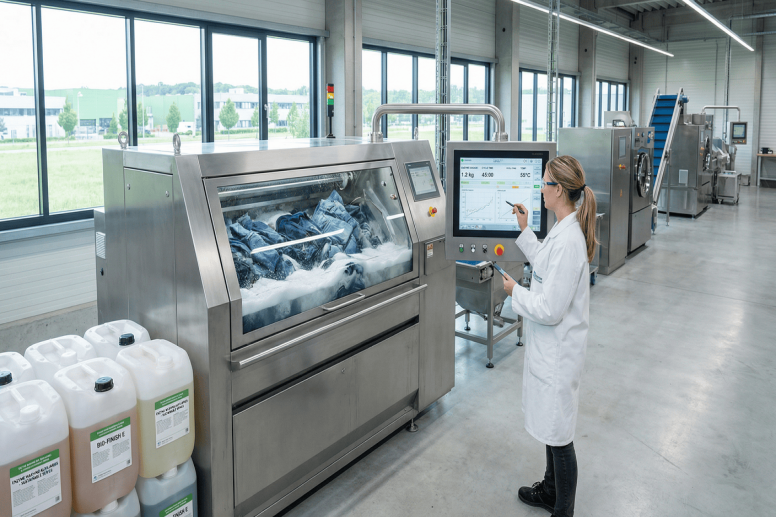
Dispersing agents are usually applied during enzyme washing or bleaching stages.
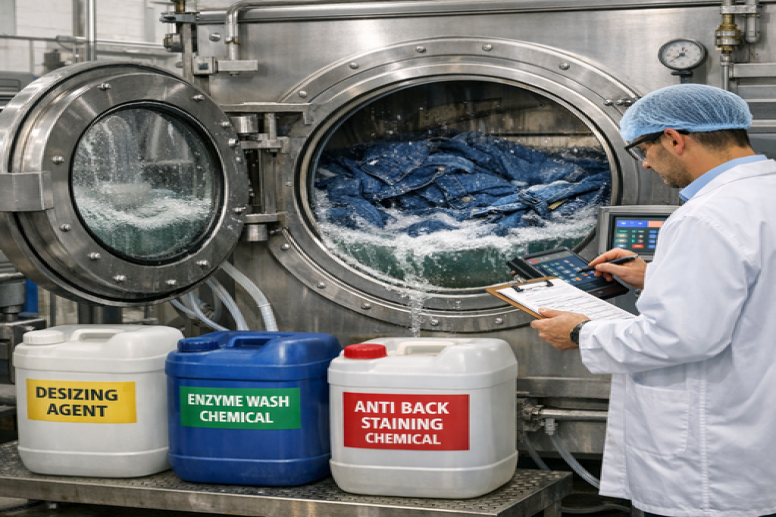
Typical denim washing sequence:
Desizing stage
Enzyme washing with denim enzyme wash chemical
Addition of dispersing agent and anti back staining chemical
Rinsing stage
Bleaching if required
Neutralization
Softening using denim softener chemical
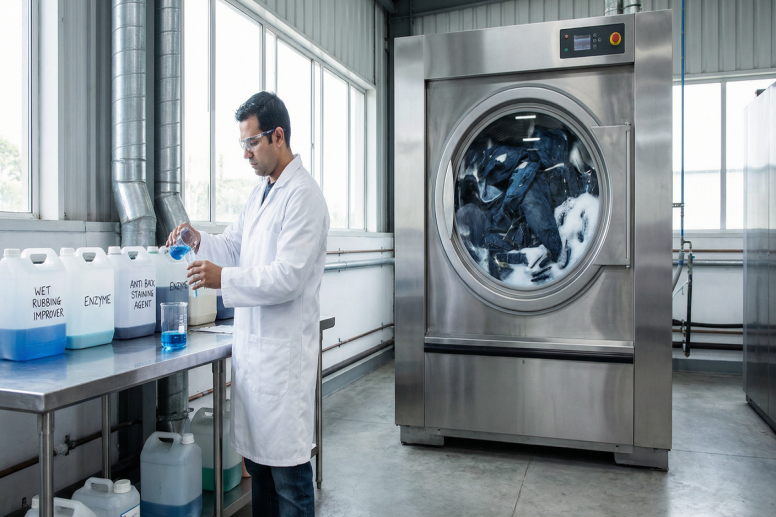
Proper dosage and mixing ensure effective chemical performance during the washing cycle.
Problems Without Dispersing Agents
Denim washing plants often face several defects when dispersing agents are not used.
Common issues include:
heavy back staining on garments
uneven fading effects
dark patches on denim surface
inefficient enzyme washing
poor garment appearance
These problems increase rejection rate and production cost.
Conclusion
A dispersing agent in denim washing plays an essential role in controlling indigo dye particles released during garment washing. By maintaining dye dispersion in the wash liquor, the chemical prevents redeposition and supports uniform fading effects.
Denim washing factories achieve better results when dispersing agents work together with garment washing auxiliaries such as denim enzyme wash chemical, anti back staining chemical, and denim softener chemical. Proper chemical selection improves washing stability, garment quality, and overall production efficiency.