14 Mar
Case Study. Improving Softness in Denim Washing Using Advanced Softening Chemicals
Learn how denim washing factories improve garment softness. Case study covering root cause, chemical solution, dosage, and production results using garment washing auxiliaries.
Improving Softness in Denim Washing. Factory Case Study
Softness remains one of the most important quality parameters in finished denim garments. Modern consumers expect denim products with comfort, flexibility, and smooth hand feel. Denim washing factories often struggle to maintain softness after enzyme washing, bleaching, and mechanical abrasion processes.
This case study explains how a garment washing factory improved fabric softness in denim garments through proper selection and application of garment washing auxiliaries.
Problem in Factory
A denim garment washing factory producing enzyme washed jeans received repeated customer complaints regarding fabric stiffness.
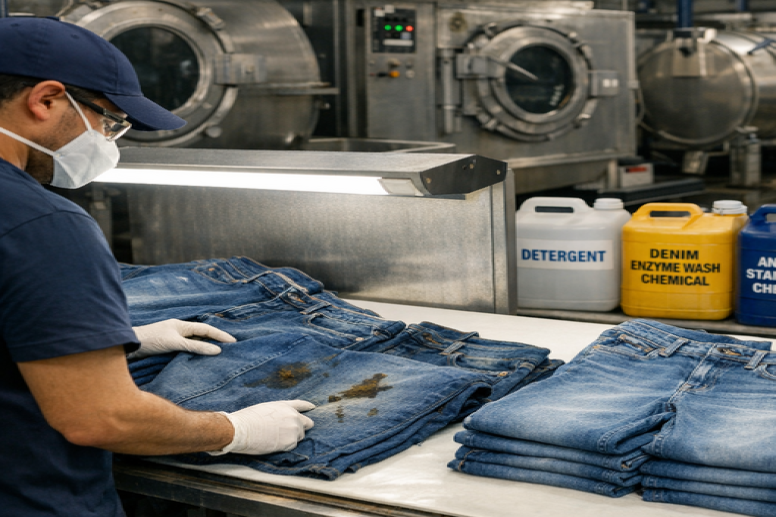
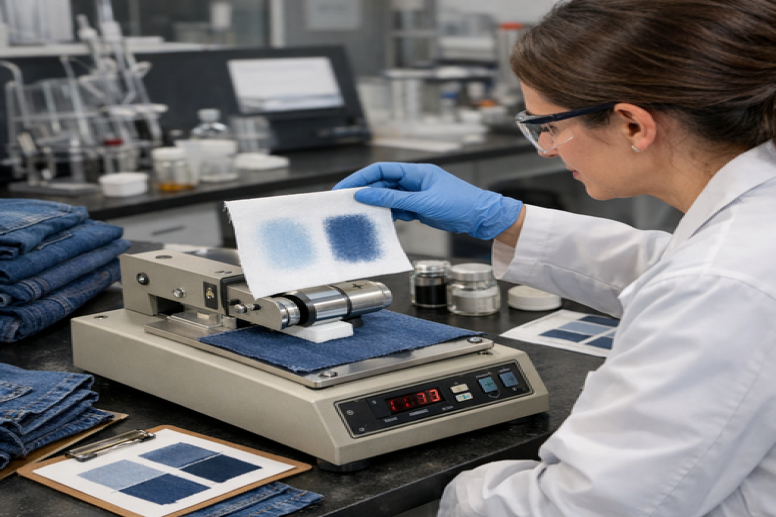
Quality inspection identified several problems:
rough and dry fabric surface after washing
poor drape and garment flexibility
uncomfortable hand feel during handling
buyer rejection during quality approval
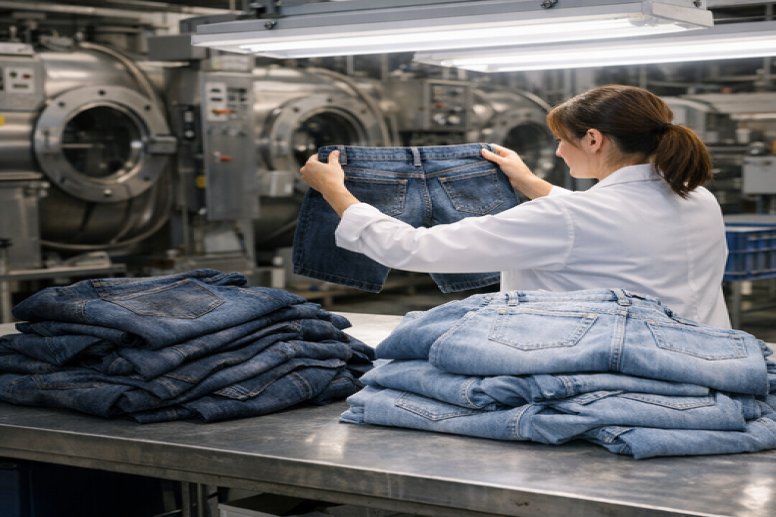
Around 18 percent of garments in production batches failed softness evaluation during final inspection.
Root Cause
Technical investigation revealed several reasons behind the softness problem.
Main causes included:
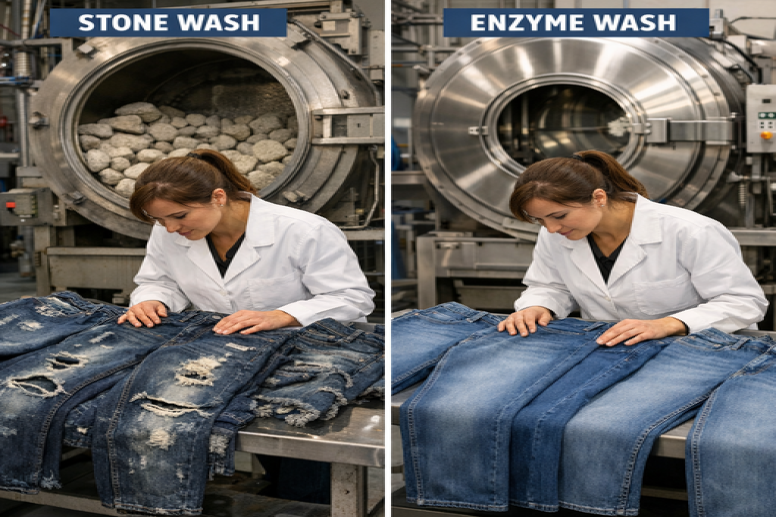
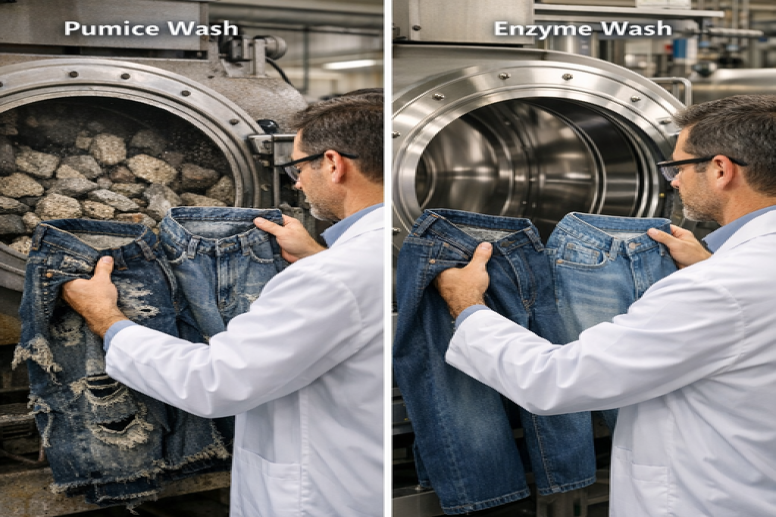
aggressive enzyme washing using denim enzyme wash chemical causing fiber surface abrasion
lack of effective softening treatment during final washing stage
low dosage of denim softener chemical
insufficient lubrication of cotton fibers after mechanical washing
The factory used basic softening chemicals that could not restore fabric softness after enzyme washing.
Chemical Solution
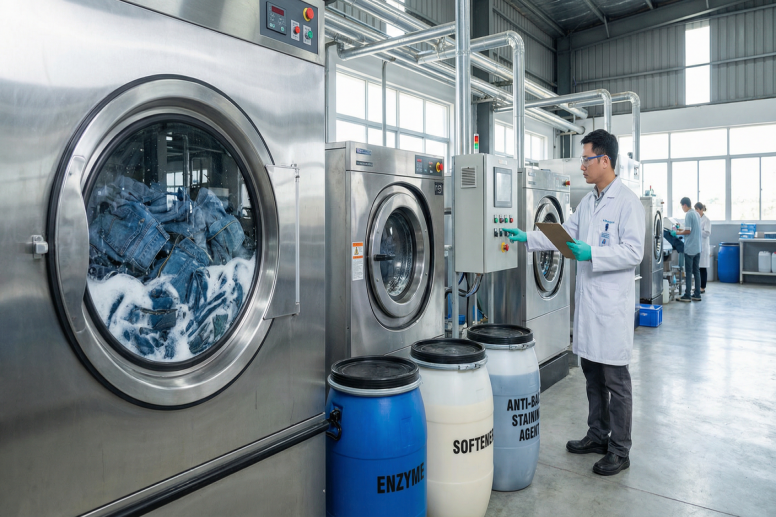
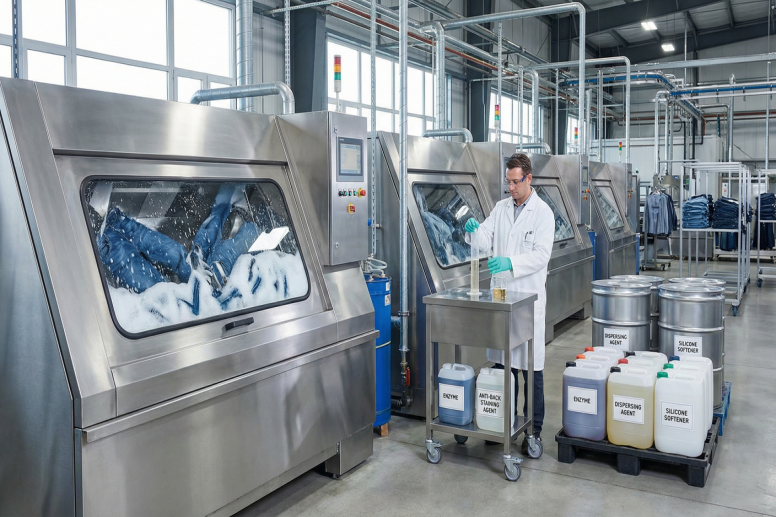
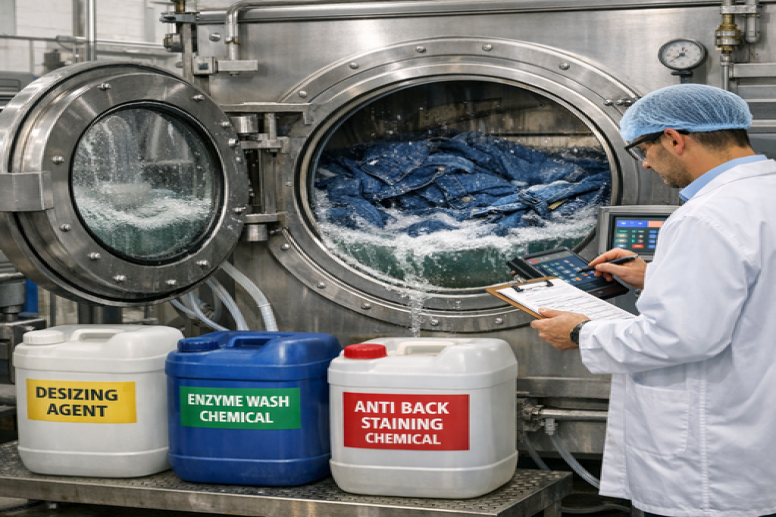
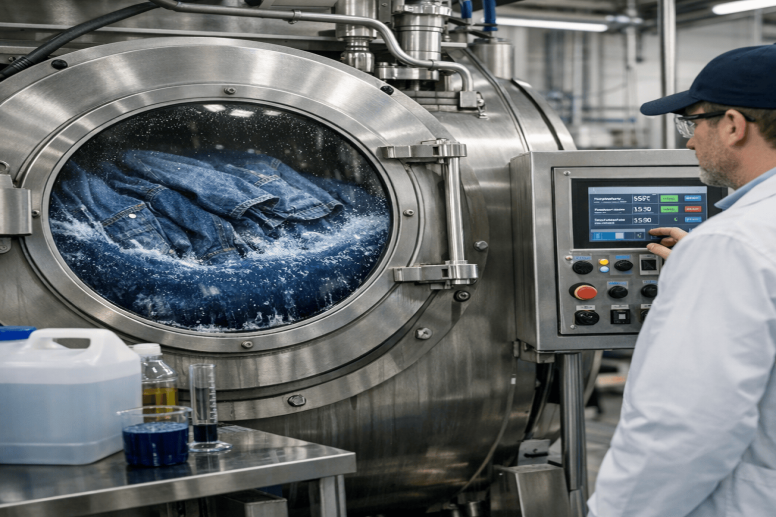
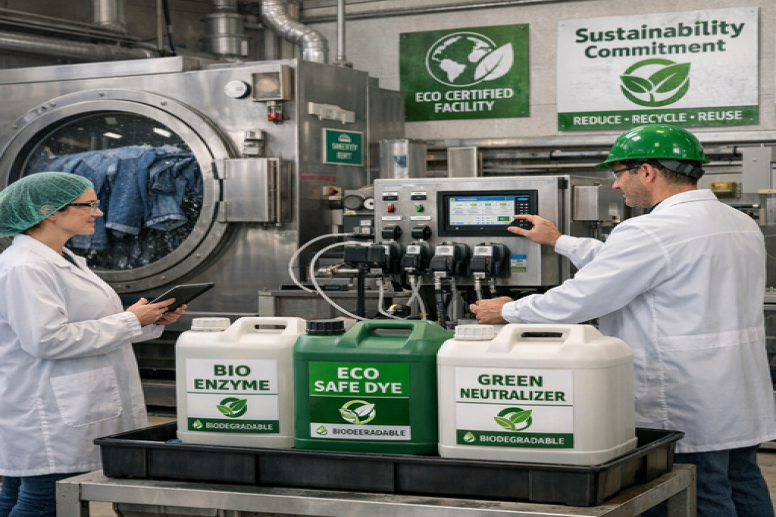
The factory introduced a new finishing system using advanced garment washing auxiliaries designed for denim softening.
The chemical solution included:
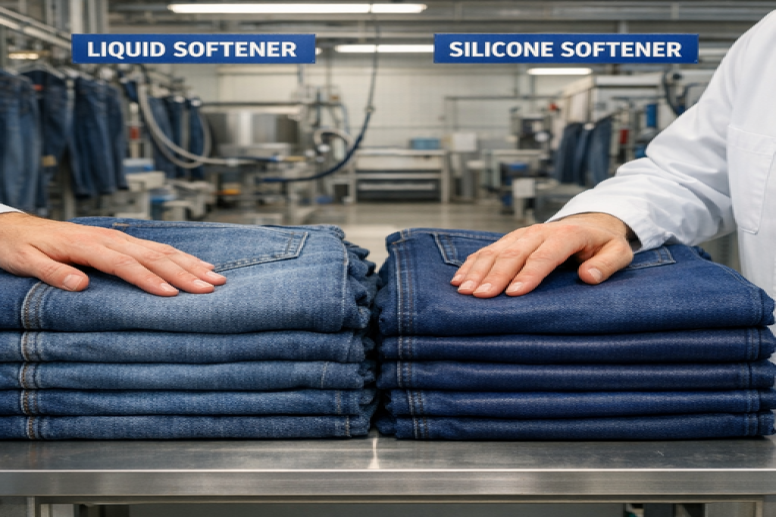
replacement of basic softener with high performance denim softener chemical
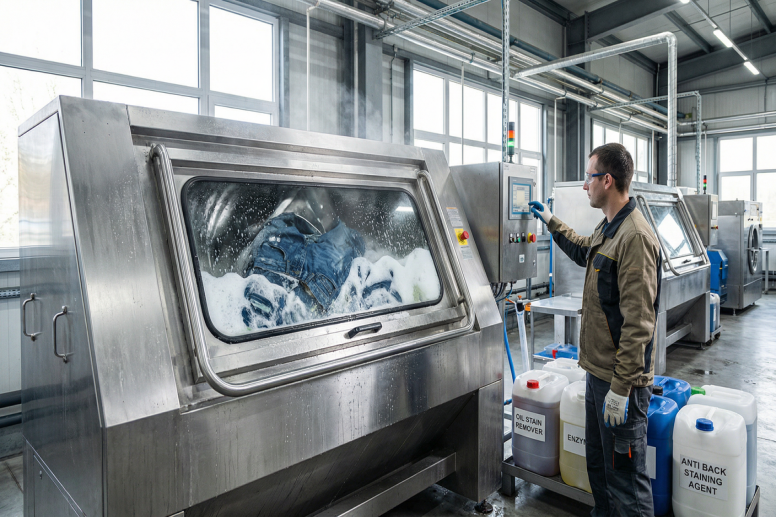
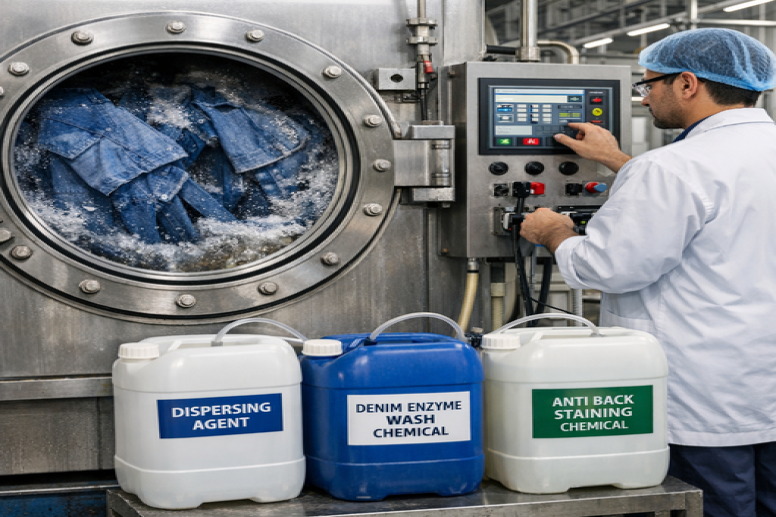
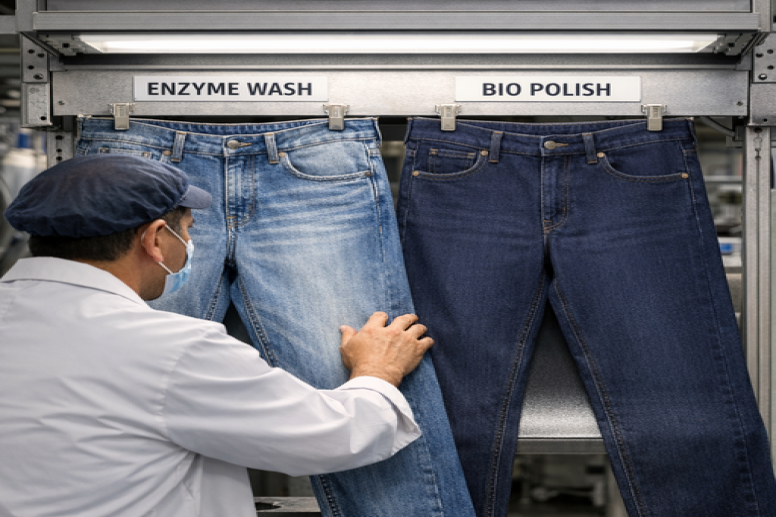
optimization of enzyme washing conditions using denim enzyme wash chemical
continued use of anti back staining chemical to maintain clean fabric surface
The improved softening treatment created a smooth lubricating layer on fiber surfaces, which enhanced garment softness and flexibility.
Dosage and Method
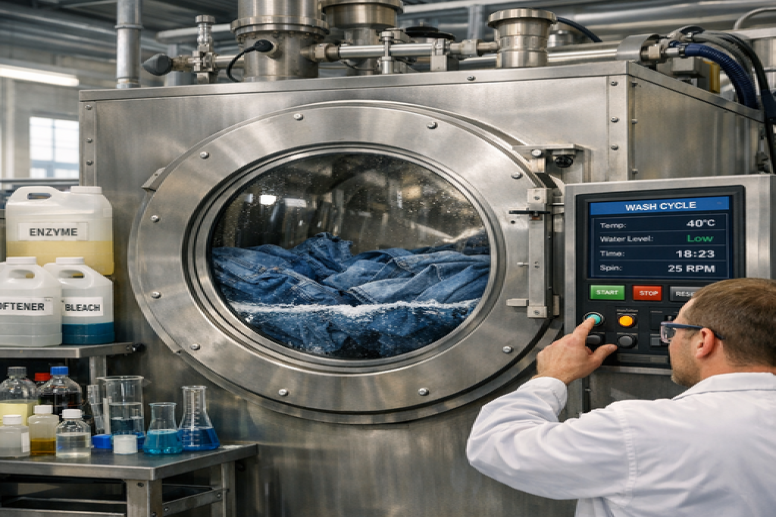
The factory implemented the following finishing process for softening treatment.
Process parameters:
liquor ratio: 1:7
temperature: 40°C
washing time: 15 to 20 minutes
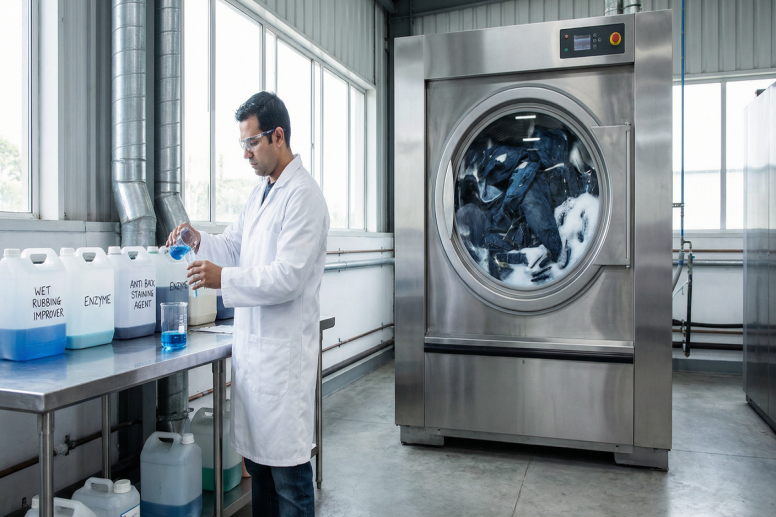
Chemical dosage:
denim softener chemical: 2.0 to 3.0 g per liter
denim enzyme wash chemical: 0.8 g per liter during enzyme stage
anti back staining chemical: 1.0 g per liter during enzyme washing
Process method:
Perform desizing and enzyme washing stage
Apply anti back staining chemical during enzyme wash
Rinse garments thoroughly after washing
Prepare finishing bath with denim softener chemical
Run softening cycle for 15 to 20 minutes
Hydro extract and dry garments
Proper chemical dosage and controlled temperature ensured effective softening performance.
Result in Production
After implementing the new softening process, the factory observed clear improvements in product quality.
Production results included:
softness rejection reduced from 18 percent to less than 3 percent
improved fabric flexibility and garment drape
smoother fabric surface after washing
better customer satisfaction and buyer approval
improved consistency in finishing quality
The factory continued using the optimized process for large scale production.
Conclusion
Improving softness in denim washing requires proper finishing treatment after enzyme washing and other garment washing processes. Fiber abrasion caused by mechanical washing must be balanced with effective softening chemicals.
Garment washing factories achieve superior results when garment washing auxiliaries such as denim softener chemical, denim enzyme wash chemical, and anti back staining chemical are used in a controlled washing process. Proper softening treatment improves garment comfort, appearance, and overall product value.