14 Mar
Case Study. Shade Protection During Enzyme Wash in Denim Garment Processing
Learn how denim washing factories protect shade during enzyme wash. Case study covering root cause, chemical solution, dosage, and production results using garment washing auxiliaries.
Shade Protection During Enzyme Wash. Denim Washing Case Study
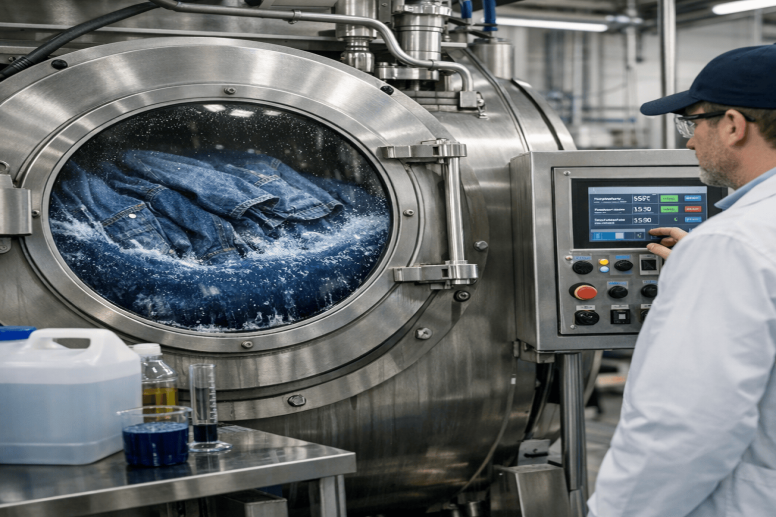
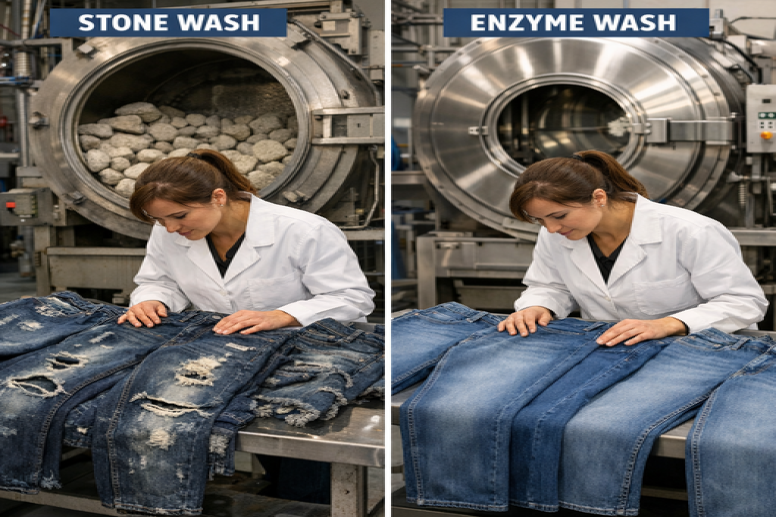
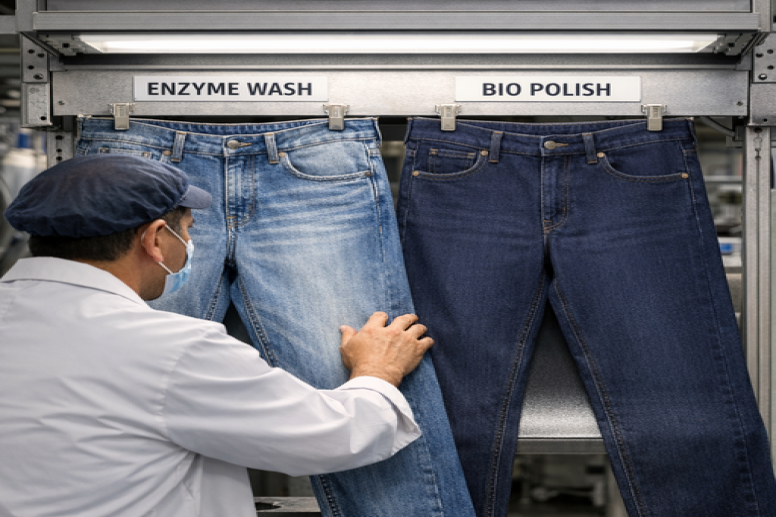
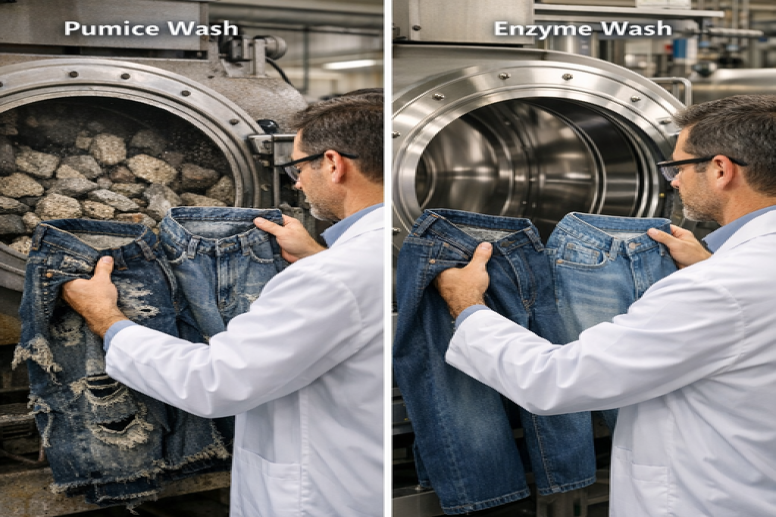
Enzyme washing remains a common technique used in denim garment processing to create a faded and worn appearance. The process removes surface fibers and partial indigo dye to develop fashion effects. Poor process control leads to excessive shade loss and uneven fading.
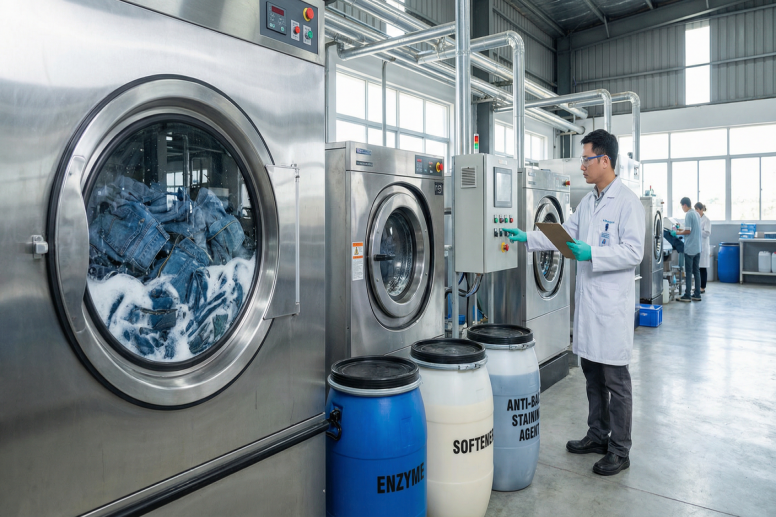
Denim washing factories require proper garment washing auxiliaries to protect the original shade during enzyme treatment. This case study explains how a factory controlled shade loss and achieved uniform enzyme washing results.
Problem in Factory
A denim garment washing factory producing enzyme washed jeans experienced repeated shade variation problems during production.
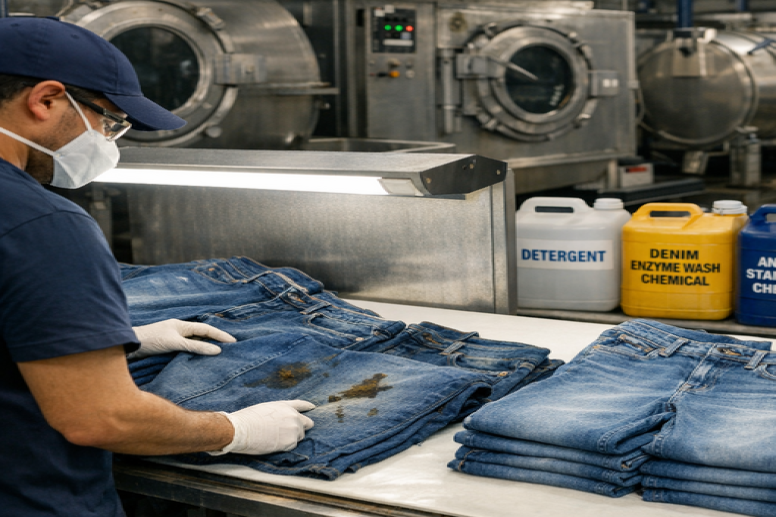
Quality inspection revealed several issues:
excessive shade loss after enzyme washing
inconsistent fading between garments in the same batch
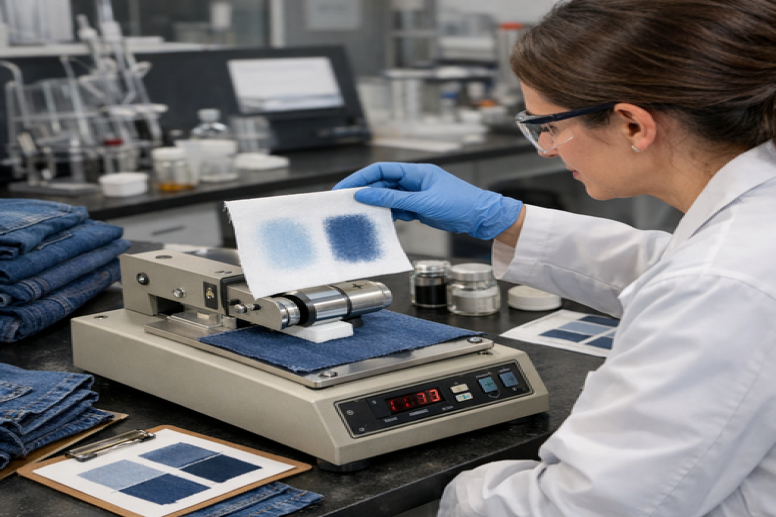
lighter shade compared with approved buyer samples
rejection during buyer shade approval stage
Around 14 percent of garments failed shade evaluation tests during final inspection.
Root Cause
Process investigation identified several reasons responsible for shade damage during enzyme washing.
Key root causes included:
excessive dosage of denim enzyme wash chemical
extended washing time during enzyme treatment
lack of proper anti back staining chemical in wash liquor
redeposition of indigo dye particles causing uneven shade
Aggressive enzyme washing removed too much surface dye and damaged the desired garment shade.
Chemical Solution
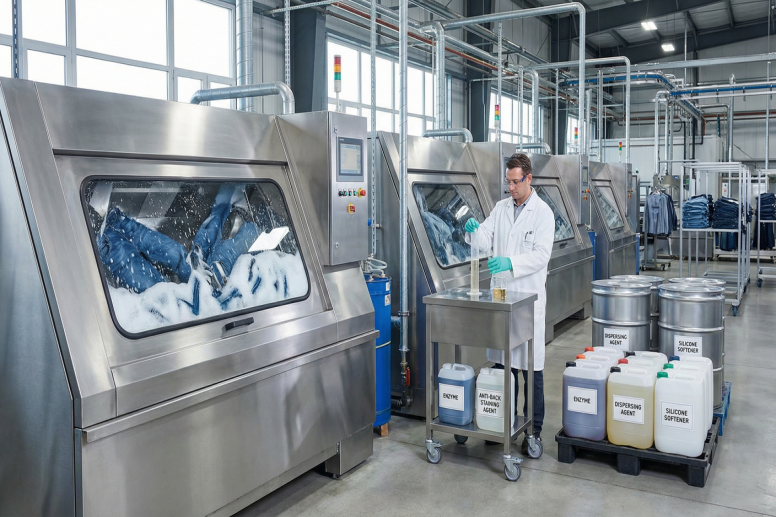
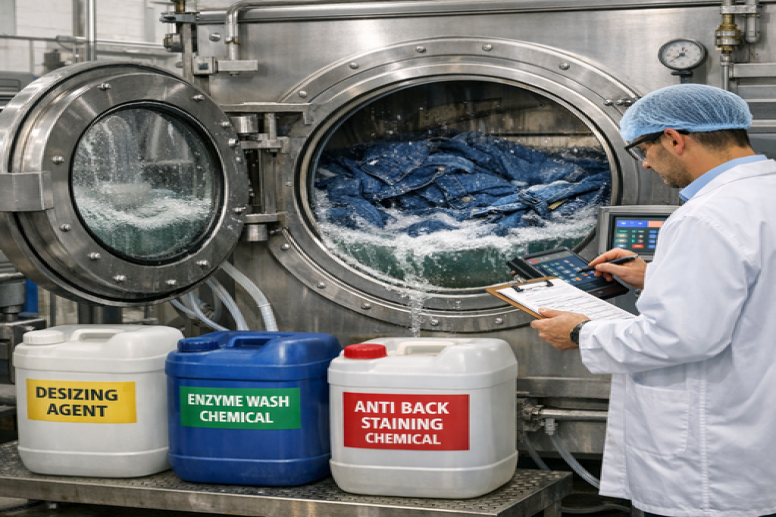
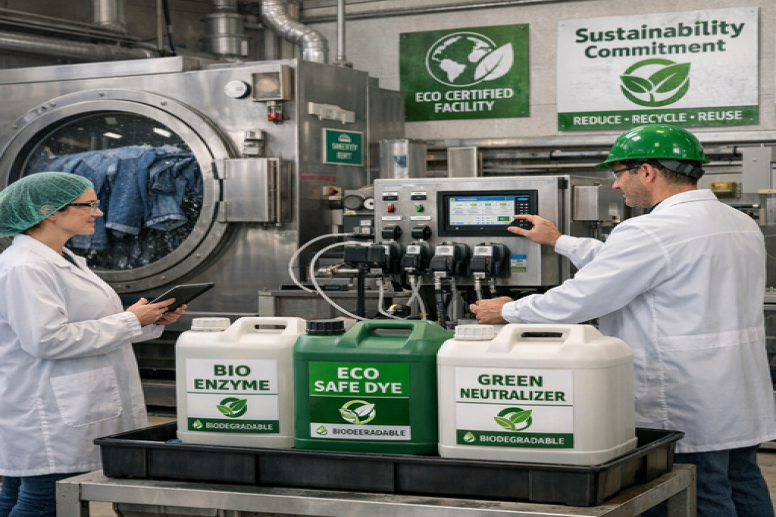
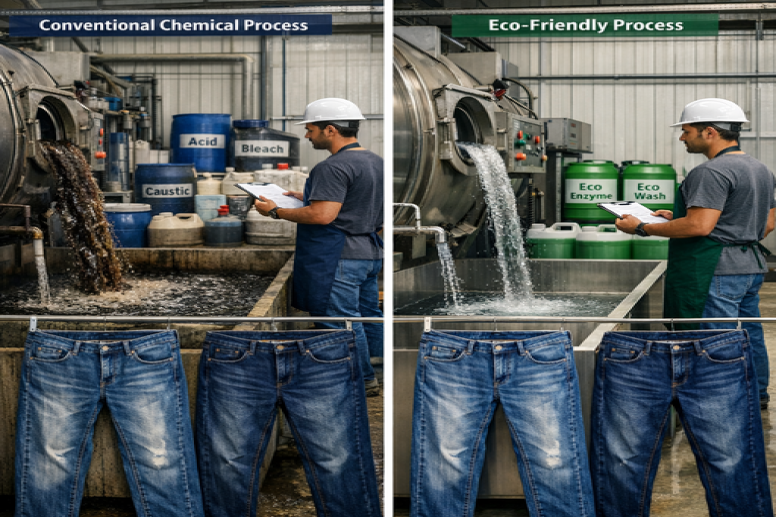
The factory introduced a controlled washing system using optimized garment washing auxiliaries.
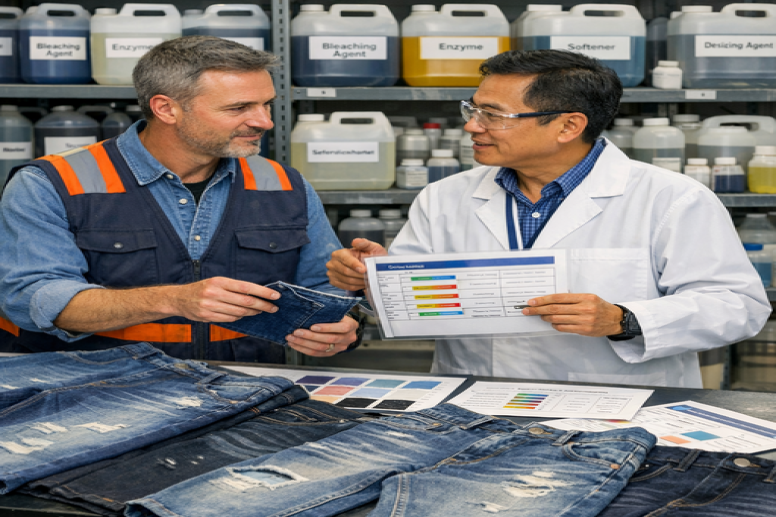
The chemical solution included:
controlled dosage of denim enzyme wash chemical to reduce excessive abrasion
use of anti back staining chemical to prevent dye redeposition
improved washing parameters for stable enzyme performance
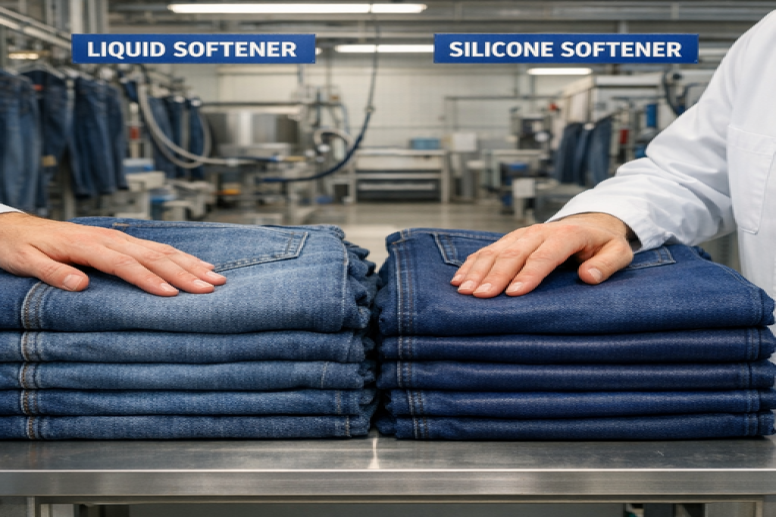
finishing treatment using denim softener chemical to restore fabric handle
This chemical system helped maintain consistent shade during enzyme washing.
Dosage and Method
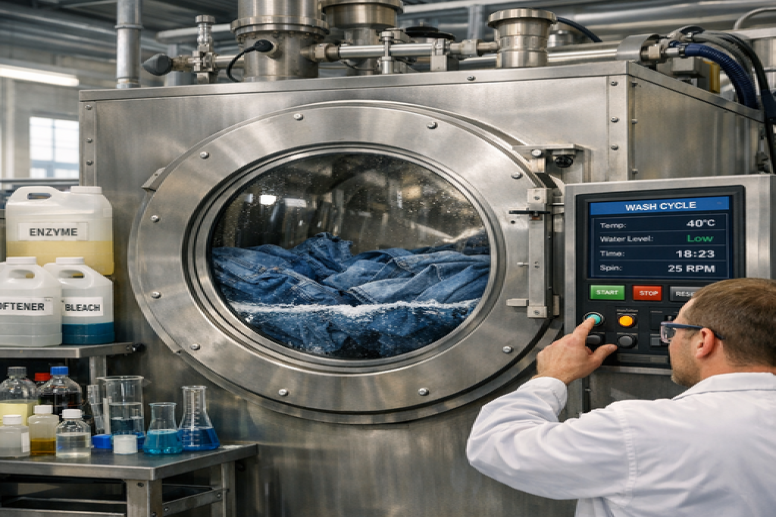
The factory implemented the following enzyme washing process.
Process parameters:
liquor ratio: 1:8
temperature: 50 to 55°C
washing time: 35 minutes
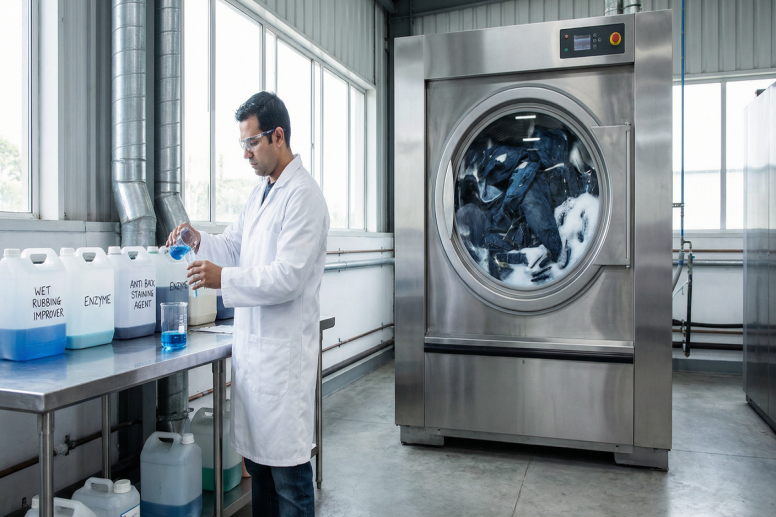
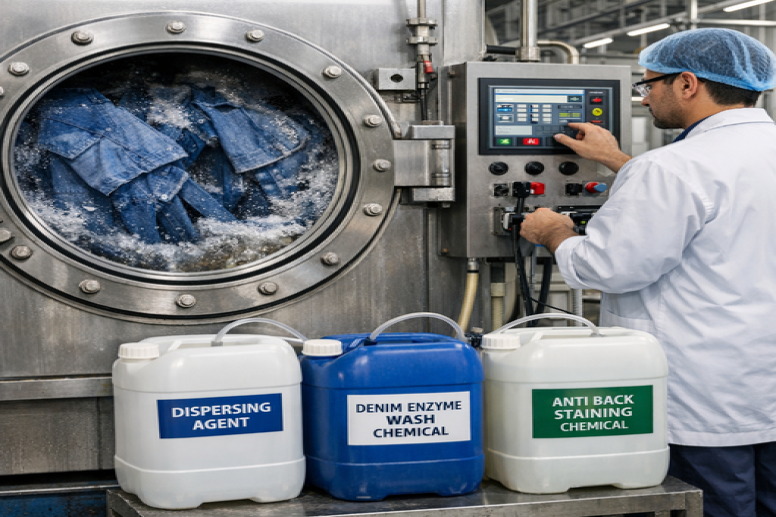
Chemical dosage:
denim enzyme wash chemical: 0.6 to 0.8 g per liter
anti back staining chemical: 1.0 g per liter
dispersing agent: 0.5 g per liter
denim softener chemical: 2.0 g per liter during finishing
Process method:
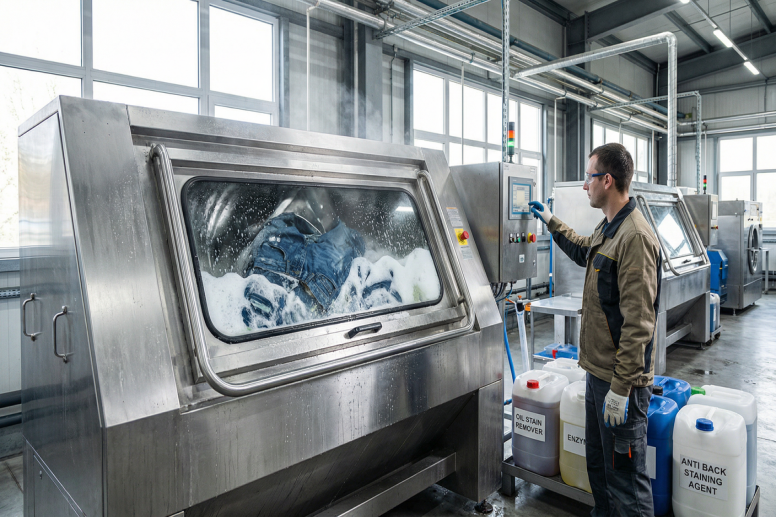
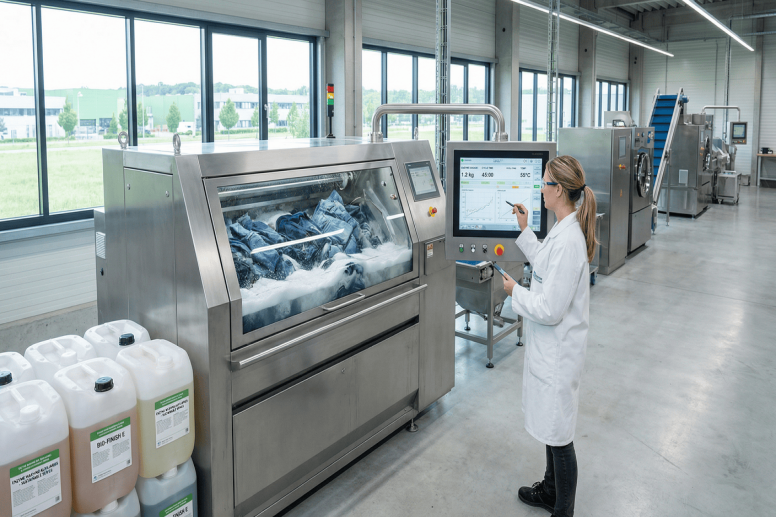
Load garments into industrial washing machine
Add water and adjust temperature
Add denim enzyme wash chemical and anti back staining chemical
Maintain controlled washing cycle
Drain wash liquor and rinse garments
Apply finishing treatment using denim softener chemical
Hydro extract and dry garments
Proper enzyme dosage and washing time ensured controlled fading without shade damage.
Result in Production
After implementing the optimized washing process, the factory achieved stable shade results.
Production results included:
shade rejection reduced from 14 percent to less than 2 percent
consistent fading across garments in each batch
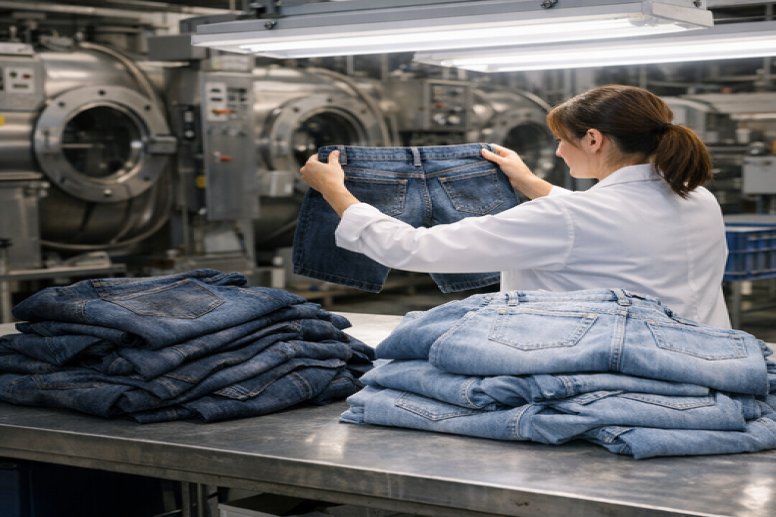
improved shade matching with buyer approval samples
reduced reprocessing cost
improved overall production efficiency
The factory maintained consistent washing quality during large scale production.
Conclusion
Shade protection during enzyme wash requires careful control of enzyme dosage, washing parameters, and chemical auxiliaries. Excessive enzyme action leads to shade loss and inconsistent fading effects.
Denim washing factories achieve stable results when garment washing auxiliaries such as denim enzyme wash chemical, anti back staining chemical, and denim softener chemical are applied with proper process control. Balanced chemical treatment ensures uniform fading and consistent garment shade.