16 Mar
Common Denim Washing Defects and Chemical Solutions
Learn about common denim washing defects and chemical solutions. Understand the enzyme wash process and methods to prevent indigo dye washing problems.
Common Denim Washing Defects and Chemical Solutions
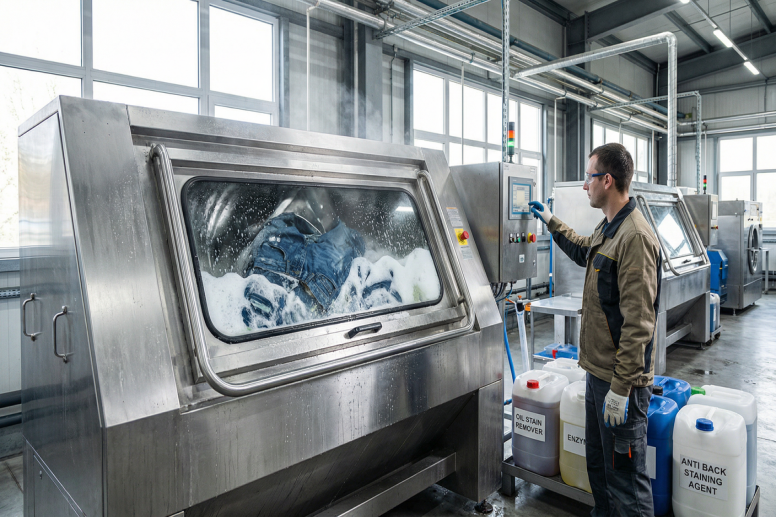
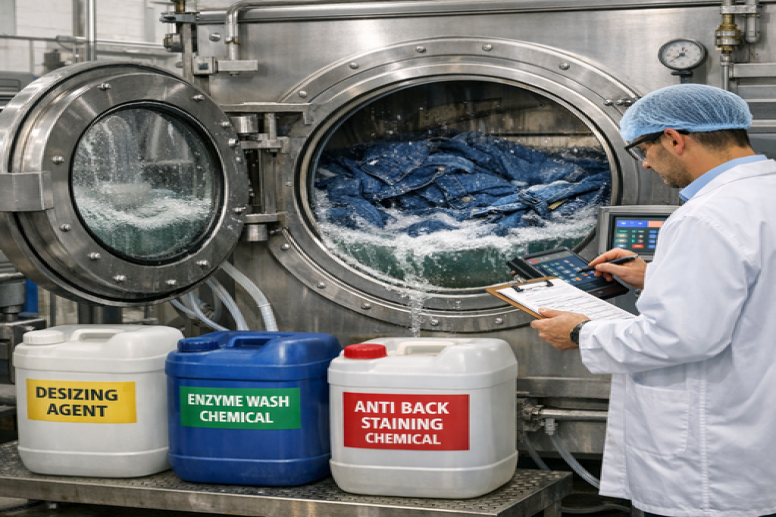
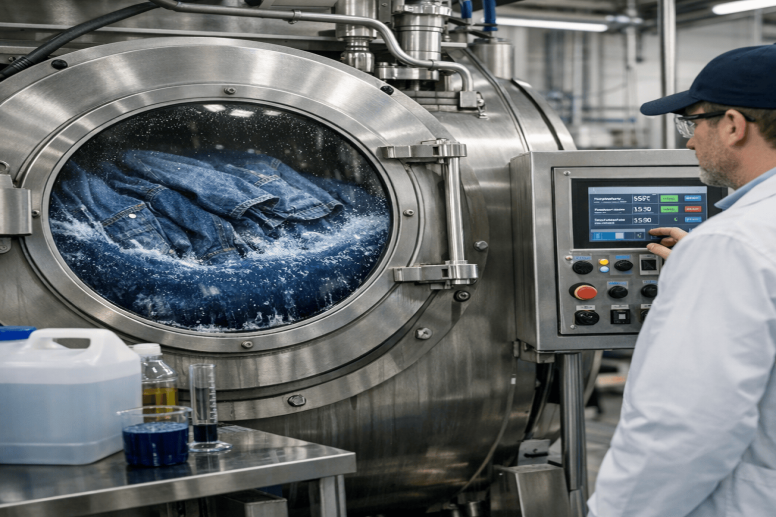
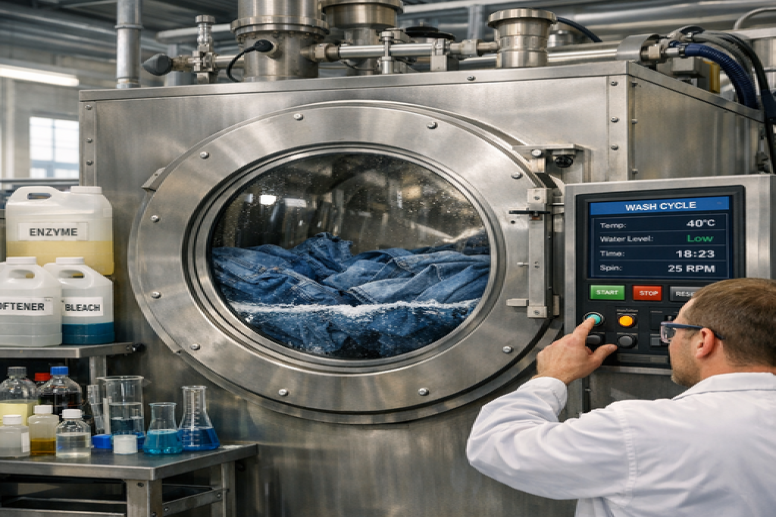
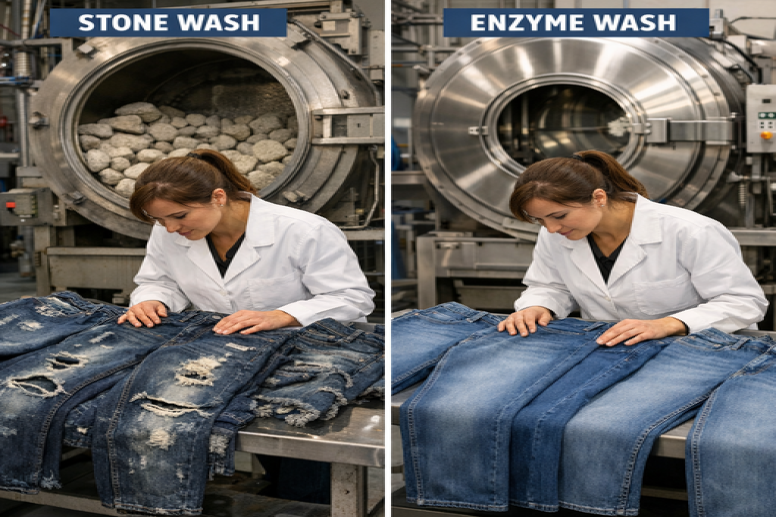
Denim garment washing creates fashion effects such as fading, softness, and vintage appearance. Factories perform several treatments including desizing, the enzyme wash process, bleaching, neutralization, and finishing. Each stage influences garment appearance and fabric performance.
Poor process control leads to various denim washing defects. These defects reduce garment quality, increase rejection rates, and raise production cost. Understanding the causes of these problems and applying the correct chemical solutions helps washing factories maintain consistent production quality.
Back Staining
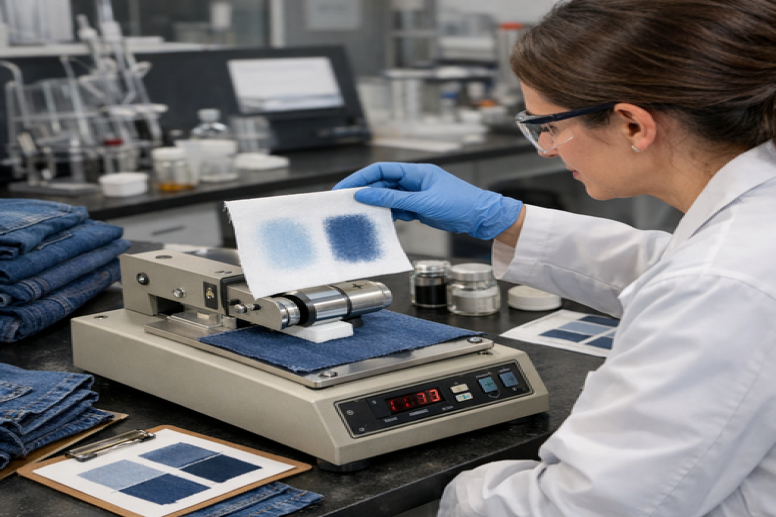
Back staining occurs when loose indigo dye particles redeposit on the garment surface during washing. The problem usually appears after the enzyme wash process.
Main causes
high release of indigo dye particles during enzyme washing
poor dispersion of dye particles in wash liquor
absence of anti back staining chemicals
Chemical solution
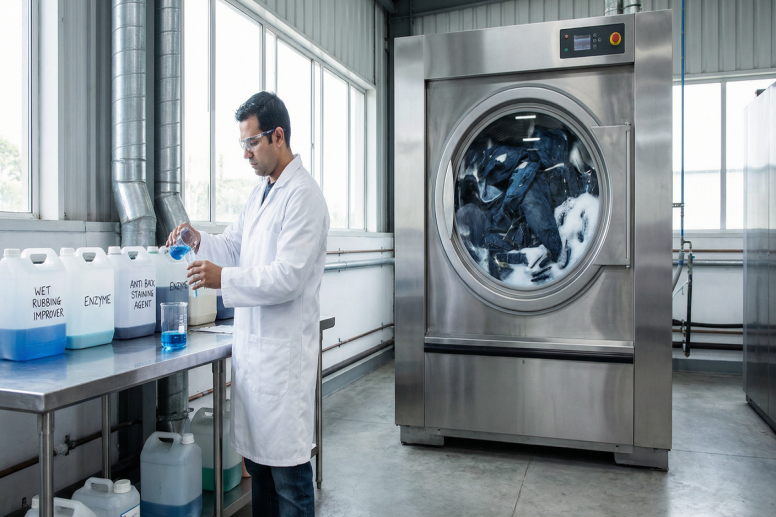
Factories control this defect by using anti back staining chemicals and dispersing agents. These auxiliaries keep dye particles suspended in wash liquor and prevent redeposition on the garment surface.
Uneven Fading
Uneven fading appears when different areas of the garment show inconsistent shade after washing.
Main causes
uneven enzyme distribution during enzyme wash process
incorrect liquor ratio or poor washing agitation
improper garment loading inside washing machines
Chemical solution
Uniform enzyme dosing and proper dispersing chemicals improve chemical penetration and ensure even fading across garments.
Indigo Dye Bleeding
Indigo dye bleeding occurs when released dye particles stain pocket bags, sewing threads, or garment labels during washing.
Main causes
excessive release of surface indigo dye
insufficient washing control during enzyme treatment
poor dispersion of dye particles in washing liquor
Chemical solution
Use of anti back staining chemicals and dispersing agents helps stabilize indigo dye particles and prevent dye transfer during washing.
Excessive Shade Loss
Excessive shade loss appears when the garment becomes lighter than the approved sample after washing.
Main causes
excessive dosage in the enzyme wash process
long washing time
high washing temperature
Chemical solution
Careful control of enzyme dosage and washing conditions protects the garment shade while maintaining desired fading effects.
Oil Stains on Garments
Oil stains remain a common problem in denim washing factories. These stains often originate from sewing machines or handling equipment.
Main causes
oil contamination during garment manufacturing
insufficient pre washing treatment
absence of proper detergent or emulsifying agents
Chemical solution
Factories apply industrial detergents and emulsifying chemicals during pre washing stages to break down and remove oil contaminants.
Benefits of Using Proper Chemical Solutions
Applying the correct garment washing auxiliaries provides several production advantages.
Important benefits include:
reduction of denim washing defects
improved shade uniformity
prevention of indigo dye washing problems
improved garment appearance
reduced reprocessing cost
consistent product quality
Proper chemical management plays a key role in successful denim garment washing.
Conclusion
Denim garment washing requires precise control of chemical treatments and washing parameters. Without proper management, factories experience several denim washing defects such as back staining, uneven fading, dye bleeding, and shade variation.
By controlling the enzyme wash process and using appropriate chemical auxiliaries, garment washing factories prevent indigo dye washing problems and achieve consistent washing quality. Understanding these defects and their chemical solutions helps manufacturers improve efficiency and maintain high product standards.