16 Mar
Green Chemistry in Denim Garment Processing
Learn about green chemistry in denim garment processing. Improve the enzyme wash process and reduce denim washing defects and indigo dye washing problems.
Green Chemistry in Denim Garment Processing
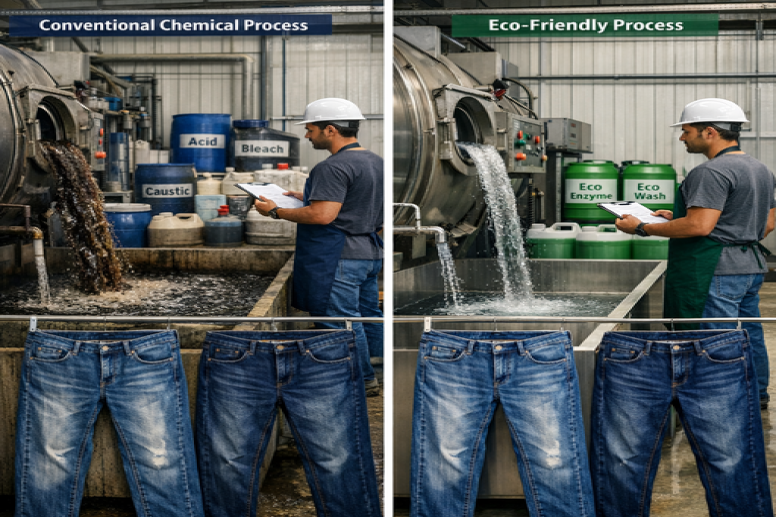
Denim garment processing uses many chemical treatments during washing and finishing. Traditional chemicals often create environmental pollution and increase wastewater treatment load.
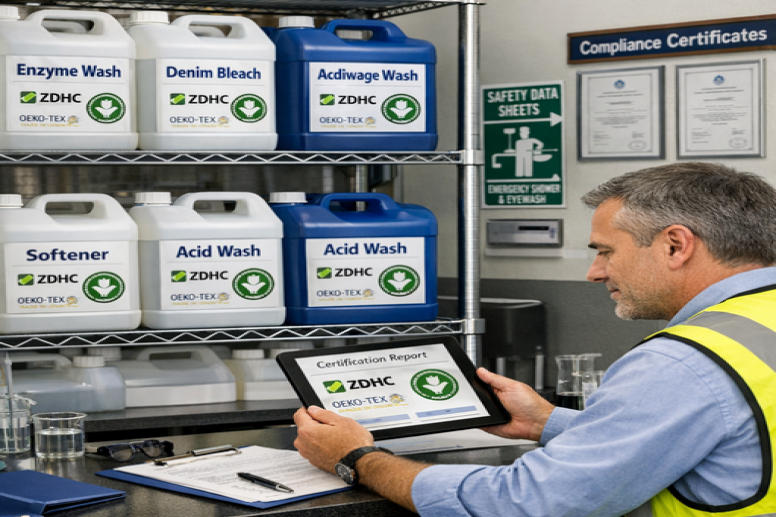
Green chemistry in denim garment processing focuses on safer chemical formulations and efficient production methods. This approach reduces harmful substances in textile processing while maintaining washing performance and garment quality.
Garment washing factories adopt green chemistry principles to reduce denim washing defects and control indigo dye washing problems during processing.
What Is Green Chemistry in Textile Processing
Green chemistry refers to chemical design and production methods which reduce hazardous substances and environmental impact.
In denim garment processing, green chemistry focuses on:
safer textile auxiliaries
reduced chemical toxicity
biodegradable formulations
efficient chemical reactions
reduced waste generation
These practices improve sustainability across denim washing operations.
Role of the Enzyme Wash Process
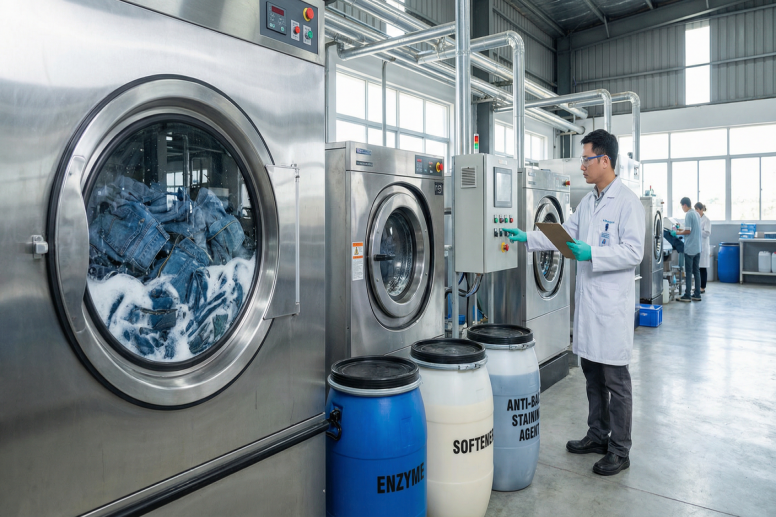
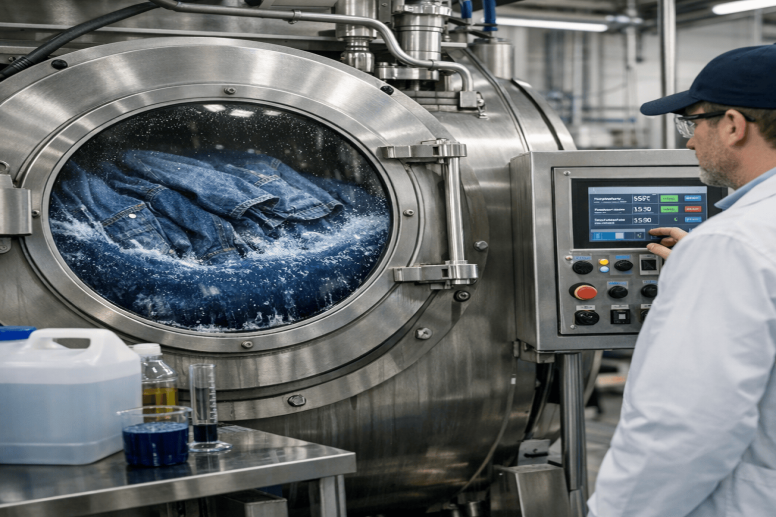
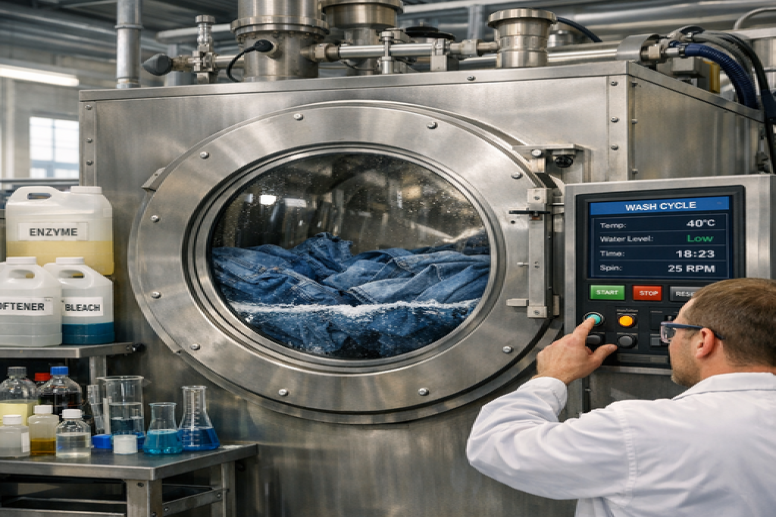
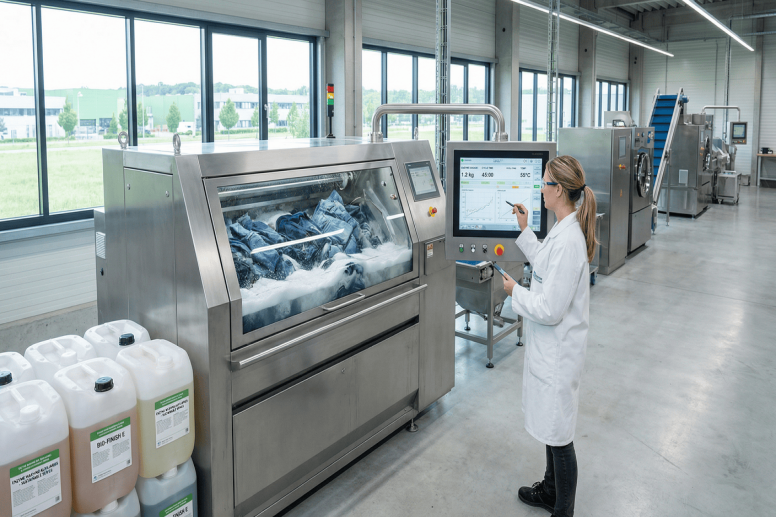
The enzyme wash process represents a key application of green chemistry in denim washing.
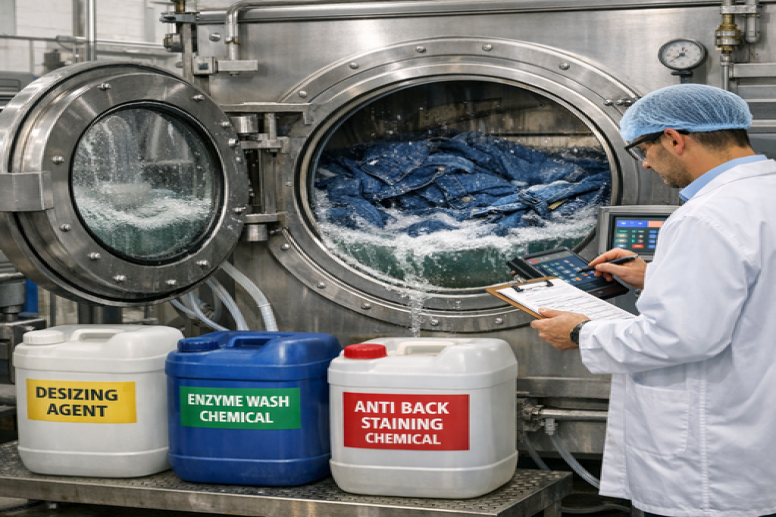
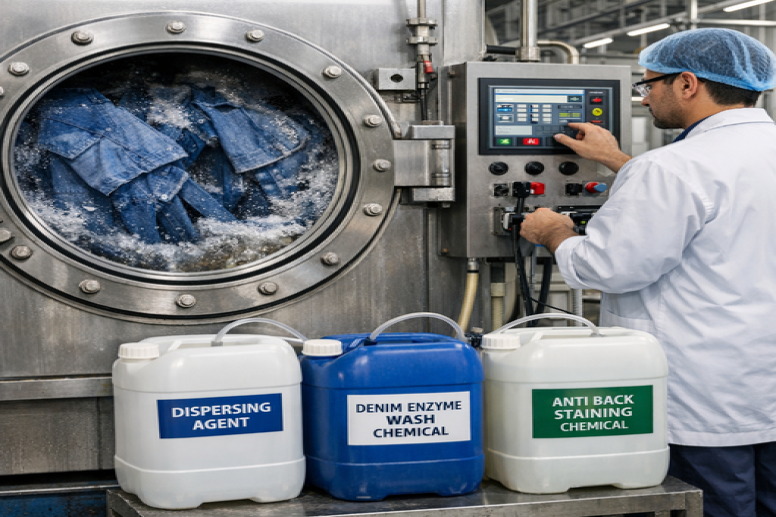
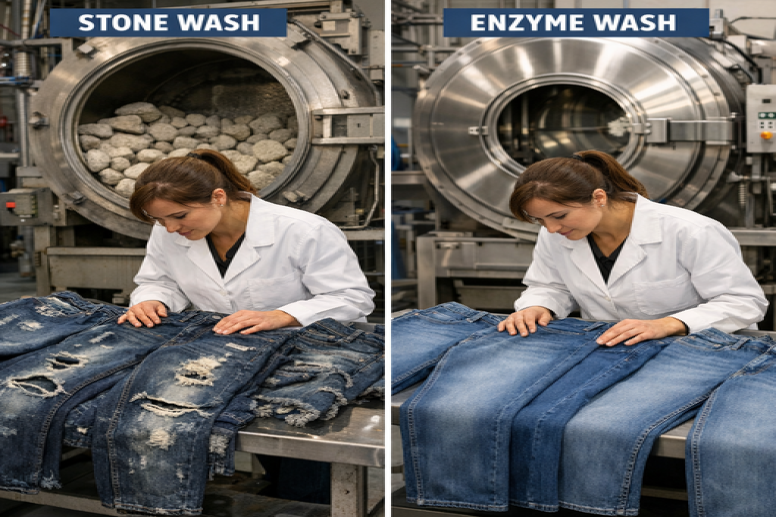
Cellulase enzymes perform fabric abrasion through biological reactions rather than mechanical friction. Enzymes break down small fiber fragments on the denim surface to create faded effects.
Advantages of enzyme washing include:
reduced fabric damage
lower solid waste compared with stone washing
improved control of fading effects
reduced energy consumption
These benefits help reduce denim washing defects during garment finishing.
Green Chemical Solutions in Denim Washing
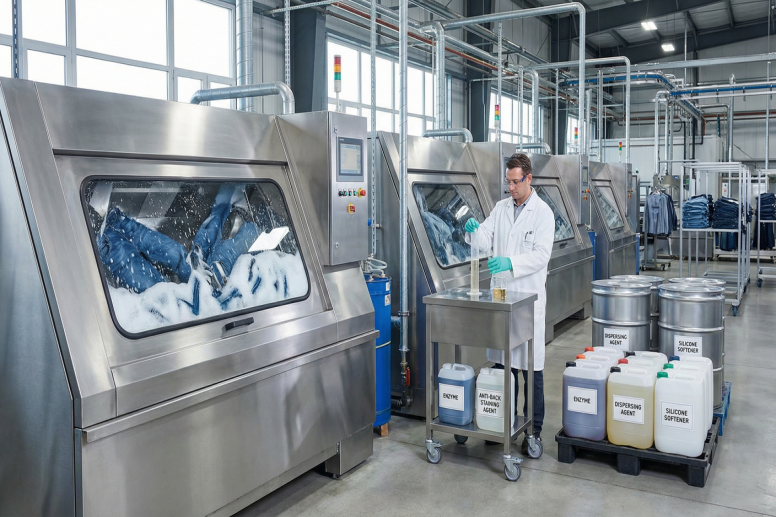
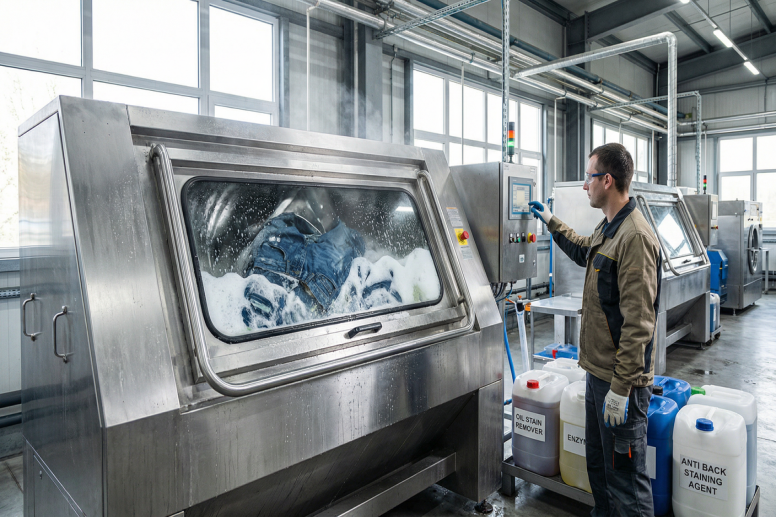
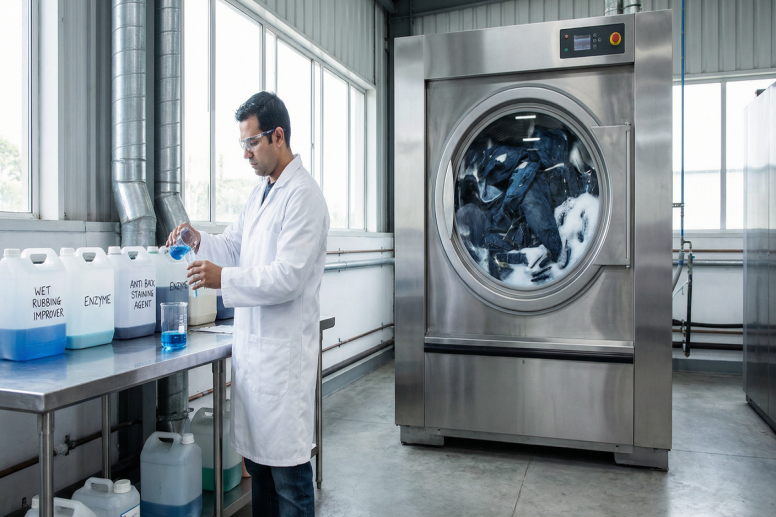
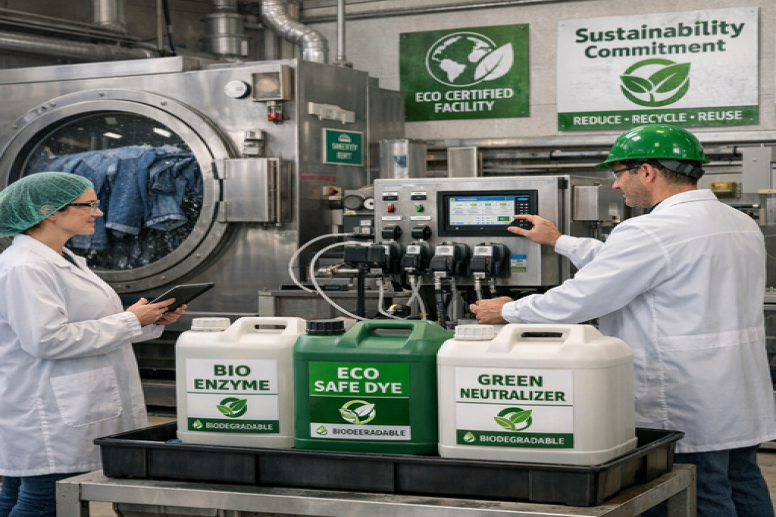
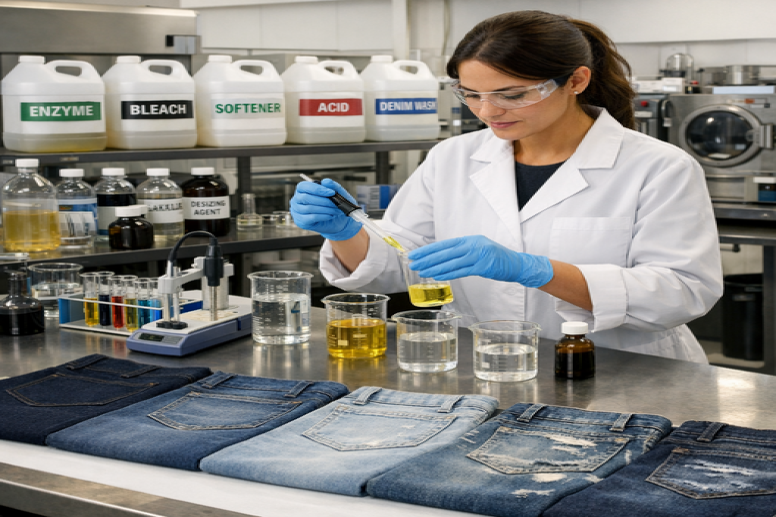
Several environmentally responsible chemical auxiliaries support sustainable denim garment processing.
Bio Based Enzymes
Cellulase enzymes replace mechanical stone washing and reduce waste generation.
Eco Friendly Detergents
Biodegradable detergents remove oils and impurities without producing harmful wastewater residues.
Dispersing Agents
Dispersing chemicals prevent indigo dye particles from redepositing on garments during washing.
Anti Back Staining Chemicals
These auxiliaries reduce indigo dye washing problems during enzyme washing treatments.
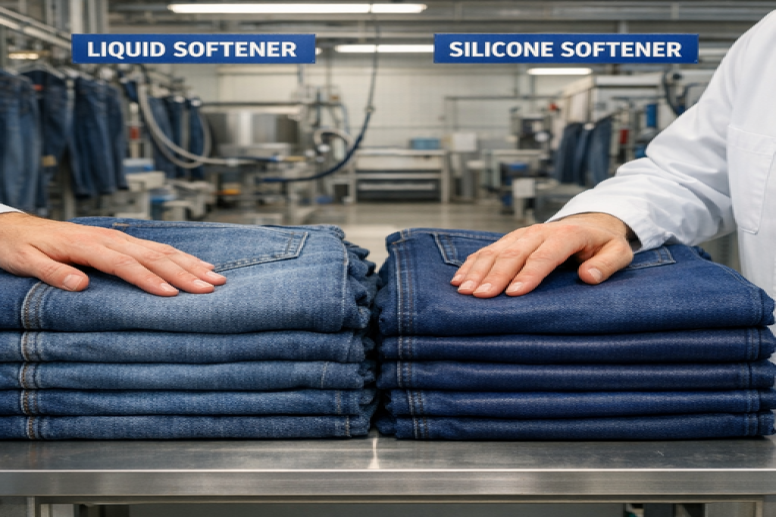
Sustainable Softeners
Modern softening agents improve fabric softness while meeting environmental compliance requirements.
Preventing Washing Problems with Green Chemistry
Green chemistry solutions also improve production quality in denim garment washing.
Proper chemical selection helps factories control:
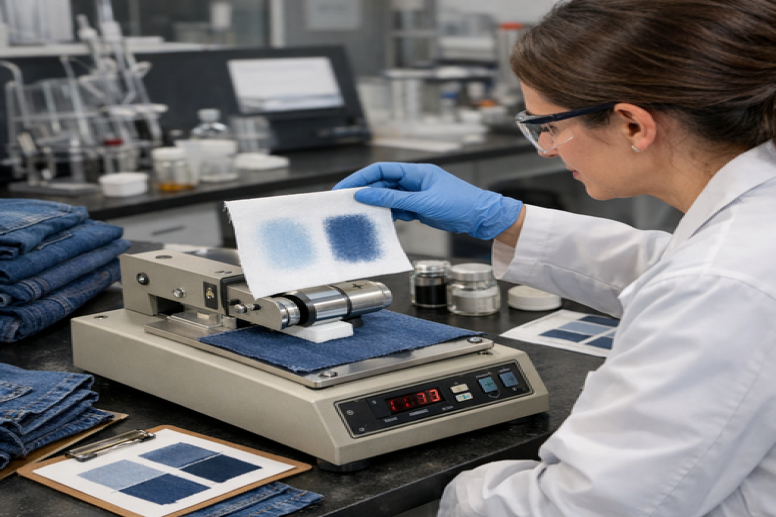
denim washing defects caused by dye redeposition
uneven fading during the enzyme wash process
indigo dye washing problems during washing cycles
staining on pocket lining and sewing threads
Consistent chemical quality improves washing stability and garment appearance.
Environmental Benefits for Washing Plants
Applying green chemistry principles provides important advantages for garment washing factories.
Key benefits include:
reduction of hazardous chemical discharge
improved wastewater treatment performance
reduced environmental pollution
improved worker safety in washing plants
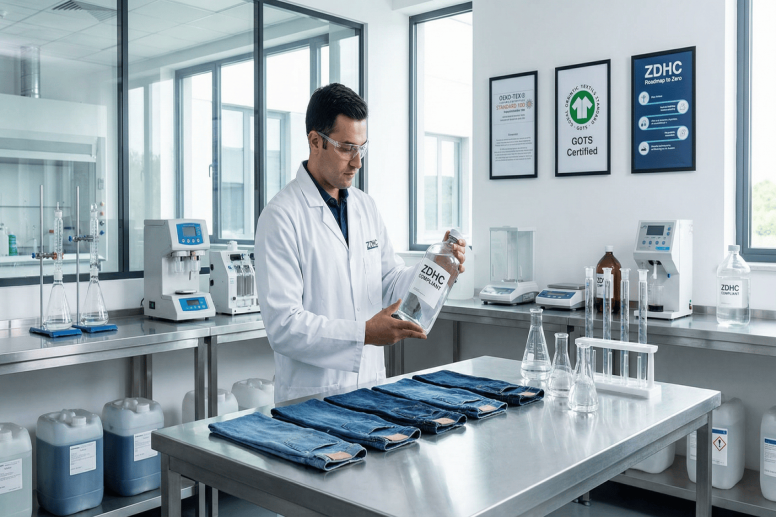
compliance with international sustainability standards
These improvements support responsible denim manufacturing.
Conclusion
Green chemistry plays a major role in modern denim garment processing. Safer chemical formulations and biological washing technologies help factories reduce environmental impact while maintaining garment quality.
Through the use of enzyme based washing systems and environmentally responsible auxiliaries, washing plants reduce denim washing defects and control indigo dye washing problems. Green chemistry practices support sustainable, efficient, and responsible denim production.