16 Mar
Indigo Dye Behavior During Washing in Denim Processing
Learn how indigo dye behaves during denim washing. Understand the enzyme wash process, dye movement in wash liquor, and solutions to common indigo dye washing problems.
Indigo Dye Behavior During Washing in Denim Processing
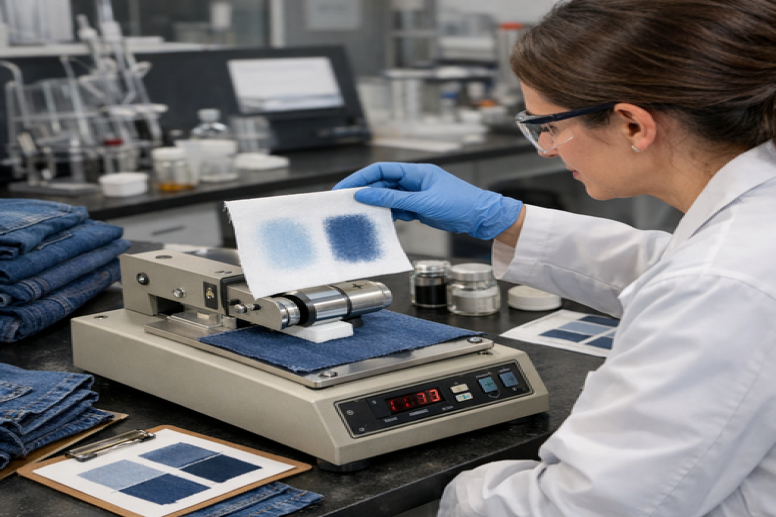
Indigo dye defines the characteristic blue color of denim fabric. During garment washing, this dye behaves differently compared with many other textile dyes. Indigo remains mainly on the surface of cotton fibers instead of penetrating deeply into the fiber structure.
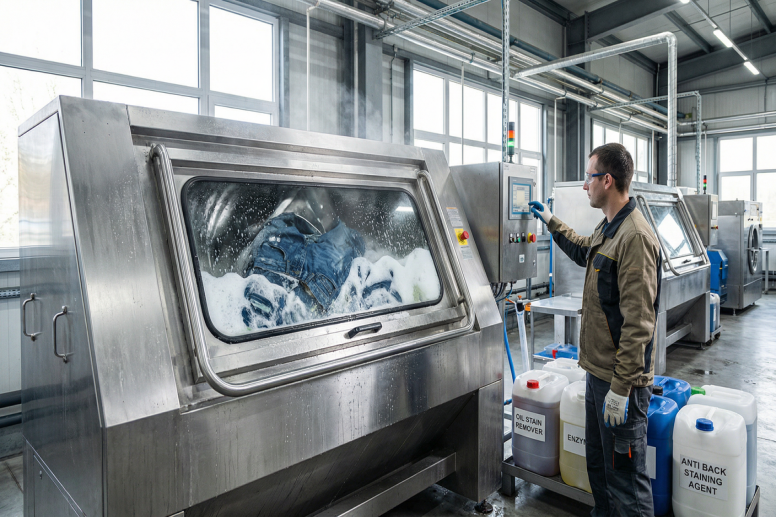
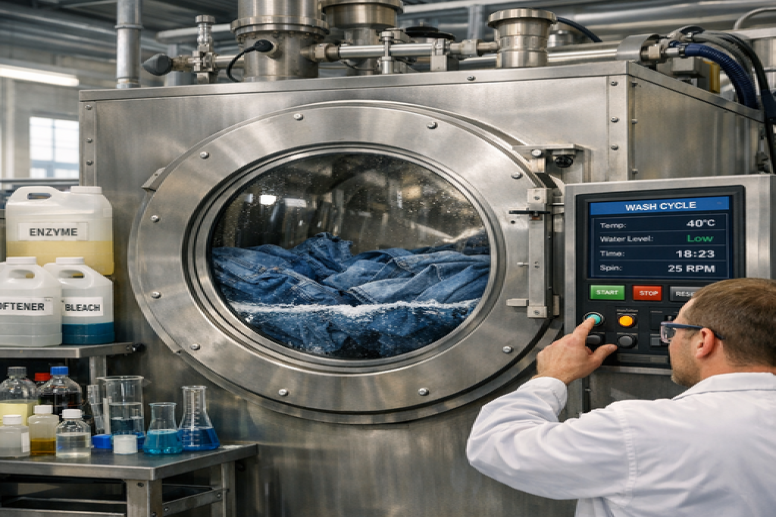
During garment washing treatments such as the enzyme wash process, indigo dye particles detach from the fiber surface and enter the washing liquor. This behavior creates the well known fading effects of denim garments. At the same time, uncontrolled dye release leads to several indigo dye washing problems and denim washing defects.
Understanding the behavior of indigo dye during washing helps garment washing factories control quality and produce consistent denim finishes. Characteristics of Indigo Dye in Denim Fabric
Indigo dye has unique chemical and physical properties which influence its behavior during washing.
Important characteristics include:
surface level dye attachment on cotton fibers
low penetration into the fiber core
gradual color loss during washing and abrasion
tendency to release dye particles into wash liquor
Because indigo mostly remains on the outer fiber layer, garment washing easily removes part of the dye to create fading effects.
Indigo Dye Behavior During Enzyme Washing
The enzyme wash process plays an important role in the fading of denim garments.
During enzyme washing:
cellulase enzymes break down small cellulose fibers on the fabric surface
weakened fibers detach from the fabric structure
indigo dyed fiber particles release into the washing liquor
mechanical agitation spreads dye particles in the washing bath
This controlled removal of dyed fibers produces the desired faded appearance on denim garments.
However, excessive dye release can create indigo dye washing problems if washing conditions are not properly controlled.
Indigo Dye Movement in Washing Liquor
Once indigo particles detach from the fabric surface, they disperse throughout the washing bath.
Dye particles can follow several paths during washing:
remain suspended in the wash liquor
redeposit on garment surface
stain pocket bags, sewing threads, or labels
settle on light colored areas of garments
This movement of dye particles often leads to common denim washing defects.
Common Indigo Dye Washing Problems
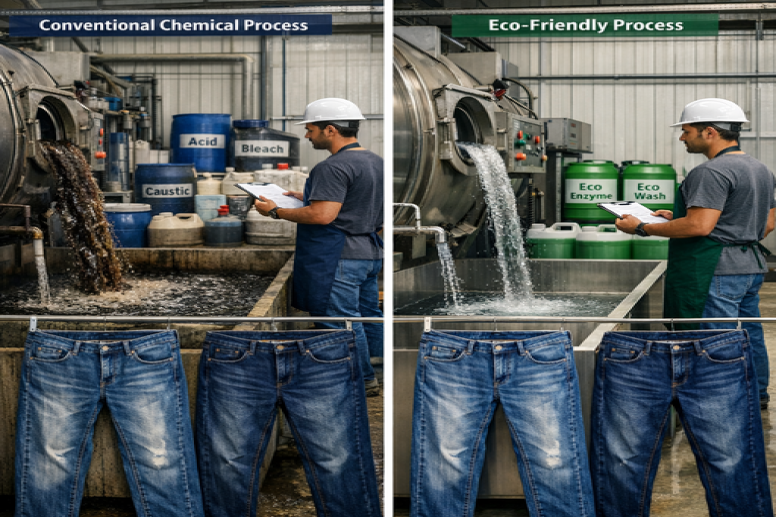
Improper control of indigo dye behavior leads to several production defects during denim processing.
Typical indigo dye washing problems include:
back staining on garment surface
staining of pocket bags and sewing threads
uneven fading across garments
excessive shade loss during washing
color bleeding during rinsing
These defects reduce garment quality and increase rejection rates in denim washing factories.
Controlling Indigo Dye Behavior During Washing
Garment washing factories apply several control methods to manage indigo dye behavior.
Important control measures include:
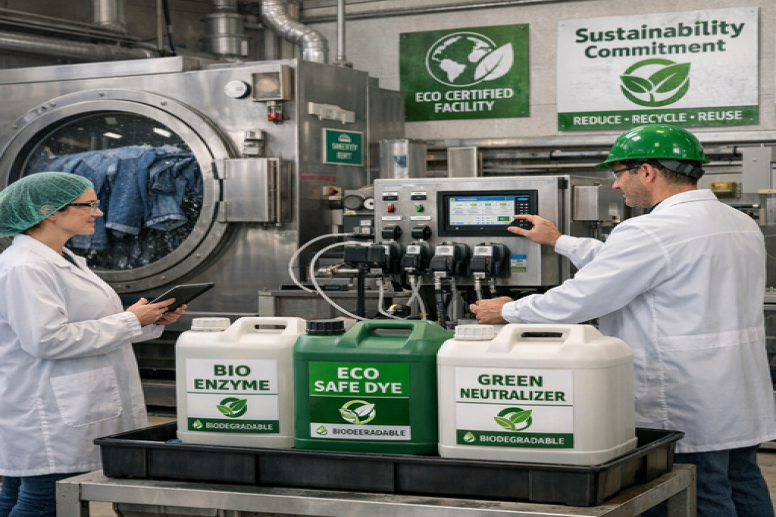
proper control of the enzyme wash process
optimized washing time and temperature
effective rinsing to remove loose dye particles
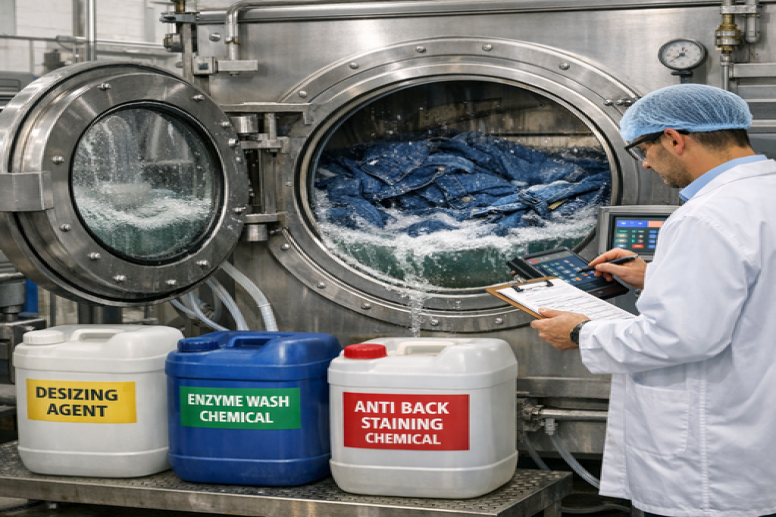
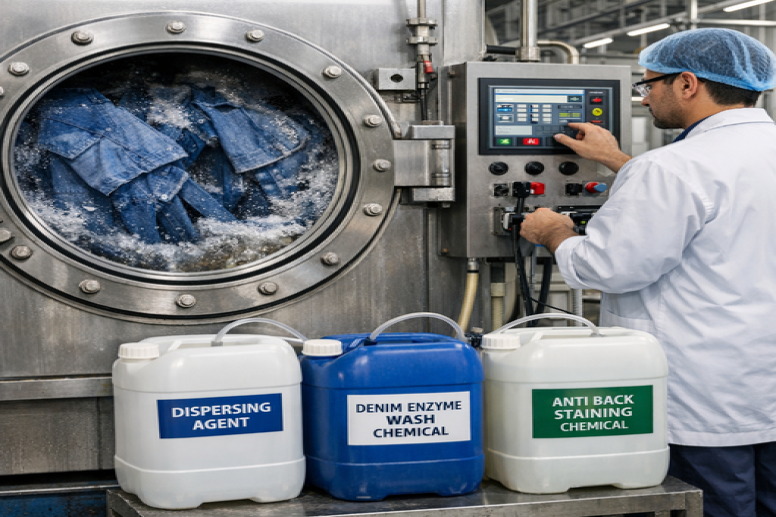
use of anti back staining chemicals
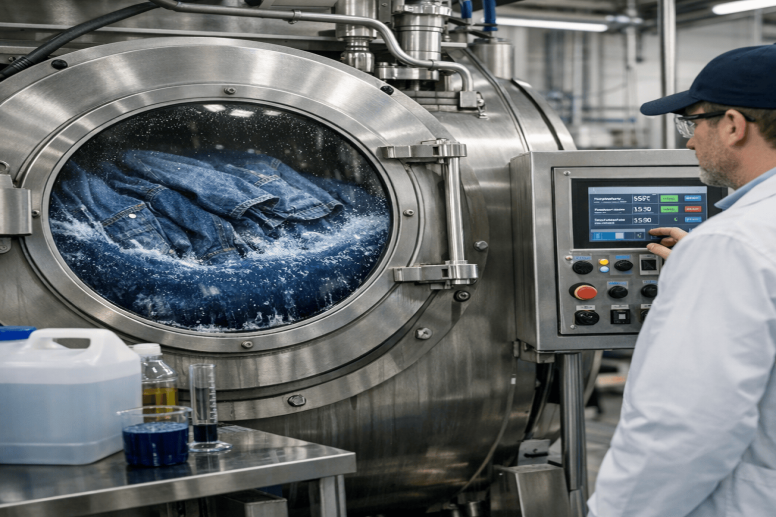
controlled mechanical agitation inside washing machines
These measures help stabilize the washing bath and prevent redeposition of indigo dye particles.
Benefits of Proper Indigo Dye Control
When indigo dye behavior is properly controlled during garment washing, manufacturers achieve several production advantages.
Key benefits include:
uniform fading across garments
reduction of denim washing defects
cleaner pocket bags and garment accessories
stable shade consistency
improved garment quality
Effective dye control improves production reliability and customer satisfaction.
Conclusion
Indigo dye behavior during washing plays a critical role in denim garment finishing. Because the dye remains mostly on the fiber surface, garment washing treatments easily release dye particles and create faded effects.
Proper management of the enzyme wash process and washing conditions helps garment washing factories control indigo dye washing problems and reduce denim washing defects. Understanding dye behavior allows manufacturers to achieve consistent fading results and maintain high garment quality.