18 Mar
Cost Comparison of Different Denim Washing Chemicals
Learn cost comparison of denim washing chemicals. Reduce cost per garment, control defects, and optimize garment washing auxiliaries.
Cost Comparison of Denim Washing Chemicals
Chemical cost drives profitability in denim washing. Many factories focus on price per kg, but real cost depends on dosage, efficiency, and rewash rate.
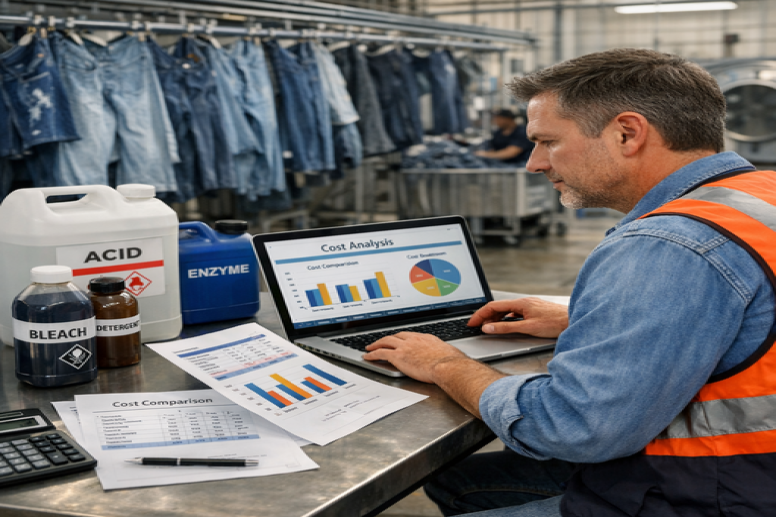
A structured cost comparison of denim washing chemicals helps decision makers reduce total processing cost while maintaining quality.
Why Cost Comparison Matters
Accurate evaluation helps you:
reduce cost per garment
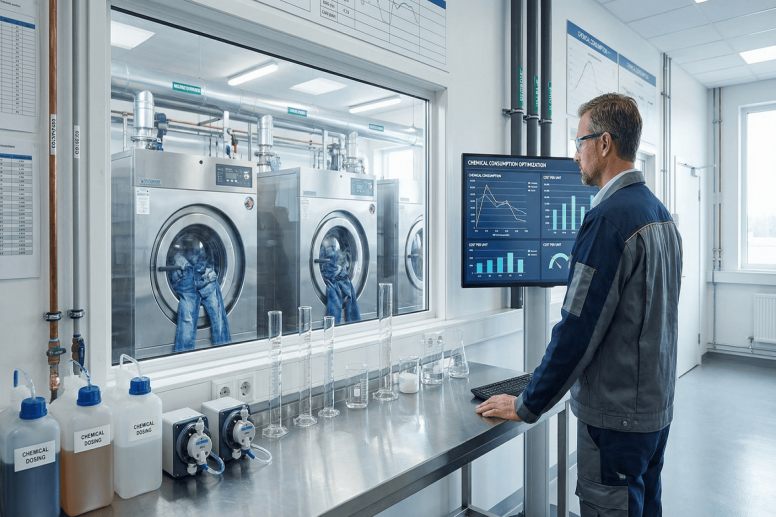
control chemical consumption
minimize rewash
improve process efficiency
maintain consistent quality
Wrong selection increases denim washing defects and raises overall production cost.
Key Cost Factors to Consider
1. Price per Kg
This is the basic comparison point.
lower price attracts buyers
does not reflect actual performance
must be combined with dosage data
Always avoid decisions based on price only.
2. Dosage Requirement
Dosage defines real consumption.
high dosage increases cost
low dosage products improve efficiency
compare grams per liter across suppliers
A higher price product with low dosage often reduces total cost.
3. Cost per Garment
This is the most important metric.
Formula
Cost per garment = (Dosage × Liquor ratio × Chemical price) ÷ Number of garments
Use this calculation for:
denim enzyme wash chemical
anti back staining chemical
denim softener chemical
all garment washing auxiliaries
This gives a clear cost comparison.
4. Rewash Cost Impact
Reprocessing increases total expense.
extra water consumption
additional chemicals
higher labor cost
production delay
Chemicals with stable performance reduce rewash rate and save cost.
5. Water and Energy Consumption
Some chemicals require more rinsing.
high rinsing increases water usage
longer process increases energy cost
inefficient detergents increase load
Optimized chemicals reduce utility cost.
6. Machine Efficiency
Chemical choice affects machine performance.
high foam reduces efficiency
poor dispersion increases cycle time
stable chemicals improve productivity
Better efficiency reduces cost per batch.
Cost Comparison by Chemical Type
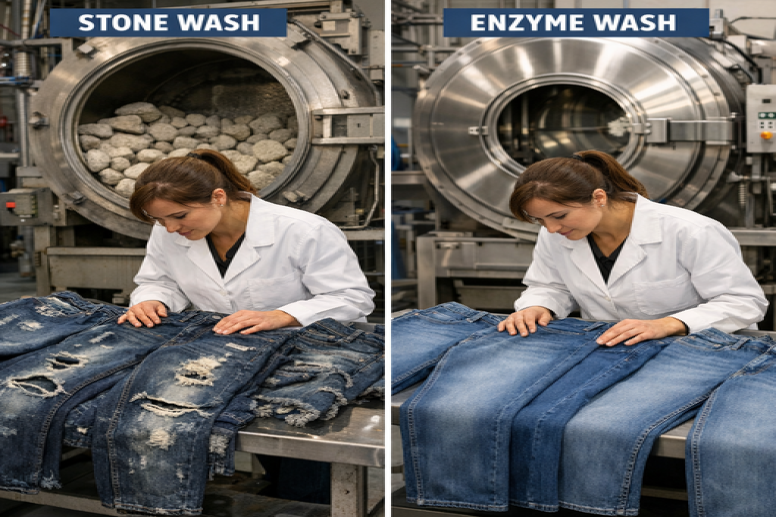
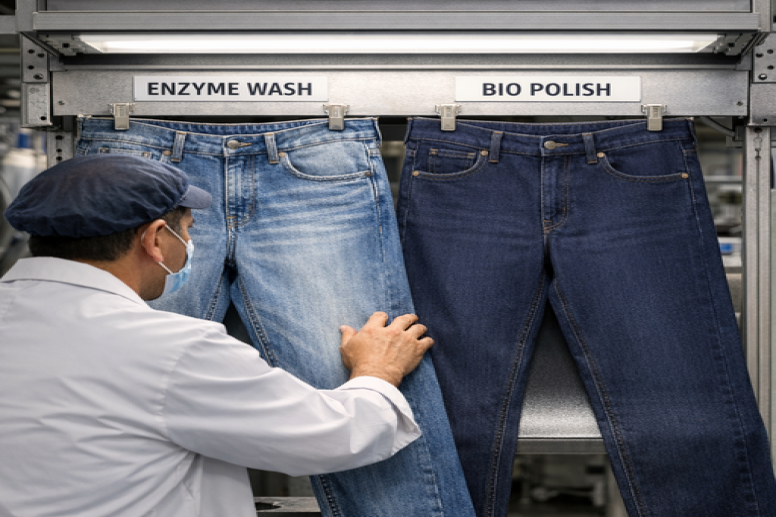
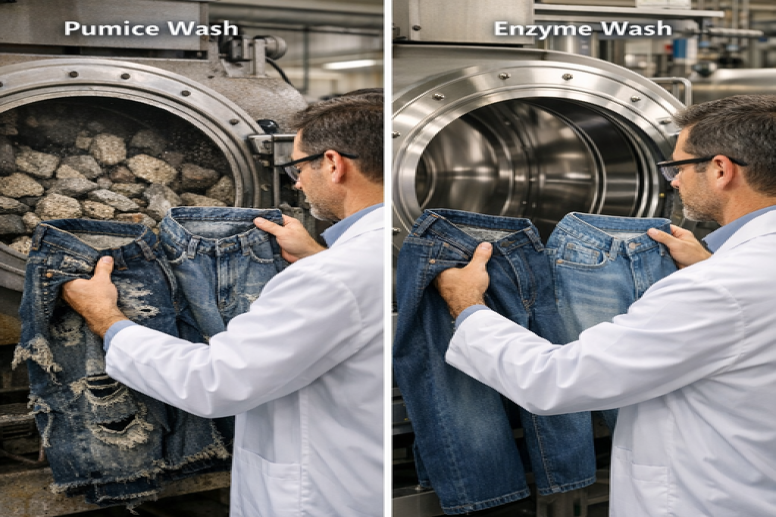
Denim Enzyme Wash Chemical
low cost enzymes require higher dosage
premium enzymes provide better control
stable enzymes reduce indigo dye washing problems
Higher quality enzymes often reduce total cost.
Anti Back Staining Chemical
low efficiency products cause redeposition
strong products improve wash clarity
better control reduces rewash
Effective anti back staining chemical lowers overall cost.
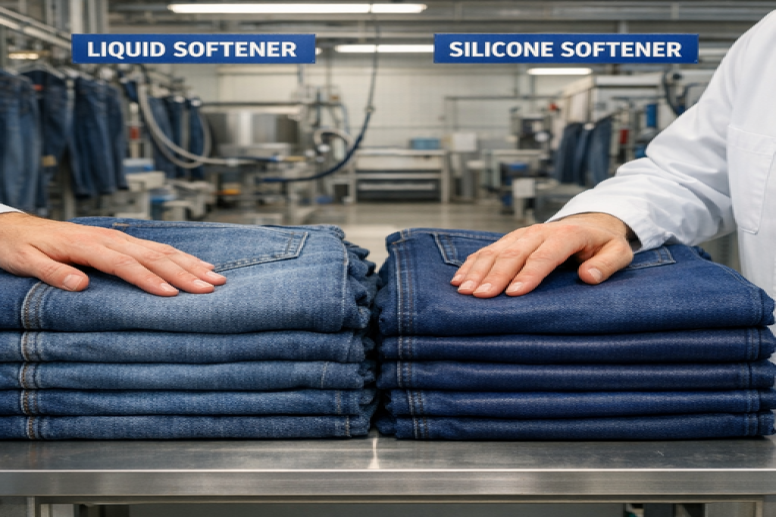
Denim Softener Chemical
low cost softeners give temporary effect
high performance softeners provide durable softness
stable softness reduces rejection rate
Durability improves cost efficiency.
Detergents and Dispersing Agents
weak detergents increase washing time
strong dispersing agents improve cleaning
efficient products reduce process steps
Optimized auxiliaries improve productivity.
Why Price Alone is Misleading: A Simple Explanation
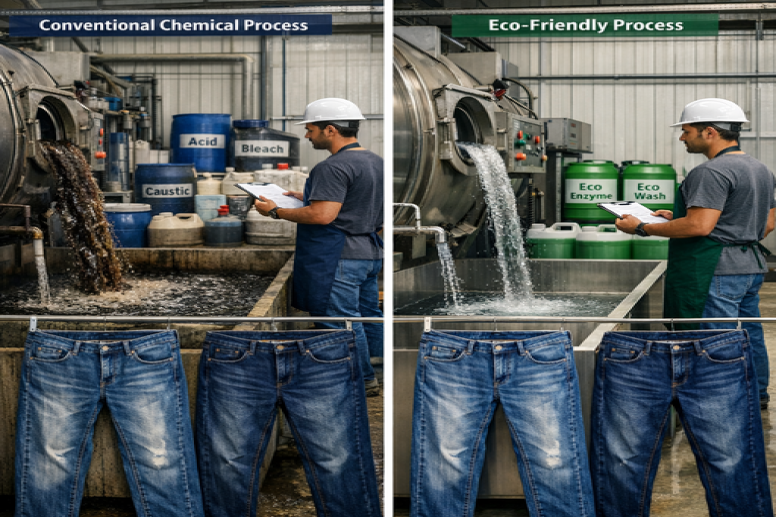
Focusing only on the price per kilogram of a chemical is misleading because it ignores two critical real-world factors: dosage and rewash rate. The low-cost chemical may seem cheaper upfront, but it requires a higher dosage per garment, which actually raises the cost per garment. Worse, it has a high rewash rate—meaning garments treated with it get dirty faster and need washing more often. This leads to repeated chemical use, driving up the total cost over time. In contrast, the high-performance chemical has a higher price per kg, but its low dosage keeps the cost per garment lower, and its low rewash rate means it lasts longer between washes. As a result, even though it costs more initially, it delivers a lower total cost in the long run. Smart decisions should always consider the full lifecycle cost—not just the sticker price.
Common Mistakes in Cost Evaluation
selecting lowest price supplier
ignoring dosage differences
not calculating cost per garment
skipping bulk trials
ignoring rewash impact
These mistakes increase denim washing defects and production cost.
Practical Tips for Decision Makers
always calculate cost per garment
compare multiple suppliers
run bulk production trials
monitor rewash percentage
track water and energy usage
Data based decisions improve profitability.
Conclusion
A proper cost comparison of denim washing chemicals must include dosage, efficiency, and rewash impact. Price per kg alone does not reflect true cost.
Decision makers who focus on total process cost achieve better quality, lower defects, and improved profitability. This approach reduces denim washing defects, stabilizes the enzyme wash process, and controls indigo dye washing problems.