16 Mar
How to Reduce Chemical Cost in Denim Washing
Learn practical methods to reduce chemical cost in denim washing. Optimize the enzyme wash process and prevent denim washing defects and indigo dye washing problems.
How to Reduce Chemical Cost in Denim Washing
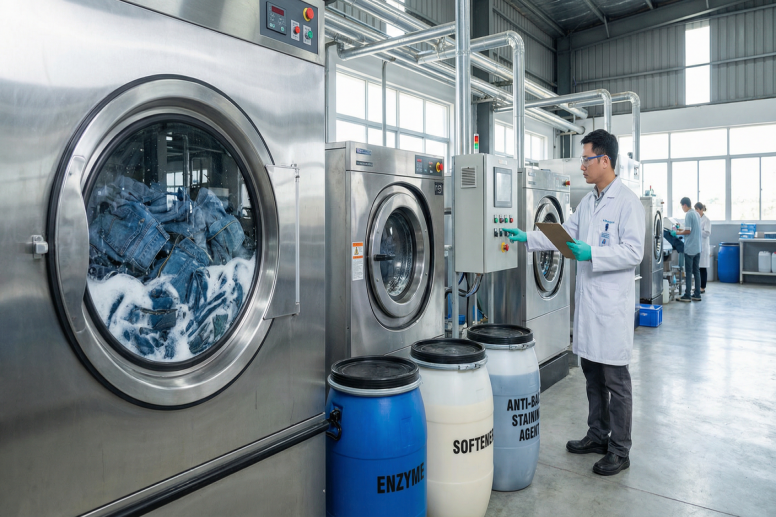
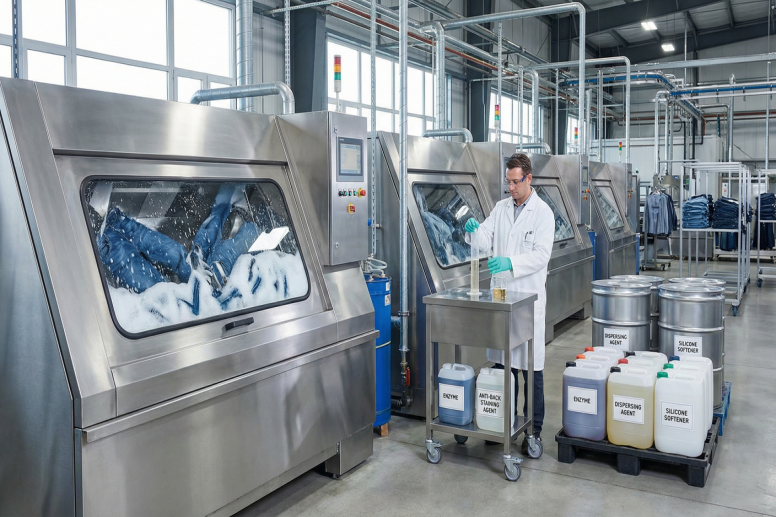
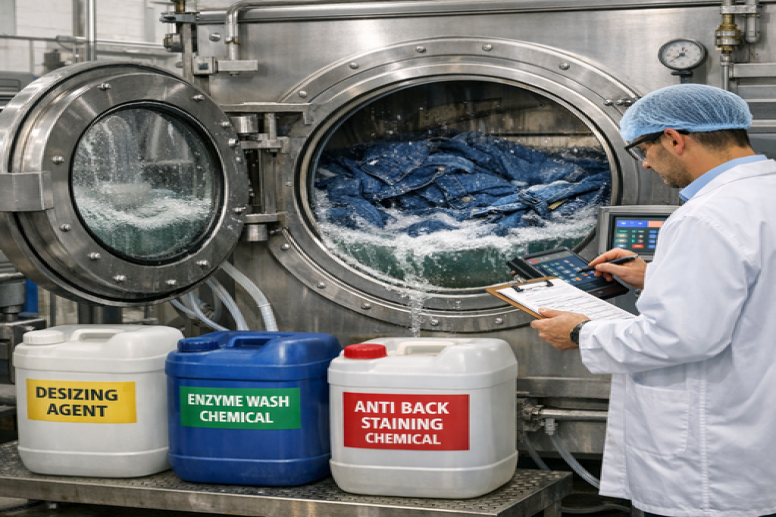
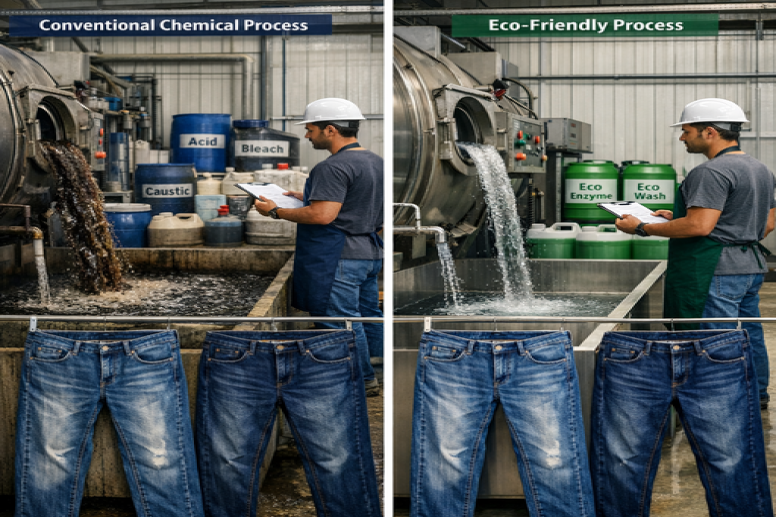
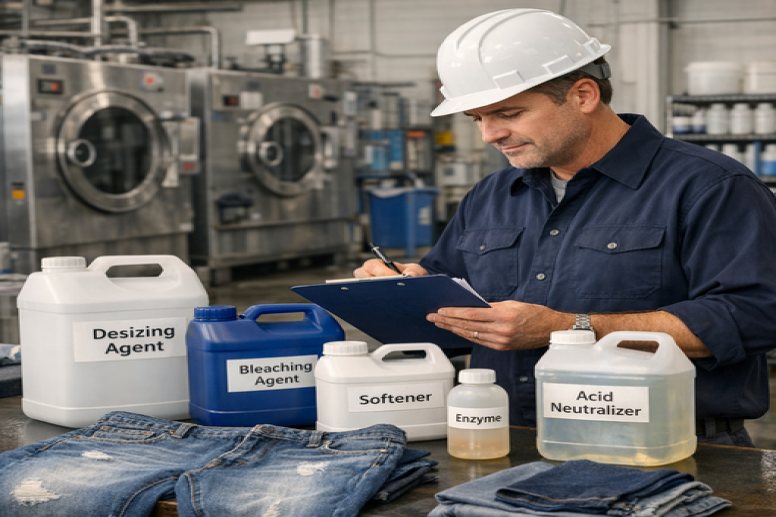
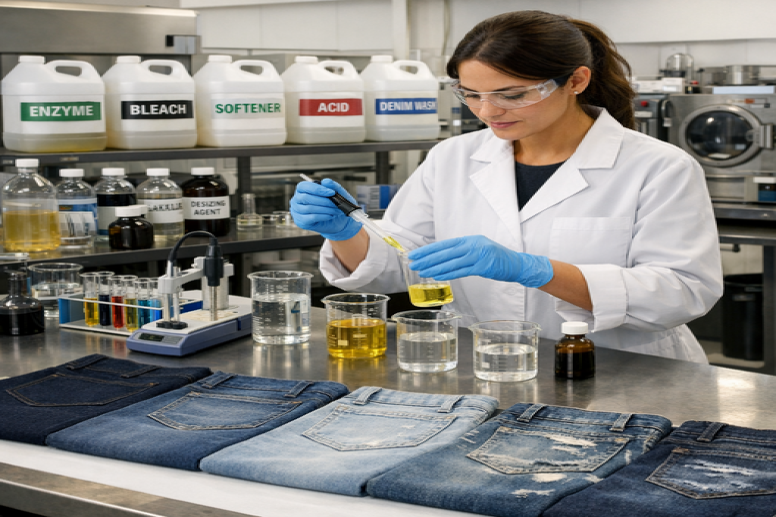
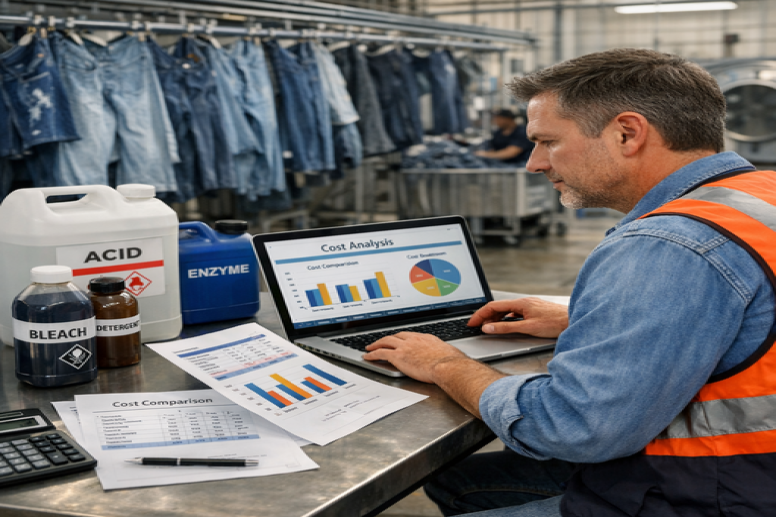
Chemical cost represents a major portion of denim garment washing expenses. Washing plants use detergents, enzymes, dispersing agents, softeners, and other auxiliaries during processing.
Without proper control, chemical overuse increases production cost and creates inconsistent washing results. Production managers must optimize chemical usage while maintaining garment quality.
Efficient chemical management reduces operating cost and prevents denim washing defects during garment washing.
Identify Major Chemical Consumption Areas
The first step involves identifying stages with high chemical usage.
Typical high consumption areas include:
desizing treatment
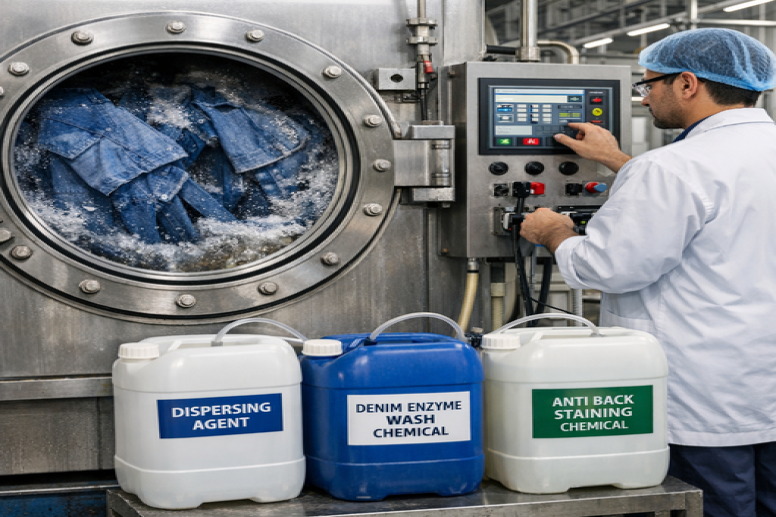
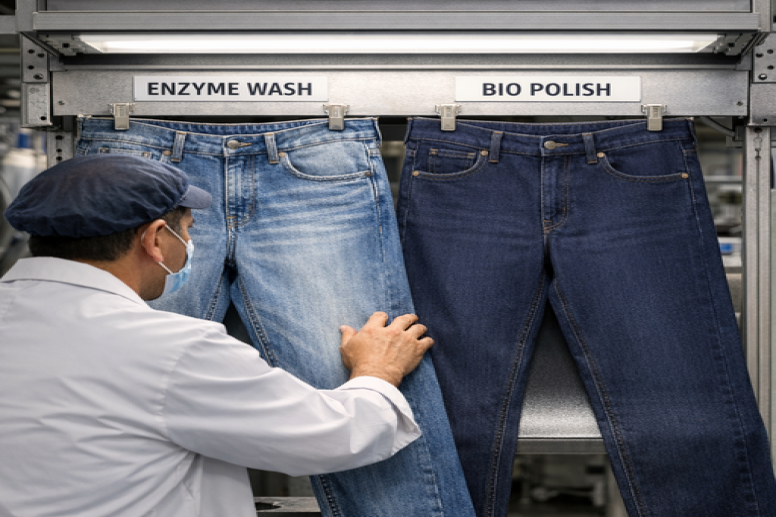
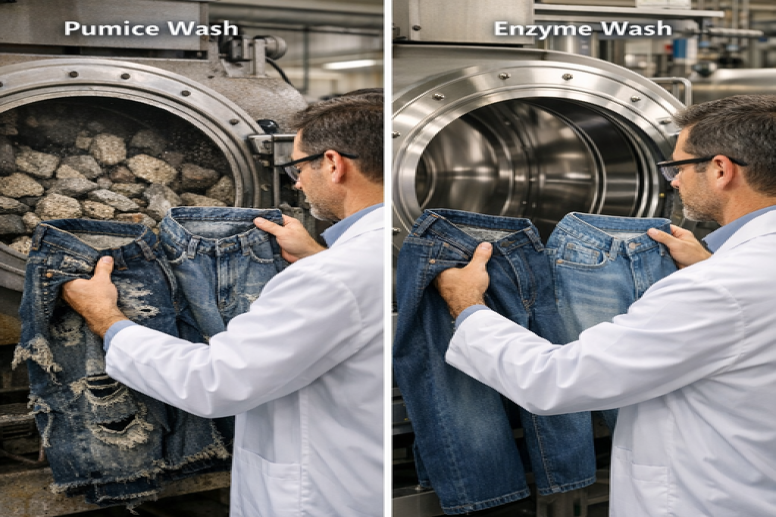
the enzyme wash process
bleaching treatment
anti back staining chemicals
softening treatment
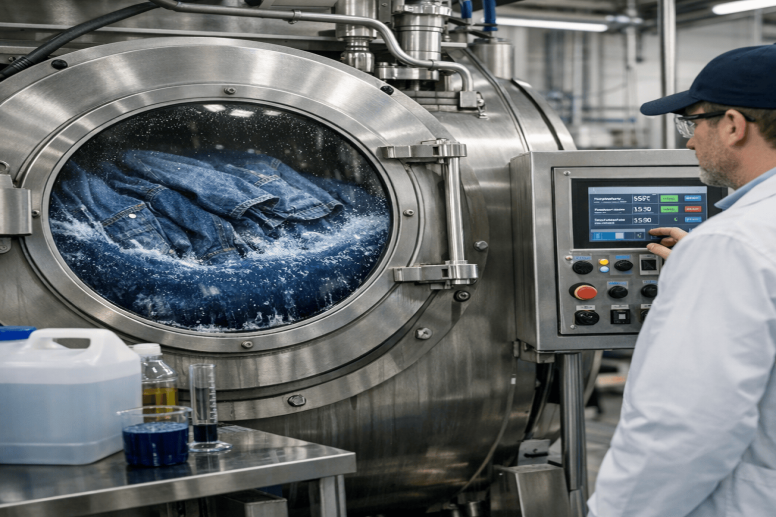
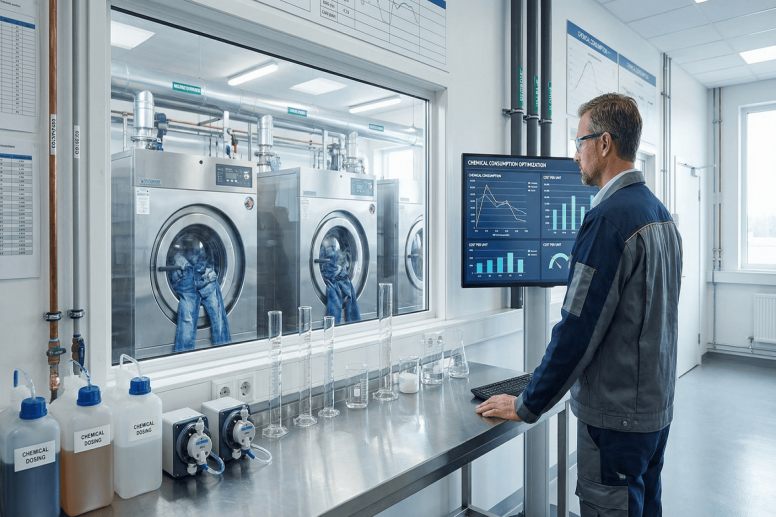
Production managers must monitor chemical dosing in each stage to avoid excessive usage.
Optimize the Enzyme Wash Process
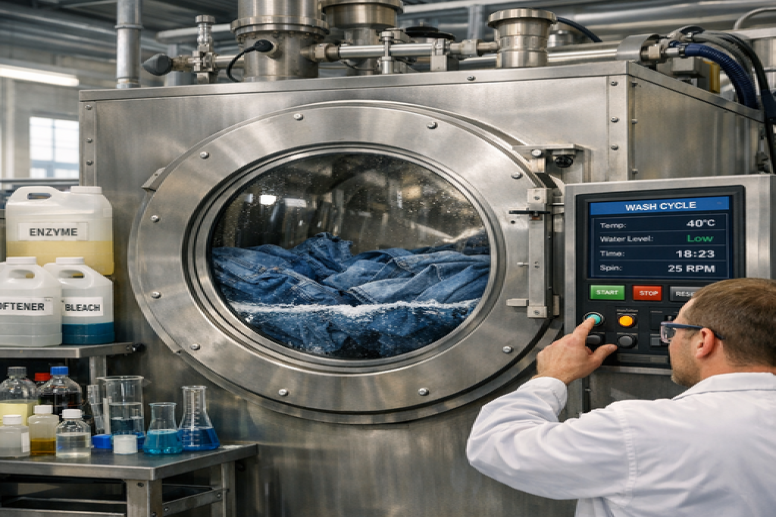
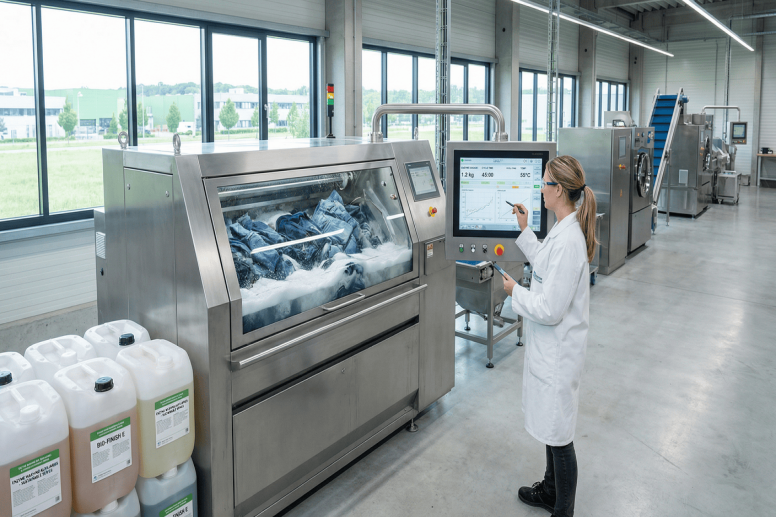
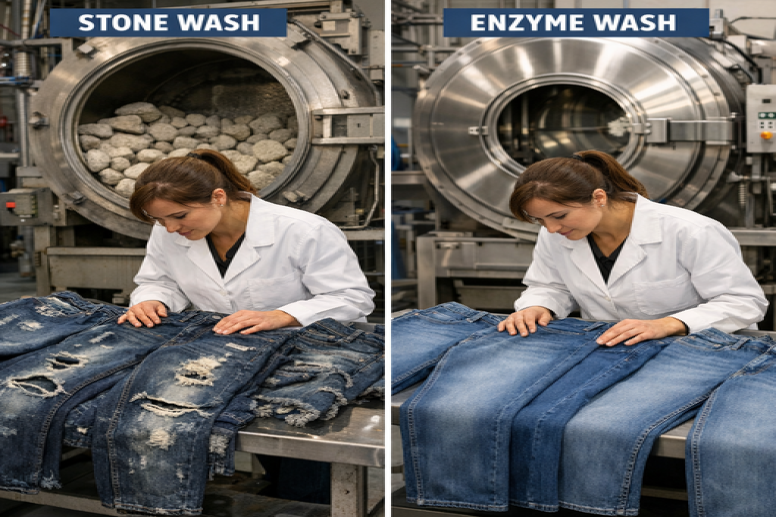
The enzyme wash process represents one of the most important chemical treatments in denim washing. Incorrect dosing increases cost and causes excessive fiber damage.
Effective optimization methods include:
accurate enzyme dosage based on garment weight
controlled washing temperature
proper washing time management
correct liquor ratio
Efficient enzyme control reduces chemical consumption while preventing indigo dye washing problems.
Use High Efficiency Textile Auxiliaries
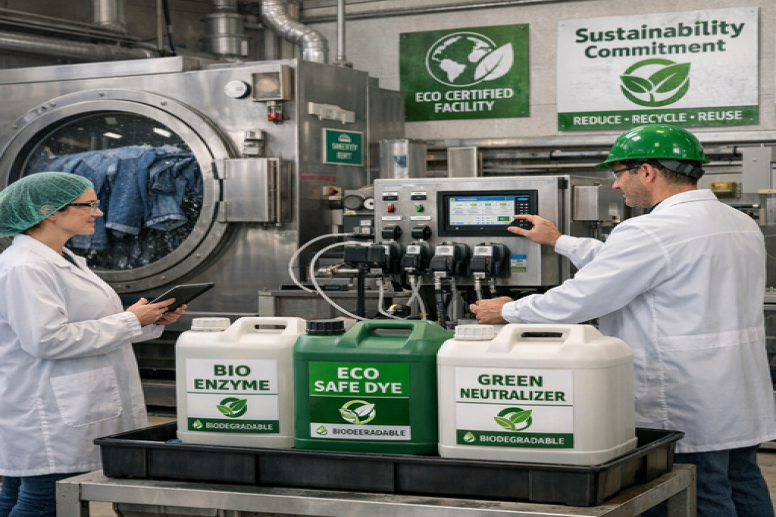
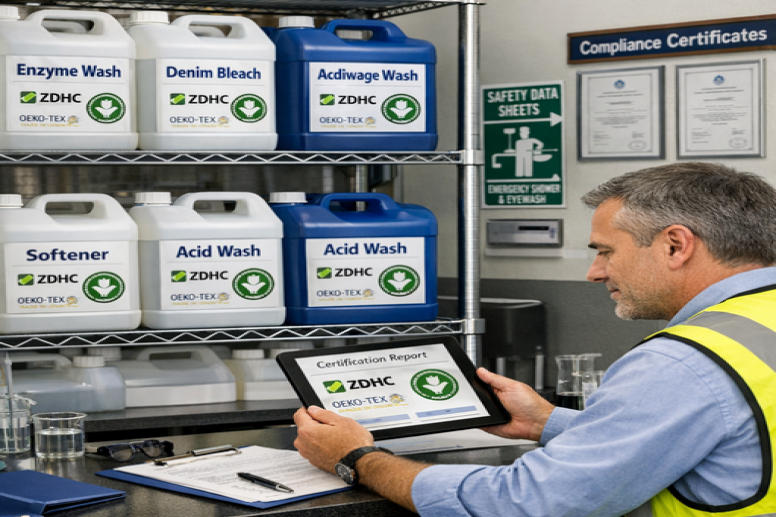
Modern textile auxiliaries provide stronger performance at lower dosage levels.
Advantages of high efficiency chemicals include:
reduced chemical consumption per batch
improved washing performance
stable fading results
lower risk of denim washing defects
Selecting concentrated formulations improves cost efficiency in garment washing plants.
Maintain Correct Liquor Ratio
Liquor ratio influences chemical concentration in washing baths. High water levels dilute chemicals and increase chemical demand.
Production managers improve efficiency by maintaining optimized liquor ratios during washing.
Benefits include:
improved chemical reaction efficiency
lower chemical dosage requirement
reduced water and energy consumption
Proper liquor management also stabilizes the enzyme wash process.
Prevent Indigo Dye Washing Problems
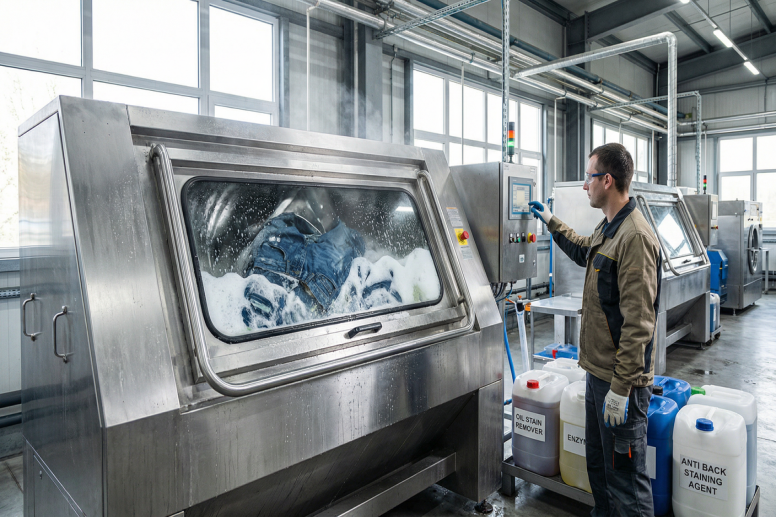
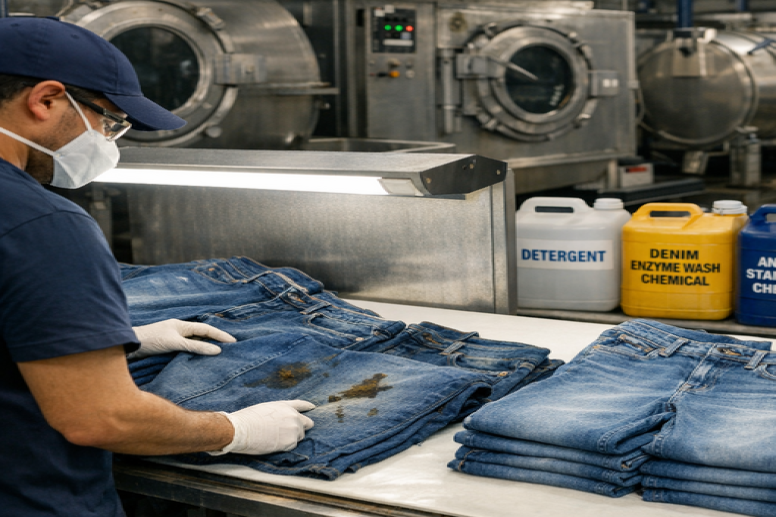
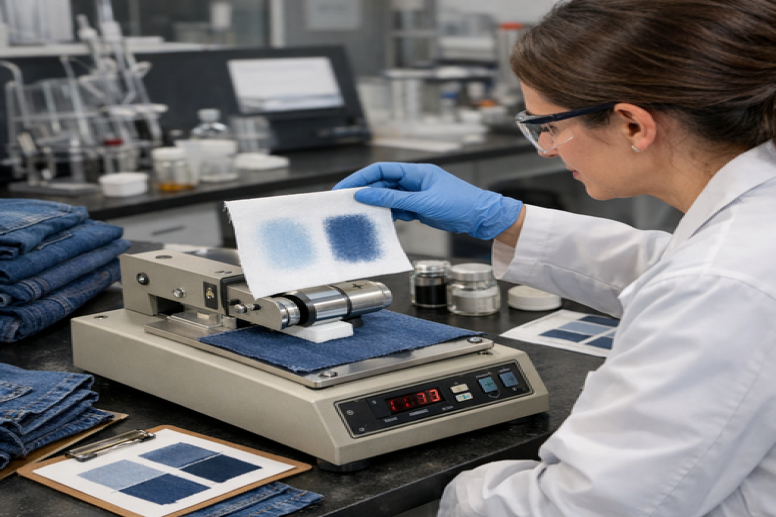
Indigo dye particles released during washing often cause back staining and uneven shade problems. Factories sometimes increase chemical dosage to correct these issues.
Correct process control reduces unnecessary chemical use.
Important preventive methods include:
proper dispersing agent usage
correct anti back staining chemical dosing
adequate rinsing cycles after washing
These practices reduce indigo dye washing problems and improve garment quality.
Train Washing Plant Operators
Operator training plays a key role in chemical cost control.
Trained technicians maintain correct chemical dosing and follow standard washing procedures.
Training programs should focus on:
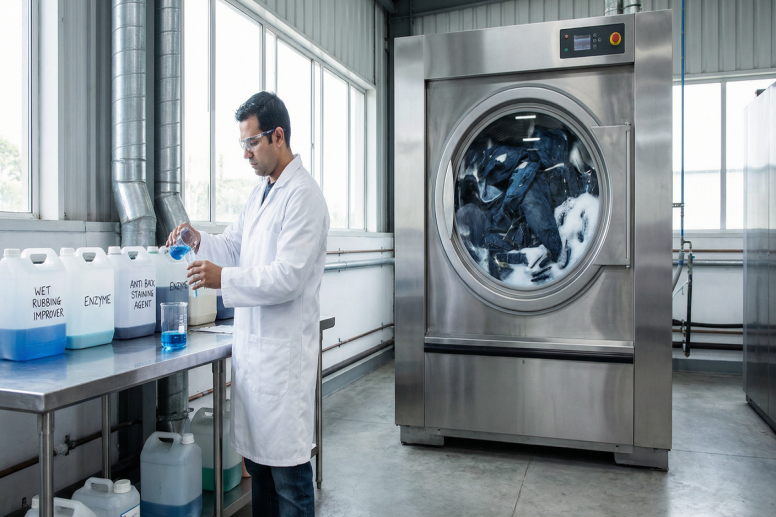
accurate chemical measurement
process monitoring during washing
quality inspection after washing
Improved technical knowledge reduces mistakes and prevents chemical waste.
Benefits of Chemical Cost Optimization
Efficient chemical management provides several operational advantages for denim washing plants.
Key benefits include:
reduced production cost
improved washing consistency
fewer denim washing defects
improved process efficiency
higher profit margin for washing factories
Production managers gain better control over garment processing performance.
Conclusion
Chemical optimization represents an important strategy for improving efficiency in denim garment washing. By controlling the enzyme wash process, selecting efficient auxiliaries, and maintaining correct washing parameters, factories reduce chemical consumption without affecting garment quality.
Effective process management prevents indigo dye washing problems and reduces denim washing defects while lowering operating cost in garment washing plants.