12 Mar
Dispersing Agents in Denim Washing: Function, Benefits, and Application
Learn how dispersing agents work in denim washing. Complete guide covering functions, benefits, and application of dispersing agents for uniform shade and defect-free garment washing.
Dispersing Agents in Denim Washing: Functions and Benefits
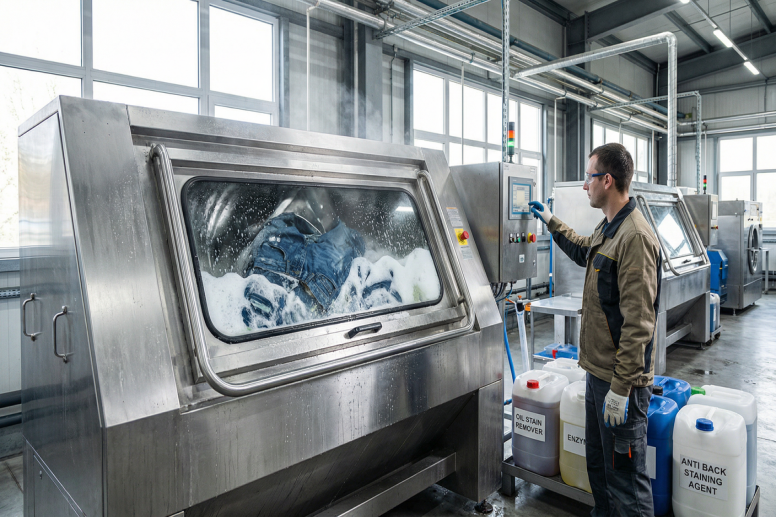
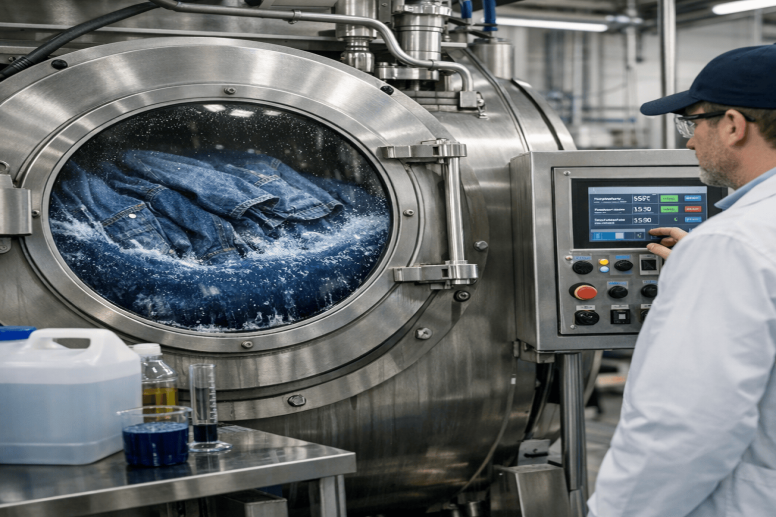
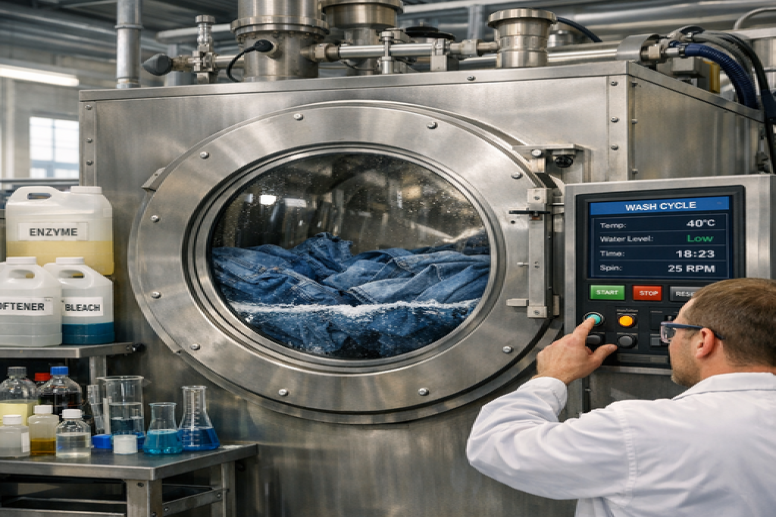
Denim washing involves indigo dye removal, enzyme treatments, and multiple wet processing stages. During these processes, loose dye particles can agglomerate and redeposit on garments, causing uneven shade or back staining. Dispersing agents in denim washing prevent these issues by keeping dye particles suspended in wash liquor.
These auxiliaries are essential for consistent shade development, clean garment appearance, and smooth washing performance in denim washing plants.
What Are Dispersing Agents
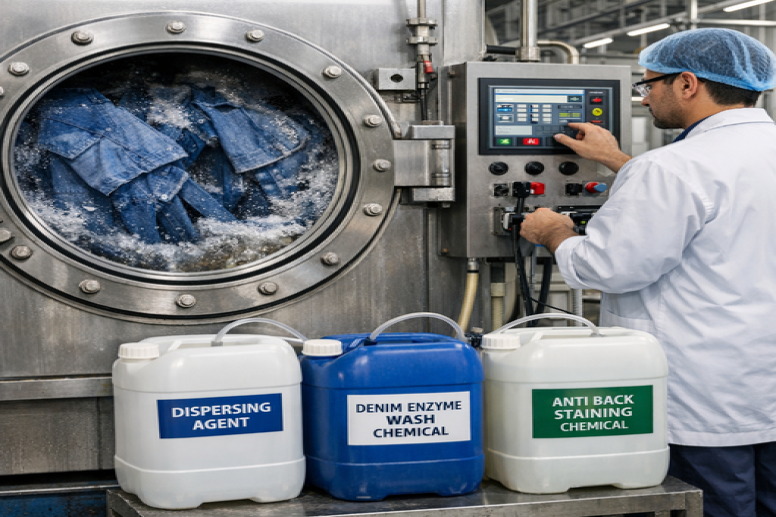
Dispersing agents are specialized chemicals used in textile wet processing to stabilize dye particles in wash liquor. They prevent the aggregation of loose indigo particles, ensuring uniform washing results and protecting fabric surface.
Primary functions include:
suspension of indigo dye particles
prevention of dye aggregation
reduction of back staining
improvement of washing uniformity
Dispersing agents are commonly applied during enzyme and bleaching stages of denim washing.
Role of Dispersing Agents in Denim Washing
Dispersing agents play several key roles:
Dye Particle Suspension
They keep indigo and other dye particles suspended in wash liquor, preventing them from settling or attaching to garment surfaces.
Shade Consistency
By preventing dye aggregation and redeposition, dispersing agents help maintain uniform fading and desired fashion effects.
Compatibility
These chemicals work effectively with enzymes, anti back staining agents, bleaching agents, and softeners without affecting their performance.
Washing Efficiency
Dispersing agents reduce the risk of staining, rewash, and defective garments, improving overall production efficiency.
Benefits of Using Dispersing Agents
Denim washing plants gain several advantages from proper dispersing agent application:
uniform shade across garments
prevention of back staining
reduced garment rejection and reprocessing
improved wash quality and consistency
higher productivity in washing operations
Factories achieve better production control and consistent output with these auxiliaries.
Application in Denim Washing Process
Dispersing agents are typically added during enzyme washing or bleaching stages.
Typical process sequence:
Desizing
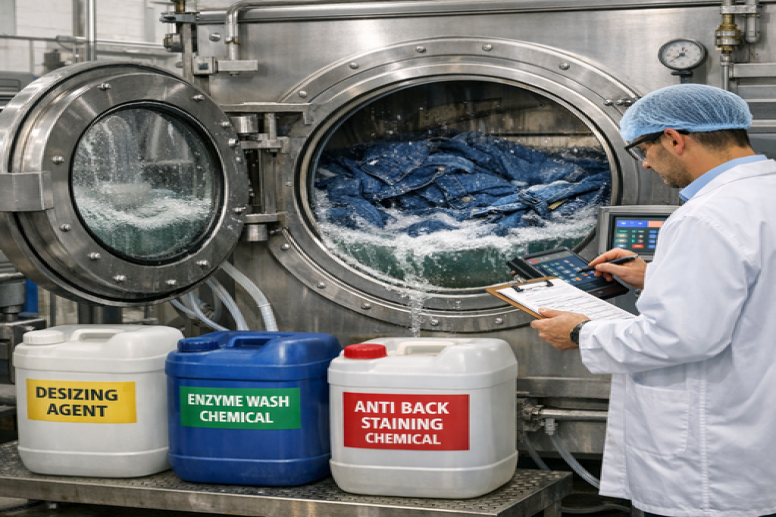
Enzyme washing with anti back staining agent and dispersing agent
Rinsing
Bleaching if required
Neutralization
Softening
Proper dosage and even distribution in wash liquor ensure effective chemical performance.
Common Problems Without Dispersing Agents
Without dispersing agents, denim washing plants may face:
uneven shade development
dye aggregation and staining
higher garment rejection
inconsistent enzyme wash results
additional reprocessing costs
Optimized chemical programs prevent these issues and improve garment quality.
Conclusion
Dispersing agents in denim washing are essential for maintaining uniform shade, preventing back staining, and stabilizing dye particles in wash liquor.
Garment washing factories achieve consistent and high-quality denim finishes by combining dispersing agents with other auxiliaries such as enzymes, anti back staining chemicals, wet rubbing improvers, and softeners. Proper application improves production efficiency, reduces defects, and ensures premium denim quality.