16 Mar
Sustainable Enzyme Washing Technology in Denim Garment Processing
Learn about sustainable enzyme washing technology in denim processing. Improve the enzyme wash process and reduce denim washing defects and indigo dye washing problems.
Sustainable Enzyme Washing Technology in Denim Processing
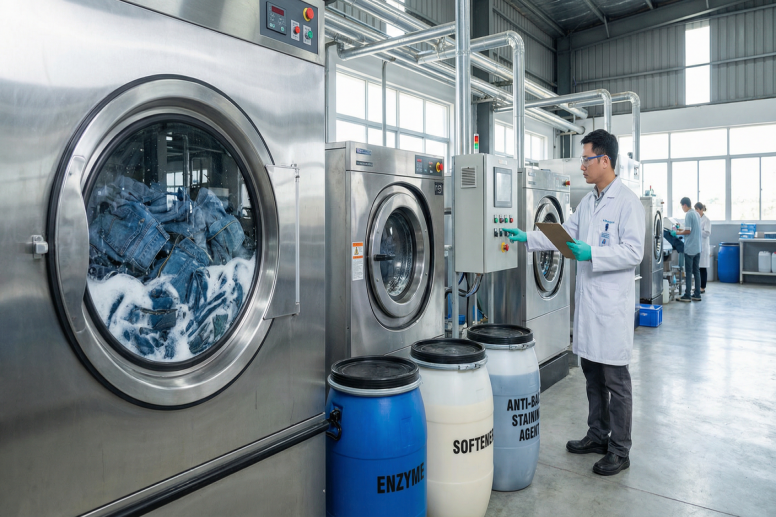
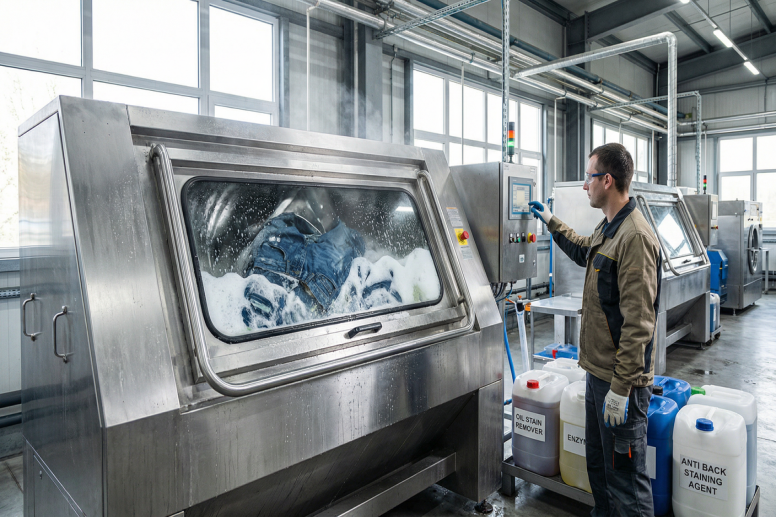
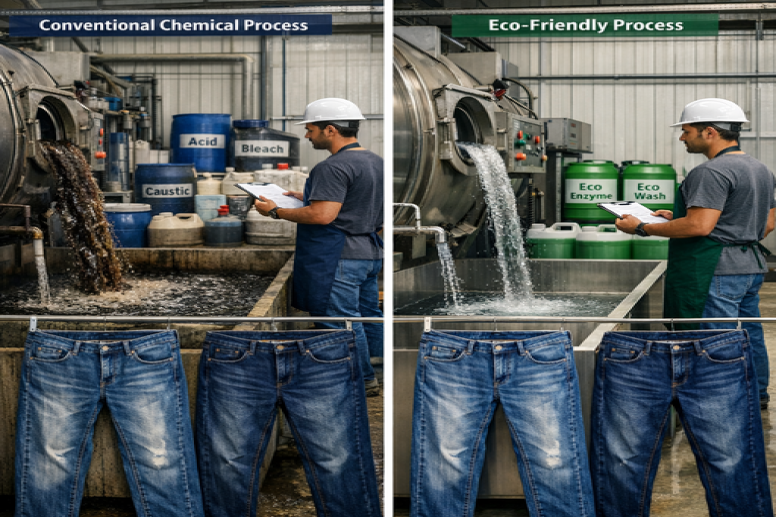
Denim garment washing creates fashionable fading effects and improves fabric softness. Traditional washing techniques often require large amounts of water, chemicals, and mechanical action. These practices increase environmental impact and production cost.
Sustainable enzyme washing technology provides an efficient alternative for modern denim processing. Enzyme based treatments reduce mechanical damage, lower resource consumption, and maintain garment quality while controlling denim washing defects.
What Is Enzyme Washing in Denim
The enzyme wash process uses cellulase enzymes to modify the surface of cotton fibers in denim fabric. These biological catalysts break down small fiber fragments from the fabric surface.
This controlled fiber removal creates the faded appearance commonly seen in denim garments.
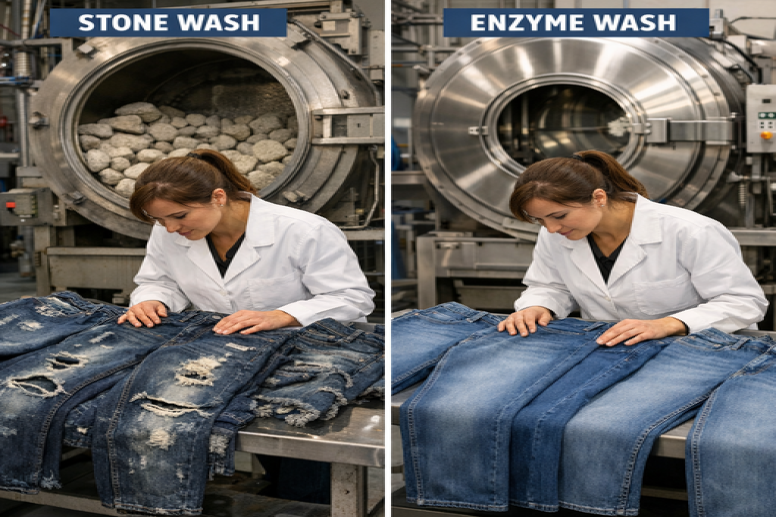
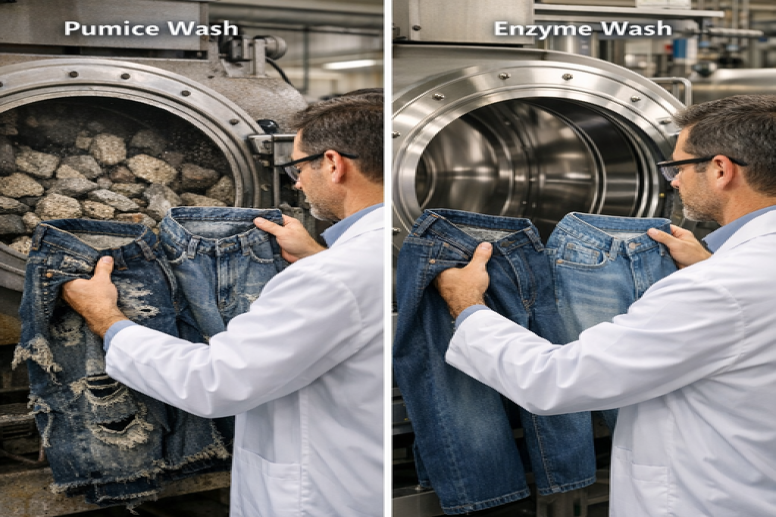
Unlike mechanical stone washing, enzyme washing performs the fading effect through biochemical reactions rather than physical abrasion.
Advantages of Sustainable Enzyme Washing
Modern enzyme technology improves both environmental performance and production efficiency in garment washing factories.
Major advantages include:
reduced mechanical damage to garments
lower water consumption compared with traditional methods
reduced pumice stone waste in washing plants
improved fabric softness and handle
better control of washing effects
These improvements help reduce denim washing defects during garment finishing.
Process Steps in Enzyme Washing
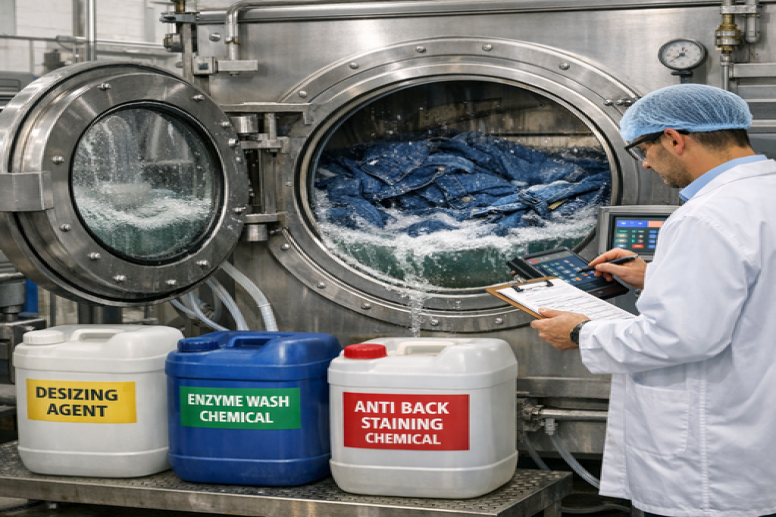
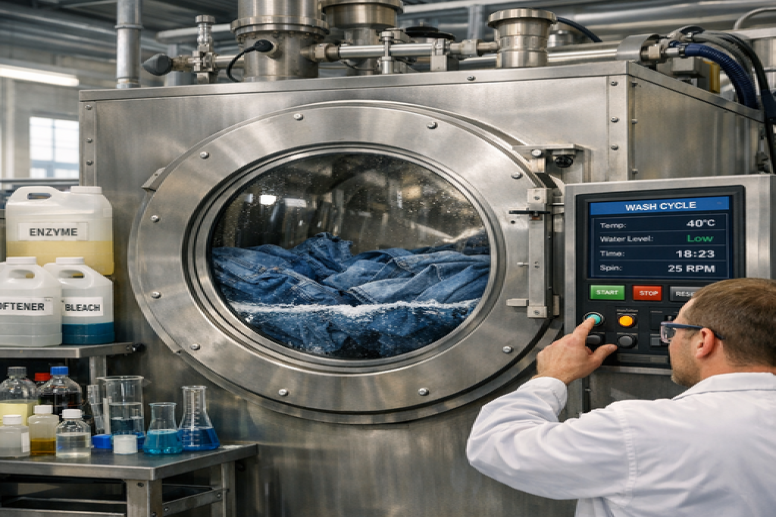
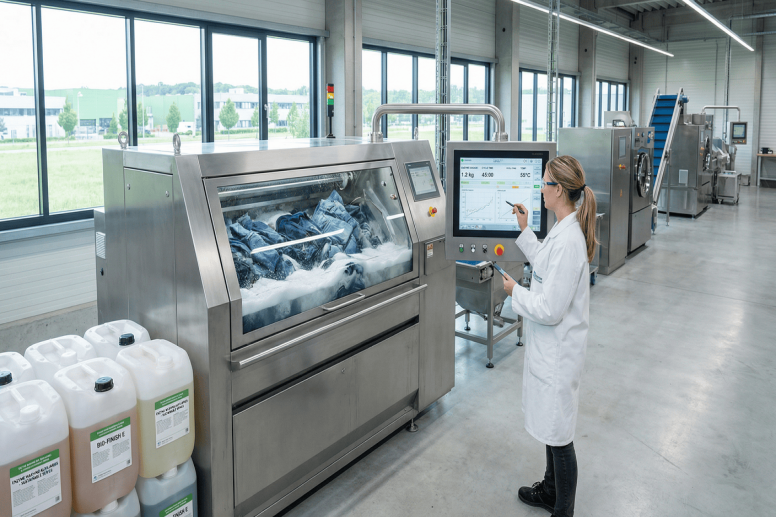
A typical enzyme wash process involves several controlled stages.
Preparation
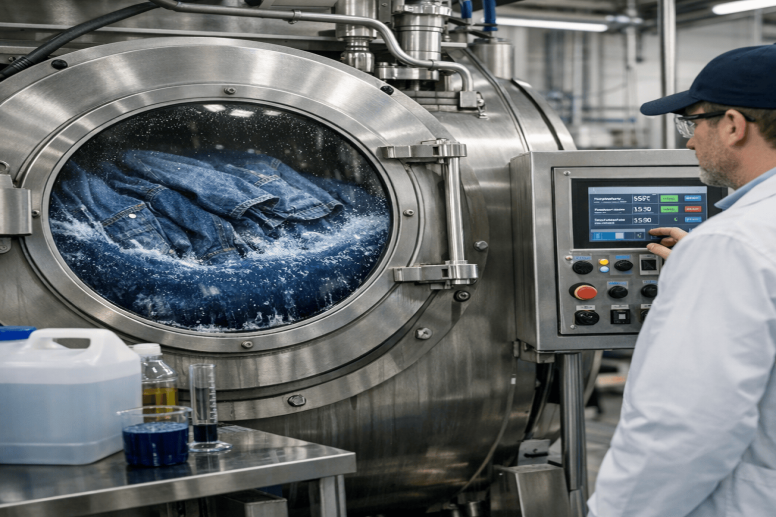
Garments enter the washing machine with the required liquor ratio and washing chemicals.
Enzyme Treatment
Cellulase enzymes react with cotton fibers on the denim surface to create controlled abrasion and fading.
Washing and Rinsing
Loose fiber particles and dye residues are removed through washing and rinsing cycles.
Neutralization
The washing bath is adjusted to stop enzyme activity and stabilize the garment structure.
Proper control during each stage helps prevent indigo dye washing problems.
Chemical Support for Enzyme Washing
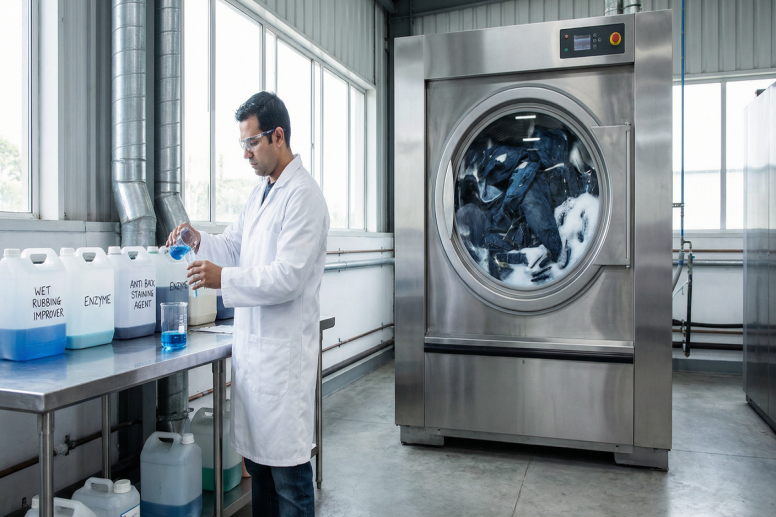
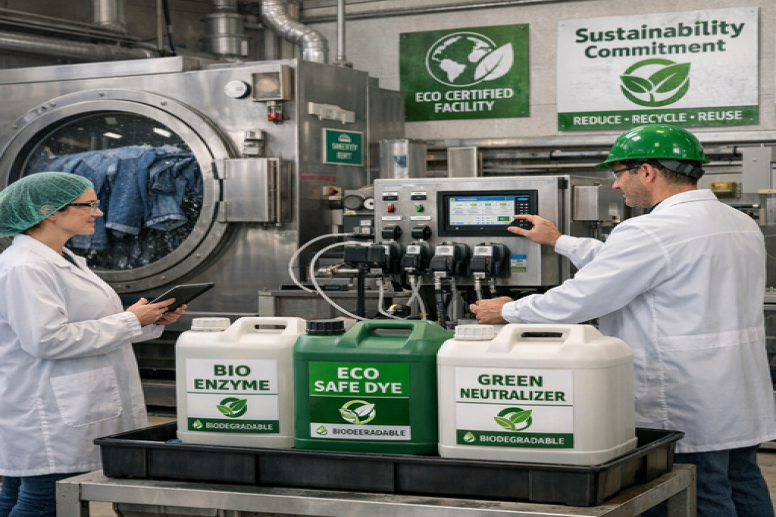
Efficient enzyme washing requires supporting auxiliaries to maintain stable washing conditions.
Common supporting chemicals include:
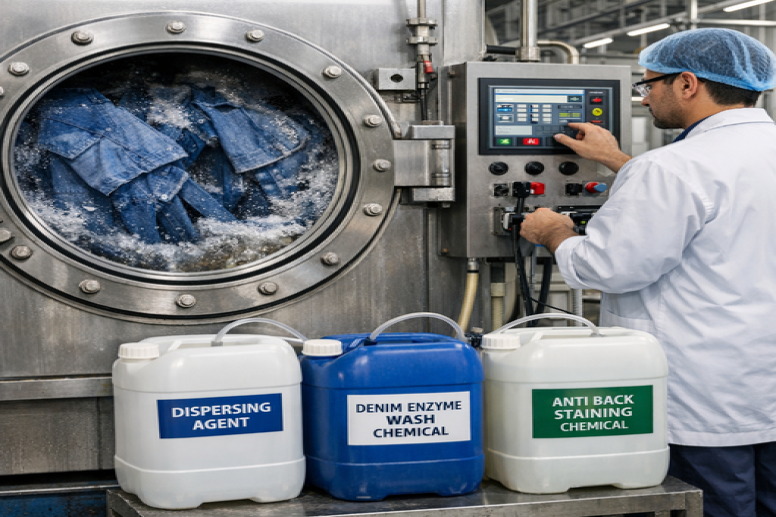
dispersing agents for dye particle control
anti back staining chemicals during enzyme treatment
detergents for impurity removal
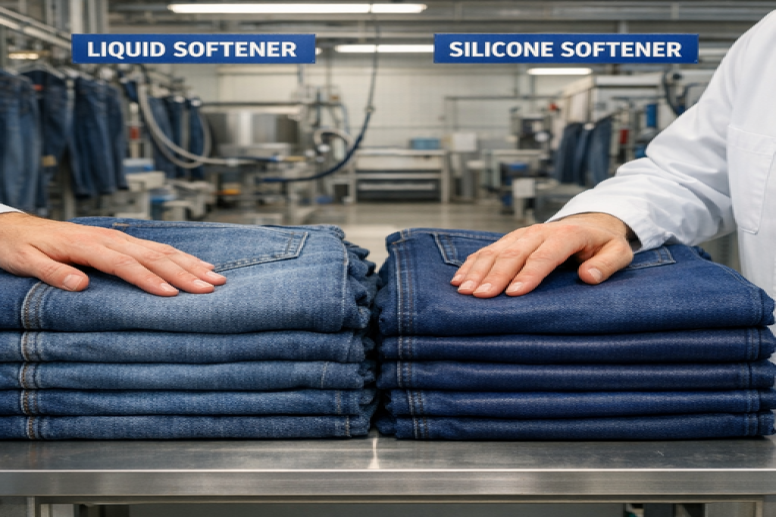
softening agents during finishing
These auxiliaries help maintain uniform fading and prevent redeposition of indigo dye.
Preventing Indigo Dye Washing Problems
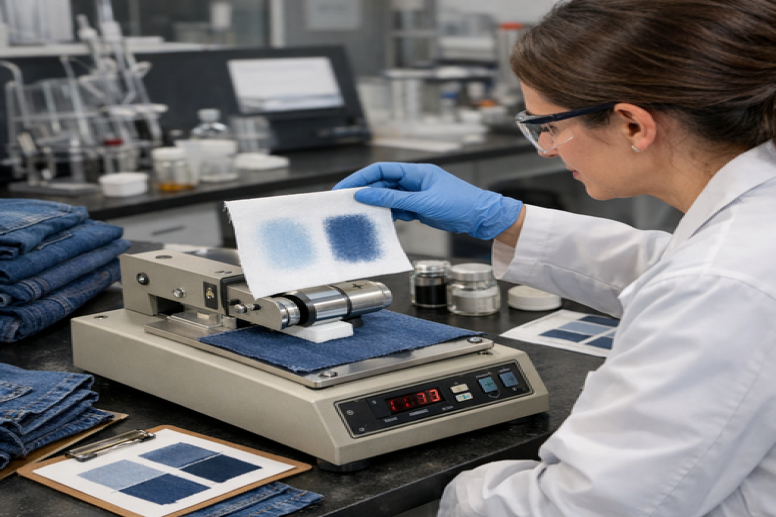
During enzyme washing, indigo dye particles detach from denim fibers. Without proper control, these particles redeposit on garments and create staining problems.
Factories prevent these issues through:
proper dispersing chemical application
controlled enzyme dosage
adequate rinsing cycles
proper liquor ratio management
Effective control reduces indigo dye washing problems and ensures consistent garment appearance.
Environmental Benefits
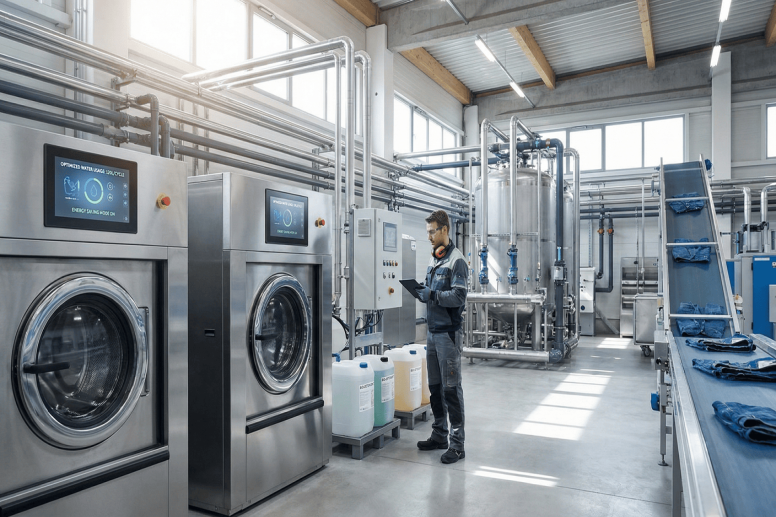
Sustainable enzyme washing technology supports environmentally responsible denim production.
Key environmental benefits include:
reduction of solid waste from pumice stones
lower water consumption in washing plants
reduced energy requirements
improved wastewater quality
safer working conditions for washing operators
These advantages support long term sustainable textile manufacturing.
Conclusion
Sustainable enzyme washing technology plays a central role in modern denim garment processing. The enzyme wash process creates controlled fading effects while reducing environmental impact and mechanical damage.
By combining enzyme technology with proper chemical auxiliaries, washing factories control denim washing defects and minimize indigo dye washing problems. This approach supports efficient, high quality, and sustainable denim production.