12 Mar
Neutralizing Agents in Denim Washing: Function, Benefits, and Application
Learn how neutralizing agents work in denim washing. Complete guide covering functions, benefits, and application of neutralizing chemicals to protect fabric and maintain uniform shade.
Neutralizing Agents in Denim Washing: Functions and Benefits
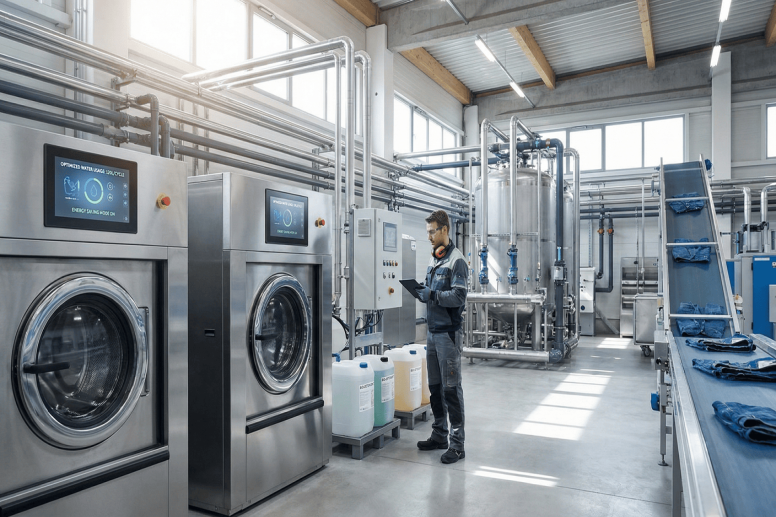
After bleaching or enzyme washing, denim garments contain residual chemicals such as oxidizing agents or acids. Neutralizing agents in denim washing remove these residues and stabilize the fabric, preventing yellowing, fiber damage, and uneven shade.
Garment washing factories use neutralizing agents to ensure consistent quality, safe handling, and optimal results in subsequent finishing stages. Proper neutralization protects both fabric strength and garment appearance.
What Are Neutralizing Agents
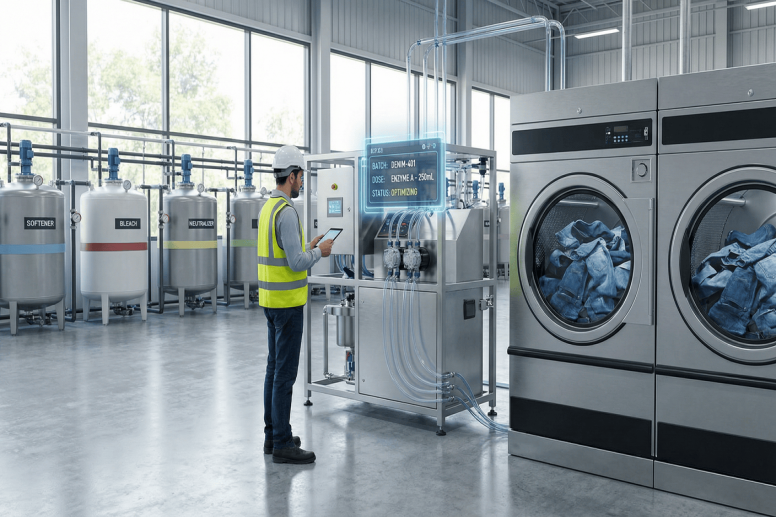
Neutralizing agents are textile auxiliaries that chemically balance the pH of washed denim. They neutralize residual oxidizing chemicals, acids, or alkalis, creating a stable environment for softening, finishing, or further processing.
Primary functions include:
elimination of chemical residues
prevention of fabric yellowing or discoloration
preparation of denim for softening or finishing
protection of fabric strength
These auxiliaries are essential for high-quality, export-ready denim garments.
Role of Neutralizing Agents in Denim Washing
Neutralizing agents improve washing outcomes through several mechanisms:
pH Stabilization
They adjust and stabilize fabric pH after bleaching or other chemical treatments, preventing continued chemical reactions.
Fabric Protection
By neutralizing residual chemicals, these auxiliaries protect fibers from degradation, preserving strength and durability.
Shade Consistency
Neutralization prevents unwanted color changes and ensures uniform garment appearance.
Compatibility
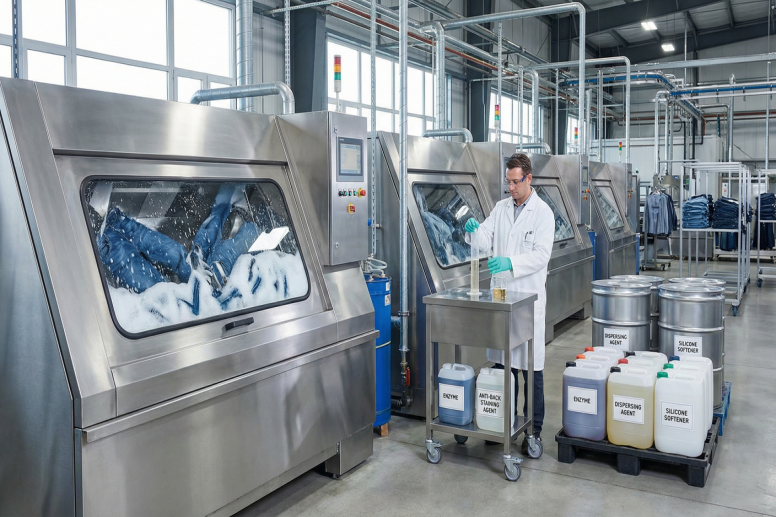
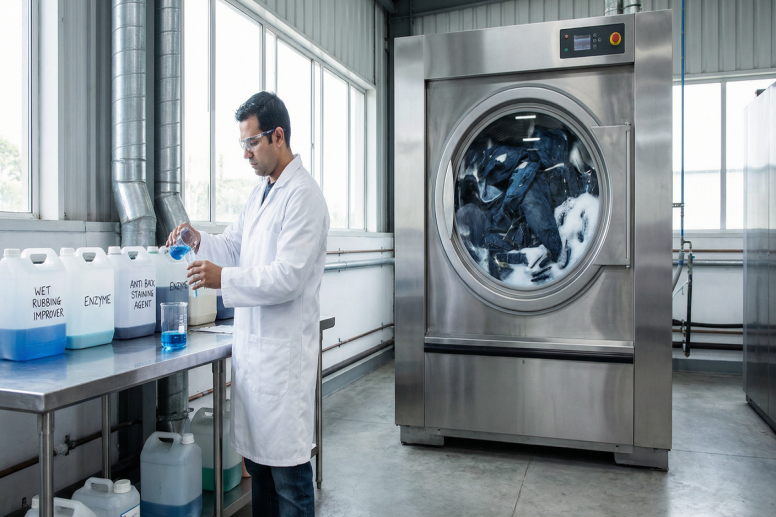
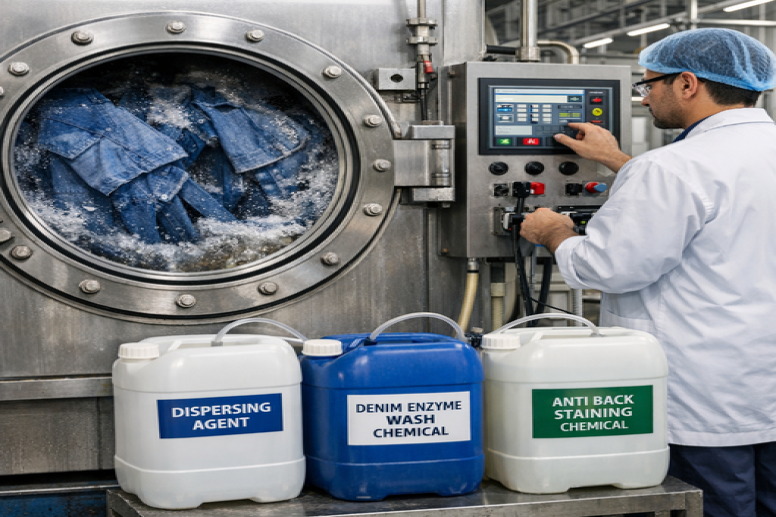
Neutralizing agents work alongside softeners, enzymes, dispersing agents, and other auxiliaries without affecting their performance.
Benefits of Using Neutralizing Agents
Denim washing factories gain multiple advantages from using neutralizing agents:
consistent and stable fabric pH
prevention of yellowing or shade changes
protection of garment strength and durability
preparation for softening and finishing stages
improved garment quality and market readiness
Proper neutralization reduces rework and enhances overall production efficiency.
Application in Denim Washing Process
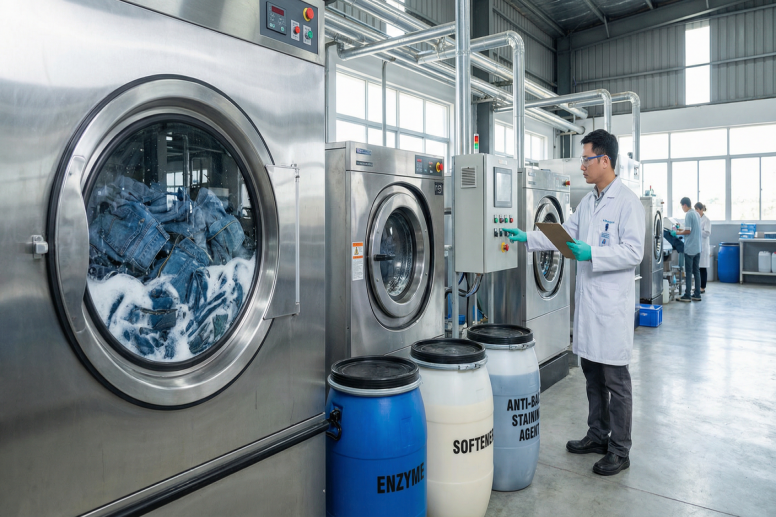
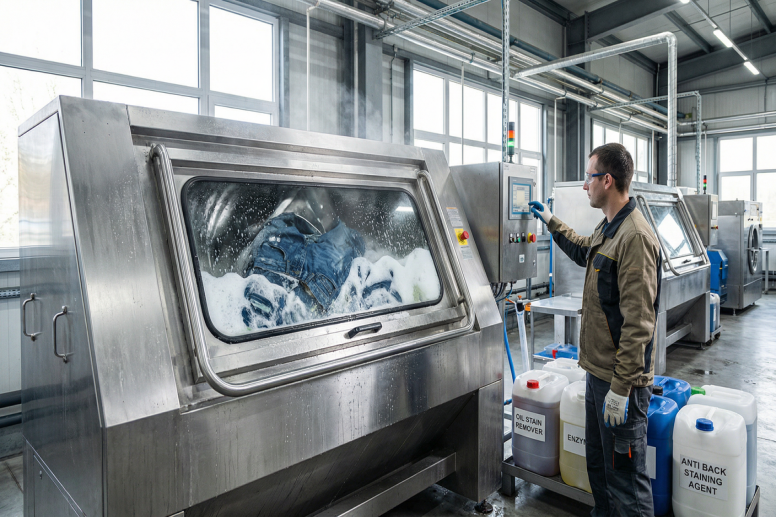
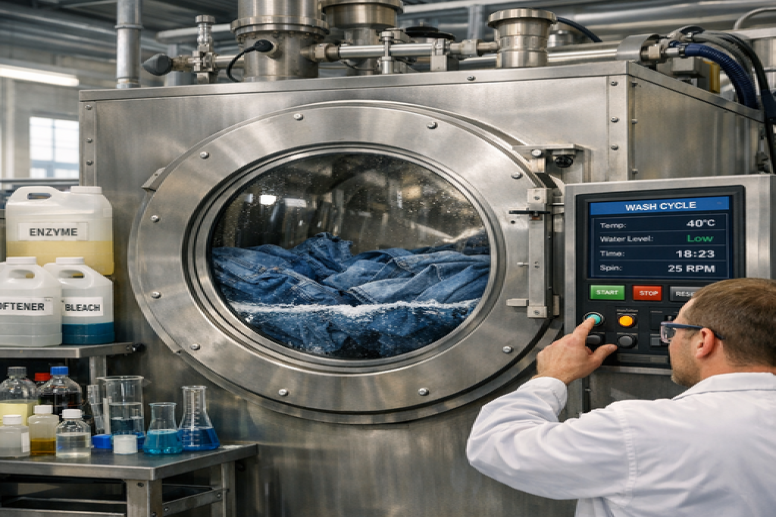
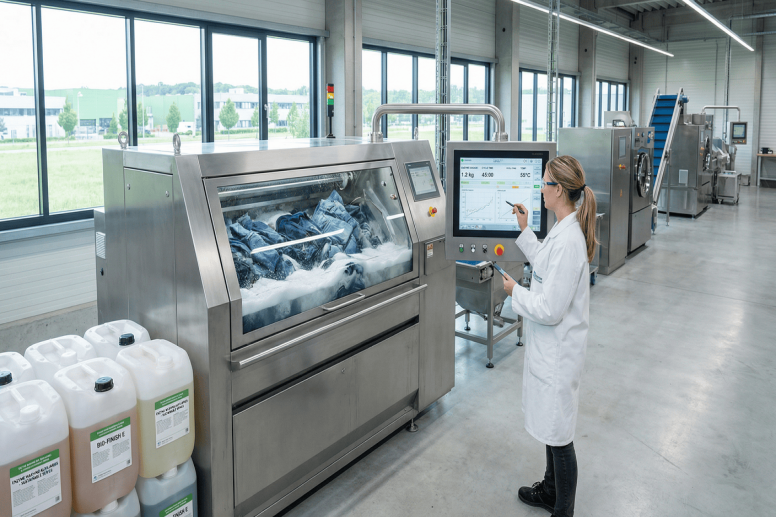
Neutralizing agents are applied after enzyme washing or bleaching, before softening and finishing.
Typical process sequence:
Desizing
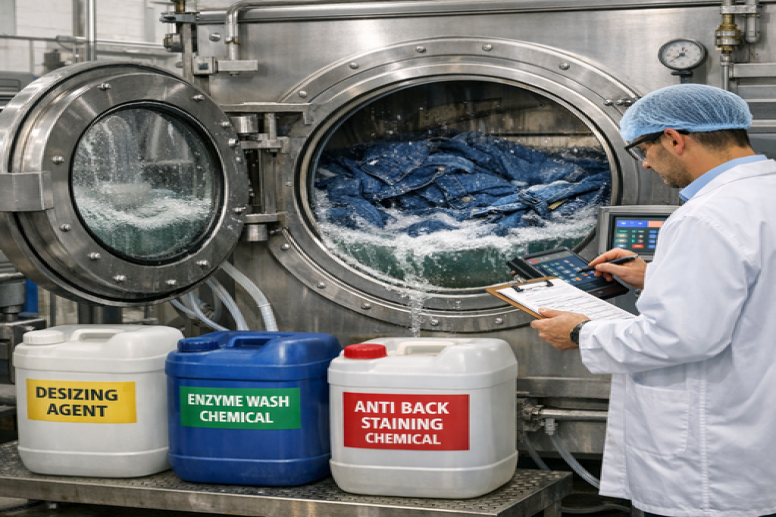
Enzyme washing with anti back staining agent
Rinsing
Bleaching with bleaching agent and stabilizer (if required)
Neutralization with neutralizing agent
Softening and finishing
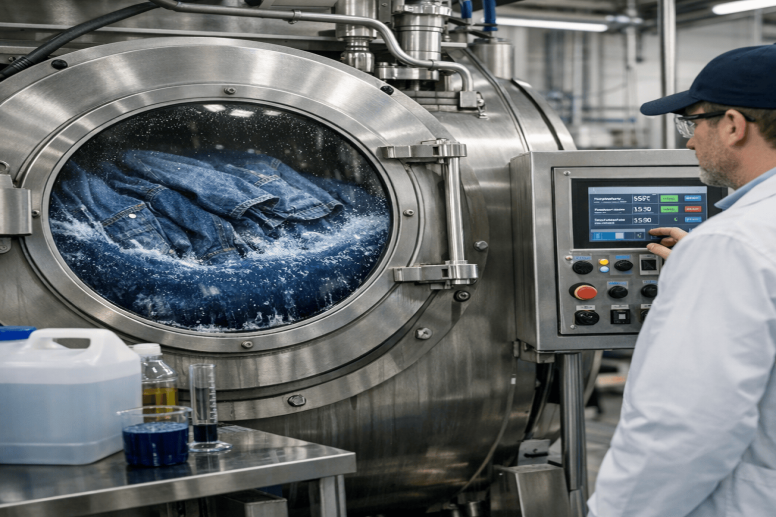
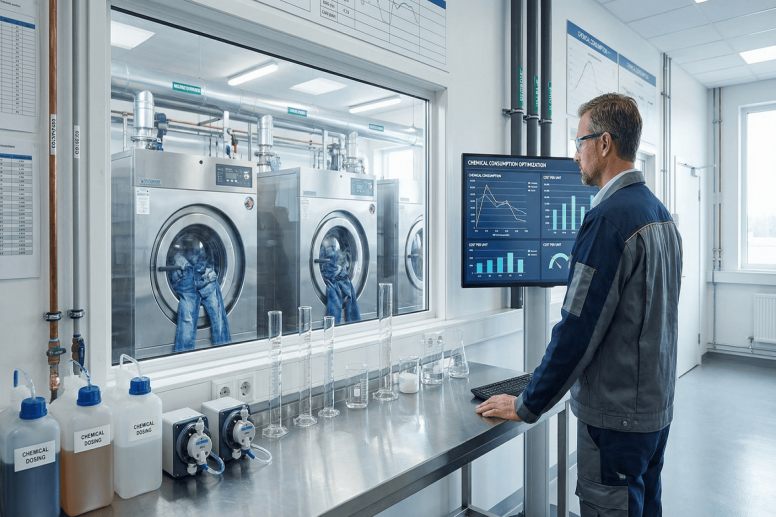
Dosage, pH adjustment, and thorough mixing are critical to achieving stable results.
Common Problems Without Neutralizing Agents
Without neutralization, denim washing plants may face:
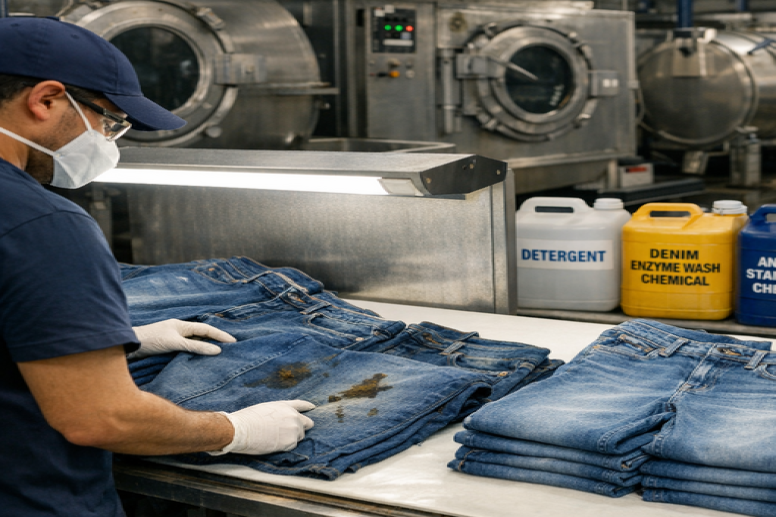
uneven or yellowed garments
weak fabric strength
poor compatibility with softening chemicals
higher rejection and reprocessing rates
inconsistent finished product quality
Neutralizing agents prevent these issues and maintain stable washing outcomes.
Conclusion
Neutralizing agents in denim washing play a vital role in stabilizing fabric pH, removing residual chemicals, and protecting garment appearance.
Denim washing factories achieve consistent quality and reduced defects when neutralizing agents are combined with enzymes, bleaching chemicals, dispersing agents, and softeners. Proper application ensures durable, premium denim garments ready for market.