12 Mar
Wet Rubbing Improver in Denim Washing: Function, Benefits, and Application
Learn how wet rubbing improvers work in denim washing. Complete guide covering functions, benefits, and application of wet rubbing chemicals in garment washing process.
Wet Rubbing Improver in Denim Washing: Function and Benefits
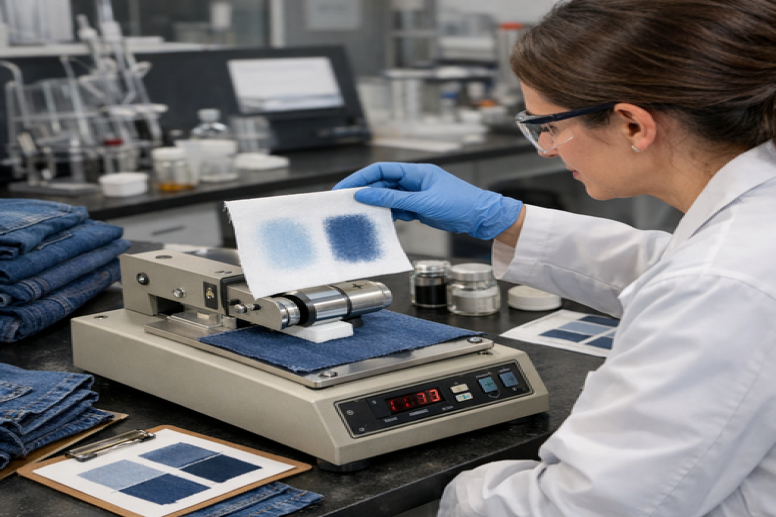
Indigo dyed denim garments often show poor wet rubbing fastness, which can lead to color transfer during handling, packaging, or wearing. A wet rubbing improver in denim washing prevents this problem by enhancing dye fixation and improving fabric durability.
Garment washing factories rely on wet rubbing improvers to maintain color quality, reduce defects, and meet international quality standards. This auxiliary is essential for premium denim products that require consistent appearance and performance.
What Is a Wet Rubbing Improver
A wet rubbing improver is a specialized chemical used during denim washing to improve wet rubbing fastness of indigo dyed fabric. It strengthens the bond between dye and fiber while ensuring smooth washability.
Primary functions include:
improved wet rubbing fastness
reduction of color transfer during washing
enhanced garment durability
protection of garment appearance
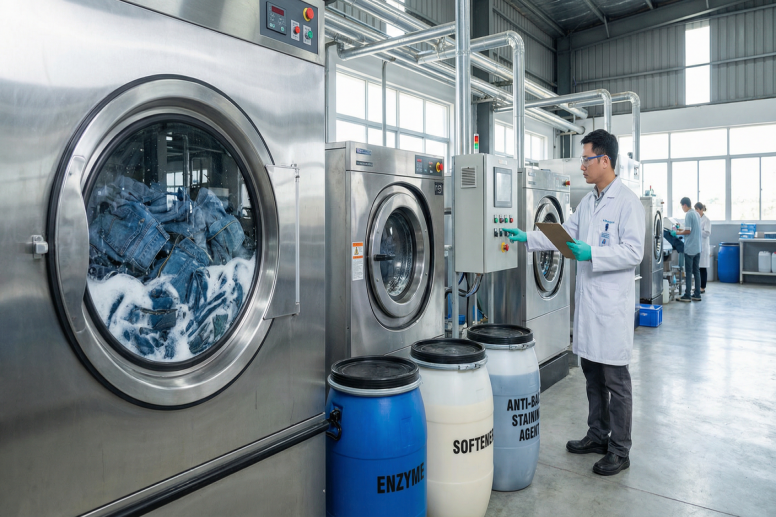
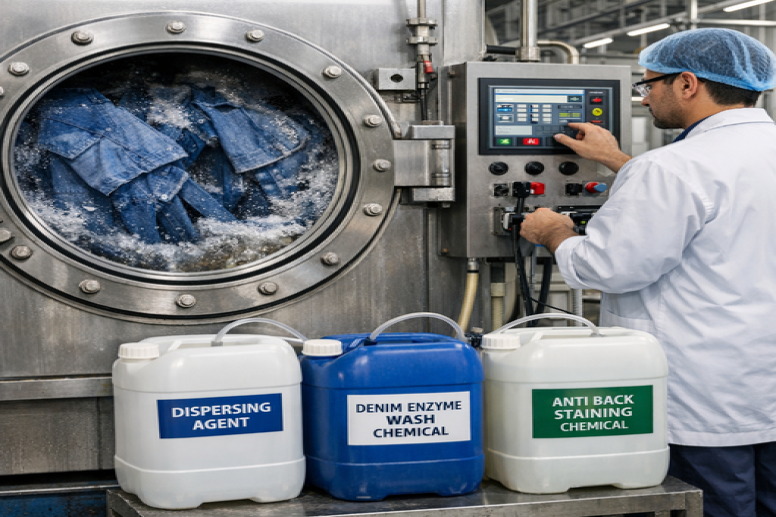
This chemical works best in combination with enzyme treatments and anti back staining agents.
Causes of Poor Wet Rubbing in Denim
Wet rubbing issues typically occur because:
Indigo dye remains on the yarn surface rather than fully penetrating fibers
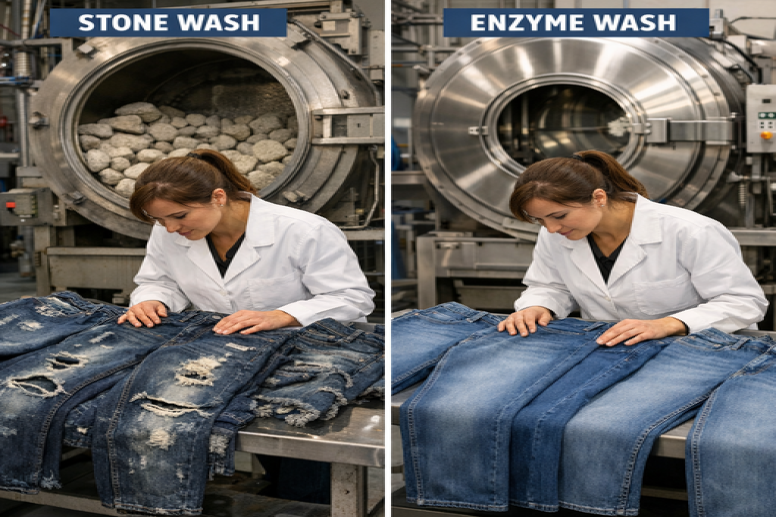
Enzyme washing removes surface fibers, exposing loose dye particles
High washing temperatures and mechanical abrasion can loosen dye
Improper chemical treatment or low auxiliary dosage
Without intervention, garments show color transfer onto other fabrics or surfaces.
Role of Wet Rubbing Improvers in Denim Washing
Wet rubbing improvers improve garment quality by:
Dye Fixation
The chemical strengthens the bond between indigo dye and fiber, reducing dye release during washing.
Color Transfer Prevention
By stabilizing surface dye, wet rubbing auxiliaries prevent color from transferring onto other fabrics or sewing threads.
Fabric Durability
Improvers protect fibers during wet washing, reducing damage caused by mechanical abrasion and enzyme treatment.
Compatibility with Other Auxiliaries
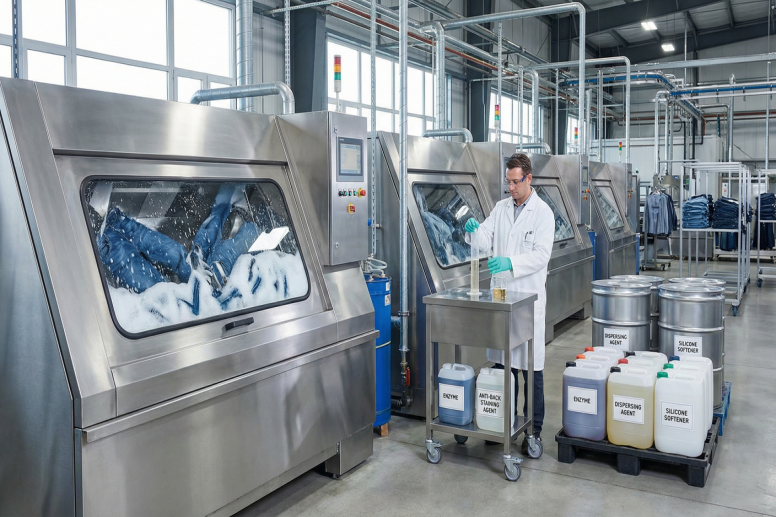
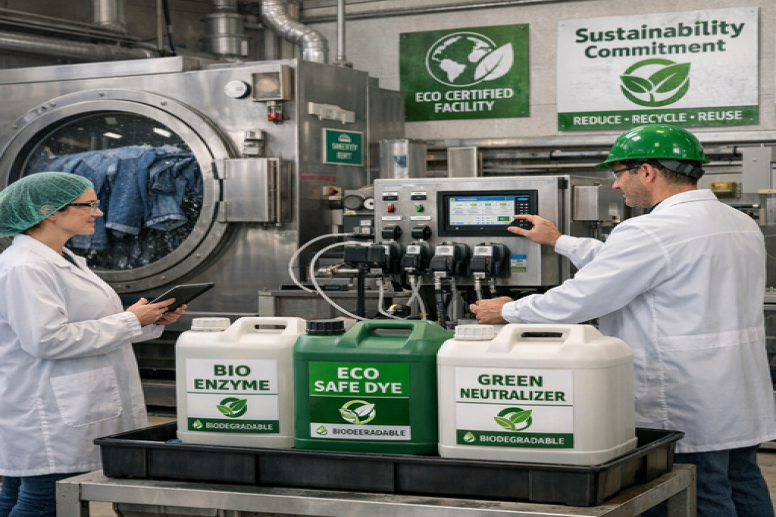
These chemicals work alongside enzymes, anti back staining agents, and softeners without interfering with their functions.
Benefits of Using Wet Rubbing Improvers
Washing plants gain several advantages from proper application:
improved wet rubbing fastness
reduction of garment rejection due to color transfer
consistent shade appearance
higher product quality for premium denim
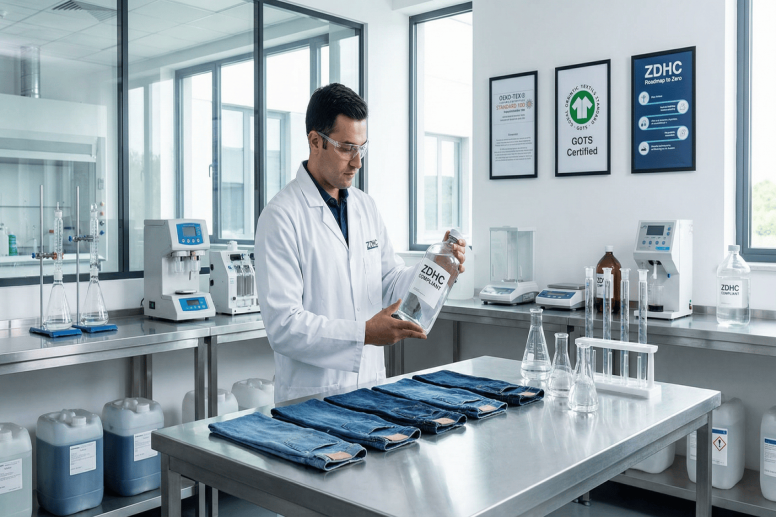
better compliance with export standards
Application in Denim Washing Process
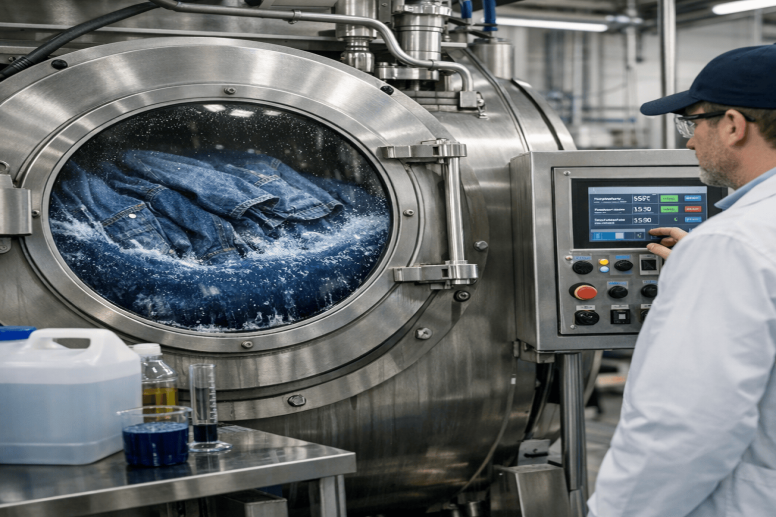
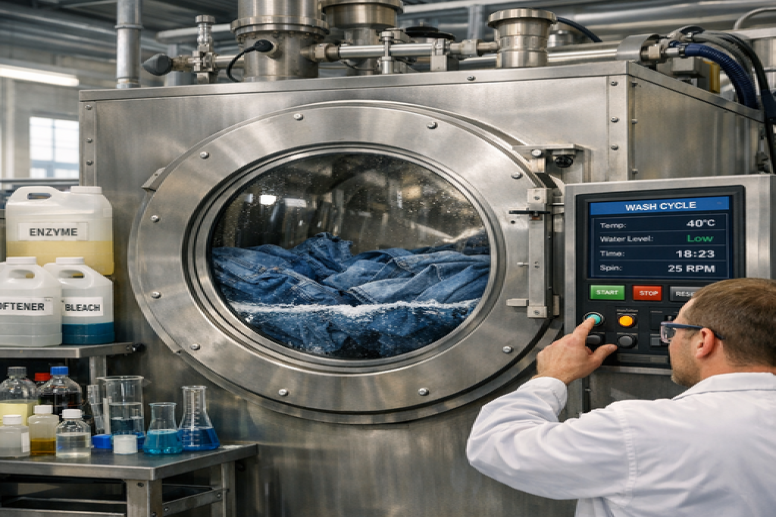
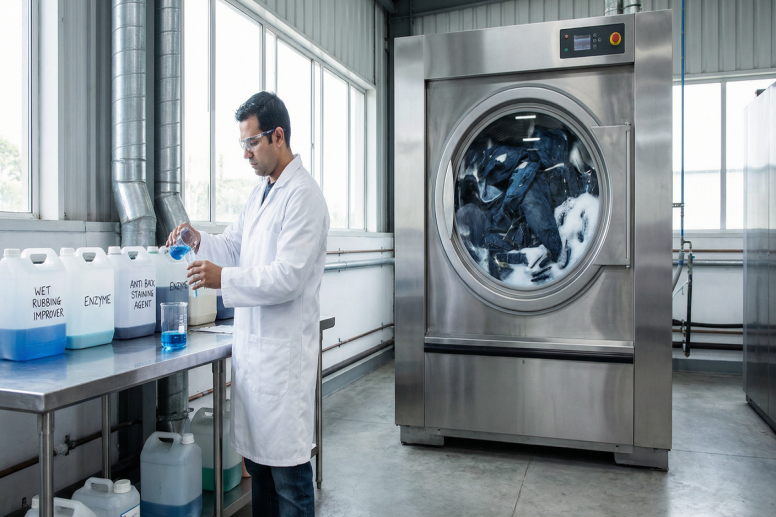
Wet rubbing improvers are applied during the finishing stages or combined with softening chemicals.
Typical process sequence:
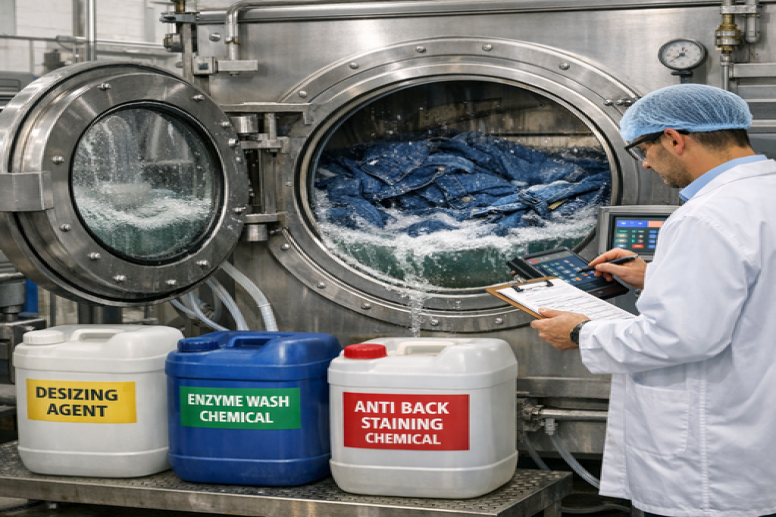
Desizing stage
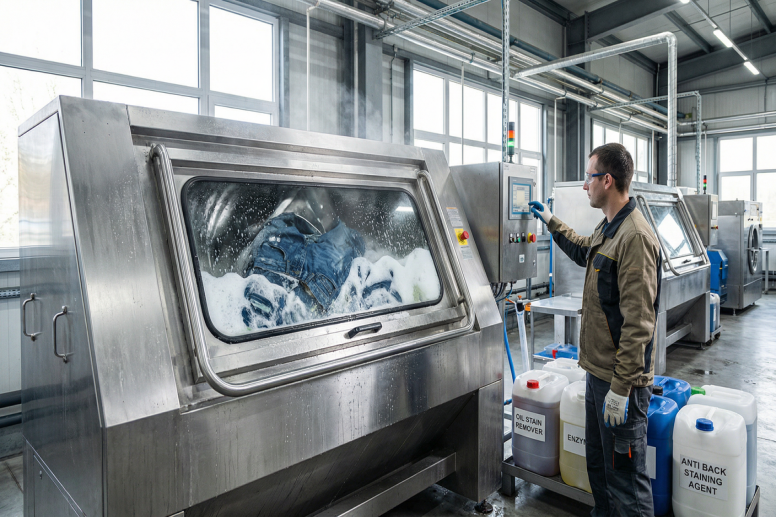
Enzyme washing with anti back staining agent
Rinsing
Wet rubbing improver addition
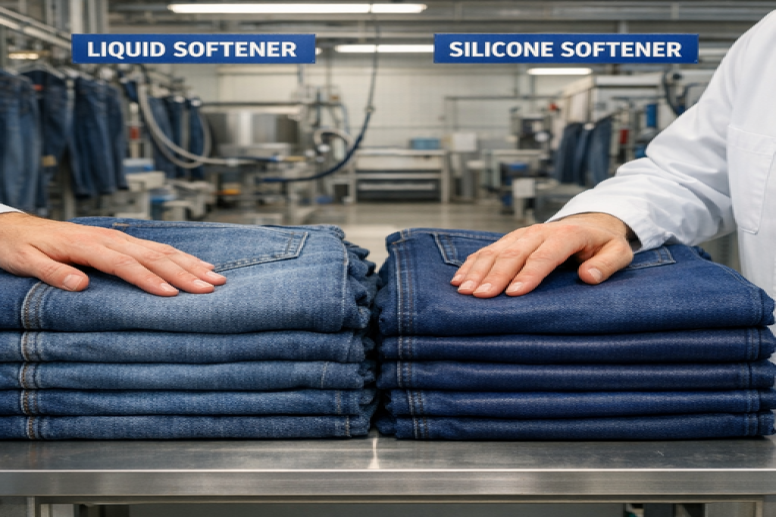
Softening and finishing
Dosage depends on fabric type, dye concentration, and washing conditions. Uniform distribution ensures effective performance.
Common Problems Without Wet Rubbing Improvers
When these auxiliaries are absent, denim washing plants may face:
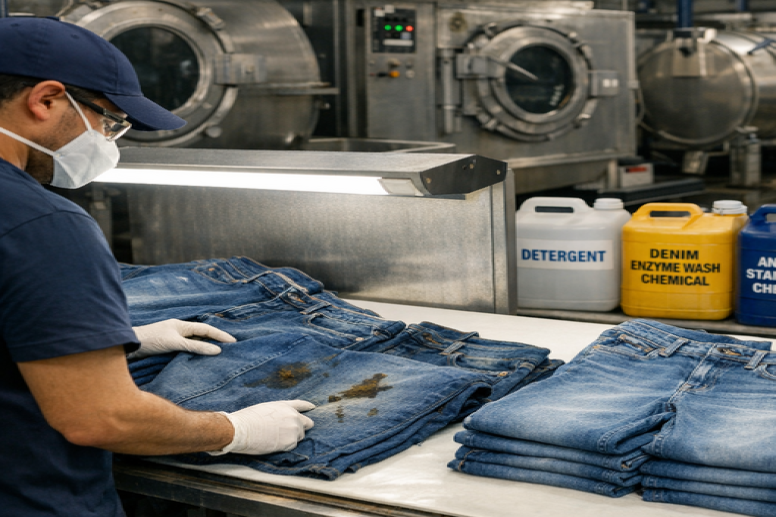
color transfer onto white or light garments
inconsistent shade appearance
poor fabric durability
customer complaints and returns
increased reprocessing costs
Optimized chemical programs prevent these issues.
Conclusion
A wet rubbing improver in denim washing is essential for maintaining indigo dye fixation and garment quality. By enhancing wet rubbing fastness, this auxiliary prevents color transfer, protects fabric integrity, and ensures consistent denim appearance.
Denim washing factories achieve reliable results by integrating wet rubbing improvers with other textile auxiliaries such as enzymes, anti back staining agents, and softeners. Proper application improves productivity, reduces defects, and increases garment value.