16 Mar
Reducing Rewash in Denim Garment Processing for Higher Efficiency
Learn how to reduce rewash in denim garment processing. Improve the enzyme wash process and prevent denim washing defects and indigo dye washing problems.
Reducing Rewash in Denim Garment Processing
Rewash increases production cost, reduces machine capacity, and delays shipment. Many denim washing plants face this issue due to shade variation, back staining, uneven fading, and process errors.
Reducing rewash in denim garment processing improves productivity and profit. Production managers must control each stage of washing to maintain first pass quality and stable output.
Strong process control also minimizes denim washing defects and prevents indigo dye washing problems during garment treatment.
Main Causes of Rewash in Denim Plants
Understanding root causes helps managers take corrective action.
Common reasons include:
incorrect enzyme wash process control
improper chemical dosing
uneven liquor ratio
poor rinsing efficiency
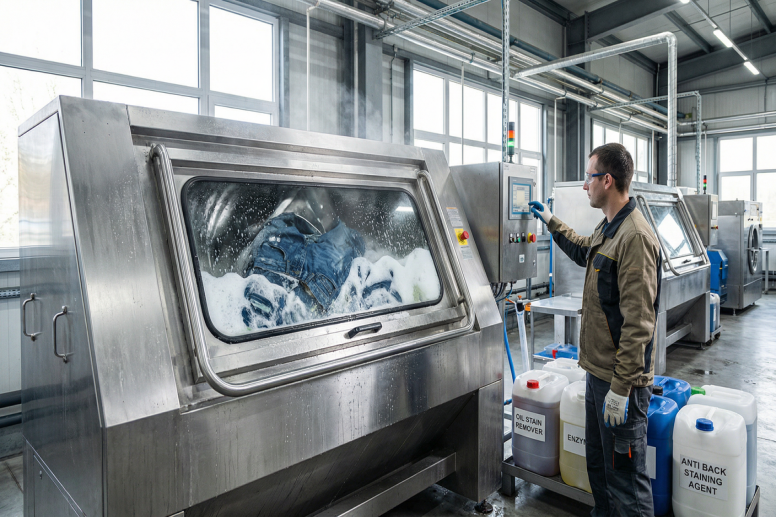
back staining on garments
shade mismatch with approved sample
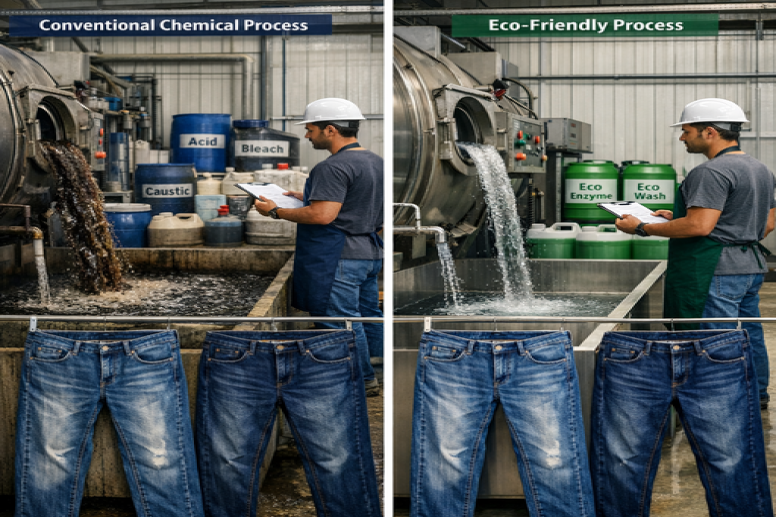
These issues force factories to repeat washing cycles, which increases water, chemical, and energy consumption.
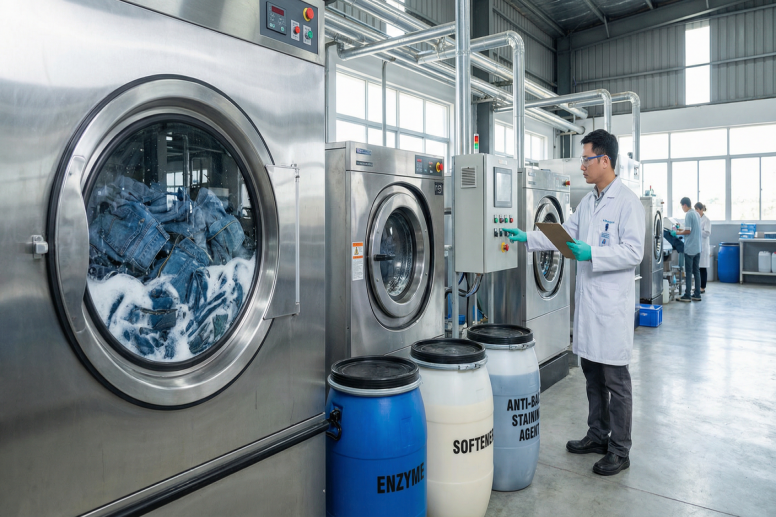
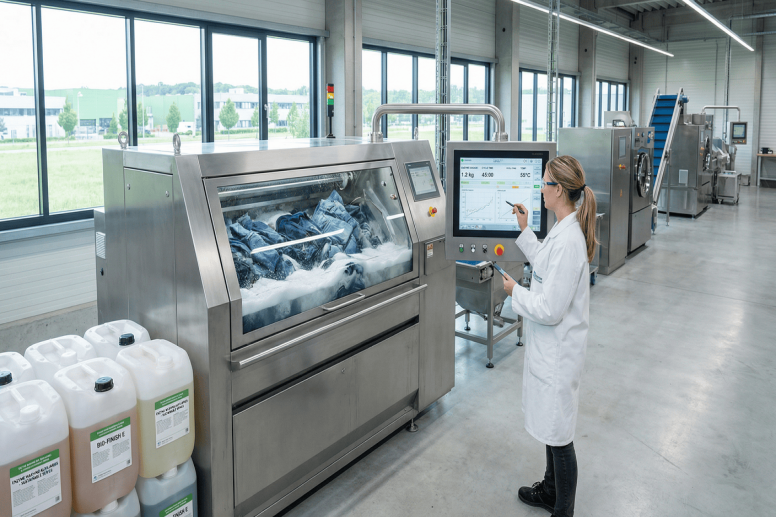
Improve Control of the Enzyme Wash Process
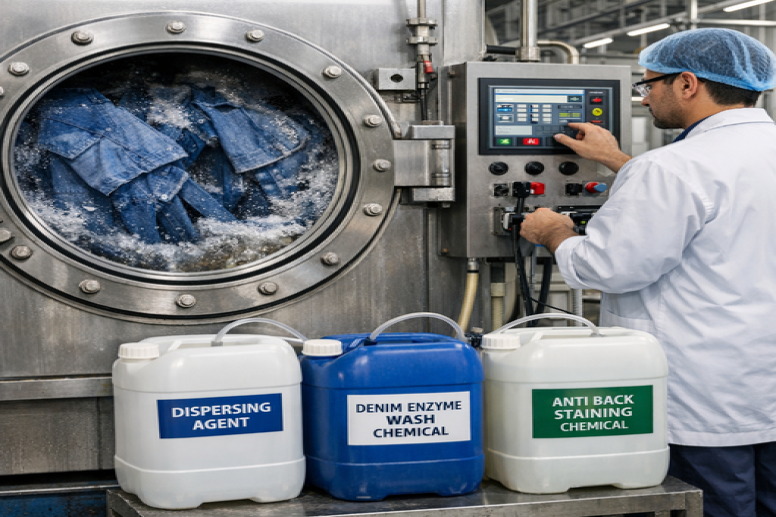
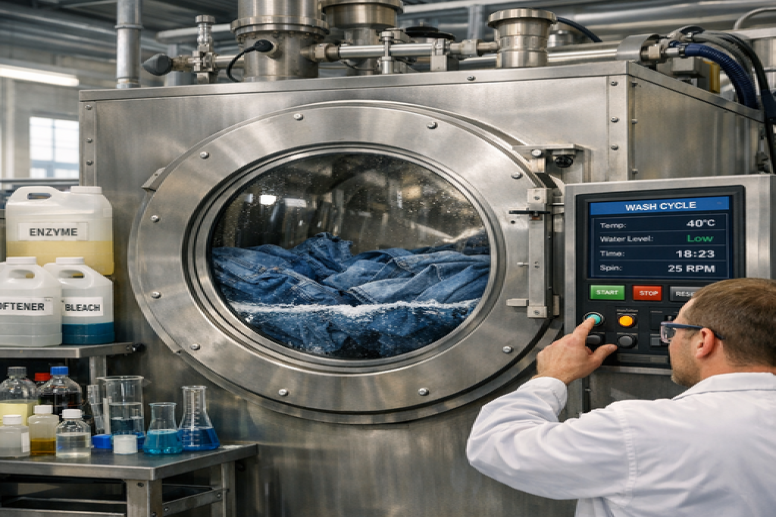
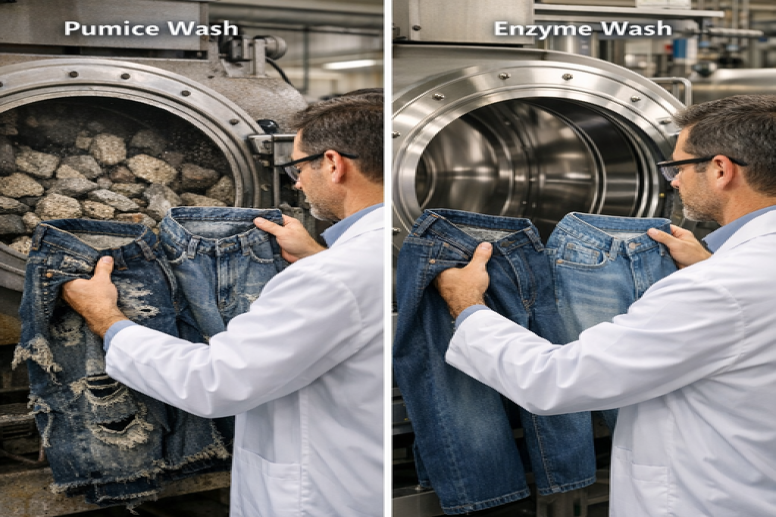
The enzyme wash process plays a major role in denim finishing. Incorrect parameters often lead to rewash.
Managers should focus on:
accurate enzyme dosage
controlled temperature
proper washing time
balanced mechanical action
Correct control produces consistent fading and reduces indigo dye washing problems. Stable enzyme performance lowers defect rates and improves first batch success.
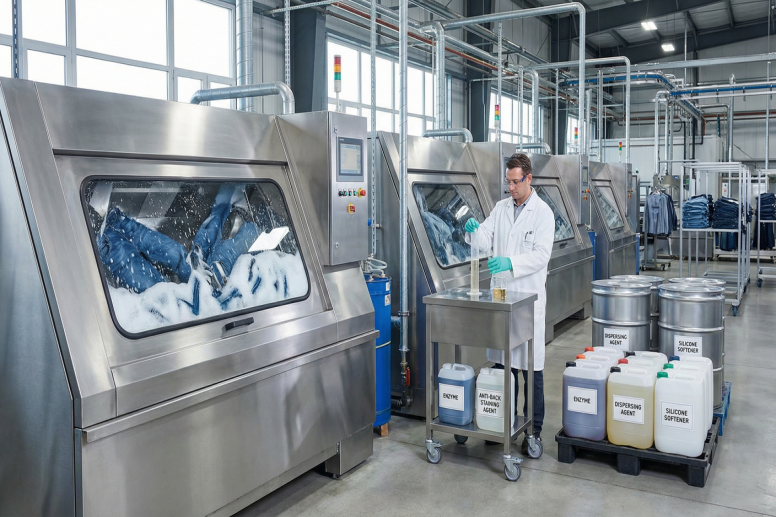
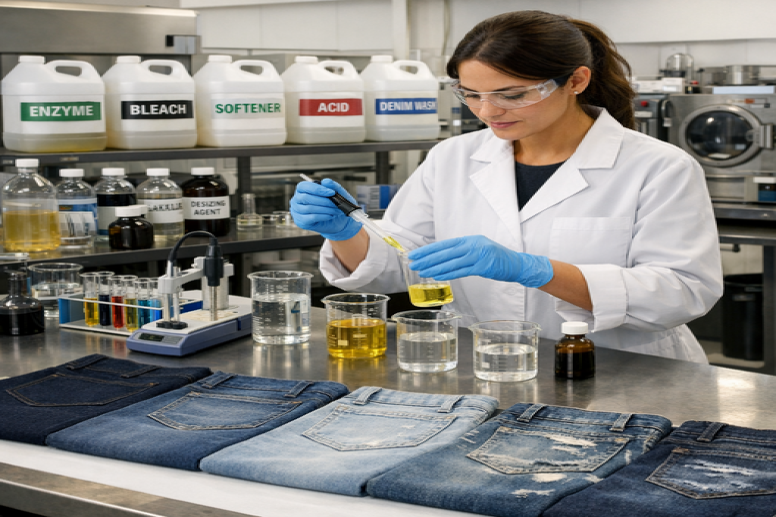
Use Proper Chemical Management
Chemical imbalance creates quality variation. Overdosing or underdosing increases risk of defects.
Key actions include:
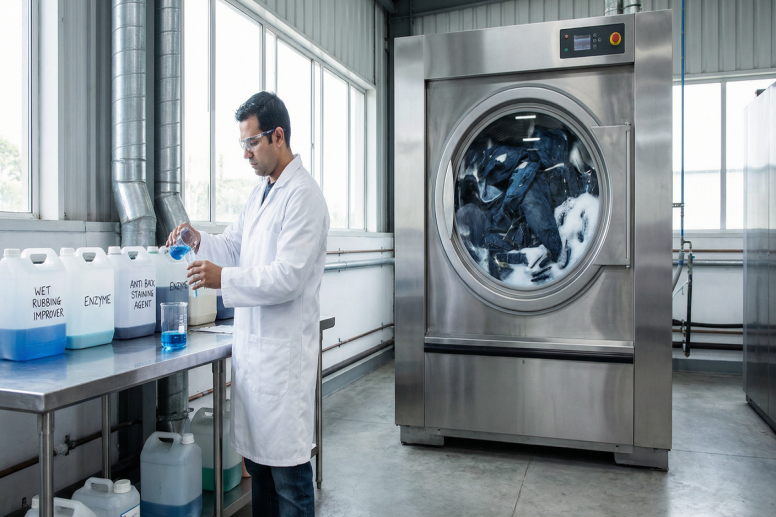
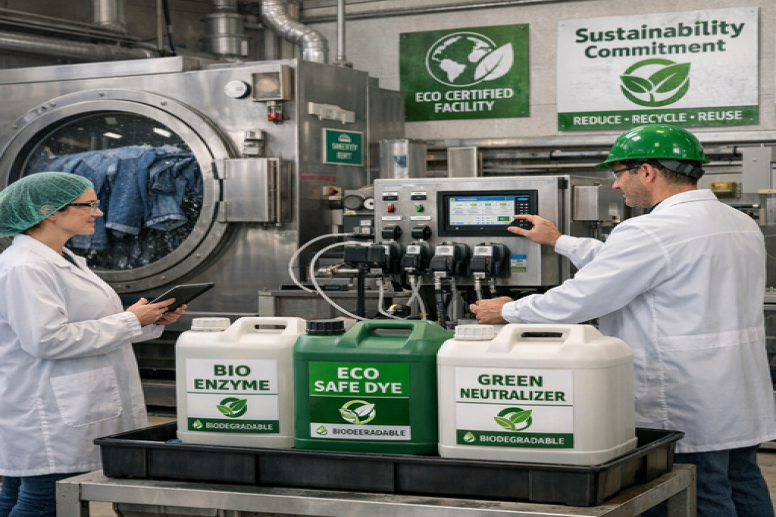
use calibrated dosing systems
follow standard operating procedures
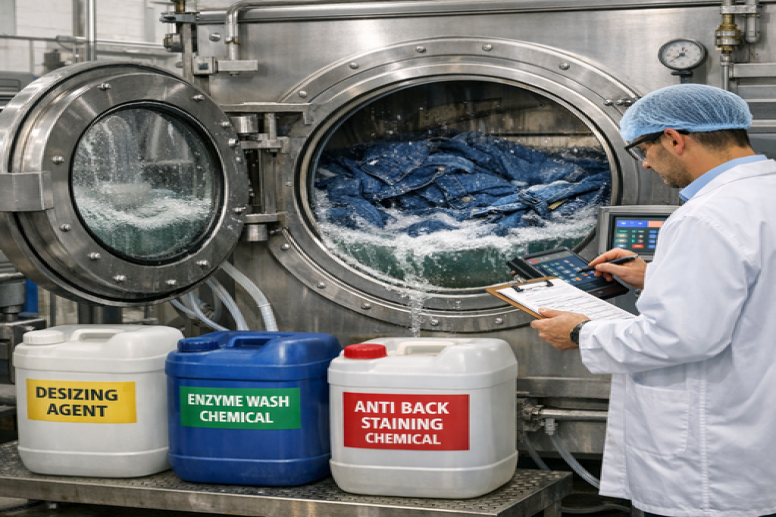
select high quality dispersing agents
apply anti back staining chemicals correctly
Proper chemical control prevents redeposition of indigo dye and reduces denim washing defects.
Strengthen Quality Control Before and After Washing
Early detection reduces rewash.
Production managers should:
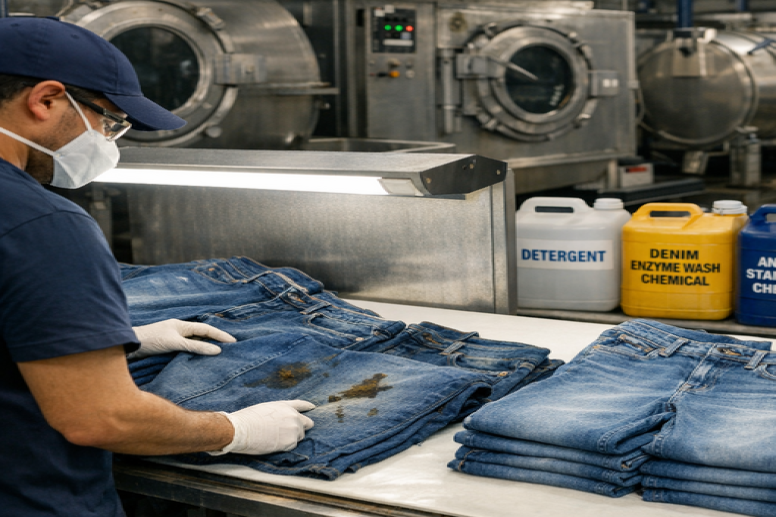
check garments before loading
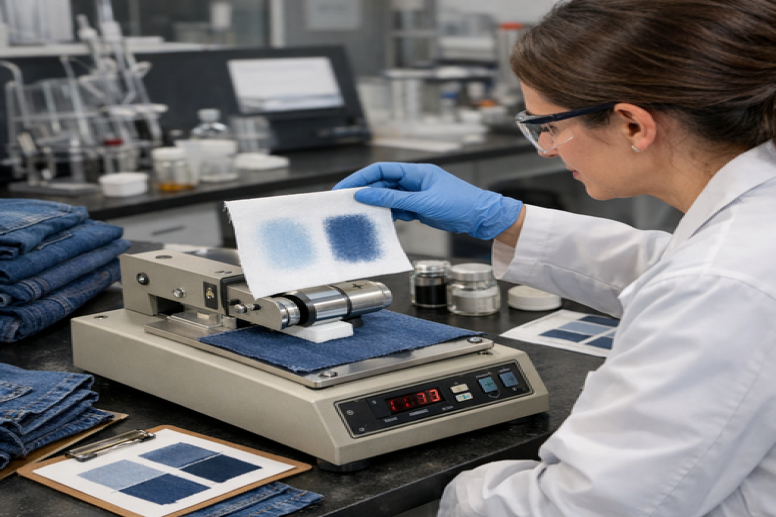
verify shade approval sample
inspect after enzyme treatment
perform final inspection under standard lighting
Strict quality control reduces errors and ensures consistent output.
Optimize Water and Rinsing Cycles
Incomplete rinsing causes shade instability and staining issues.
Improvement methods include:
optimized rinse cycles
correct liquor ratio management
efficient water flow control
counter current rinsing systems
Better rinsing reduces residual chemicals and improves washing stability.
Train Operators for Process Discipline
Operator mistakes are a common reason for rewash.
Training should focus on:
correct chemical measurement
machine loading techniques
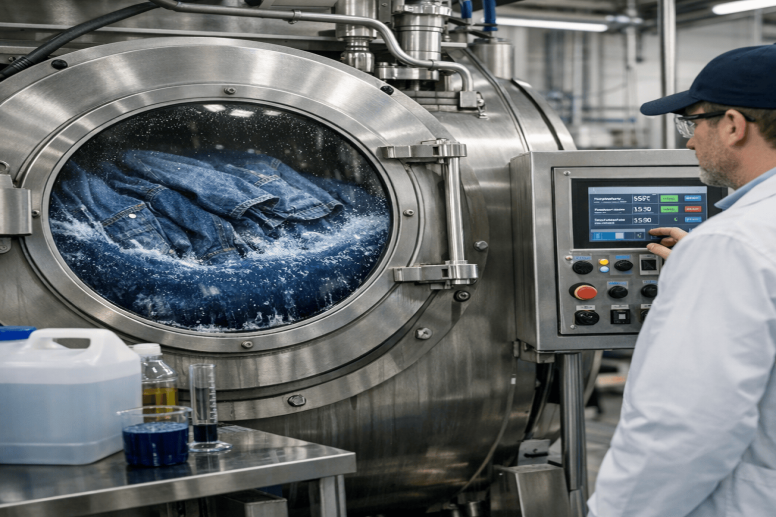
monitoring wash parameters
identifying early defects
Skilled teams reduce process variation and improve productivity.
Benefits of Reducing Rewash
Lower rewash rate creates measurable advantages for production managers.
Key benefits include:
higher first pass quality
reduced water consumption
lower chemical usage
improved machine utilization
fewer denim washing defects
better control of indigo dye washing problems
increased profit margin
Efficient systems strengthen overall plant performance.
Conclusion
Reducing rewash in denim garment processing improves efficiency, cost control, and production stability. Proper management of the enzyme wash process, accurate chemical dosing, and strict quality control help prevent defects and maintain consistent results.
Production managers who focus on process optimization achieve higher output, reduced waste, and stronger profitability in denim washing operations.