12 Mar
Bleaching Agents in Denim Washing: Functions and Benefits
Learn about bleaching agents in denim washing. Complete guide covering functions, benefits, and application of bleaching chemicals for uniform shade and fashion effects.
Bleaching Agents in Denim Washing: Functions and Benefits
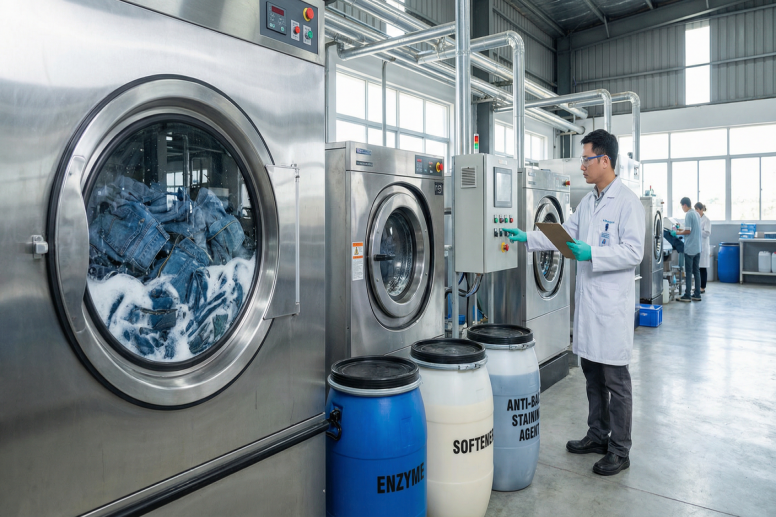
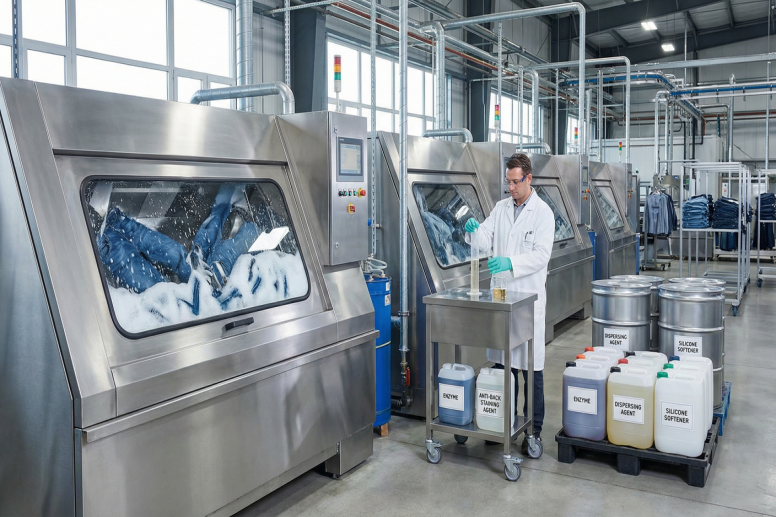
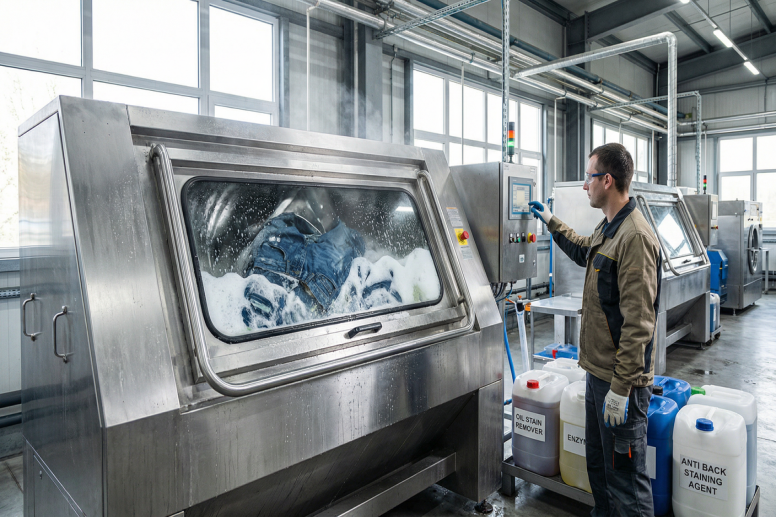
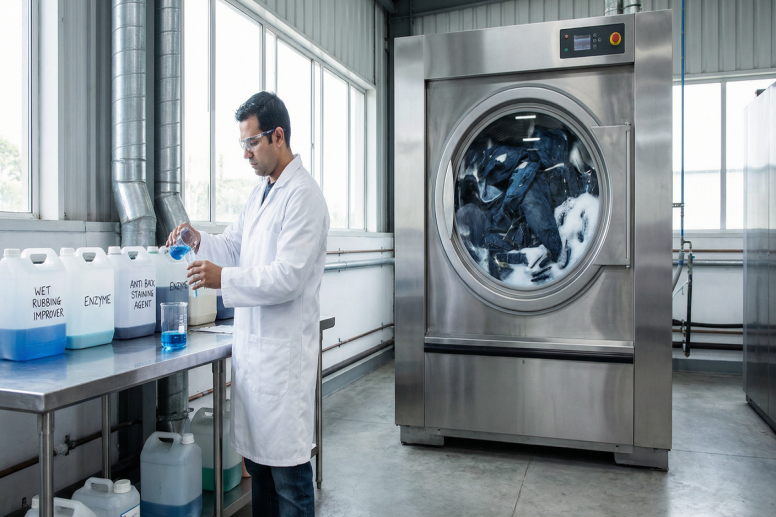
Bleaching is a crucial stage in denim washing used to reduce shade depth, create vintage or fashion effects, and prepare garments for finishing. Bleaching agents in denim washing are specialized chemicals that oxidize indigo dye and other impurities while protecting fabric strength.
Garment washing factories rely on bleaching agents to achieve uniform shade, improve garment aesthetics, and enhance finishing results. Proper application ensures consistent results across all denim batches.
What Are Bleaching Agents
Bleaching agents are textile chemicals that remove or lighten color from indigo dyed yarns. They work by oxidizing dye molecules or other residues on the fabric surface.
Primary functions include:
reduction of shade depth
creation of vintage or faded effects
uniform color development
preparation for subsequent finishing treatments
These chemicals are critical in producing light or specialty denim washes.
Role of Bleaching Agents in Denim Washing
Bleaching agents improve denim washing outcomes in several ways:
Shade Lightening
They reduce indigo dye concentration on the fabric surface to achieve lighter shades or fashion effects.
Fabric Protection
Bleaching auxiliaries are balanced with stabilizers to prevent fiber damage and preserve garment strength.
Uniform Color
Proper bleaching ensures consistent shade across the garment batch, avoiding patchy or uneven effects.
Compatibility
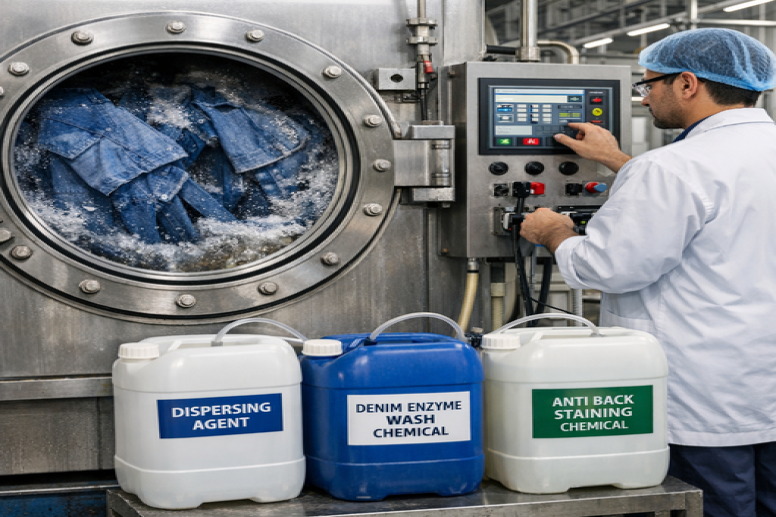
Bleaching agents work with dispersing agents, anti back staining chemicals, and softeners without affecting enzyme performance or fabric integrity.
Benefits of Using Bleaching Agents
Denim washing factories gain multiple advantages from controlled bleaching processes:
uniform and desirable fashion shade
improved fabric aesthetics
preparation for softening and finishing stages
reduced garment defects and reprocessing
enhanced consumer appeal and product value
Application in Denim Washing Process
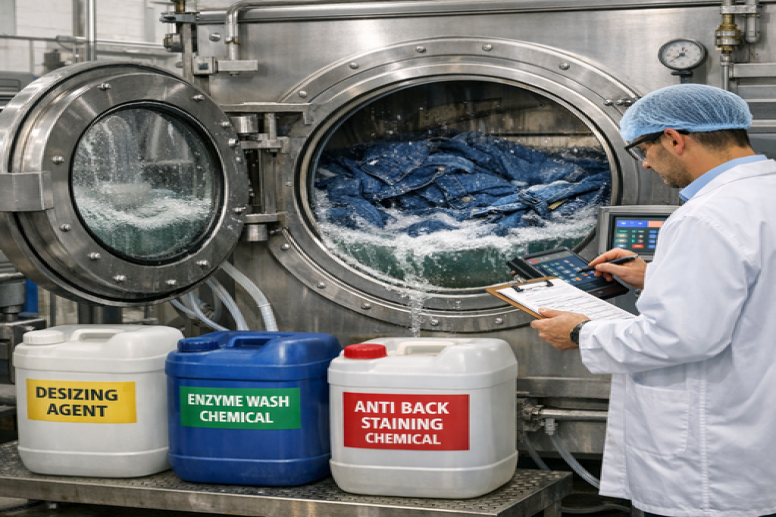
Bleaching agents are applied after desizing and enzyme washing.
Typical process sequence:
Desizing
Enzyme washing with anti back staining agent
Rinsing
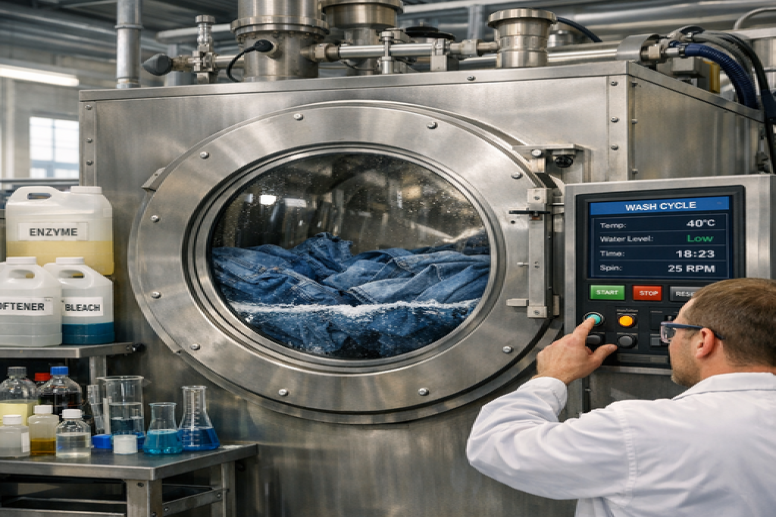
Bleaching with bleaching agent and stabilizer
Neutralization
Softening and finishing
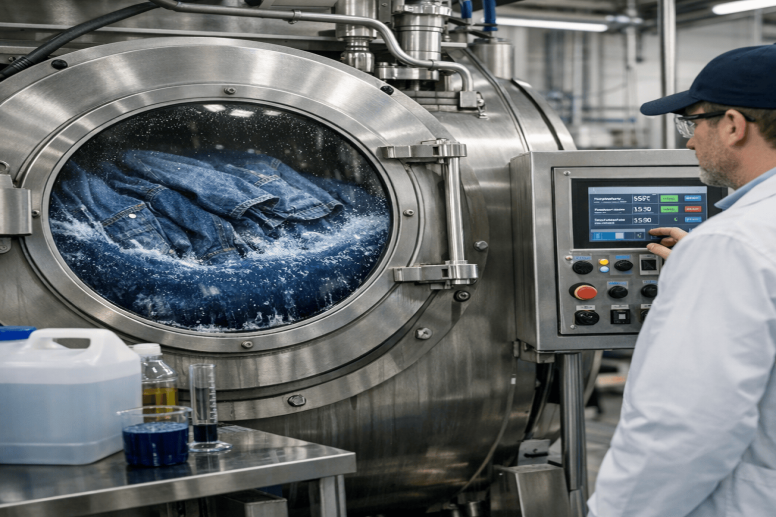
Correct dosage, temperature, and washing time are essential to prevent fabric damage while achieving desired shade.
Common Problems Without Bleaching Agents
Without proper bleaching chemicals, denim washing plants may encounter:
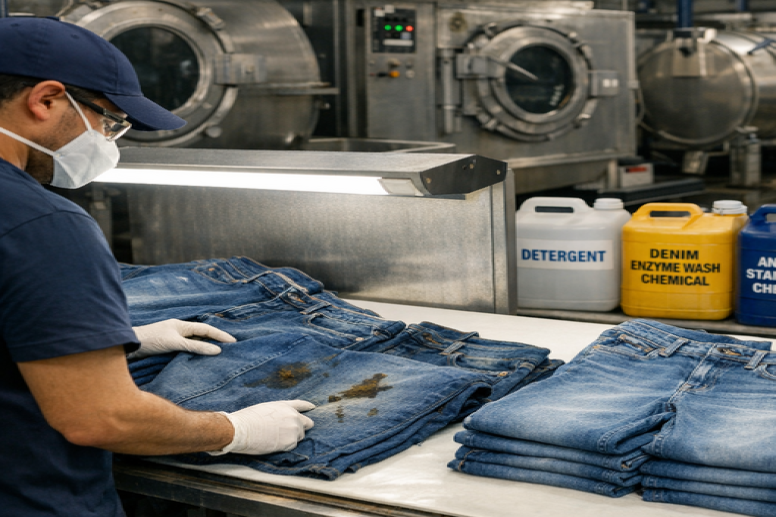
uneven light shades or patchy appearance
insufficient vintage effects
poor compatibility with finishing treatments
lower garment quality and reduced market appeal
higher reprocessing and rejection rates
Conclusion
Bleaching agents in denim washing play a vital role in achieving desired shade, uniformity, and garment aesthetics. They ensure consistent faded effects while protecting fabric integrity.
Factories that combine bleaching agents with dispersing chemicals, anti back staining agents, and softeners achieve reliable results, premium garment quality, and higher production efficiency. Proper bleaching improves consumer satisfaction and adds value to denim garments.