12 Mar
Denim Washing Process Flow and Required Textile Auxiliaries
Learn the denim washing process flow including desizing, enzyme washing, bleaching, neutralization, and softening. Complete guide to textile auxiliaries used in garment washing.
Denim Washing Process Flow and Required Textile Auxiliaries
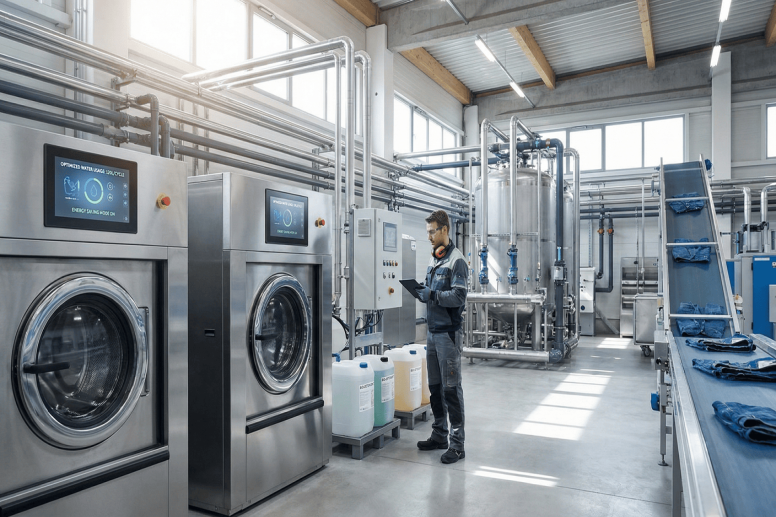
Denim garment washing transforms rigid indigo dyed fabric into soft and fashionable apparel. The denim washing process flow includes several wet processing stages supported by specialized textile auxiliaries.
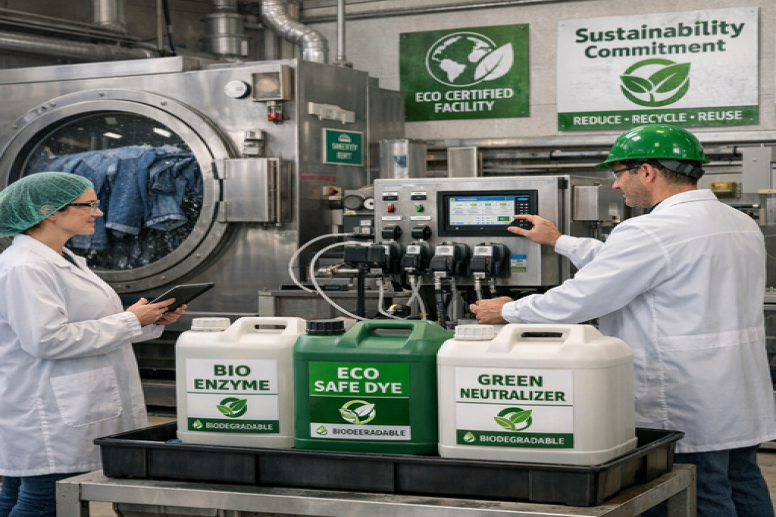
Garment washing factories use chemical treatments to remove sizing materials, create faded effects, control dye behavior, and improve garment softness. Each stage requires specific auxiliaries to maintain consistent washing quality.
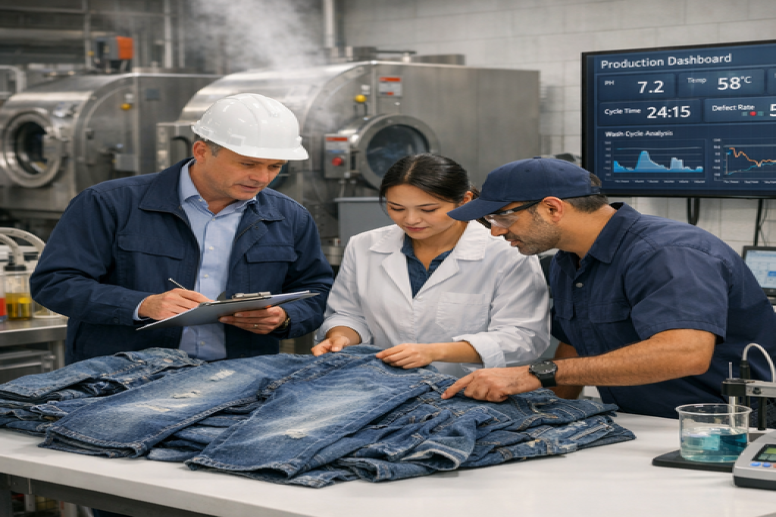
A clear understanding of the denim washing process flow helps production teams improve efficiency and avoid washing defects.
Overview of Denim Washing Process
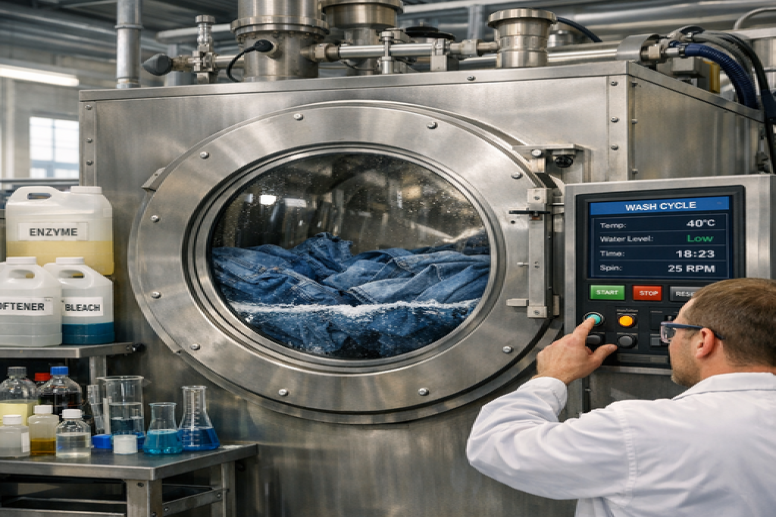
A typical denim washing plant follows a sequence of wet treatments. Each stage serves a specific purpose and uses particular textile auxiliaries.
Major steps include:
Desizing
Enzyme washing
Bleaching
Neutralization
Softening and finishing
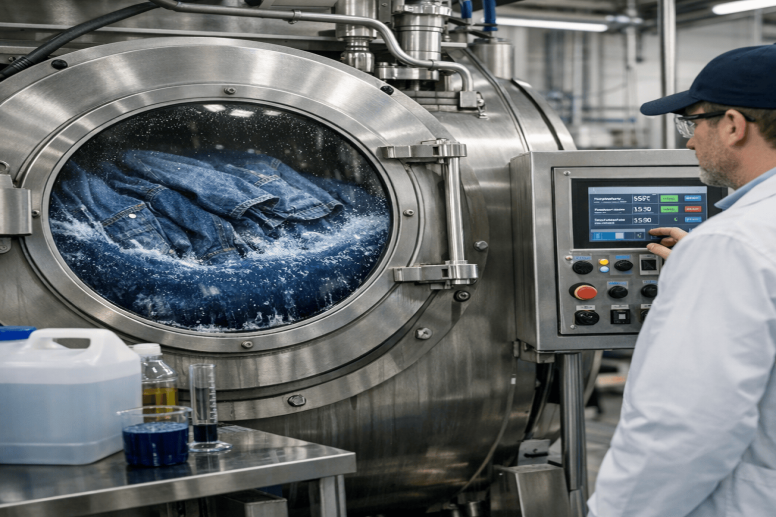
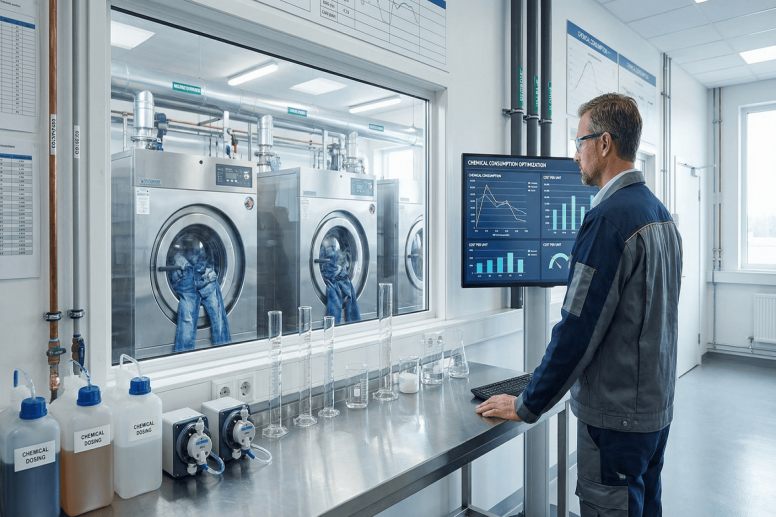
Controlled chemical dosing and proper machine parameters ensure stable production results.
Step 1. Desizing Process
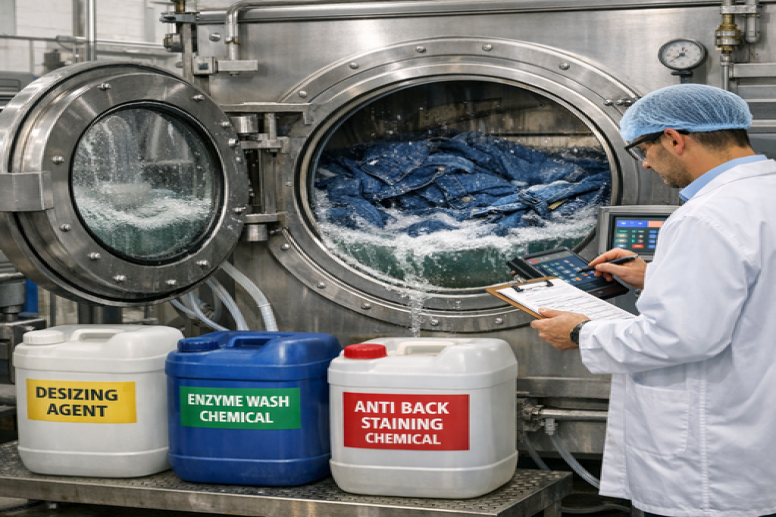
Desizing represents the first stage in denim washing. Denim fabrics contain starch or synthetic size applied during weaving to strengthen yarns.
The desizing stage removes these materials before further washing.
Auxiliaries Used
desizing agent
wetting agent
detergent
Purpose
removal of starch and sizing chemicals
improved fabric absorbency
preparation for enzyme washing
Complete desizing ensures uniform chemical penetration during later washing stages.
Step 2. Enzyme Washing Process
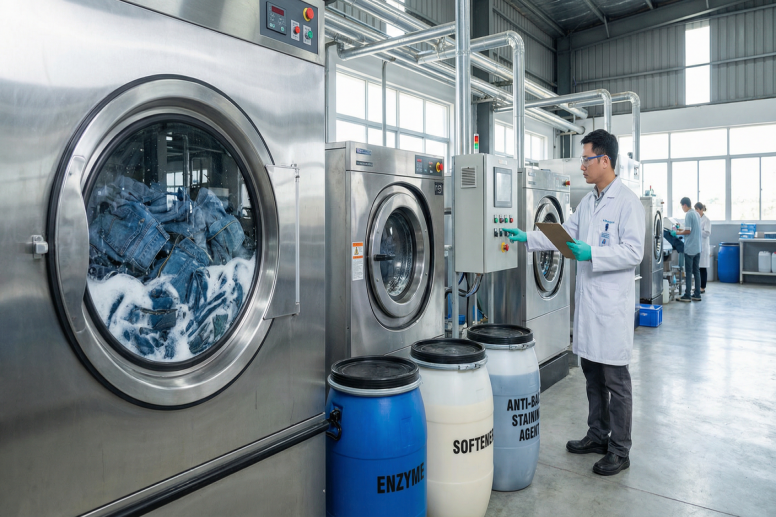
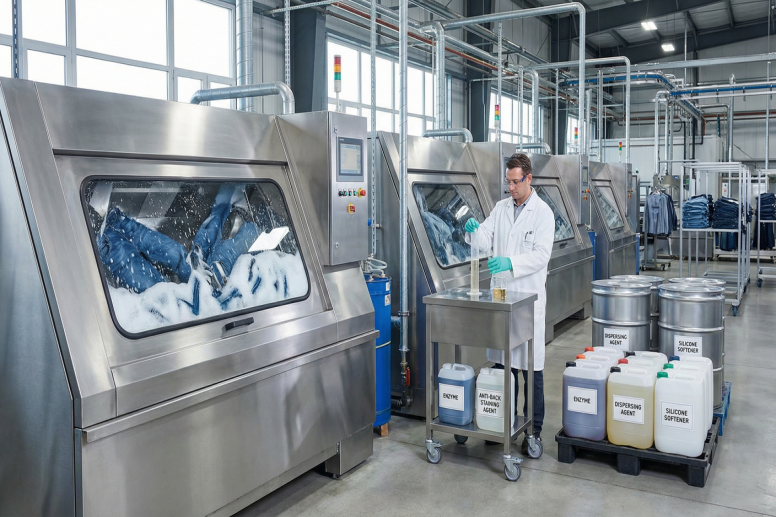
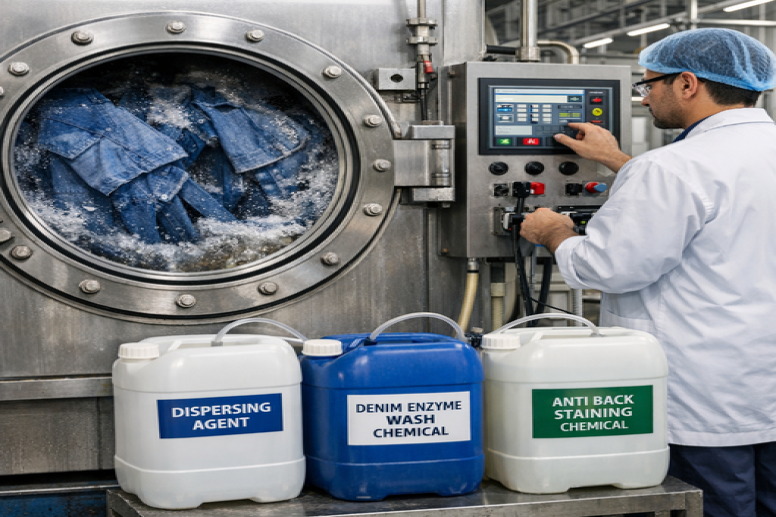
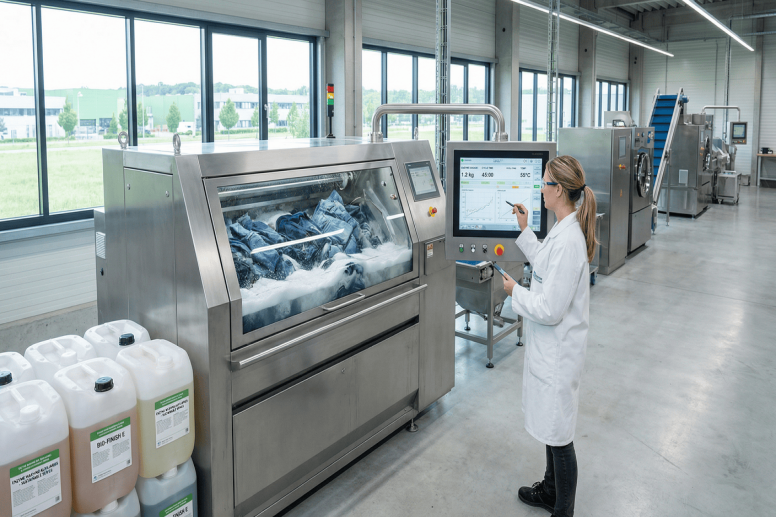
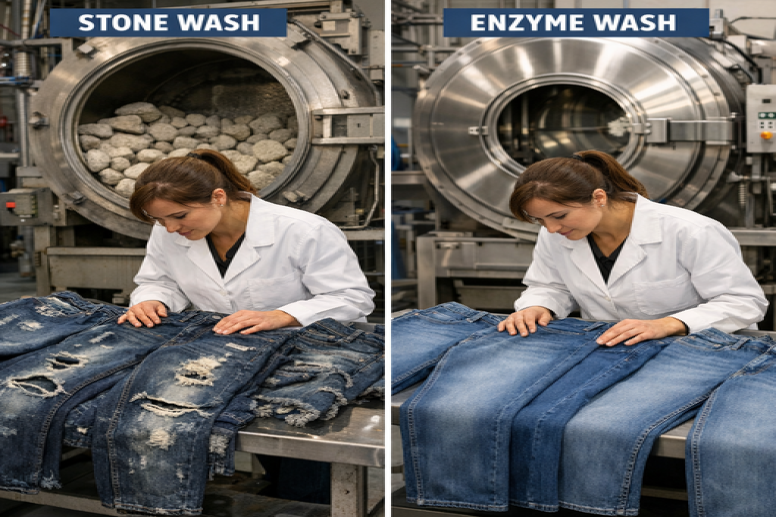
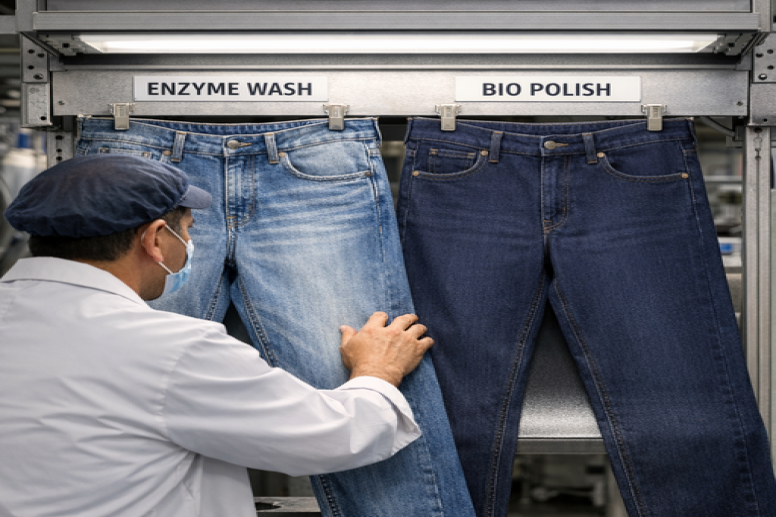
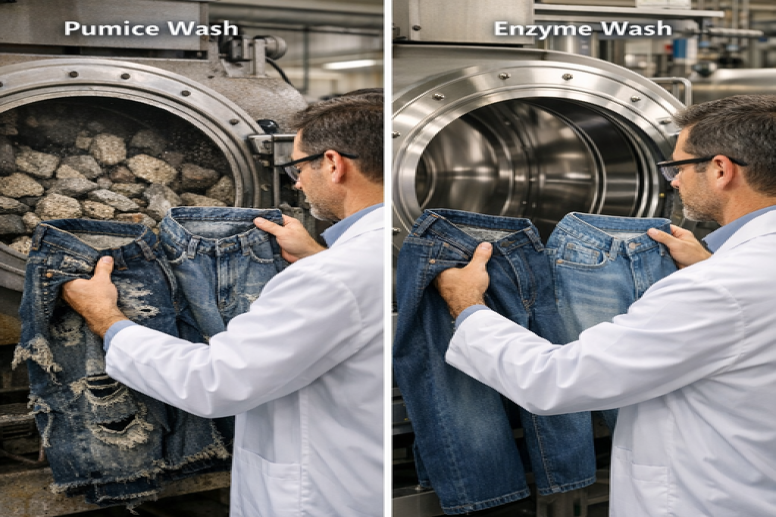
Enzyme washing produces the faded appearance commonly seen in denim garments. Cellulase enzymes break down surface fibers and remove indigo dye from yarn surface.
This stage also improves garment softness.
Auxiliaries Used
cellulase enzyme
anti back staining agent
dispersing agent
Purpose
controlled fading of indigo dye
removal of surface fibers
prevention of dye redeposition
Anti back staining auxiliaries prevent indigo dye particles from redepositing on garments during washing.
Step 3. Bleaching Process
Bleaching reduces shade depth and produces fashion effects such as vintage or light denim appearance.
Garment washing plants perform bleaching after enzyme washing when lighter shades are required.
Auxiliaries Used
bleaching agent
stabilizer
wetting agent
Purpose
shade lightening
fashion effect creation
preparation for special finishes
Careful chemical control protects fabric strength during bleaching.
Step 4. Neutralization Process
Bleaching leaves oxidizing chemical residues inside garments. Neutralization removes these chemicals and stabilizes the fabric.
Auxiliaries Used
neutralizing agent
peroxide remover
Purpose
elimination of chemical residues
prevention of yellowing
preparation for softening stage
Neutralization ensures chemical stability before finishing treatments.
Step 5. Softening and Finishing
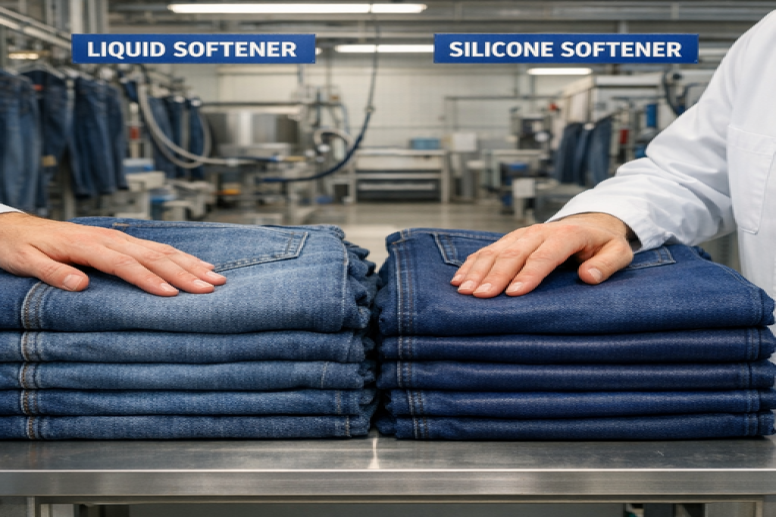
Softening represents the final stage of the denim washing process. This treatment improves garment comfort and fabric flexibility.
Auxiliaries Used
silicone softener
cationic softener
polyethylene softener
Purpose
improved fabric softness
smooth garment surface
enhanced drape and comfort
Softening chemicals play an important role in final garment quality.
Additional Chemicals Used in Denim Washing
Garment washing plants often use supplementary auxiliaries to solve production problems.
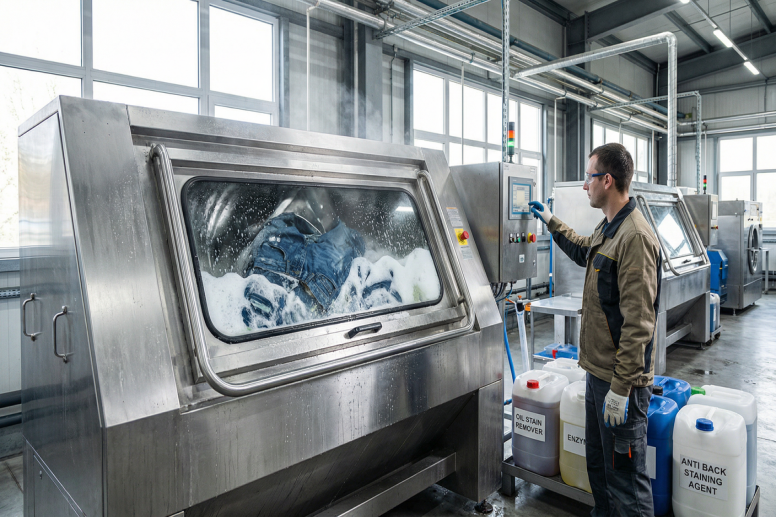
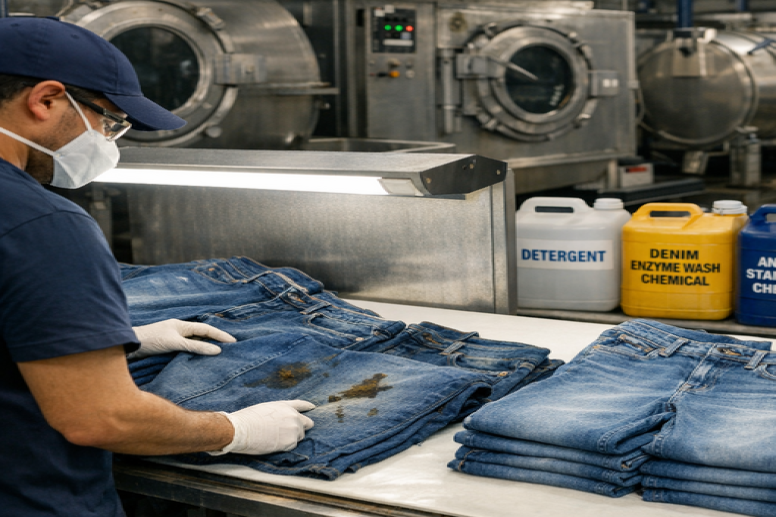
Oil Stain Removers
Oil stain remover chemicals dissolve grease marks introduced during garment sewing operations.
Benefits include:
removal of machine oil stains
cleaner garment surface
prevention of permanent marks
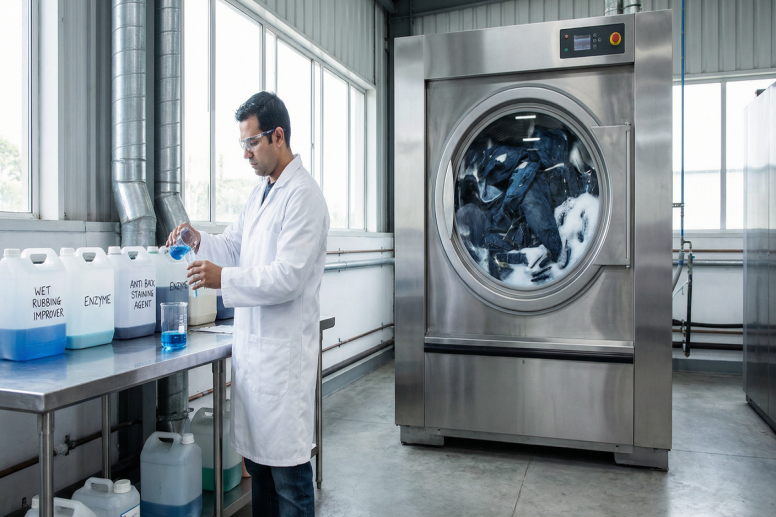
Wet Rubbing Improvers
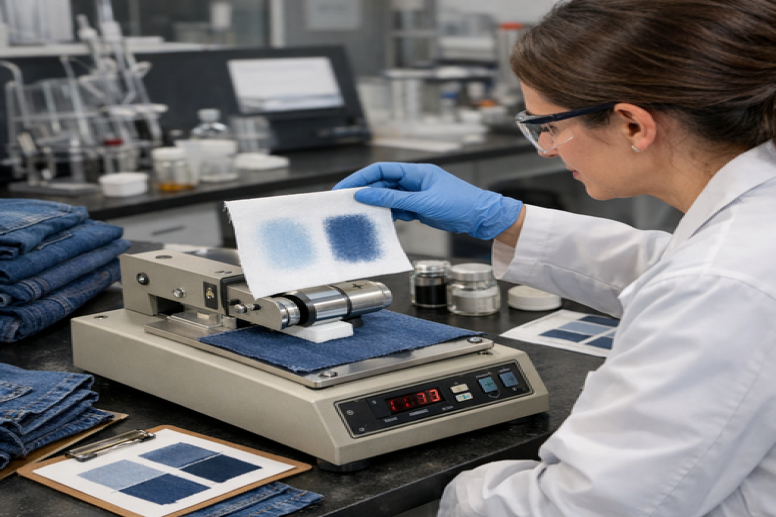
Indigo dyed denim frequently shows poor rubbing fastness.
Wet rubbing improvers provide:
improved dye fixation
reduced color transfer
better garment durability
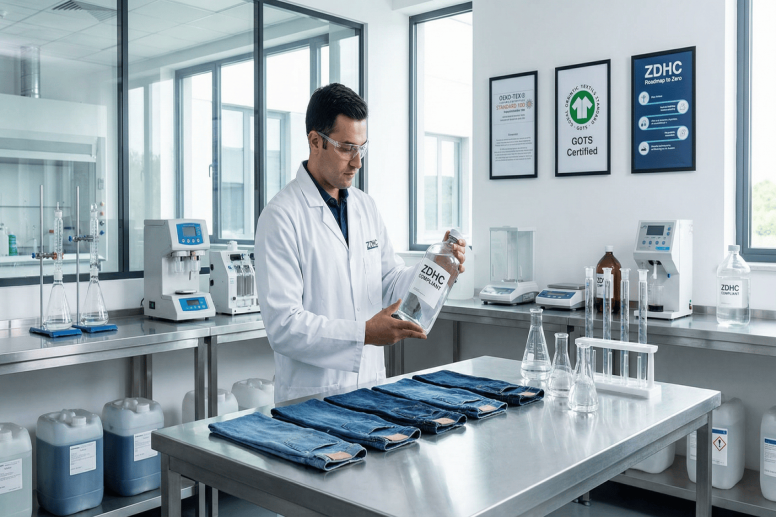
Many denim exporters apply these chemicals to meet international quality standards.
Dispersing Agents
Dispersing auxiliaries control dye particles released during washing.
Functions include:
suspension of indigo dye particles
prevention of dye aggregation
reduction of back staining
These chemicals support stable enzyme washing performance.
Common Washing Problems in Denim Processing
Garment washing plants face several issues when process control remains poor.
Typical problems include:
back staining during enzyme washing
uneven shade development
oil stains on garments
rough fabric hand feel
poor rubbing fastness
Correct chemical selection and process control reduce these problems.
Benefits of an Optimized Denim Washing Process
Well controlled denim washing processes provide operational advantages for garment manufacturers.
Production benefits include:
consistent shade results
improved garment softness
reduced reprocessing cost
stable washing performance
higher product quality
Efficient washing processes increase factory productivity.
Conclusion
The denim washing process flow involves multiple wet processing stages supported by specialized textile auxiliaries. Each stage performs a defined function, from desizing and enzyme washing to bleaching, neutralization, and softening.
Proper auxiliary selection and controlled washing conditions ensure stable production, consistent garment appearance, and improved product quality. Modern garment washing plants rely on advanced textile chemicals to achieve reliable denim finishing results.