16 Mar
Productivity Improvement in Denim Washing Plants for Higher Output and Lower Cost
Learn strategies for productivity improvement in denim washing plants. Optimize the enzyme wash process and reduce denim washing defects for higher efficiency.
Productivity Improvement in Denim Washing Plants
Denim washing plants face constant pressure to increase output, reduce cost, and maintain consistent quality. Production managers must control time, water, energy, labor, and chemical usage.
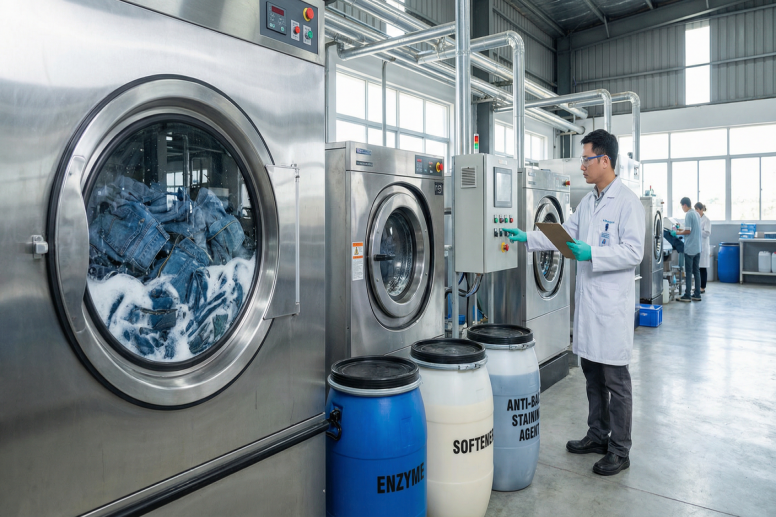
Productivity improvement in denim washing plants focuses on process optimization, machine efficiency, and chemical control. Strong management practices reduce downtime, prevent reprocessing, and improve garment throughput.
Efficient operations also help reduce denim washing defects and maintain stable results during the enzyme wash process.
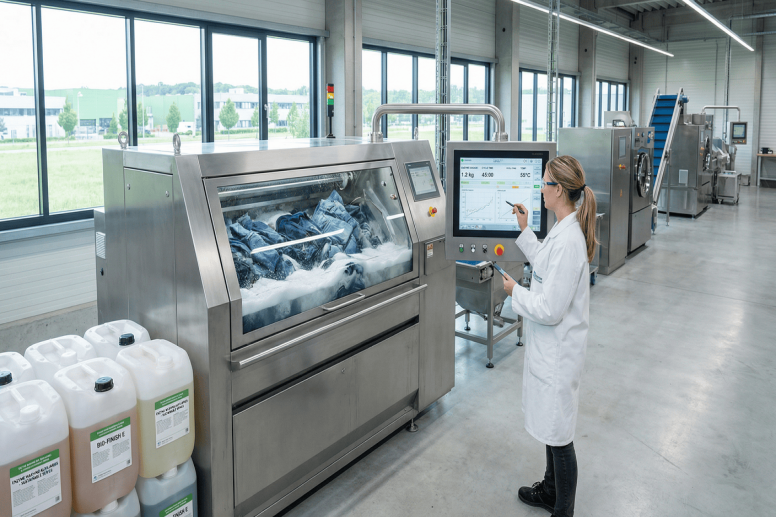
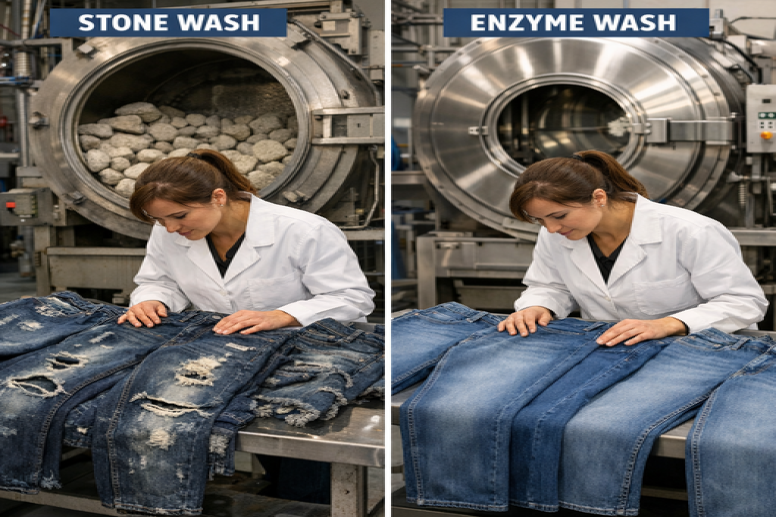
Optimize the Enzyme Wash Process
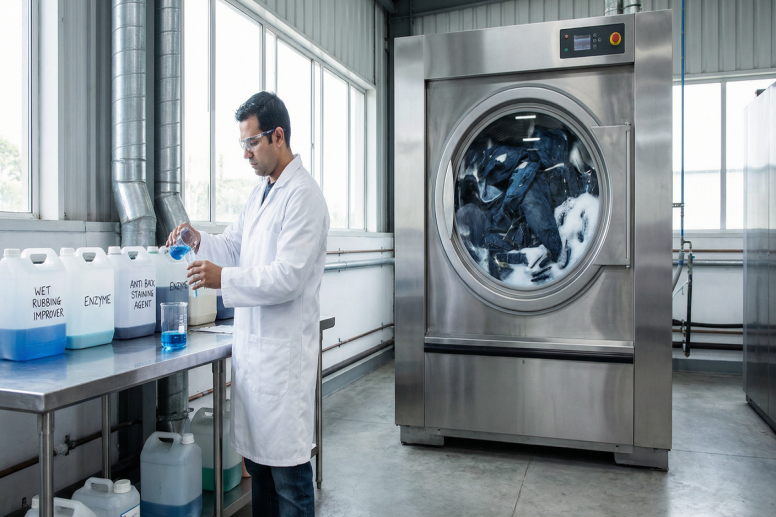
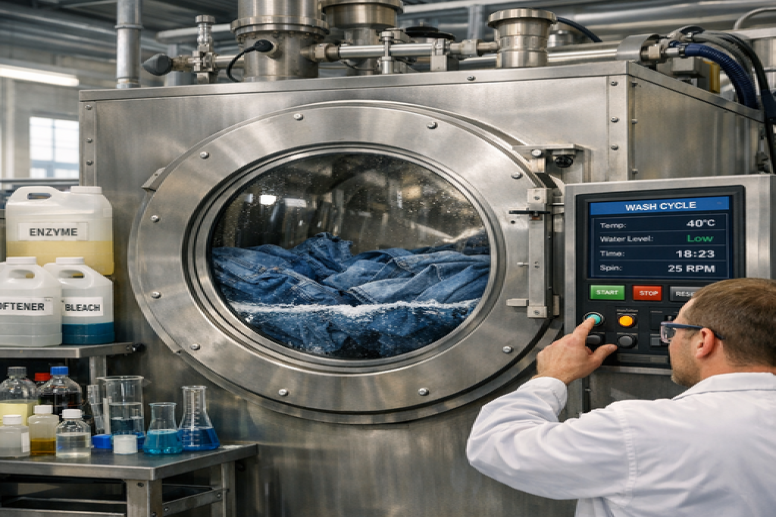
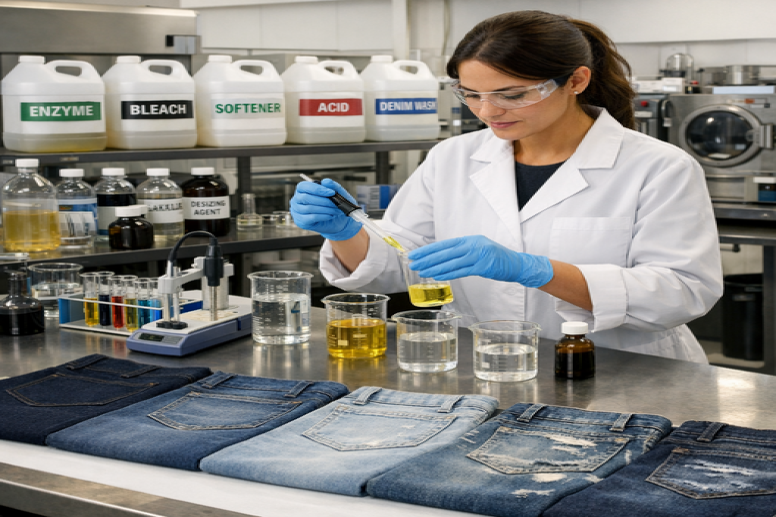
The enzyme wash process plays a central role in denim finishing. Poor control increases cycle time and reduces machine capacity.
Production managers should:
define standard enzyme dosage
control temperature and washing time
maintain proper liquor ratio
avoid over processing
Proper control improves fading consistency and reduces indigo dye washing problems.
Reduce Reprocessing and Quality Rejections
Rewashing garments reduces productivity and increases cost.
Common causes of reprocessing include:
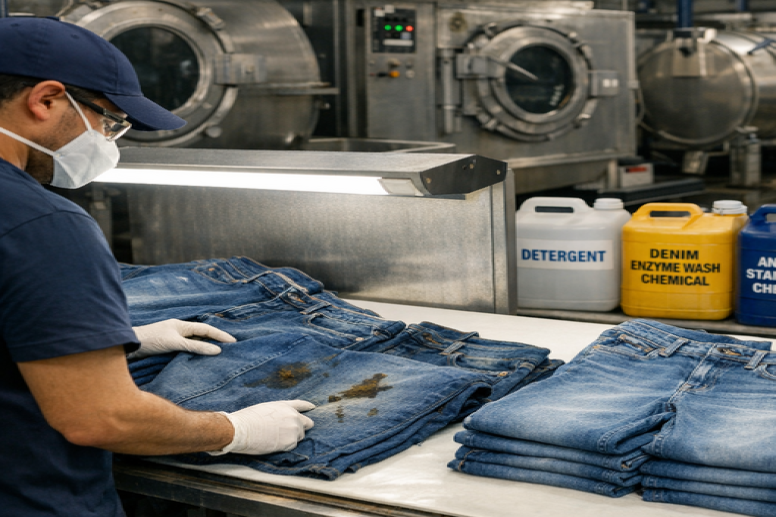
back staining
uneven fading
shade variation
incomplete dye removal
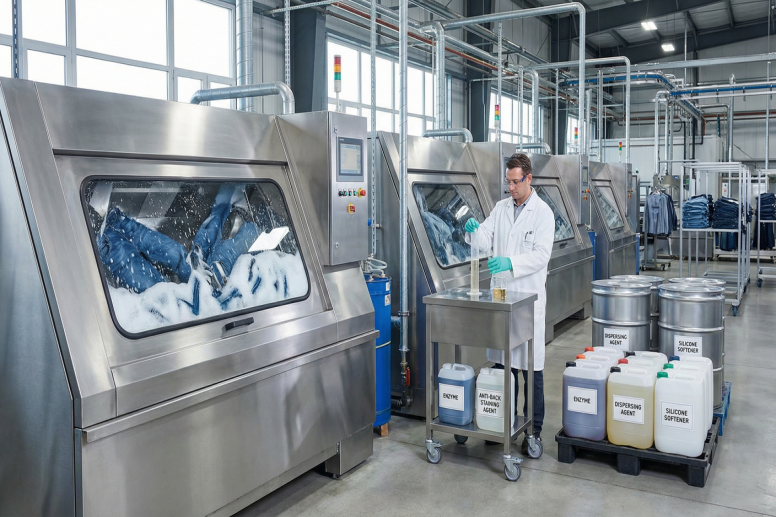
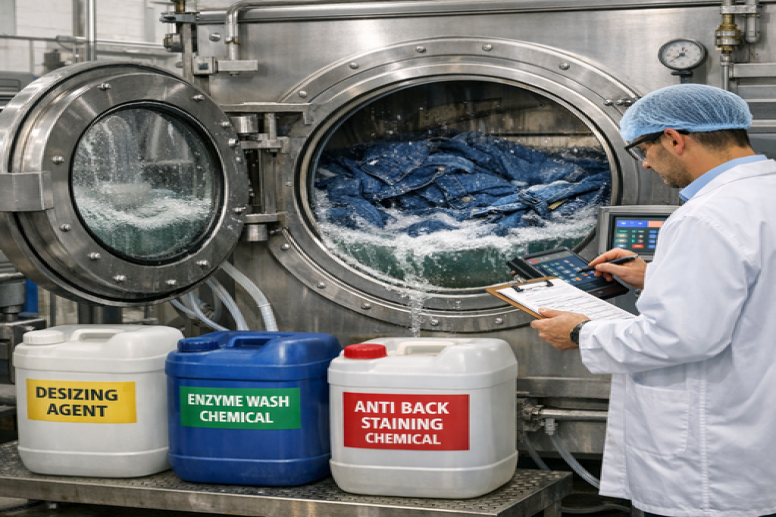
Using correct dispersing agents and anti back staining chemicals helps prevent these issues. Lower defect rates increase first pass yield and improve plant efficiency.
Improve Machine Utilization
High productivity depends on effective machine scheduling.
Best practices include:
plan batch loading in advance
minimize idle machine time
balance workload across washing units
maintain preventive maintenance schedules
Well maintained machines reduce breakdowns and improve production flow.
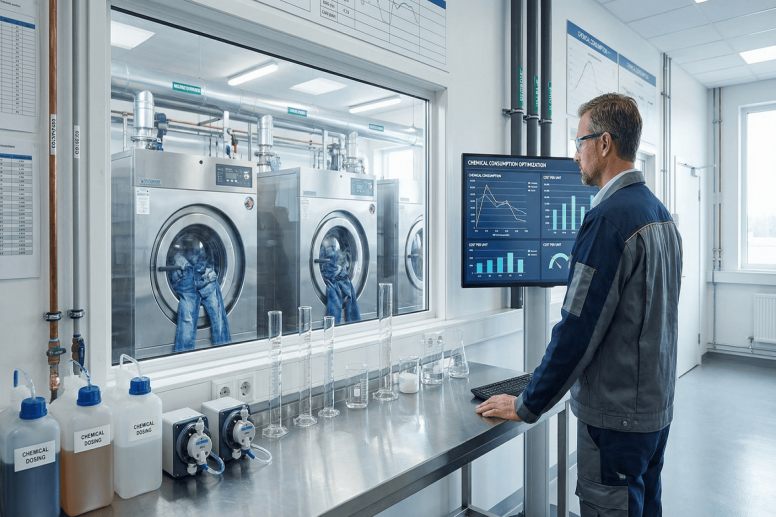
Control Chemical Consumption
Excess chemical usage increases cost without improving results.
Chemical optimization helps improve productivity by:
reducing unnecessary dosing
maintaining stable wash performance
improving process repeatability
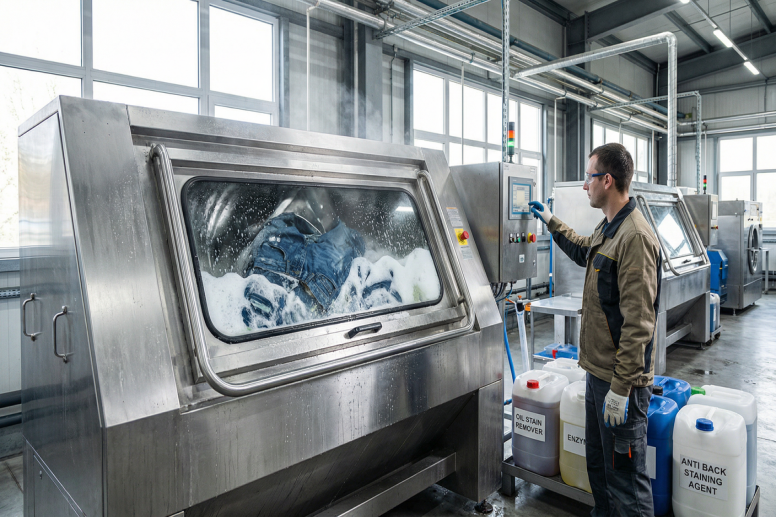
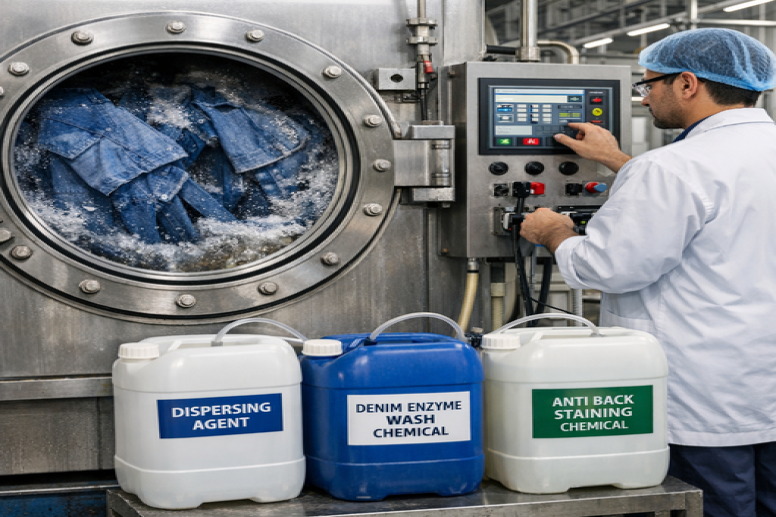
Accurate dosing during the enzyme wash process reduces variability and prevents denim washing defects.
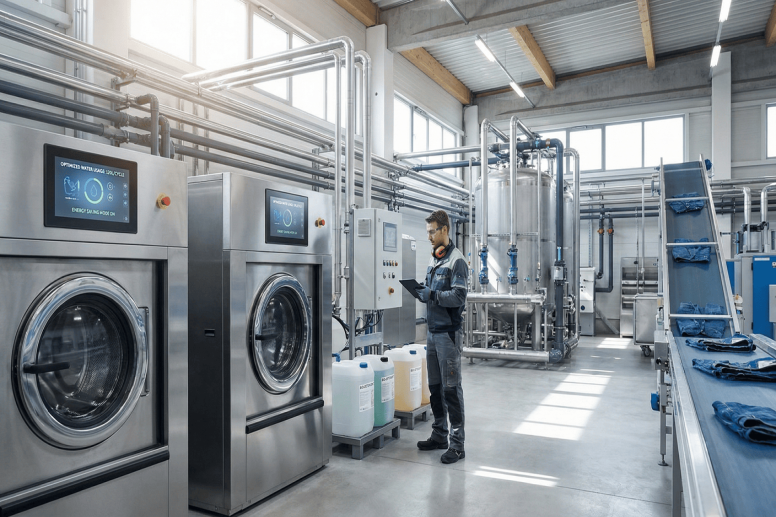
Improve Water and Energy Efficiency
Water and energy directly impact production cost.
Productivity improvement strategies include:
low liquor ratio washing systems
heat recovery systems
optimized rinsing cycles
efficient drying methods
Lower resource consumption increases output per unit cost and supports sustainable operations.
Train Operators and Supervisors
Skilled operators improve production stability.
Training programs should focus on:
accurate chemical dosing
process timing control
defect identification
machine operation standards
Well trained teams reduce errors and maintain consistent quality during denim processing.
Use Data Based Monitoring
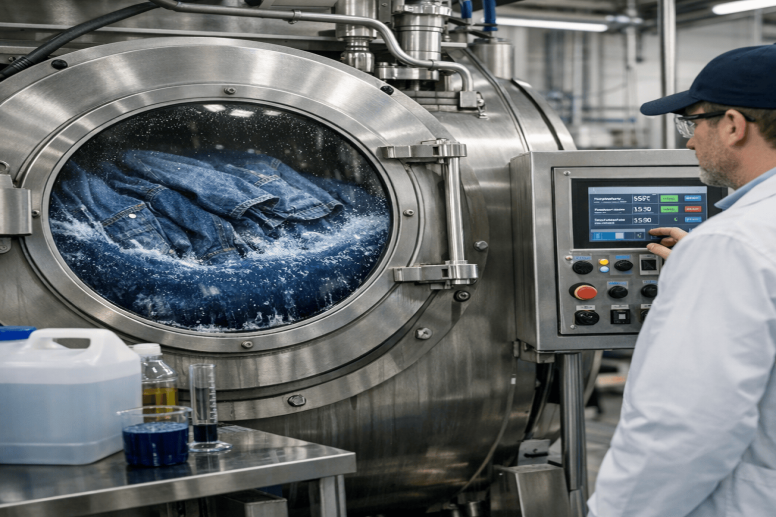
Modern washing plants use digital systems to track performance.
Production managers should monitor:
cycle time per batch
chemical consumption per garment
reprocessing rate
machine downtime
Data driven decisions improve efficiency and support long term productivity growth.
Benefits of Productivity Improvement
Effective management delivers measurable results.
Key benefits include:
higher daily output
lower production cost
reduced denim washing defects
better control of indigo dye washing problems
improved profit margins
stronger buyer satisfaction
Consistent productivity builds competitive advantage in the garment washing industry.
Conclusion
Productivity improvement in denim washing plants requires process control, chemical optimization, machine efficiency, and skilled operators. Proper management of the enzyme wash process and careful prevention of indigo dye washing problems help reduce defects and increase output.
Production managers who implement systematic improvement strategies achieve stable quality, lower cost, and higher operational performance in denim garment washing factories.