14 Mar
Denim Fabric Softening Chemicals: Functions, Benefits, and Application in Garment Washing
Learn about denim fabric softening chemicals used in garment washing. Complete guide covering denim softener chemical, application process, and benefits for denim garments.
Denim Fabric Softening Chemicals: Functions and Benefits
Denim garments pass through several washing stages before reaching the final finishing stage. After enzyme washing, bleaching, and neutralization, garments often feel rough due to fiber abrasion and chemical treatments. Denim fabric softening chemicals restore softness and improve garment comfort.
Garment washing factories rely on denim softener chemical as one of the most important garment washing auxiliaries. These chemicals improve hand feel, enhance fabric drape, and increase the commercial value of finished denim garments.
Proper softening treatment ensures that denim garments meet both quality standards and consumer comfort expectations.
What Are Denim Fabric Softening Chemicals
Denim fabric softening chemicals are textile auxiliaries applied during the final washing stage to improve fabric softness and flexibility. These chemicals create a thin lubricating layer around fibers, which reduces friction between yarns.
Main functions include:
improvement of garment softness
reduction of fabric stiffness
enhancement of drape and flexibility
protection of fabric surface
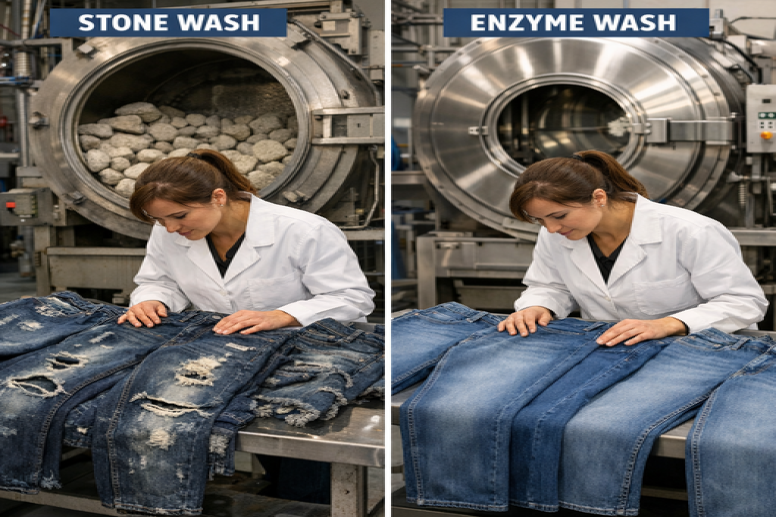
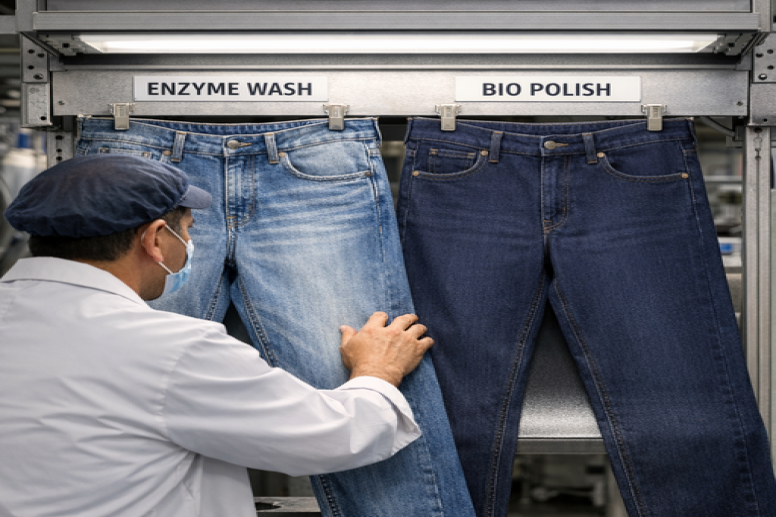
Softening treatments remain essential after processes involving denim enzyme wash chemical because enzyme washing increases surface roughness.
Importance of Fabric Softening in Denim Washing
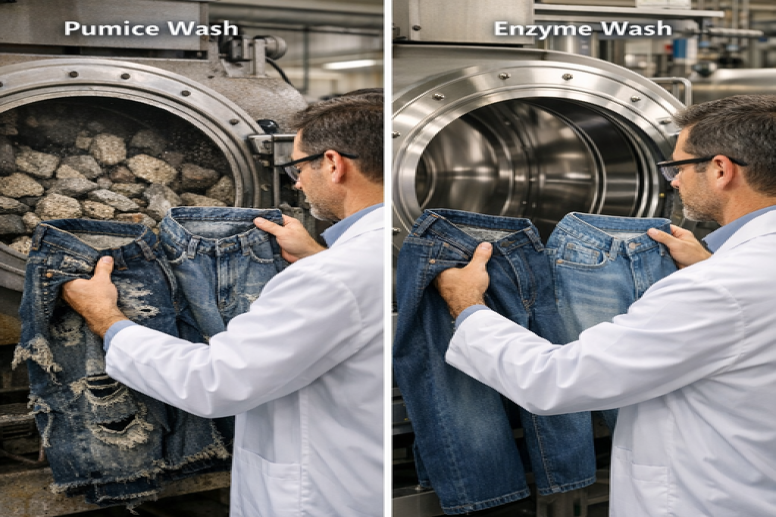
Denim garments undergo mechanical abrasion during washing. Processes such as enzyme washing and bleaching remove surface fibers and dye particles. While these processes create desired fashion effects, they also increase fabric roughness.
Fabric softening provides several advantages:
improved comfort during wear
smoother garment surface
improved fabric flexibility
enhanced product quality
Softening also supports the performance of other garment washing auxiliaries by stabilizing the final fabric condition.
Types of Denim Softener Chemicals
Different types of softening chemicals are used in denim garment washing depending on the desired fabric feel.
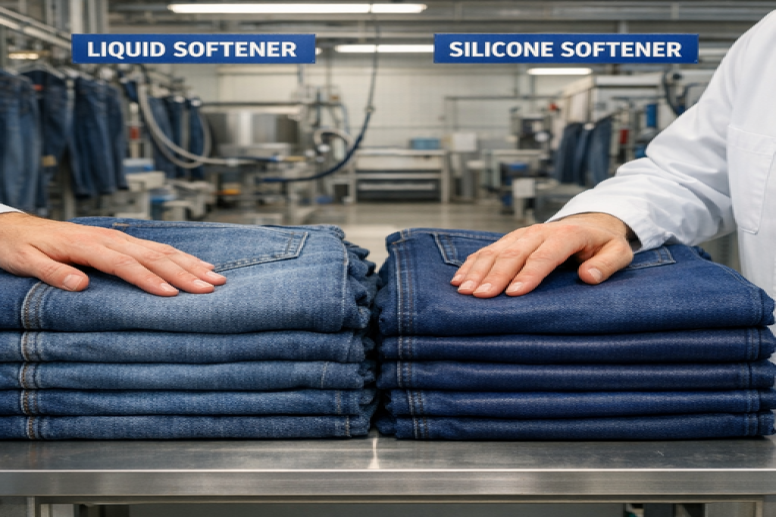
Silicone Based Softeners
Silicone softeners provide smooth and silky hand feel. These softeners are widely used in premium denim garments.
Benefits include:
superior softness
improved drape
smooth fabric surface
Cationic Softeners
Cationic softeners attach strongly to cotton fibers and provide durable softness.
Advantages include:
stable softening performance
improved fabric flexibility
good compatibility with cotton denim fabrics
Polyethylene Based Softeners
These softeners provide surface lubrication and improved abrasion resistance.
Benefits include:
reduced fiber friction
improved garment durability
better finishing quality
Role of Fabric Softeners in Denim Washing Process
Denim softener chemical plays several important roles in garment finishing.
Fiber Lubrication
Softening chemicals coat fiber surfaces and reduce friction between yarns.
Improved Fabric Hand Feel
The chemical treatment transforms rough denim fabric into soft and comfortable garments.
Surface Protection
Softening creates a protective layer that helps preserve garment appearance.
Compatibility With Other Auxiliaries
Fabric softeners work effectively after treatments involving denim enzyme wash chemical and anti back staining chemical.
Benefits of Using Denim Fabric Softening Chemicals
Garment washing factories gain several operational advantages when proper softening treatments are applied.
Main benefits include:
improved garment comfort
smooth and flexible fabric surface
enhanced visual appearance
increased product value
improved performance of garment washing auxiliaries
better consumer satisfaction
Softening treatments help denim products meet export quality standards.
Application in Denim Washing Process
Fabric softening chemicals are applied during the final stage of the denim washing process.
Typical process sequence:
Desizing stage
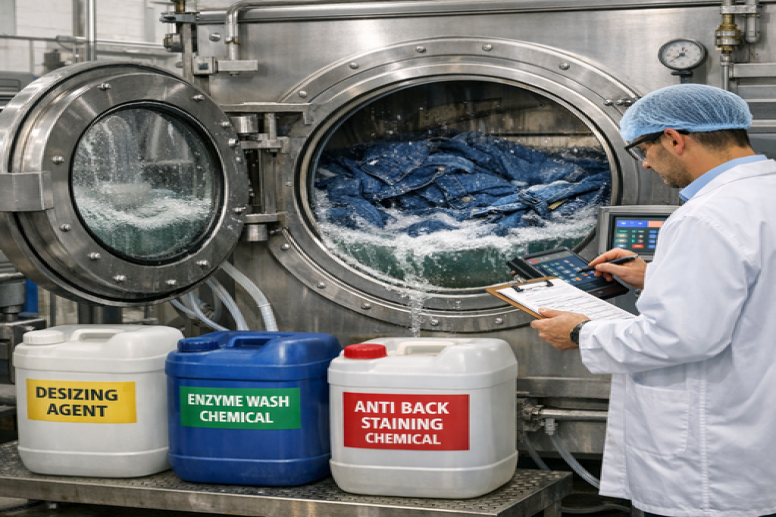
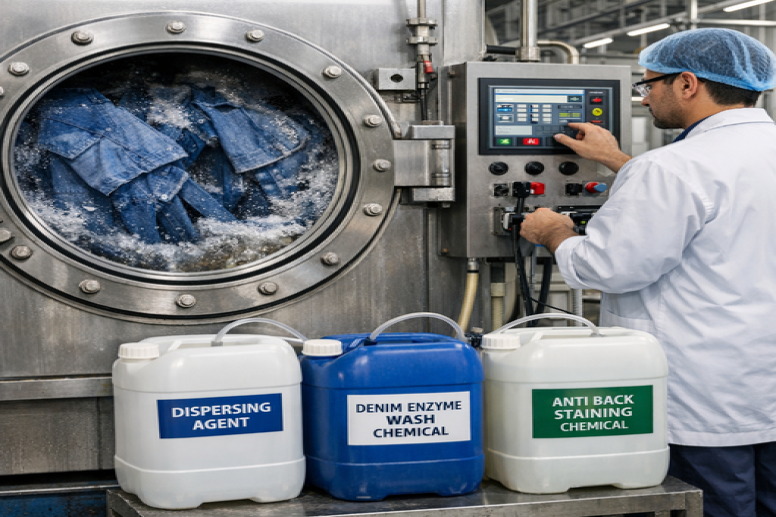
Enzyme washing using denim enzyme wash chemical
Addition of anti back staining chemical
Rinsing stage
Bleaching if required
Neutralization
Softening using denim softener chemical
Proper dosage and washing parameters ensure uniform softening across all garments in the washing machine.
Problems Without Proper Softening Treatment
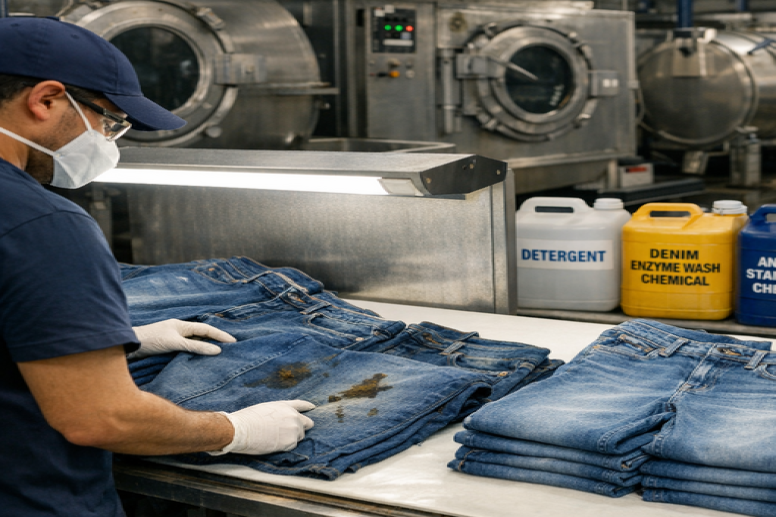
Denim garments without proper softening treatment often show quality problems.
Common issues include:
rough and stiff fabric feel
poor garment drape
uncomfortable wearing experience
reduced market value
These problems reduce consumer acceptance of the finished product.
Conclusion
Denim fabric softening chemicals play a crucial role in the final stage of garment washing. These auxiliaries improve fabric softness, enhance garment comfort, and increase product value.
Denim washing factories achieve consistent results when denim softener chemical is combined with other garment washing auxiliaries such as denim enzyme wash chemical and anti back staining chemical. Proper finishing treatment ensures high quality denim garments ready for the global market.