16 Mar
How to Improve Wet and Dry Rubbing Fastness in Denim Garments
Learn how to improve wet and dry rubbing fastness in denim garments. Understand causes, enzyme wash process effects, and solutions for indigo dye washing problems.
How to Improve Wet and Dry Rubbing Fastness in Denim
Wet and dry rubbing fastness remains a critical quality requirement in denim garments. Poor rubbing fastness causes indigo dye to transfer from denim fabric onto other materials during friction. This problem leads to customer complaints and product rejection.
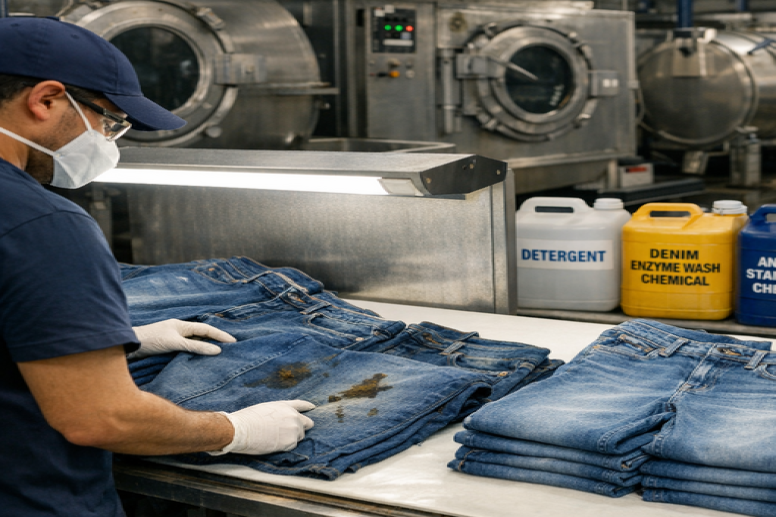
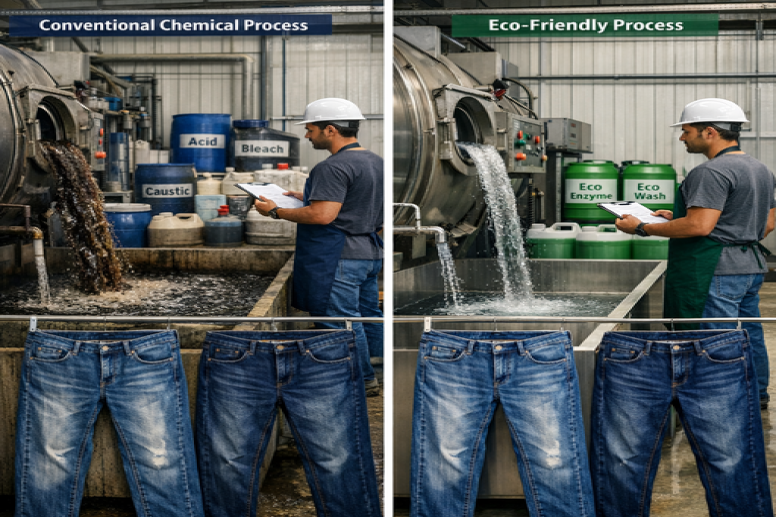
During garment washing treatments such as the enzyme wash process, surface fibers and indigo dye particles become loose. Without proper control, these loose dye particles create indigo dye washing problems and increase the risk of color transfer.
Understanding the causes of rubbing fastness problems and applying proper washing techniques helps garment washing factories maintain high product quality.
What Is Wet and Dry Rubbing Fastness
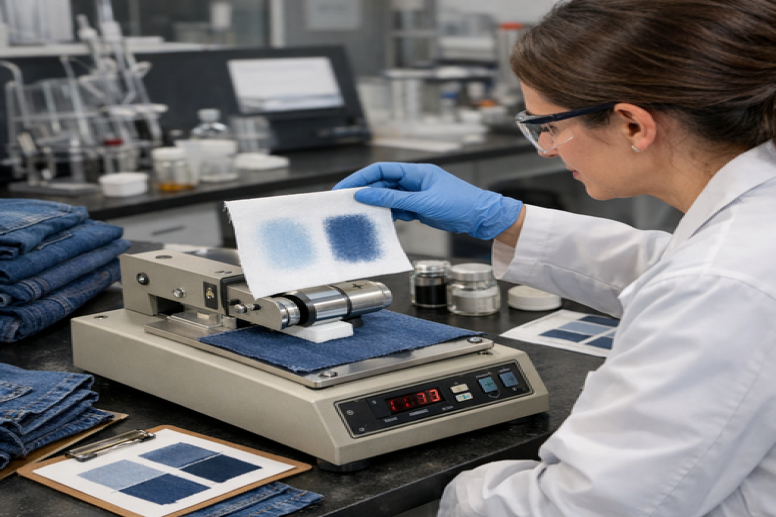
Rubbing fastness refers to the resistance of dyed fabric against color transfer during friction.
Two main types are evaluated in denim garments.
Dry rubbing fastness
This test measures color transfer when dry fabric rubs against another dry surface.
Wet rubbing fastness
This test measures color transfer when the fabric surface contains moisture during rubbing.
Wet rubbing fastness usually shows lower results because water helps loosen dye particles from the fabric surface.
Causes of Poor Rubbing Fastness in Denim
Several factors influence rubbing fastness performance in denim garments.
Main causes include:
high amount of loose indigo dye particles on fabric surface
aggressive enzyme wash process which releases surface fibers
insufficient washing and rinsing after enzyme treatment
improper finishing treatment
These conditions increase indigo dye washing problems and cause color transfer during rubbing.
Role of Enzyme Washing in Rubbing Fastness
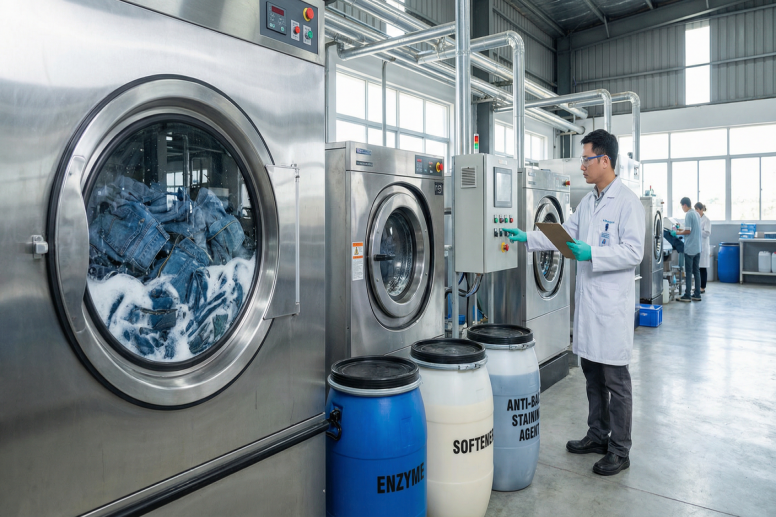
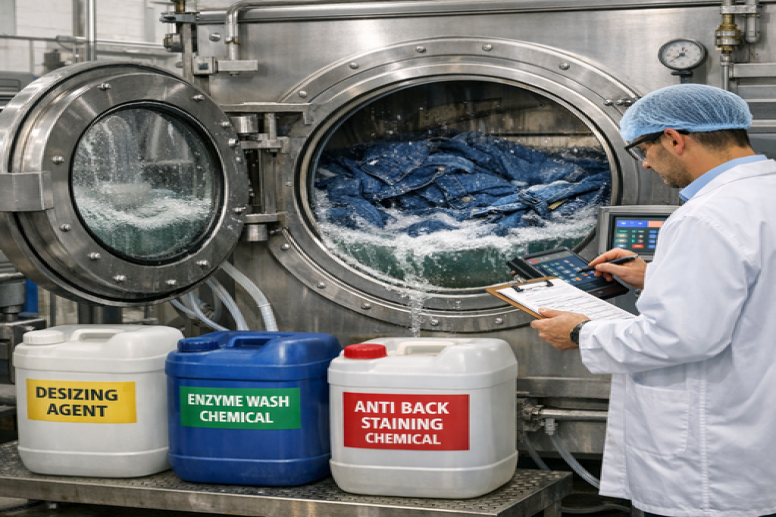
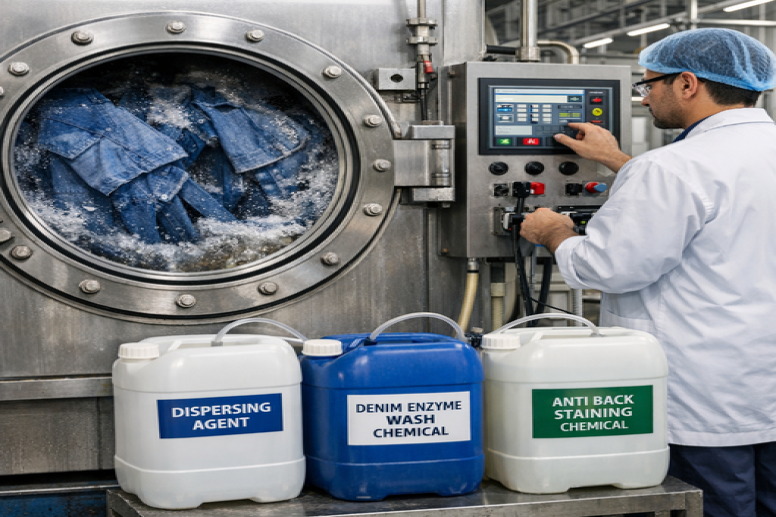
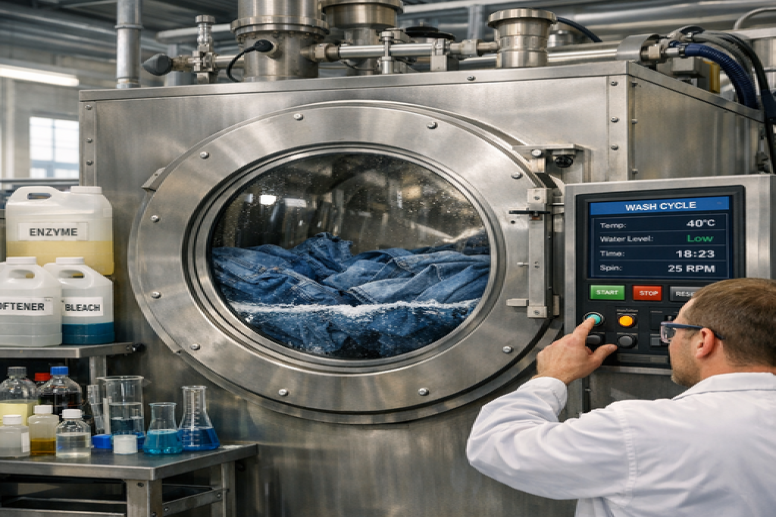
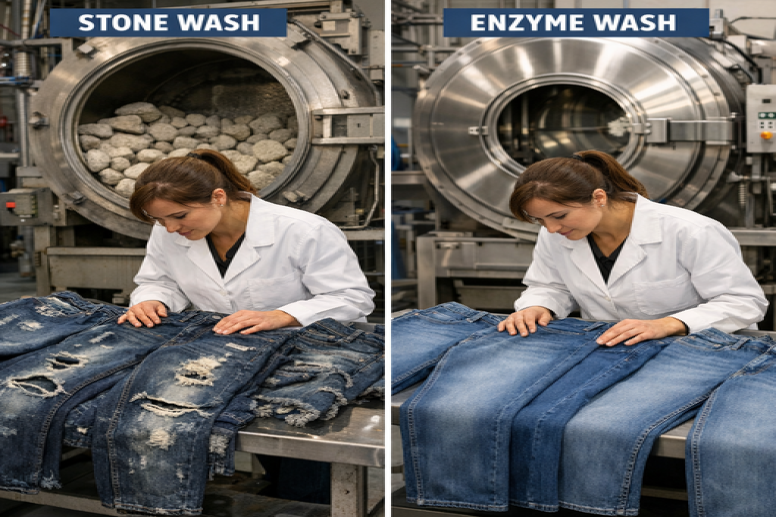
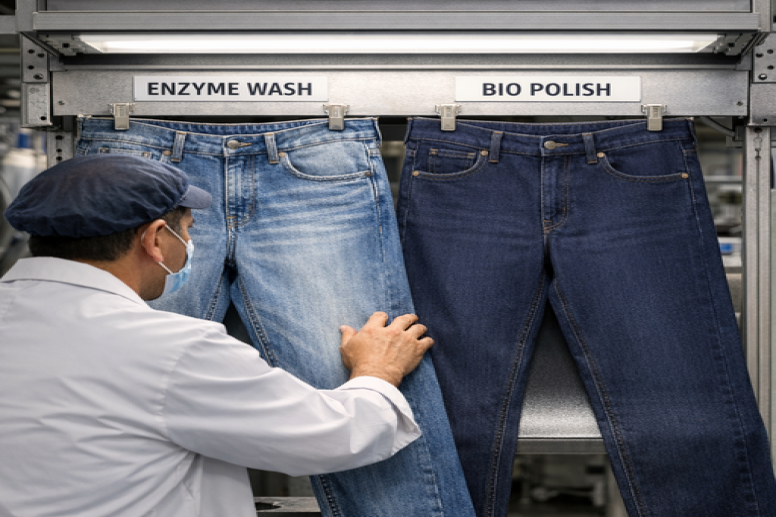
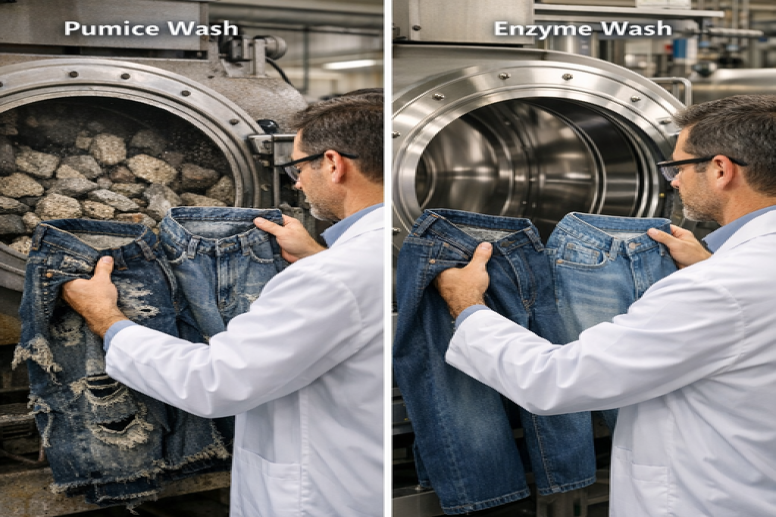
The enzyme wash process removes surface fibers from denim fabric to create faded effects. During this process, small indigo dyed fiber particles detach from the fabric surface.
If these particles remain on the garment after washing, they easily transfer during rubbing tests.
Proper control of the enzyme wash process helps reduce excessive dye release and improves rubbing fastness performance.
Methods to Improve Wet and Dry Rubbing Fastness
Garment washing factories apply several technical methods to improve rubbing fastness.
Proper Washing and Rinsing
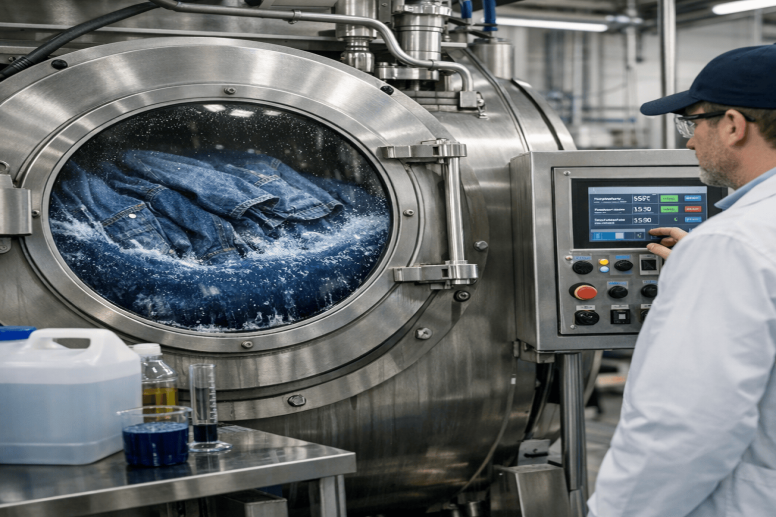
Effective rinsing removes loose dye particles released during the enzyme wash process. Multiple rinsing cycles improve garment cleanliness.
Controlled Enzyme Treatment
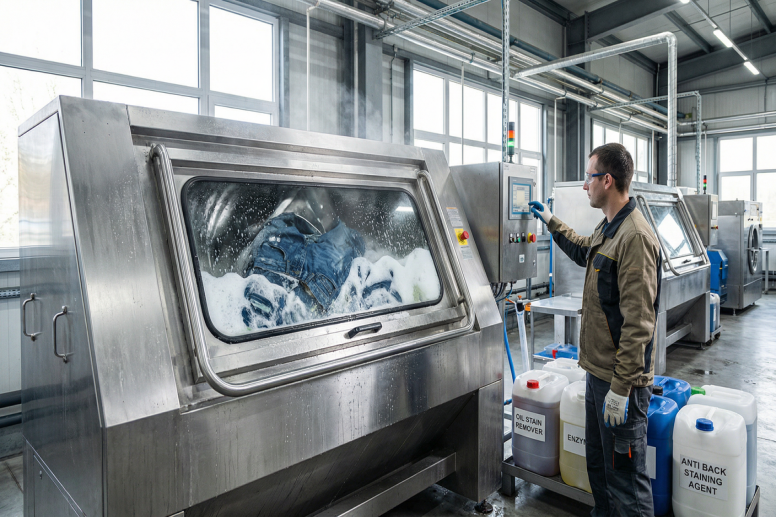
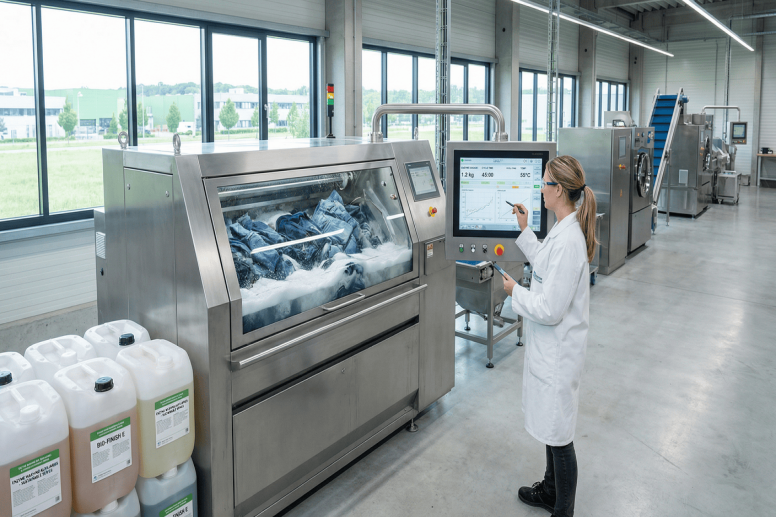
Maintaining proper enzyme dosage, washing time, and temperature prevents excessive fiber damage and dye release.
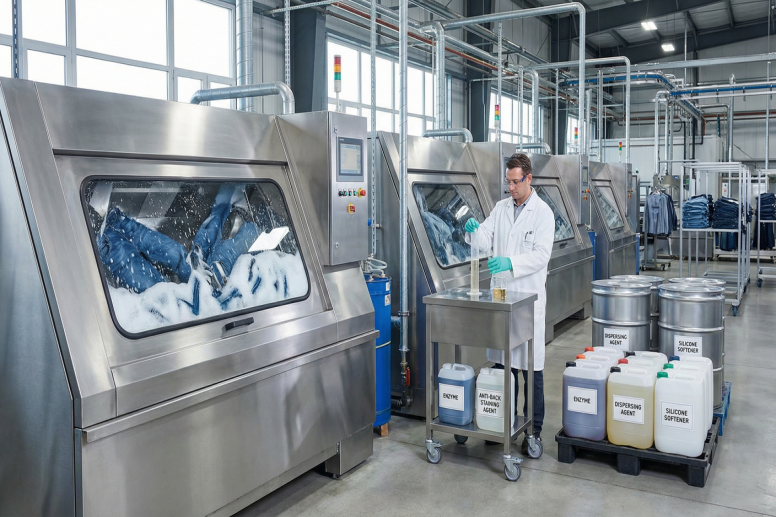
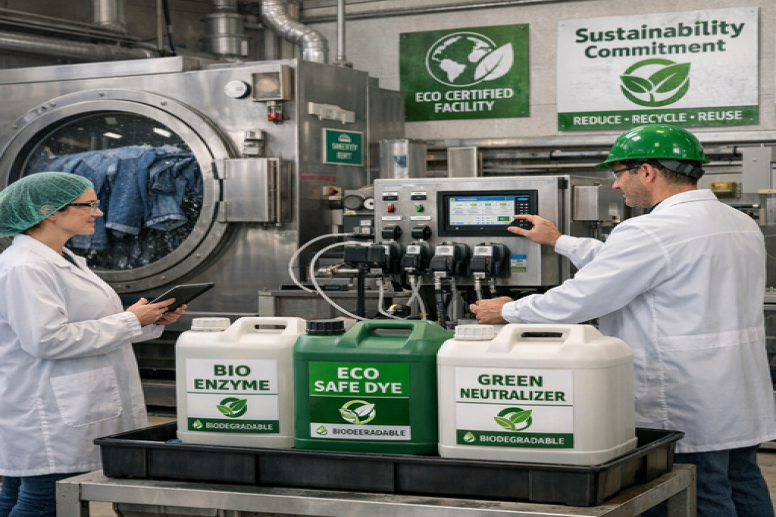
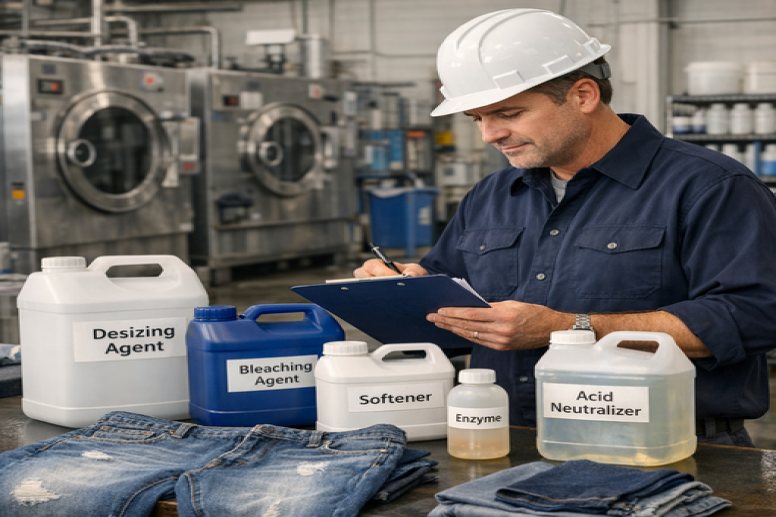
Use of Anti Back Staining Chemicals
These auxiliaries prevent redeposition of indigo dye particles on the garment surface.
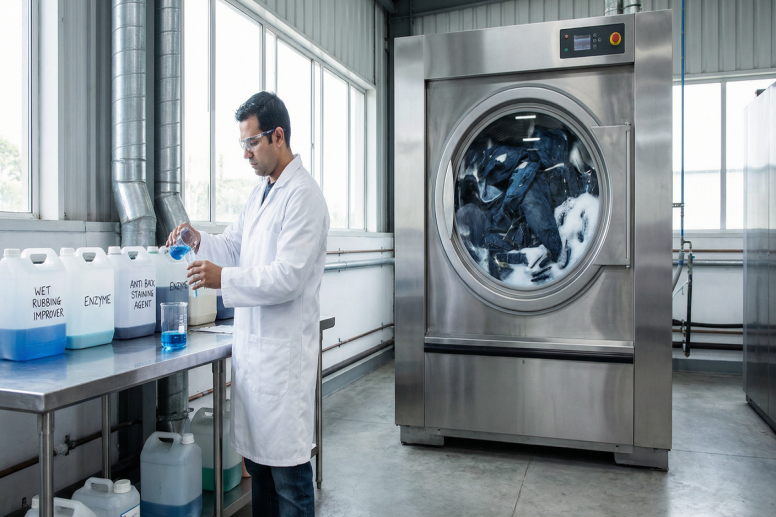
Application of Rubbing Fastness Improvers
Special finishing chemicals create a protective layer on the denim surface and reduce dye transfer during friction.
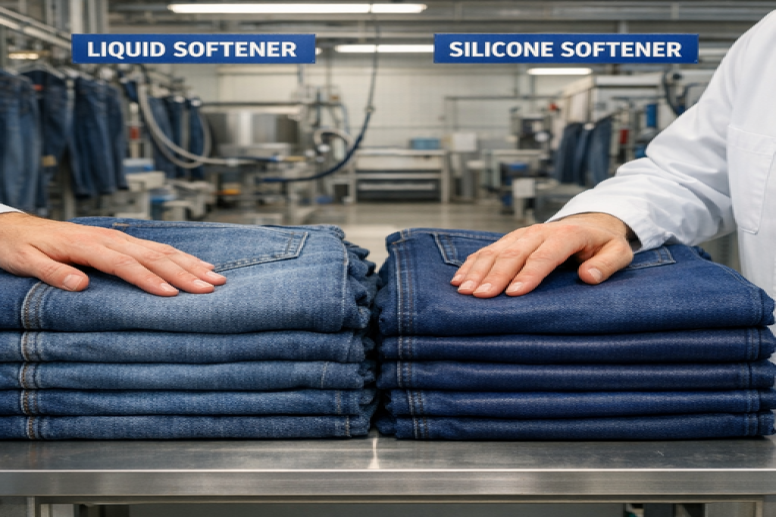
Proper Softening Treatment
Controlled softening treatment improves fabric surface smoothness and reduces fiber friction.
Benefits of Improving Rubbing Fastness
Improving rubbing fastness provides several advantages for denim manufacturers.
Key benefits include:
reduced denim washing defects
prevention of indigo dye washing problems
improved garment durability
better buyer acceptance during quality testing
increased consumer satisfaction
Consistent rubbing fastness performance strengthens product reliability in the market.
Conclusion
Wet and dry rubbing fastness represents an important quality parameter in denim garments. Loose indigo dye particles released during the enzyme wash process often cause color transfer during friction.
Garment washing factories improve rubbing fastness by controlling washing parameters, applying proper rinsing methods, and using specialized finishing chemicals. Proper process control reduces denim washing defects and ensures stable garment quality.