18 Mar
Liquid Softener vs Silicone Softener in Denim Garment Washing
Compare liquid softener vs silicone softener in denim washing. Improve softness, reduce denim washing defects, and control indigo dye washing problems.
Liquid Softener vs Silicone Softener in Denim Washing
Softening treatment defines the final hand feel and appearance of denim garments. Production managers must select the right softener to achieve required softness, durability, and finish.
Understanding liquid softener vs silicone softener helps improve garment quality, reduce reprocessing, and control denim washing defects during finishing. Correct selection also supports stability after the enzyme wash process and reduces indigo dye washing problems.
What Is Liquid Softener
Liquid softeners are conventional textile auxiliaries used to improve fabric hand feel. These products are often based on fatty acid derivatives or cationic compounds.
Key characteristics
moderate softness
good absorbency
easy application
cost effective solution
suitable for basic finishing
Liquid softeners are widely used in standard denim washing processes.
What Is Silicone Softener
Silicone softeners use silicone based polymers to provide enhanced softness and smoothness to fabrics.
Key characteristics
superior softness and silky feel
improved surface smoothness
better elasticity and flexibility
higher durability after washing
premium garment finish
Silicone softeners are preferred for high value denim garments.
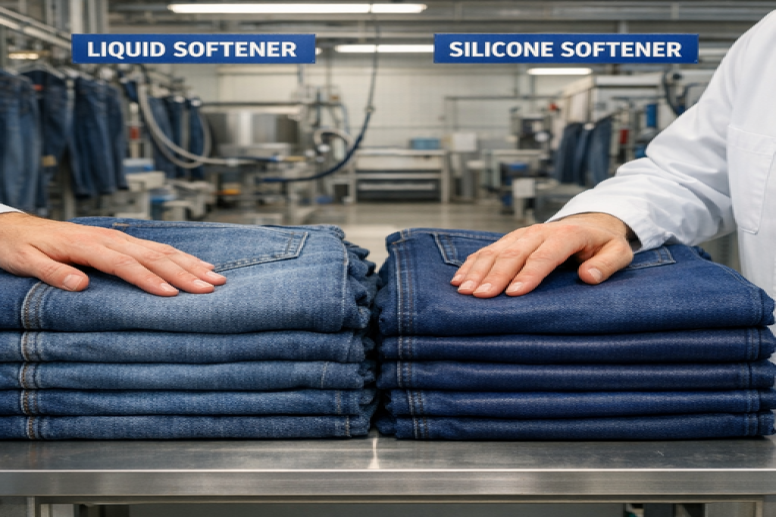
Key Differences Between Liquid Softener vs Silicone Softener
Softness Level
Liquid softener provides basic softness
Silicone softener provides high level smooth and silky touch
Fabric Surface
Liquid softener gives a normal hand feel
Silicone softener creates a smooth and lubricated surface
Durability
Liquid softener effect reduces after repeated washing
Silicone softener maintains performance for longer cycles
Absorbency
Liquid softener maintains good absorbency
Silicone softener may slightly reduce absorbency
Cost Impact
Liquid softener has lower cost
Silicone softener has higher cost but better performance
Impact on Denim Washing Defects
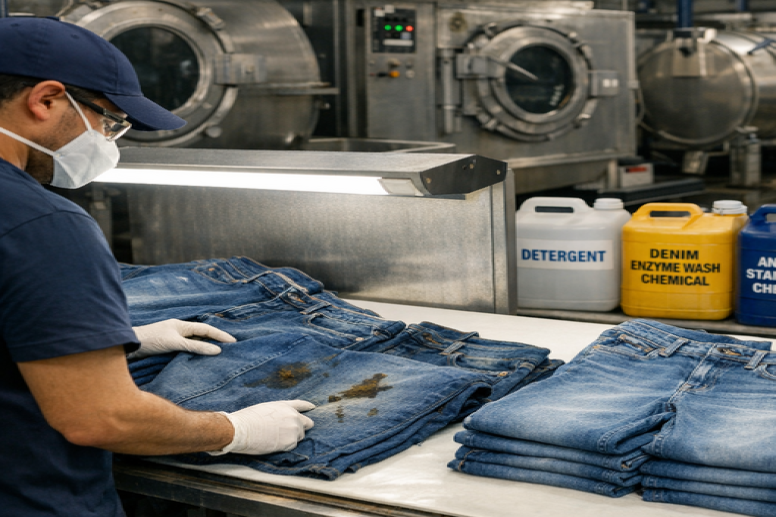
Incorrect softener selection or dosing creates finishing problems.
Common issues include:
patchy softness
oil stains from overdosing
shade variation
reduced rubbing fastness
Proper application of silicone softeners improves surface smoothness and reduces friction, which helps control indigo dye washing problems after the enzyme wash process.
Application Guidelines
Production managers should follow proper methods for best results.
For Liquid Softener
use in final rinse stage
maintain recommended dosage
ensure uniform distribution
For Silicone Softener
dilute properly before use
apply at controlled temperature
avoid overdosing to prevent oil marks
Correct application improves consistency and reduces denim washing defects.
When to Use Each Softener
Use liquid softener when
cost control is a priority
standard softness is acceptable
high absorbency is required
Use silicone softener when
premium softness is required
smooth surface finish is needed
export quality garments are produced
long lasting softness is required
Production managers should select based on product requirement and target market.
Conclusion
The comparison of liquid softener vs silicone softener shows clear differences in performance, cost, and application. Liquid softeners provide economical finishing, while silicone softeners deliver superior softness and premium quality.
Proper selection and controlled application help reduce denim washing defects, improve hand feel, and maintain stability after the enzyme wash process while minimizing indigo dye washing problems.