18 Mar
Top Textile Chemical Certifications Explained for Denim Washing
Learn textile chemical certifications explained. Ensure compliance, reduce defects, and select the right garment washing auxiliaries for denim processing.
Top Textile Chemical Certifications Explained
Global buyers require strict chemical compliance in denim washing. Using non compliant products leads to order rejection, shipment delay, and brand risk.
Decision makers must understand key standards before selecting any garment washing auxiliaries. Clear knowledge of textile chemical certifications helps secure orders and maintain consistent production.
Why Certifications Matter
Certified chemicals ensure:
compliance with buyer requirements
safer production environment
reduced environmental impact
lower risk of shipment rejection
consistent product quality
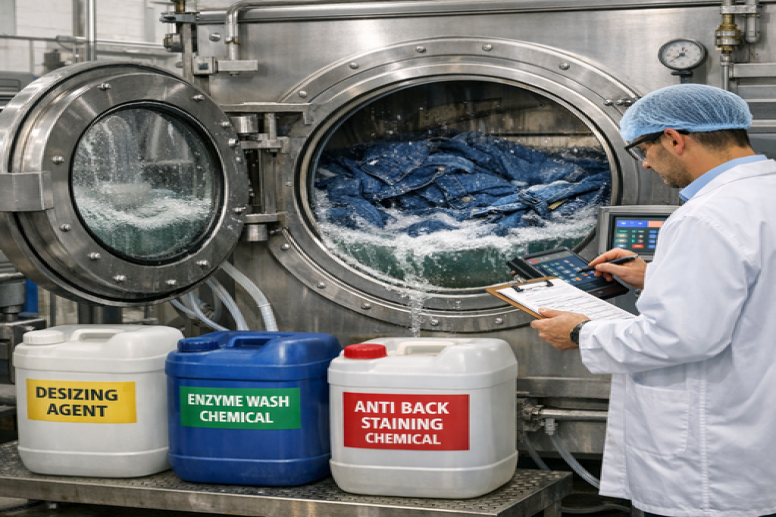
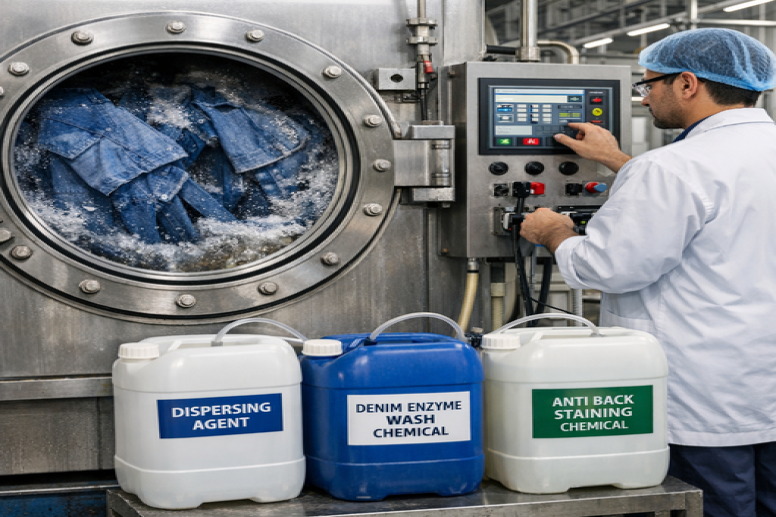
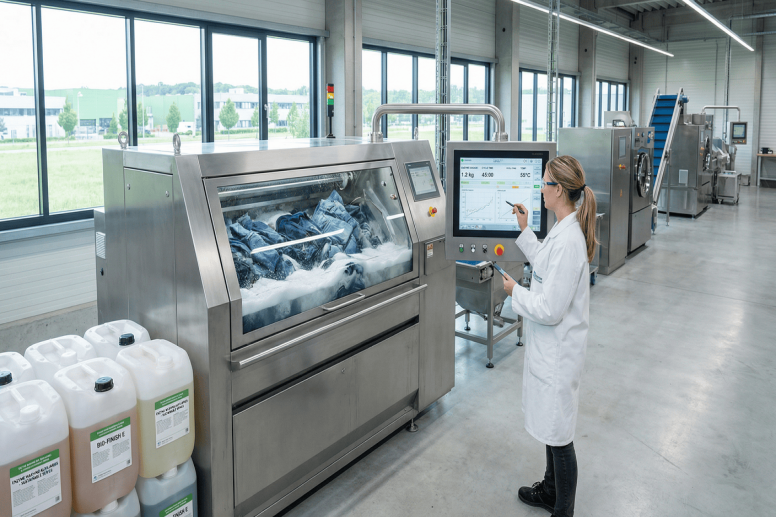
Factories using certified denim enzyme wash chemical and auxiliaries gain strong market access.
Top Textile Chemical Certifications Explained
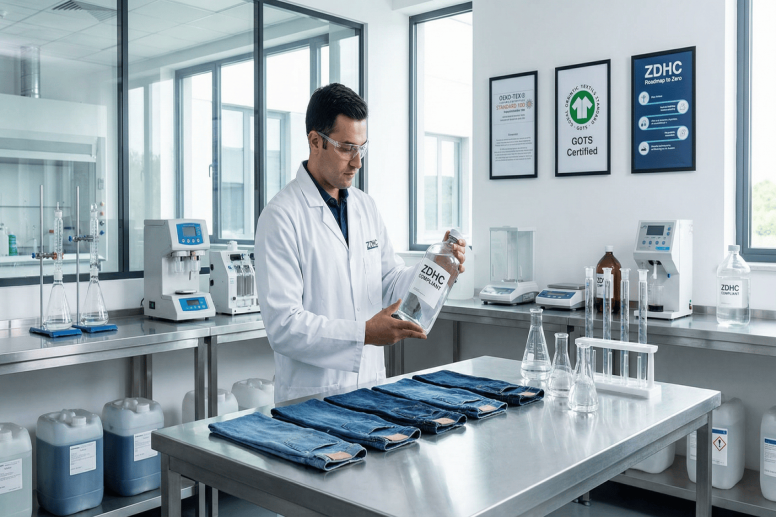
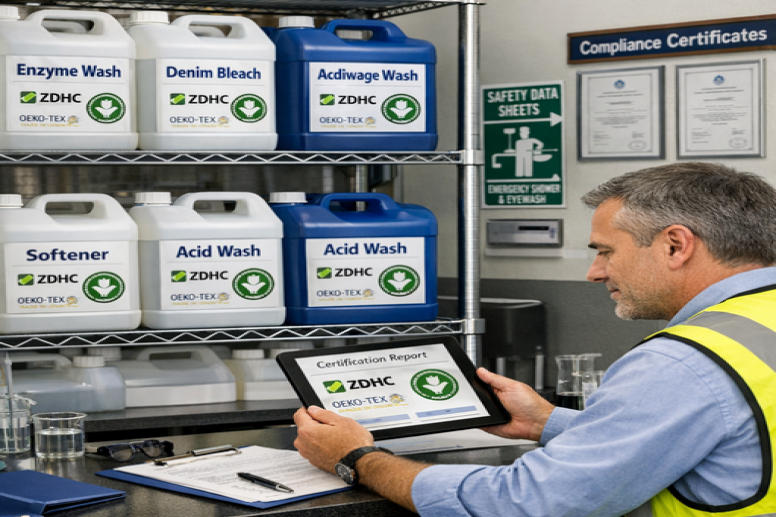
1. ZDHC
ZDHC focuses on eliminating hazardous chemicals from textile production.
Key points
restricts harmful substances
requires MRSL compliance
promotes sustainable chemical use
Why it matters
Most global brands demand ZDHC compliance for garment washing auxiliaries.
2. OEKO-TEX
OEKO TEX ensures textile products are safe for human use.
Key points
tests harmful chemical residues
covers finished garments and chemicals
widely accepted in global markets
Why it matters
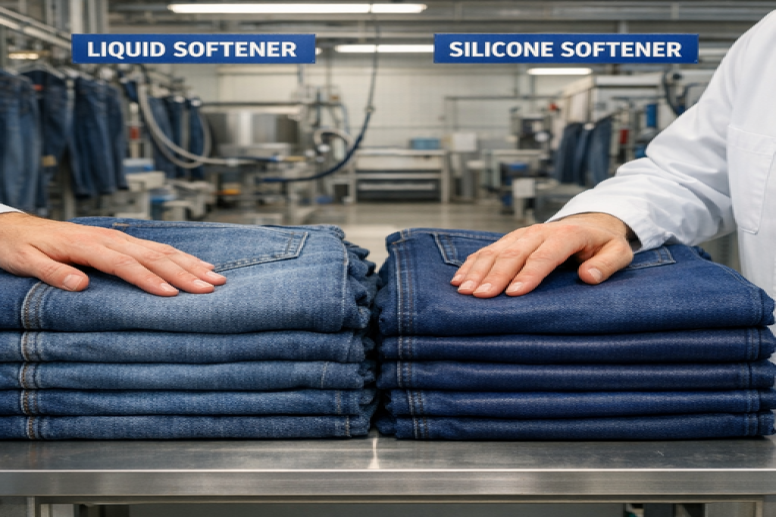
Ensures denim softener chemical and finishing agents are skin safe.
3. REACH
REACH regulates chemical substances used in the European Union.
Key points
controls hazardous chemicals
requires registration and evaluation
restricts harmful substances
Why it matters
Mandatory for exporting denim garments to Europe.
4. GOTS
GOTS focuses on organic textile processing and chemical control.
Key points
restricts toxic inputs
ensures eco friendly processing
covers entire supply chain
Why it matters
Required for organic denim production.
5. bluesign
Bluesign ensures safe and sustainable textile production.
Key points
evaluates chemical input
focuses on environmental impact
ensures worker safety
Why it matters
Premium brands prefer bluesign approved chemicals.
Certification Impact on Denim Washing
Using certified chemicals improves:
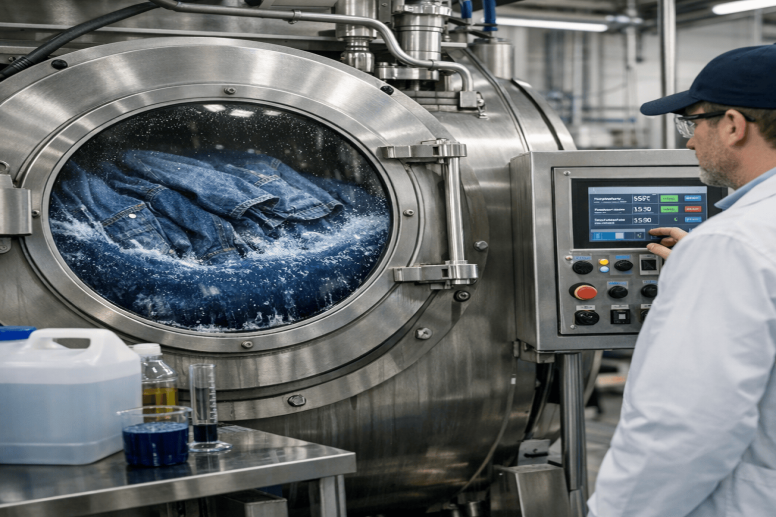
stability in enzyme wash process
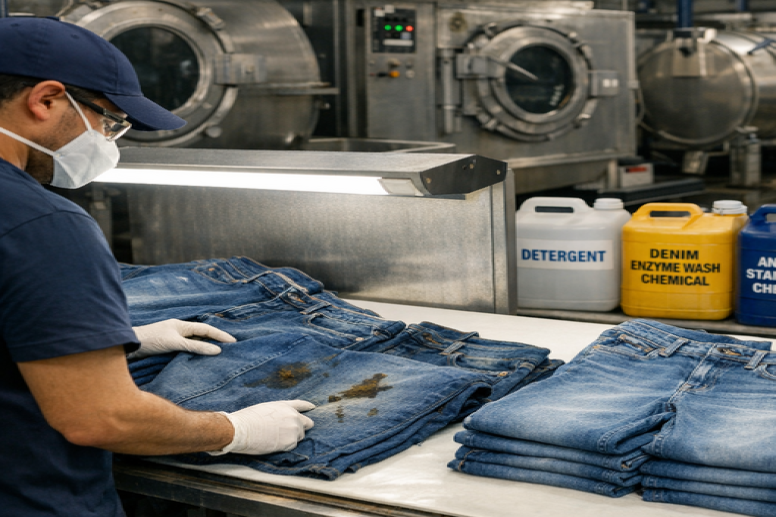
reduction in denim washing defects
better control of indigo dye washing problems
consistent product quality
buyer approval rate
Non certified chemicals increase risk of rejection and compliance failure.
How to Verify Certifications
Before purchasing chemicals:
request valid certification documents
check supplier registration number
verify from official websites
ensure certification covers specific product
Never rely on verbal claims.
Common Mistakes by Factories
using partially compliant chemicals
ignoring updated regulations
not verifying supplier claims
selecting low cost non certified products
These mistakes create export risk and quality issues.
Practical Tips for Decision Makers
select suppliers with multiple certifications
prioritize ZDHC compliant products
align chemicals with buyer requirements
maintain documentation for audits
train team on compliance standards
This approach ensures smooth export operations.
Conclusion
Understanding textile chemical certifications explained helps factories meet global standards and reduce production risk. Decision makers must focus on certified garment washing auxiliaries to ensure compliance, quality, and sustainability.
Using certified denim enzyme wash chemical, anti back staining chemical, and denim softener chemical improves process stability, reduces denim washing defects, and controls indigo dye washing problems.