14 Mar
Case Study. Wet Rubbing Fastness Improvement in Denim Garment Washing
Learn how denim washing factories improve wet rubbing fastness. Case study covering root cause, chemical solution, dosage, and production results using garment washing auxiliaries.
Wet Rubbing Fastness Improvement in Denim Washing. Factory Case Study
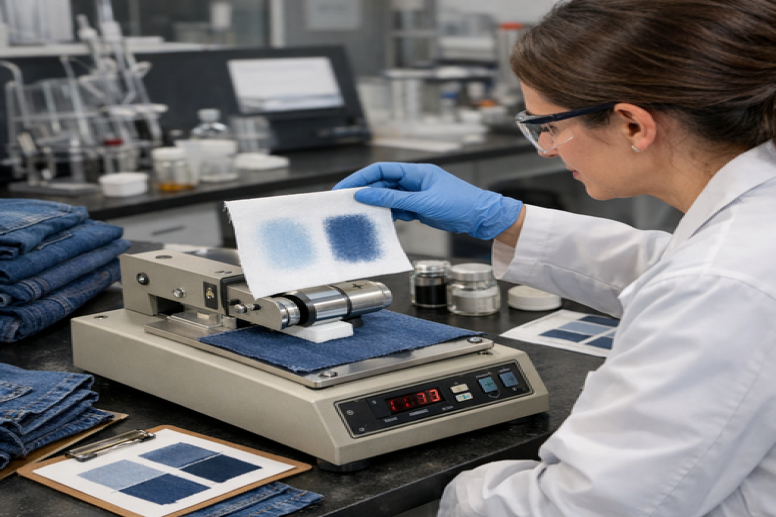
Wet rubbing fastness represents a major quality parameter in denim garments. During garment use, friction between the denim surface and other fabrics releases loose indigo dye, which transfers color onto other materials. Poor wet rubbing fastness leads to product complaints and buyer rejection.
This case study explains how a denim garment washing factory improved wet rubbing fastness through optimized chemical treatment and proper use of garment washing auxiliaries.
Problem in Factory
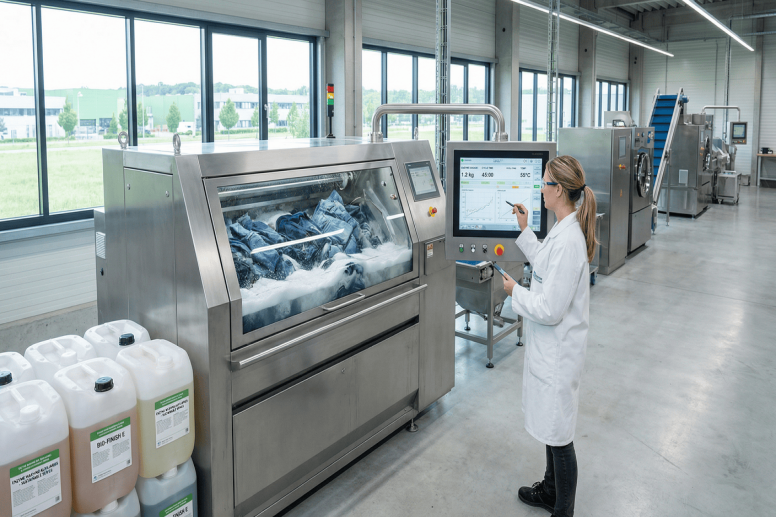
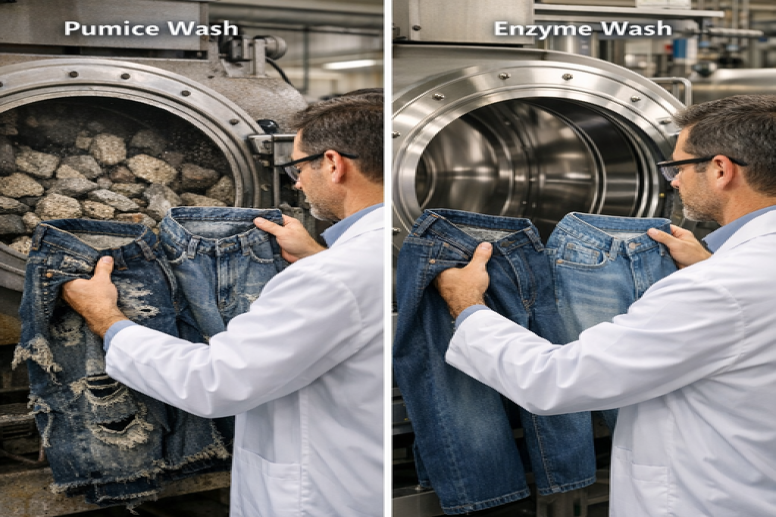
A garment washing factory producing enzyme washed denim jeans experienced consistent quality issues related to wet rubbing fastness.
Quality control tests showed several problems:
wet rubbing fastness rating between grade 1 and 2
color transfer onto white fabric during testing
buyer complaints regarding color bleeding
frequent rejection during shipment inspection
Approximately 20 percent of production batches failed buyer quality requirements due to low wet rubbing fastness performance.
Root Cause
Technical analysis identified several factors responsible for poor wet rubbing fastness.
Key causes included:
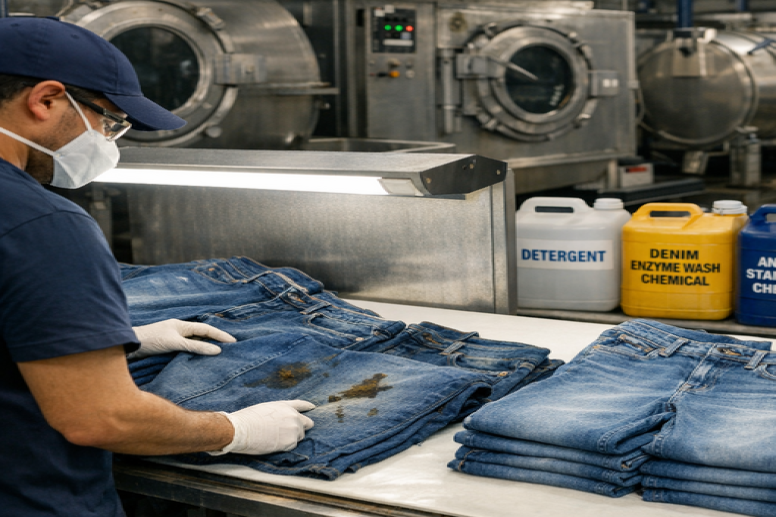
excessive loose indigo dye remaining on fabric surface after enzyme washing
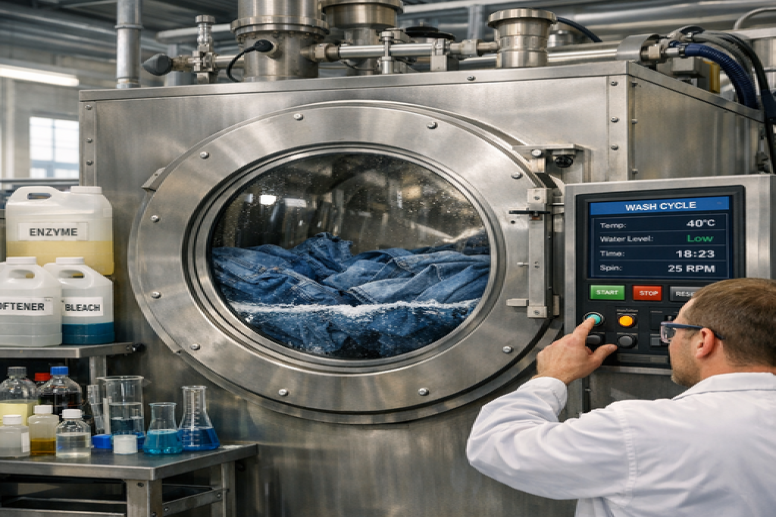
strong mechanical abrasion during denim enzyme wash chemical treatment
insufficient removal of surface dye particles during washing
lack of proper fixing or surface protection chemicals
Without proper chemical control, loose dye particles transferred easily during rubbing.
Chemical Solution
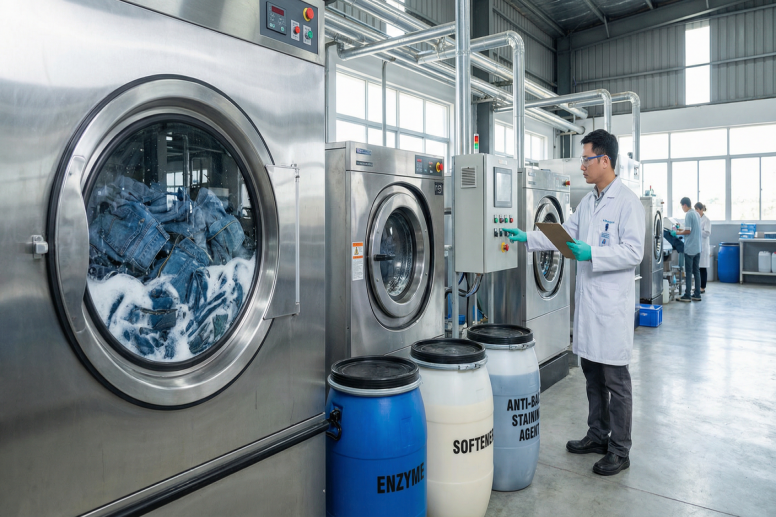
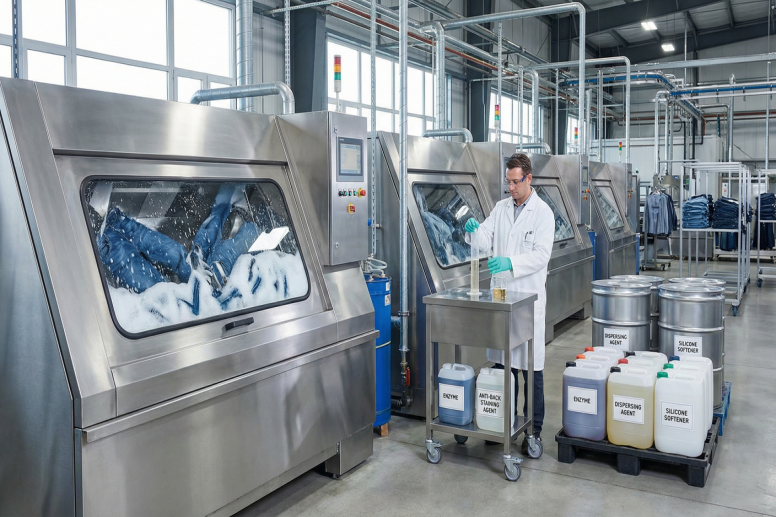
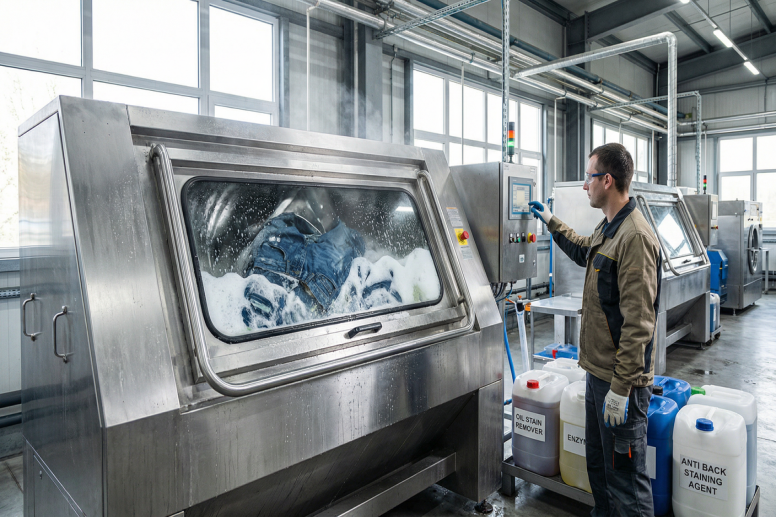
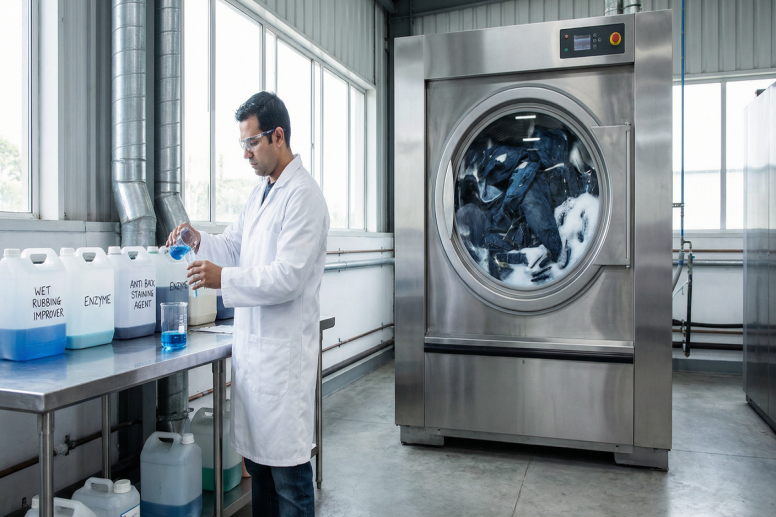
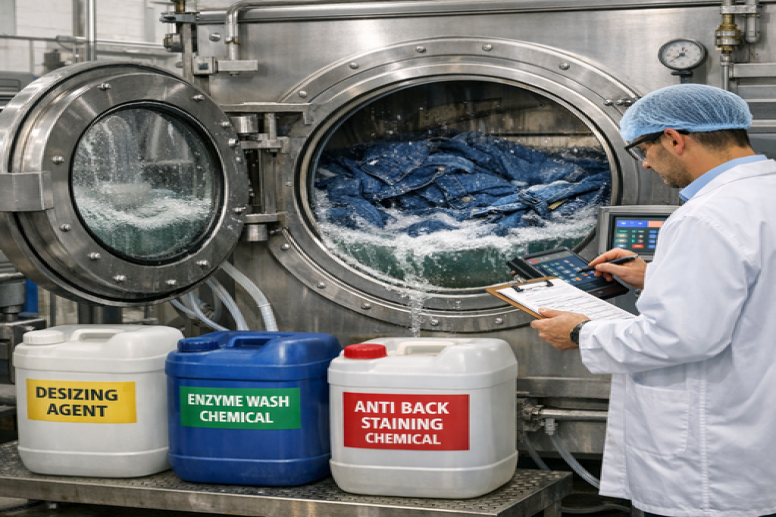
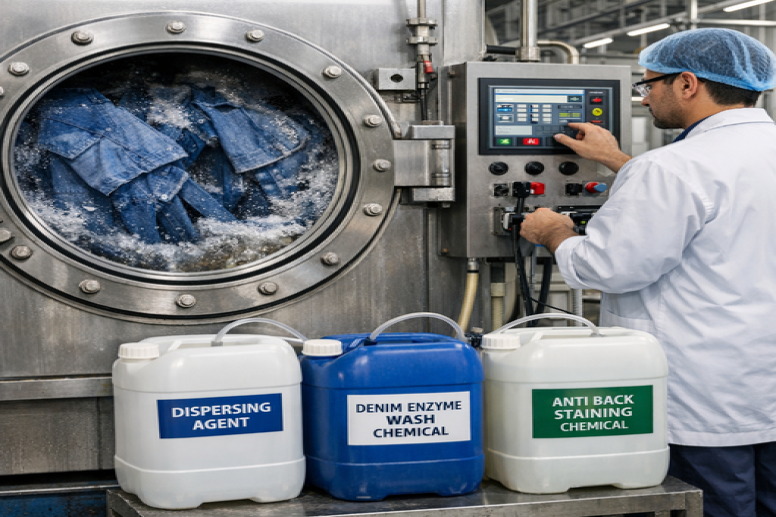
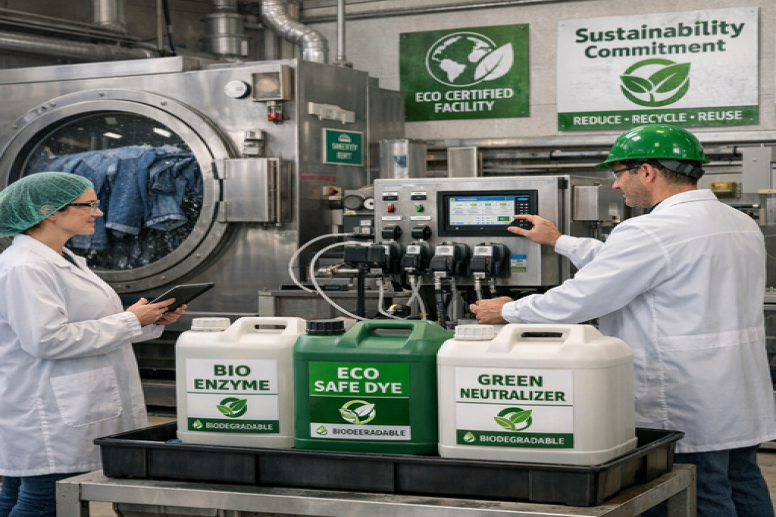
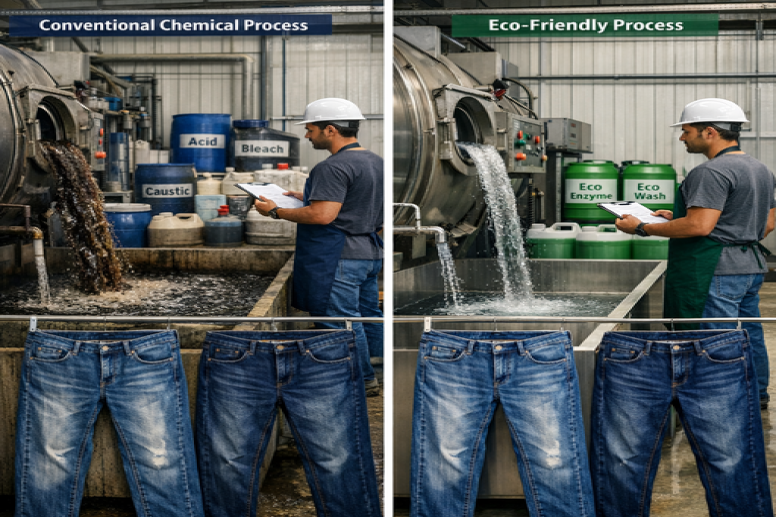
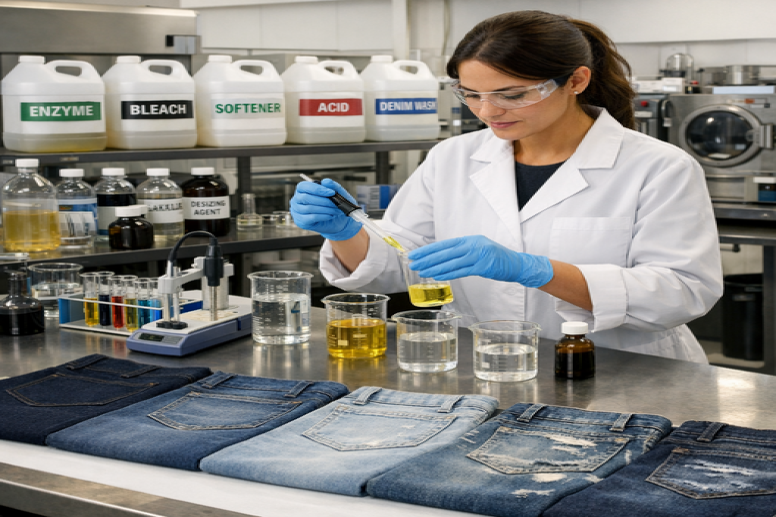
The factory introduced an improved washing and finishing system using specialized garment washing auxiliaries.
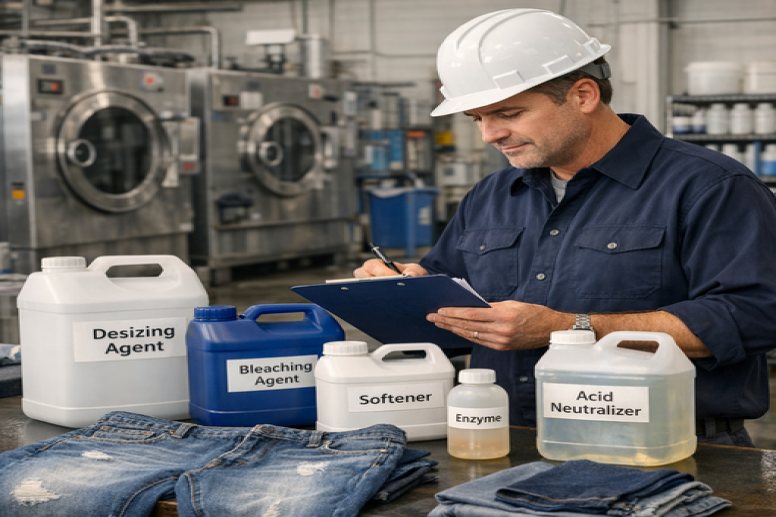
The chemical solution included:
optimized dosage of denim enzyme wash chemical to control surface fiber removal
use of anti back staining chemical to reduce dye redeposition during washing
application of wet rubbing fastness improver during finishing stage
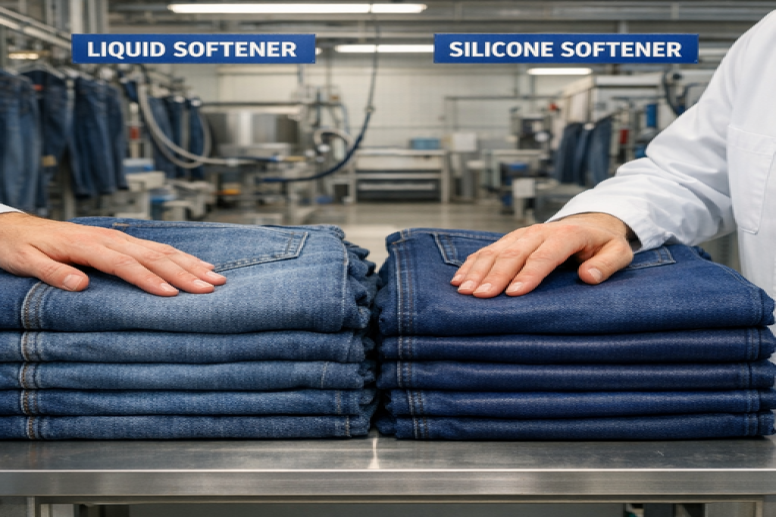
controlled softening treatment using denim softener chemical
This chemical combination reduced loose dye particles and created a protective layer on the denim surface.
Dosage and Method
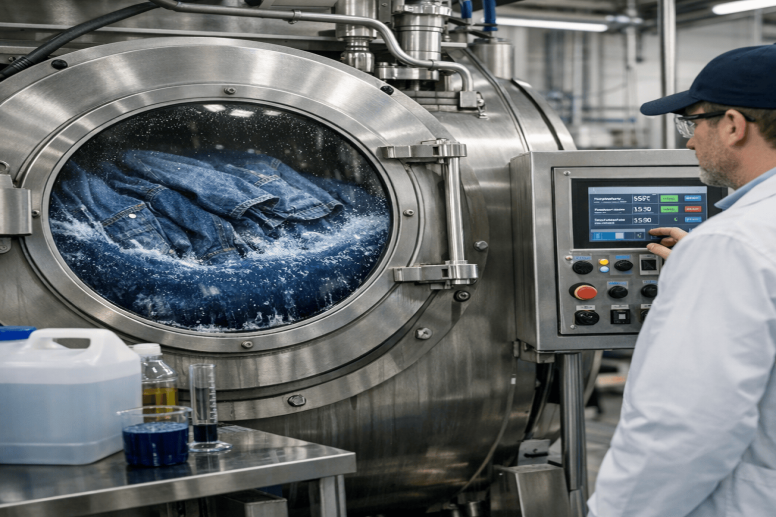
The factory implemented the following washing and finishing method.
Process parameters:
liquor ratio: 1:8
temperature: 50°C for enzyme washing
finishing temperature: 40°C
Chemical dosage:
denim enzyme wash chemical: 0.7 to 0.9 g per liter
anti back staining chemical: 1.0 g per liter
wet rubbing fastness improver: 2.0 to 3.0 g per liter
denim softener chemical: 1.5 to 2.0 g per liter
Process method:
Perform desizing and enzyme washing stage
Add anti back staining chemical during enzyme washing
Rinse garments thoroughly to remove loose dye particles
Prepare finishing bath with wet rubbing fastness improver
Run treatment cycle for 15 minutes
Apply denim softener chemical during final finishing
Hydro extract and dry garments
Controlled washing conditions ensured stable chemical performance.
Result in Production
After implementing the improved washing process, the factory achieved significant quality improvements.
Production results included:
wet rubbing fastness improved from grade 1 to grade 3 to 4
reduced color transfer during rubbing tests
improved garment appearance and surface cleanliness
buyer approval for export shipments
reduced rejection rate and improved production reliability
The factory maintained consistent wet rubbing performance in subsequent production batches.
Conclusion
Wet rubbing fastness improvement in denim washing requires proper control of surface dye particles and effective finishing treatment. Excess loose indigo dye must be removed or fixed to prevent color transfer during fabric friction.
Garment washing factories achieve stable quality results when garment washing auxiliaries such as denim enzyme wash chemical, anti back staining chemical, wet rubbing fastness improver, and denim softener chemical are applied with proper dosage and process control.