15 Mar
How Enzyme Washing Works in Denim Processing
Learn how the enzyme wash process works in denim processing. Understand enzyme washing steps, benefits, and solutions to common indigo dye washing problems.
How Enzyme Washing Works
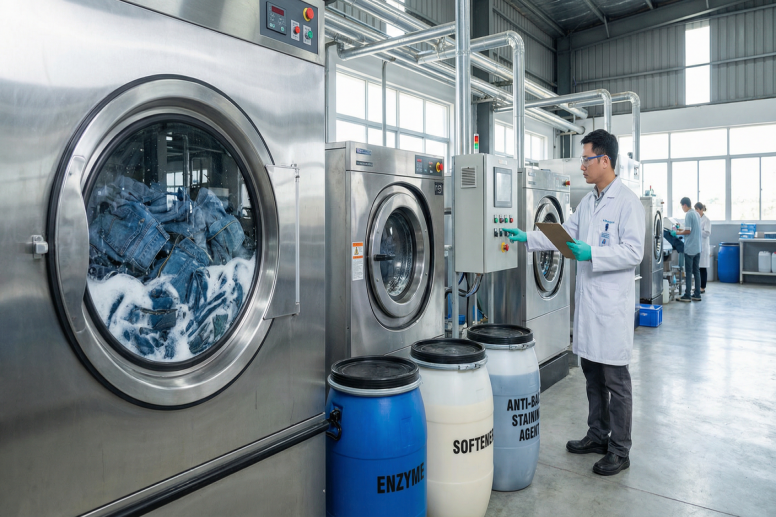
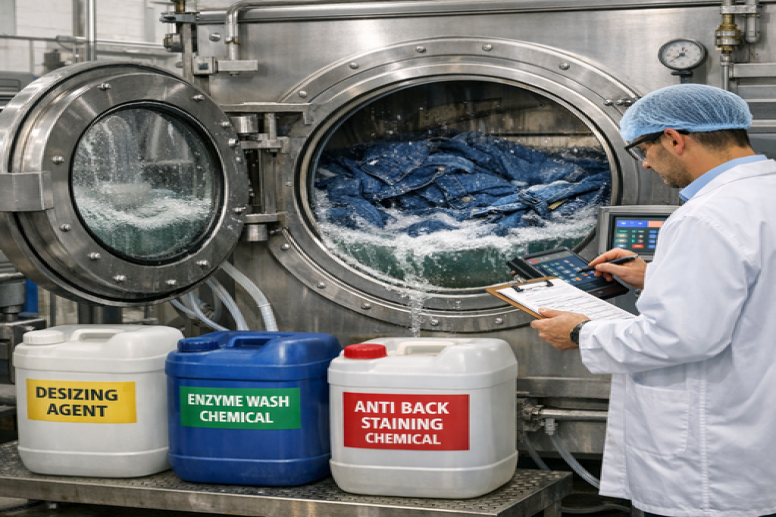
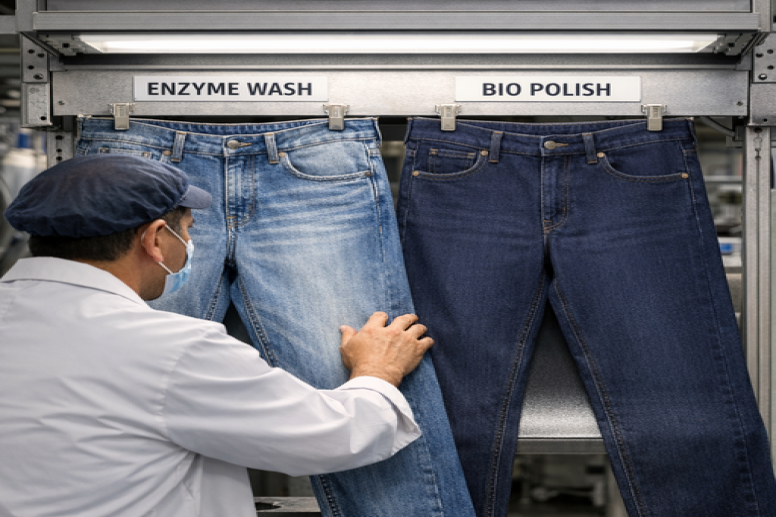
Enzyme washing plays a central role in modern denim processing. The treatment removes surface fibers from denim fabric and creates a soft hand feel with controlled fading effects. Fashion brands demand enzyme washed denim garments because the process produces natural worn appearance without damaging the fabric structure.
Garment washing factories use the enzyme wash process to achieve consistent shade, improved softness, and uniform fading. Proper process control also prevents common denim washing defects and reduces indigo dye washing problems during production.
What Is Enzyme Washing in Denim Processing
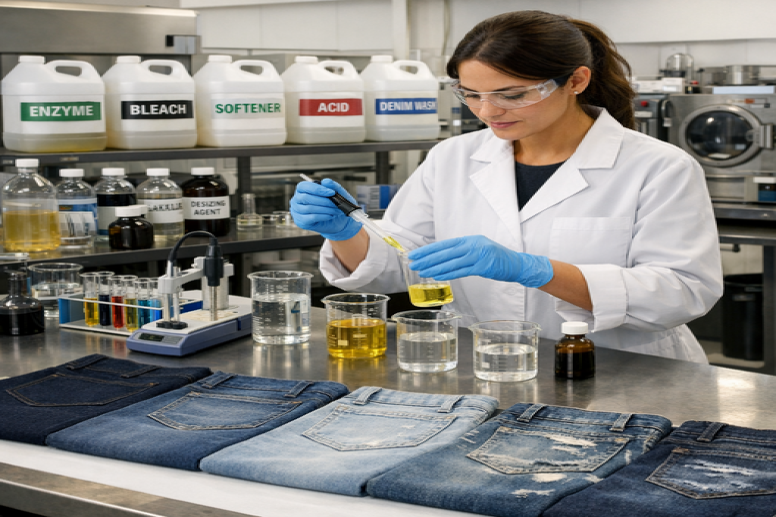
Enzyme washing refers to a biological treatment used in garment washing to remove small surface fibers from cotton denim fabric. The process uses cellulase enzymes which break down cellulose fibers located on the outer layer of the fabric.
During the enzyme wash process, these enzymes react with surface fibers and loosen the indigo dyed fiber layer. Mechanical agitation inside the washing machine removes these fibers and produces a faded appearance.
Key objectives of enzyme washing include:
controlled removal of surface fibers
creation of natural faded effects
improvement of fabric softness
reduction of harsh mechanical abrasion
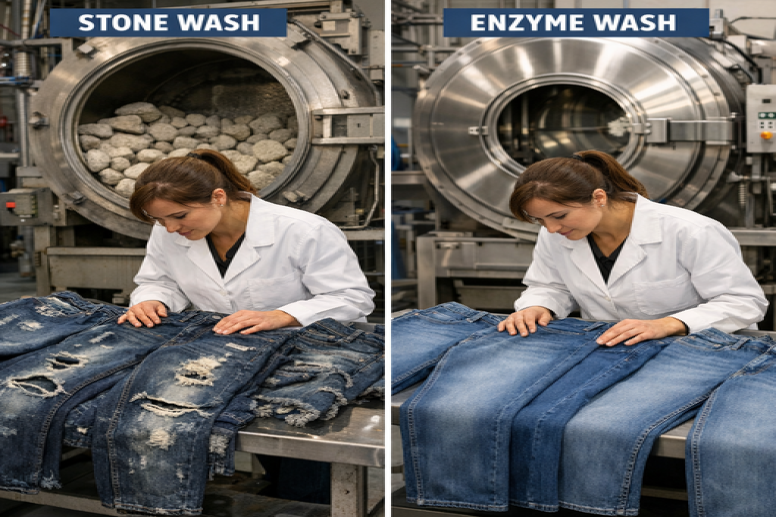
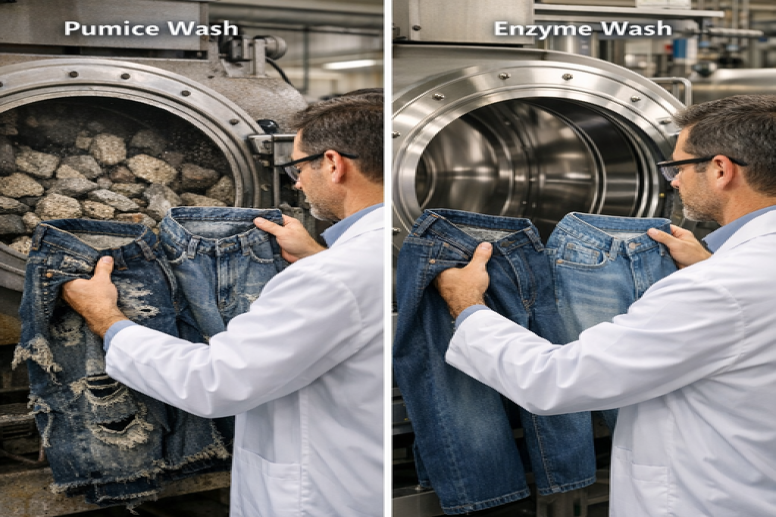
The process replaced traditional stone washing in many denim production systems.
Working Principle of Enzyme Washing
The enzyme wash process works through a biochemical reaction between cellulase enzymes and cotton cellulose fibers.
Step by step working mechanism includes:
Cellulase enzymes attach to the cotton fiber surface.
Enzymes break down small cellulose chains present on the fabric surface.
Loosened fibers detach from the fabric during mechanical agitation.
Indigo dyed fiber particles release into the washing liquor.
Controlled washing creates a faded and smooth denim surface.
This controlled fiber removal creates the desired worn appearance while maintaining fabric strength.
Enzyme Washing Process in Denim Garment Production
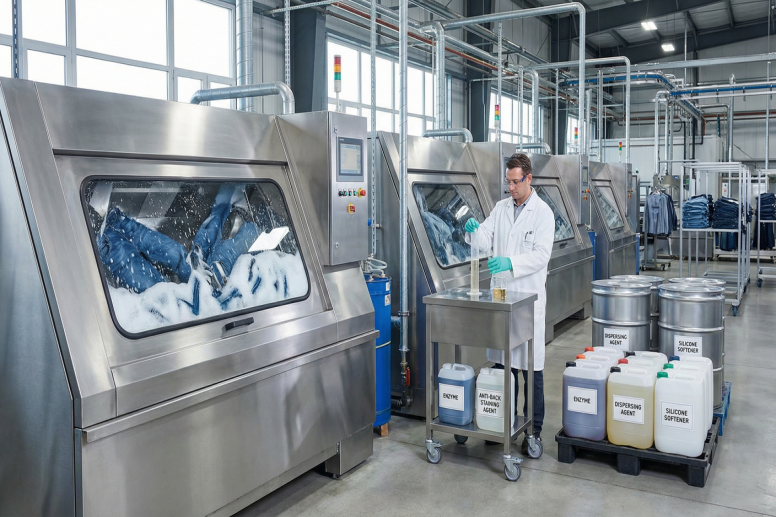
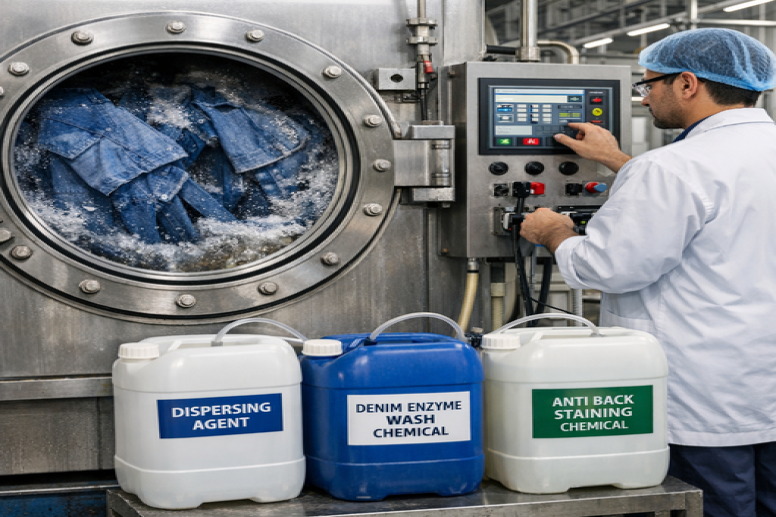
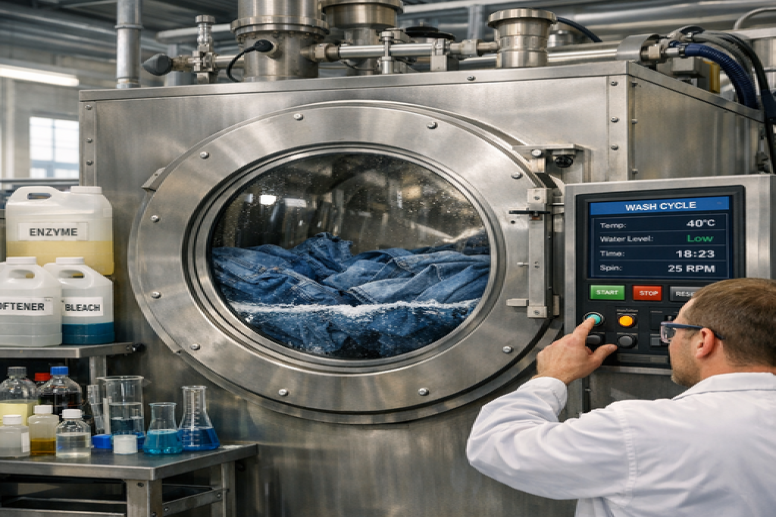
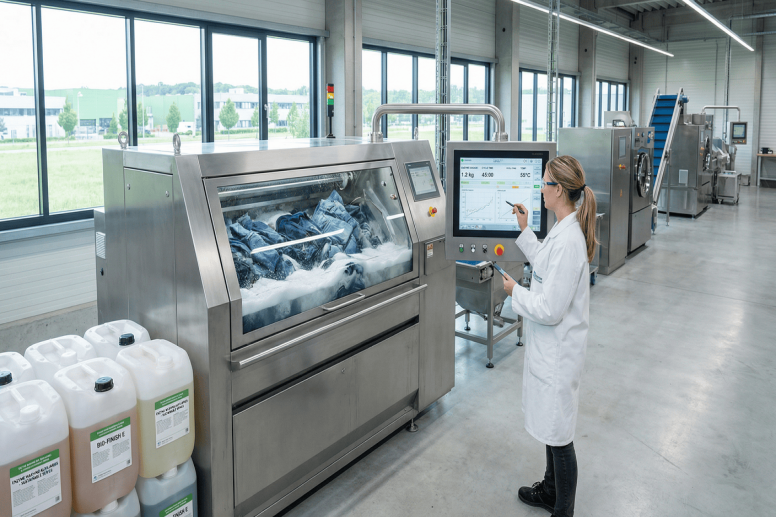
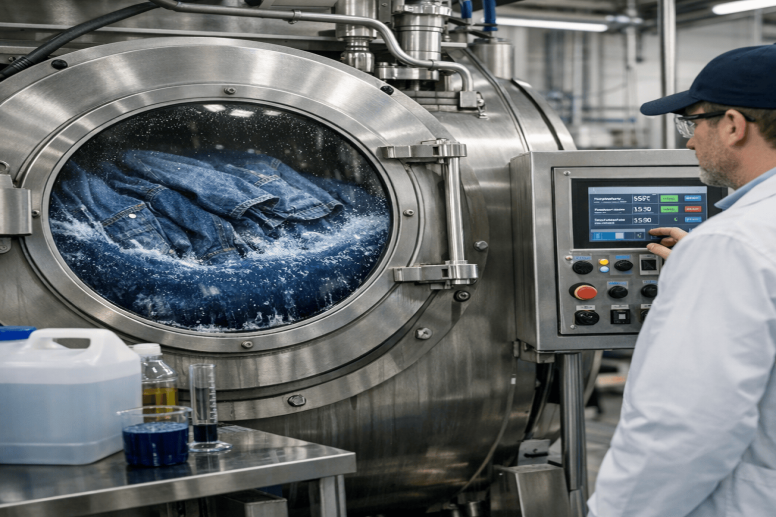
A typical enzyme wash process follows several controlled steps inside an industrial garment washing machine.
Common process sequence:
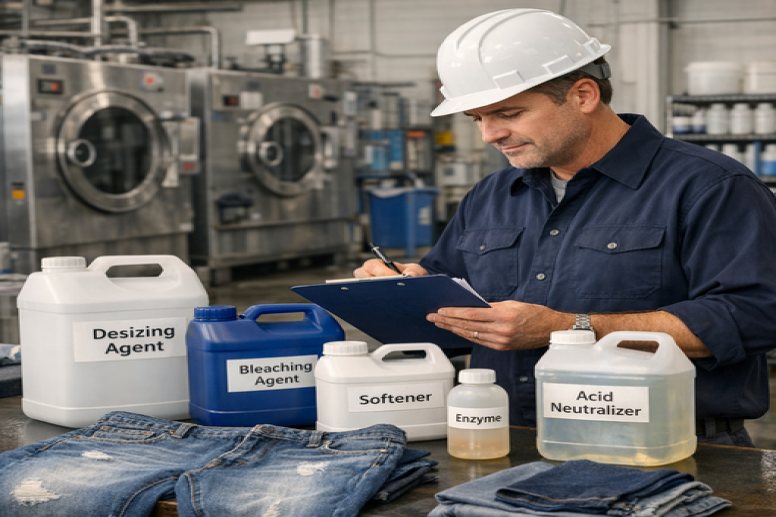
Desizing stage to remove sizing chemicals from fabric
Preparation of enzyme washing bath
Addition of cellulase enzyme for denim treatment
Controlled washing cycle with temperature and pH control
Rinsing stage to remove loosened fibers and dye particles
Neutralization and finishing
Each step requires accurate process control to avoid denim washing defects.
Benefits of Enzyme Washing
Denim garment manufacturers use enzyme washing because of its multiple production advantages.
Key benefits include:
natural fading effect on denim garments
improved fabric softness and comfort
reduced fabric damage compared with stone washing
consistent washing results in production batches
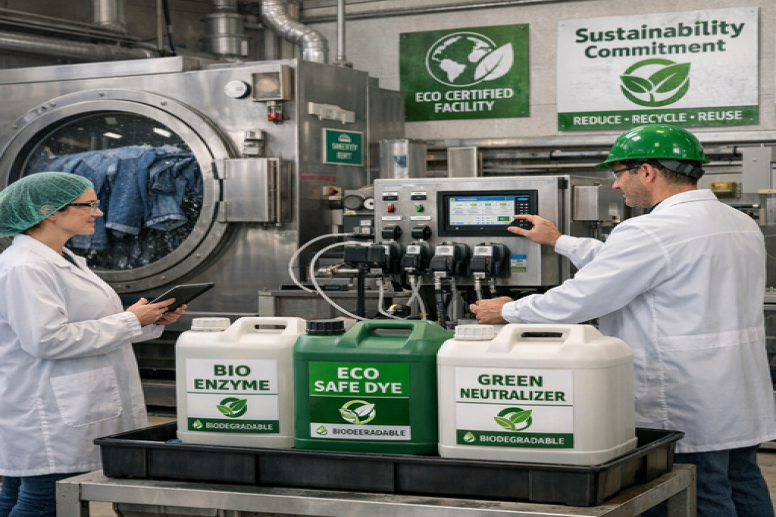
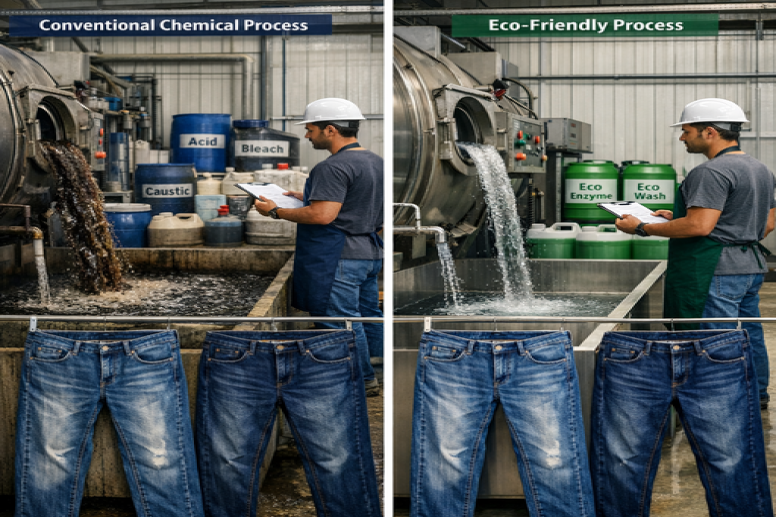
lower environmental impact compared with mechanical abrasion processes
These advantages make enzyme washing a preferred method in modern denim finishing.
Common Indigo Dye Washing Problems During Enzyme Treatment
Despite its benefits, improper enzyme washing can create several indigo dye washing problems in garment processing.
Typical problems include:
excessive shade loss during washing
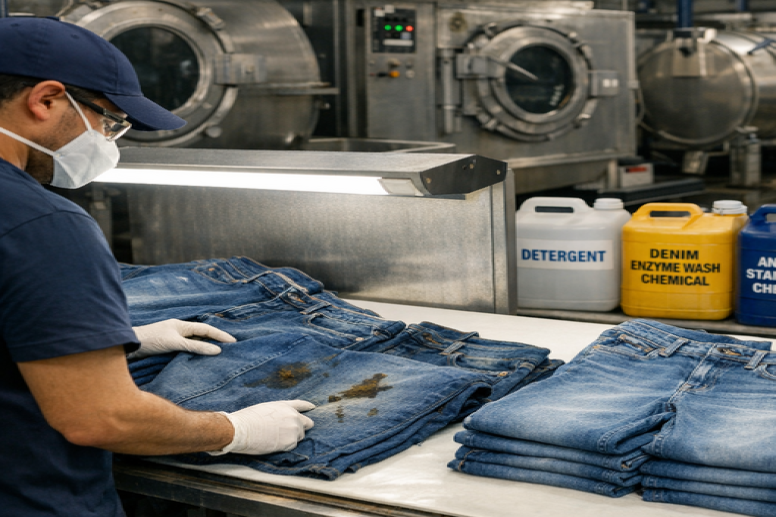
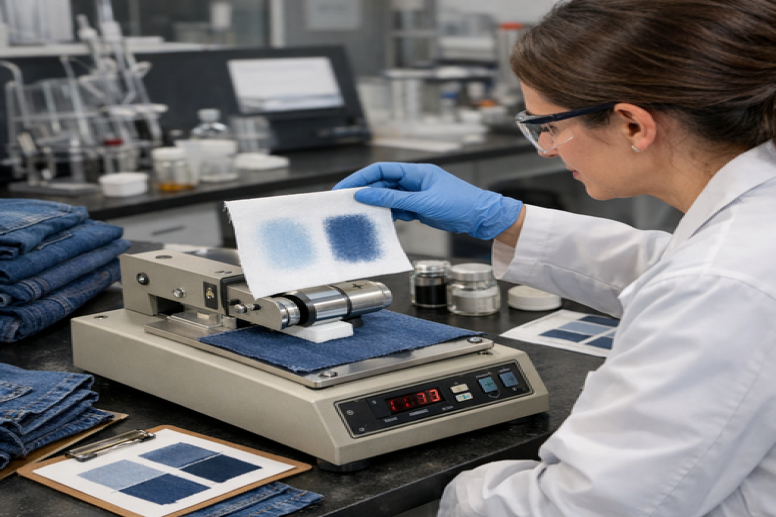
back staining caused by loose indigo dye particles
uneven fading across garments
staining on pocket bags and sewing threads
These issues occur when washing parameters or chemical auxiliaries are not properly controlled.
Preventing Denim Washing Defects During Enzyme Washing
Garment washing factories control denim washing defects by maintaining proper process conditions.
Important control measures include:
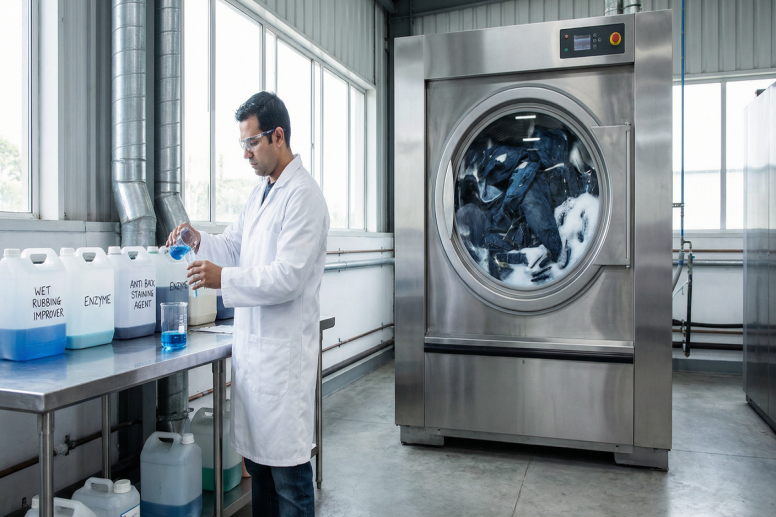
controlled dosage during enzyme wash process
correct temperature and pH levels
proper washing time control
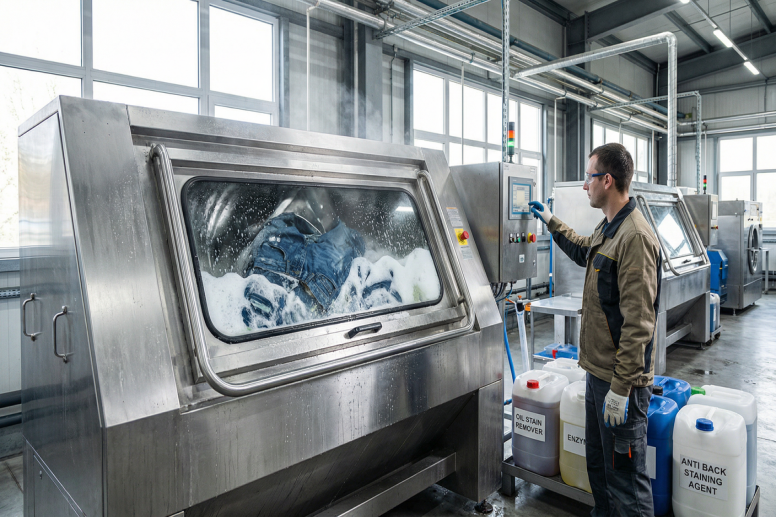
use of anti back staining chemicals to control indigo dye washing problems
effective rinsing to remove loose dye particles
Proper chemical control ensures uniform fading without damaging the garment shade.
Conclusion
The enzyme wash process remains one of the most effective techniques used in denim garment finishing. By using cellulase enzymes, garment washing factories create natural faded effects while maintaining fabric softness and durability.
Successful enzyme washing requires careful control of process parameters to avoid denim washing defects and indigo dye washing problems. When the process is properly managed, manufacturers achieve consistent garment quality and attractive fashion finishes.