14 Mar
Case Study. Oil Stain Removal from Denim Garments in Industrial Washing
Learn how denim washing factories remove oil stains from garments. Case study covering root cause, chemical solution, dosage, and production results using garment washing auxiliaries.
Oil Stain Removal from Denim Garments. Industrial Washing Case Study
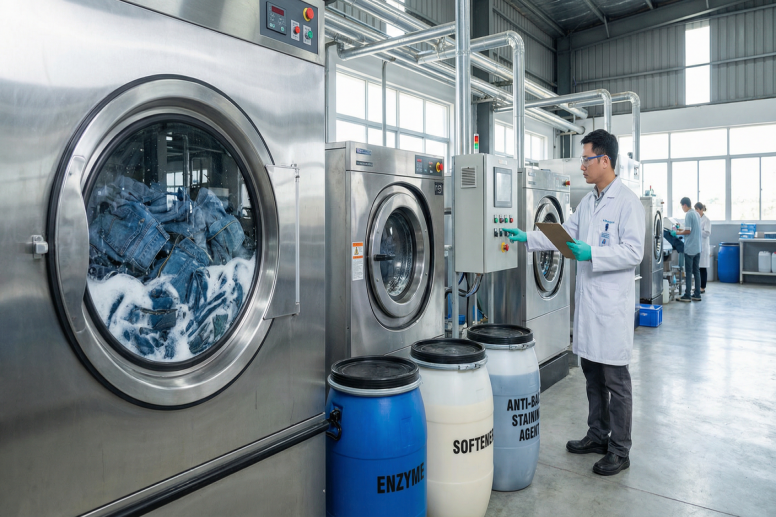
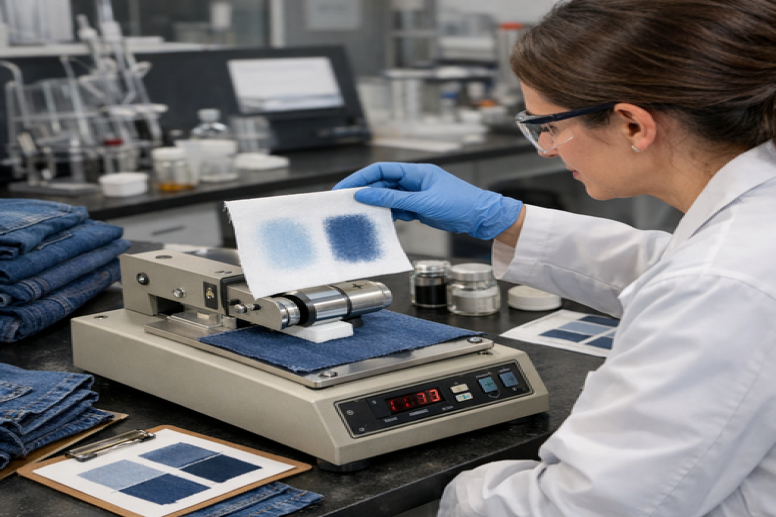
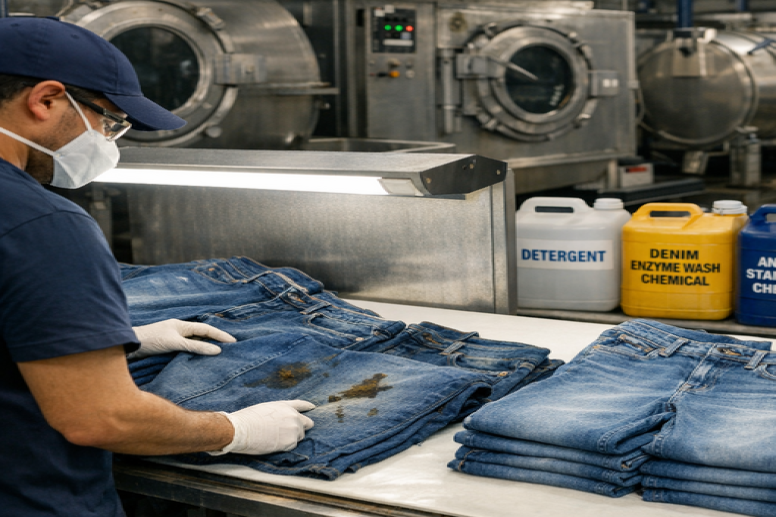
Oil stains on denim garments create serious quality problems in garment washing factories. During garment manufacturing and transportation, denim garments often pick up oil contamination from sewing machines, lubricants, handling equipment, and storage conditions.
Oil stains resist normal washing processes and remain visible after enzyme washing and finishing. This case study explains how a denim washing factory solved oil stain removal problems through proper selection of garment washing auxiliaries and process optimization.
Problem in Factory
A denim garment washing plant producing enzyme washed jeans faced frequent oil stain defects during production.
Quality inspection identified the following issues:
dark oil marks on thigh and pocket areas
oil spots appearing after enzyme washing stage
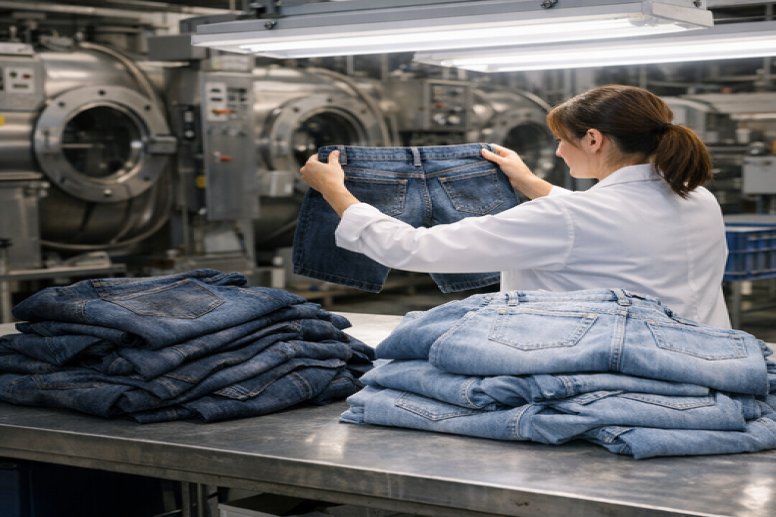
rejection of finished garments during final inspection
increased reprocessing and washing cost
Approximately 10 to 12 percent of garments in each batch showed visible oil stains, which affected shipment schedules and product quality.
Root Cause
Technical investigation identified several causes responsible for oil stain contamination.
Key root causes included:
sewing machine lubricants transferred to denim garments during stitching
oil contamination during garment handling and storage
insufficient removal of oil during the initial washing stages
lack of proper detergent or emulsifying agents in the washing bath
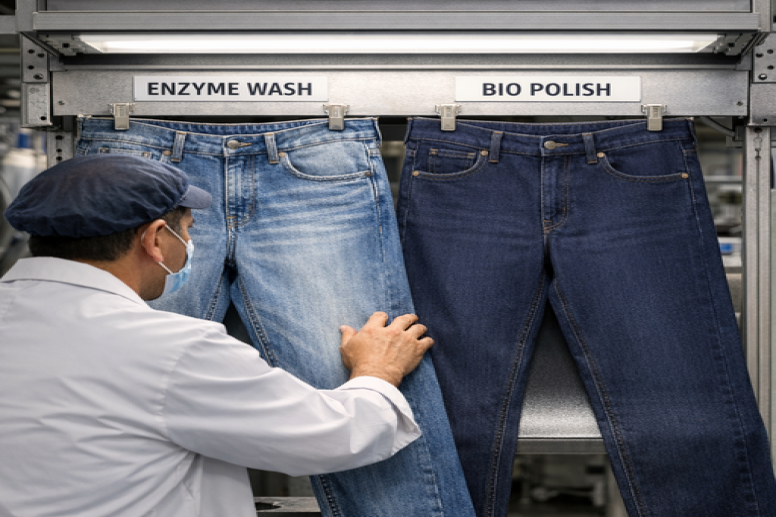
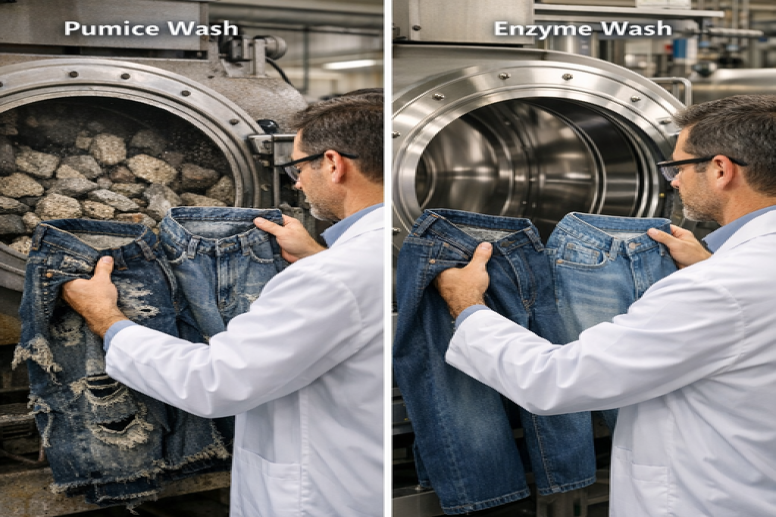
Standard washing with denim enzyme wash chemical alone could not remove these oil based contaminants effectively.
Chemical Solution
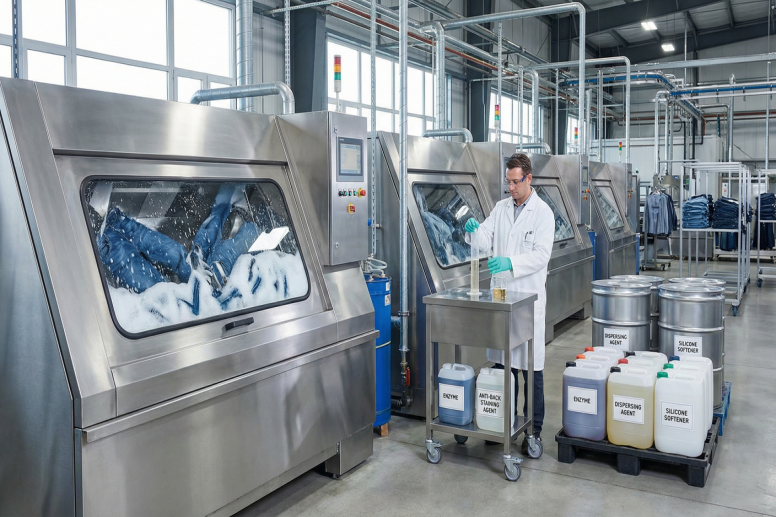
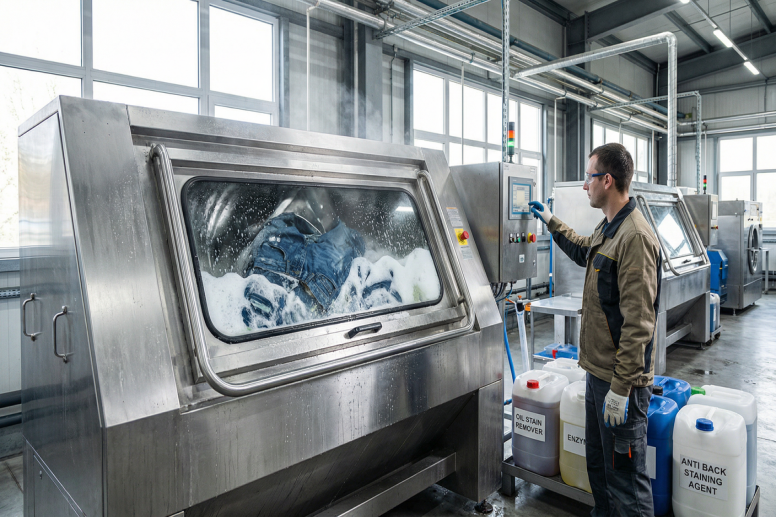
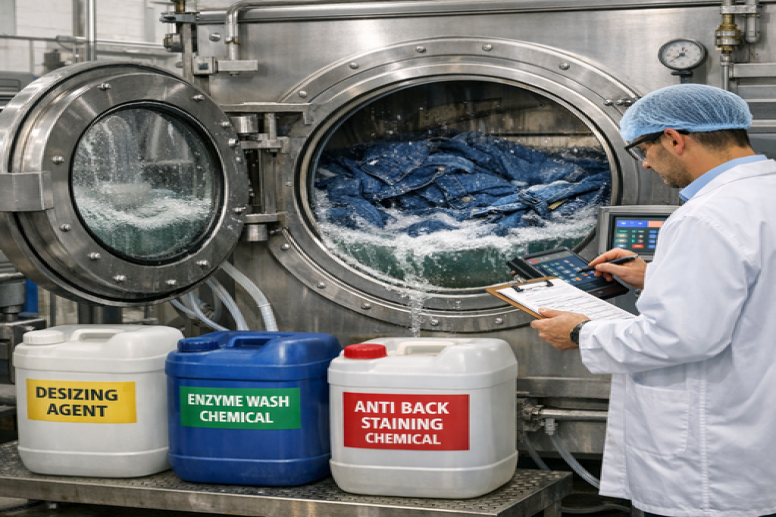
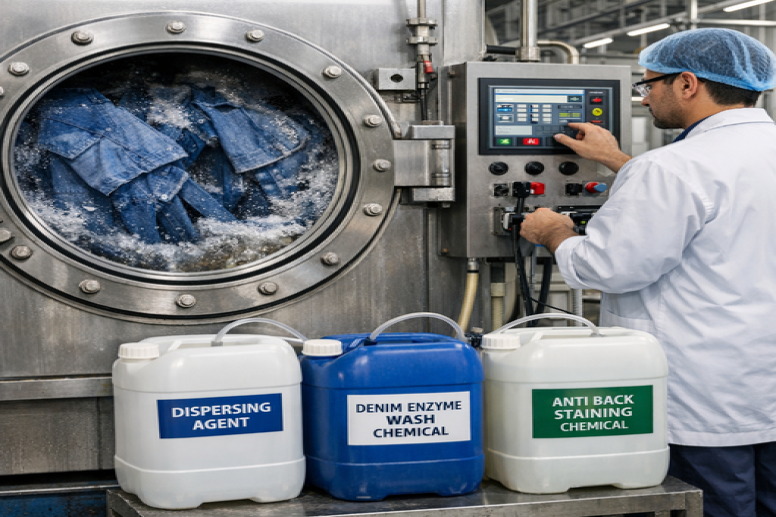
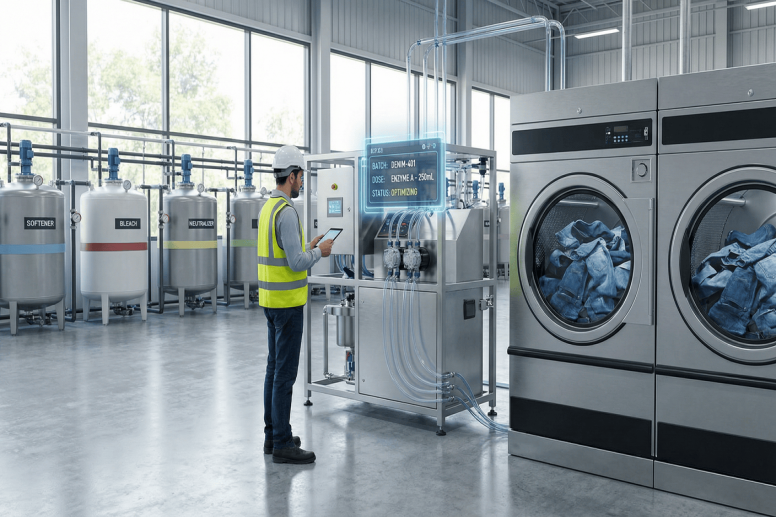
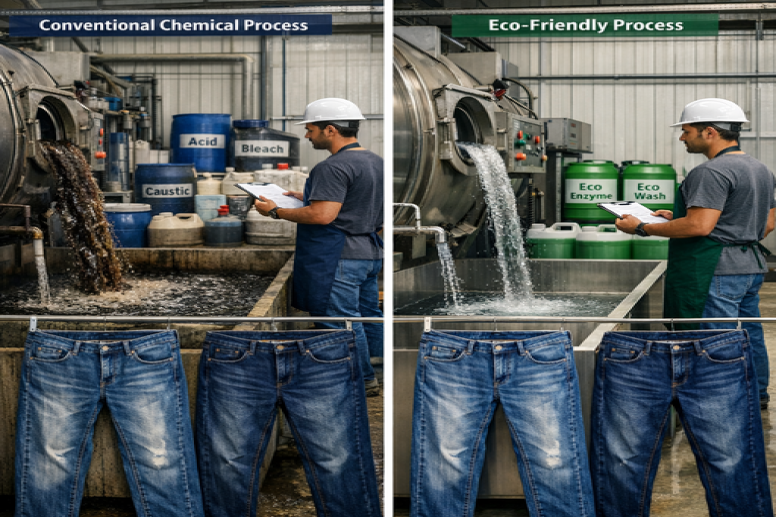
The factory introduced a controlled chemical treatment using specialized garment washing auxiliaries designed for oil removal.
The solution included:
addition of a strong detergent and emulsifying agent during pre washing stage
improved washing conditions before enzyme treatment
combination of detergent with dispersing chemicals to keep oil particles suspended in wash liquor
This chemical treatment helped break down oil deposits and prevent redeposition on the garment surface.
Dosage and Method
The factory implemented the following washing method to remove oil contamination.
Process parameters:
liquor ratio: 1:8
temperature: 60°C
washing time: 20 to 25 minutes
Chemical dosage:
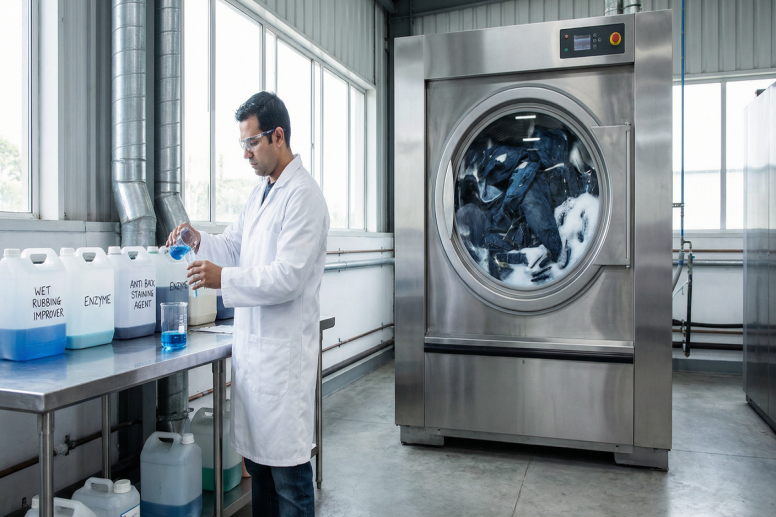
industrial detergent or oil removing agent: 1.5 to 2.0 g per liter
dispersing agent: 0.5 g per liter
denim enzyme wash chemical: 0.8 g per liter in next stage
anti back staining chemical: 1.0 g per liter
Process method:
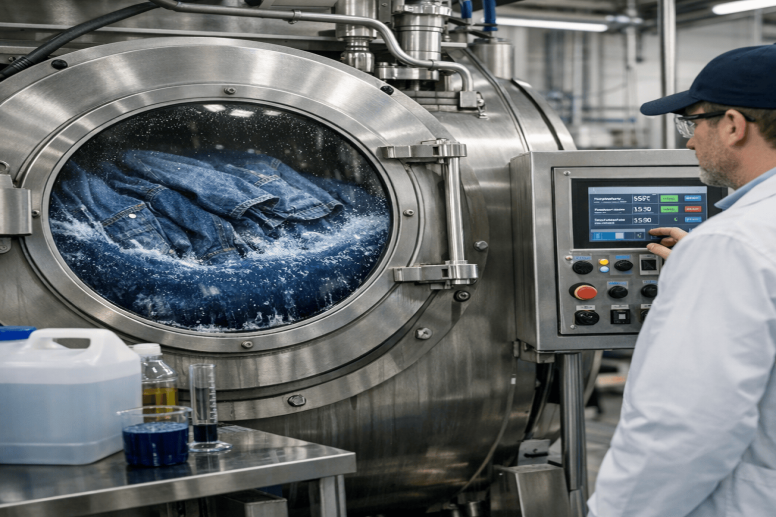
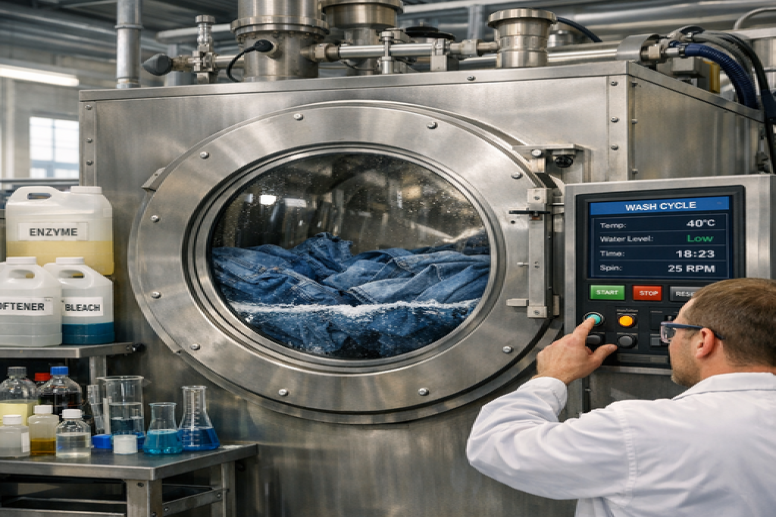
Load garments into industrial washing machine
Add water and raise temperature to 60°C
Add detergent and dispersing agent for oil removal
Run washing cycle for 20 to 25 minutes
Drain and rinse garments thoroughly
Continue enzyme washing stage using denim enzyme wash chemical and anti back staining chemical
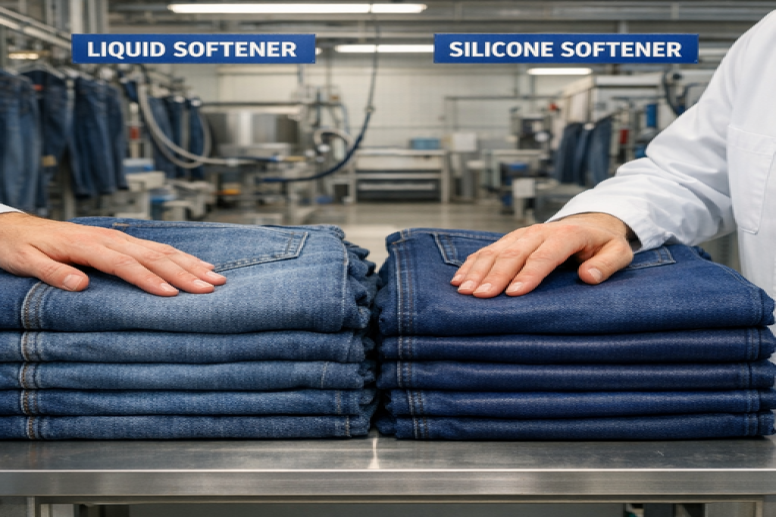
Finish garments using denim softener chemical
Proper pre washing ensured effective oil removal before enzyme washing.
Result in Production
After applying the new washing process, the denim washing factory observed clear improvements in garment quality.
Production results included:
oil stain defects reduced from 12 percent to less than 1 percent
improved garment surface cleanliness
uniform washing results during enzyme washing
reduced garment rejection rate
improved production efficiency and shipment reliability
The factory maintained consistent washing quality in subsequent production batches.
Conclusion
Oil stain removal from denim garments requires proper chemical treatment during the early stages of garment washing. Oil contamination from sewing machines and handling equipment cannot be removed by enzyme washing alone.
Garment washing factories achieve better results when garment washing auxiliaries such as detergents, dispersing agents, denim enzyme wash chemical, anti back staining chemical, and denim softener chemical are used in a controlled washing process. Proper chemical selection ensures clean garments and consistent production quality.