12 Mar
Silicone Softeners in Denim Washing: Function, Benefits, and Application
Learn how silicone softeners work in denim washing. Complete guide covering functions, benefits, and application of silicone softeners in garment washing and finishing.
Silicone Softeners in Denim Washing: Functions and Benefits
Softening is a critical stage in denim washing that determines fabric hand feel, drape, and consumer comfort. Silicone softeners in denim washing provide a smooth surface, enhanced fabric flexibility, and premium garment quality.
Garment washing factories use silicone softeners as part of their finishing process to improve softness, enhance drape, and protect the garment surface. These auxiliaries are essential for premium denim products and fashion-oriented finishes.
What Are Silicone Softeners
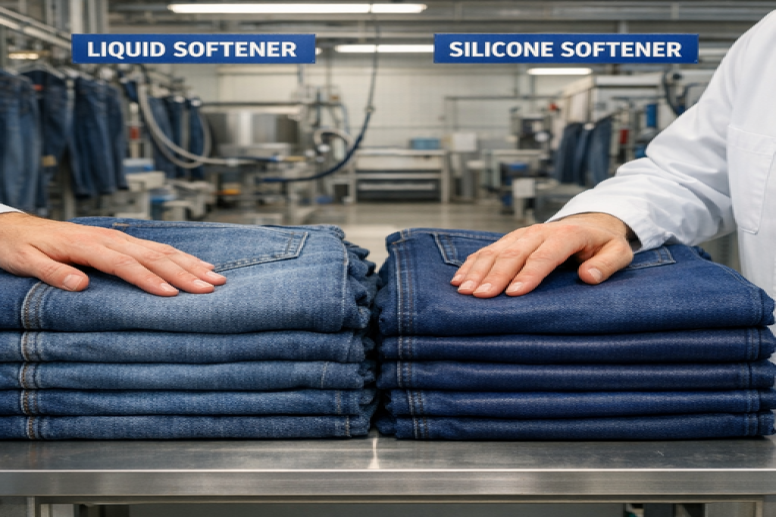
Silicone softeners are specialized textile auxiliaries designed to coat fibers with a thin, smooth layer. This layer provides softness, reduces friction, and improves fabric handle without affecting shade or durability.
Primary functions include:
improved fabric softness and smoothness
enhanced drape and garment flexibility
reduced fabric friction during handling
compatibility with other washing chemicals
Silicone softeners are widely used in enzyme-washed, bleached, and fashion-finished denim garments.
Role of Silicone Softeners in Denim Washing
Silicone softeners improve garment quality through several mechanisms:
Surface Coating
They coat the fabric surface with a protective film, giving smooth hand feel and reducing roughness caused by enzyme or mechanical treatments.
Enhanced Drape
Softeners improve fabric flexibility, allowing garments to fall naturally and enhancing consumer comfort.
Compatibility
Silicone softeners work alongside enzymes, anti back staining agents, wet rubbing improvers, and bleaching chemicals without affecting their performance.
Fabric Protection
The auxiliary reduces friction during handling and packaging, protecting both fabric surface and stitching.
Benefits of Using Silicone Softeners
Denim washing factories experience multiple advantages when applying silicone softeners:
soft, smooth garment surface
consistent and premium hand feel
improved garment drape
reduced fabric friction during handling
higher product value for premium denim
better compliance with export quality standards
Proper application enhances both production efficiency and customer satisfaction.
Application in Denim Washing Process
Silicone softeners are applied during the final softening or finishing stage of denim washing.
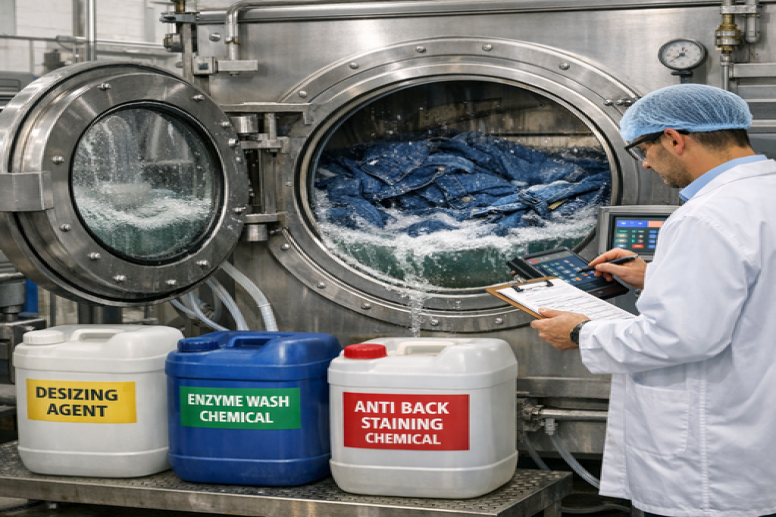
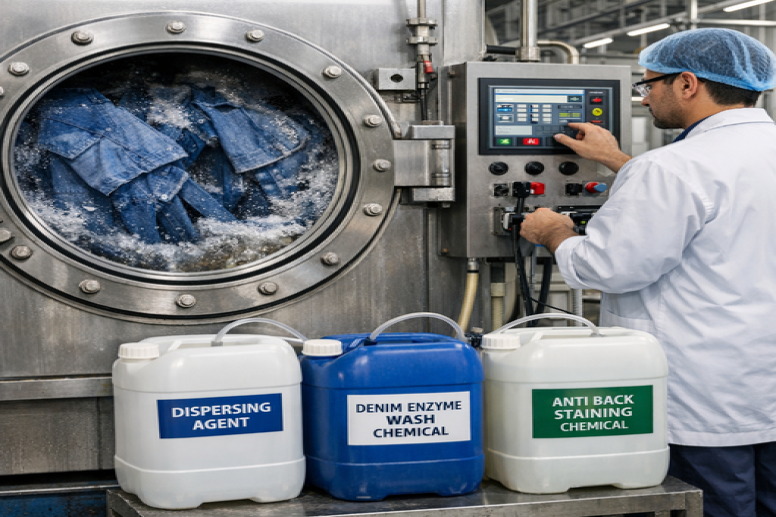
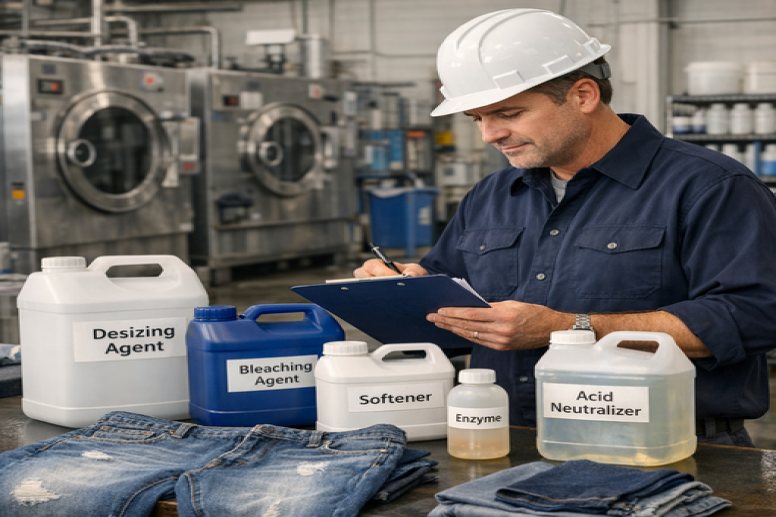
Typical process sequence:
Desizing
Enzyme washing with anti back staining agent
Bleaching if required
Neutralization
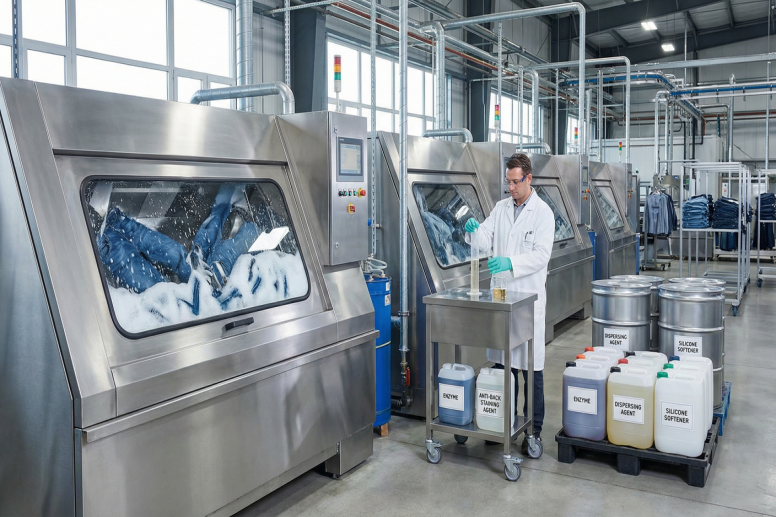
Softening with silicone softener
Dosage depends on fabric type, yarn count, and required softness. Uniform mixing in the washer ensures consistent results across the batch.
Common Problems Without Silicone Softeners
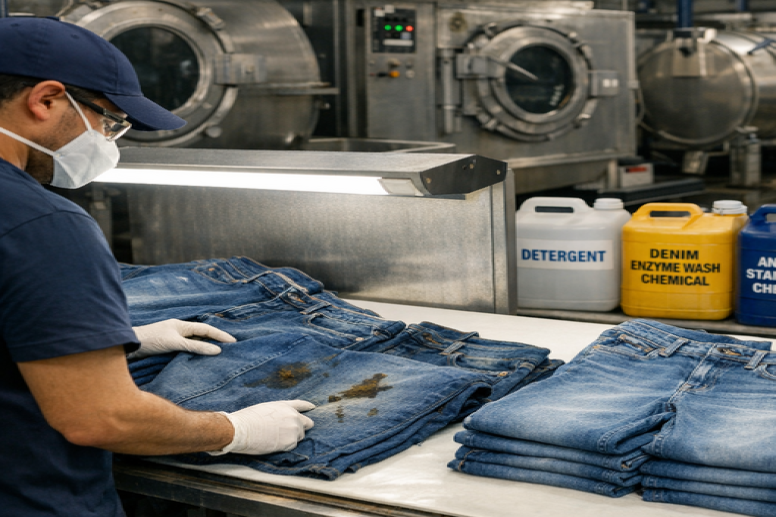
When silicone softeners are not applied, denim garments may experience:
rough or stiff hand feel
poor drape and flexibility
higher friction during handling
reduced garment value
lower customer satisfaction
Softening auxiliaries are critical for fashion-oriented denim garments.
Conclusion
Silicone softeners in denim washing play a key role in achieving premium garment hand feel, drape, and surface smoothness. By coating fabric fibers, they reduce friction, improve softness, and enhance garment value.
Factories achieve consistent finishing results when silicone softeners are combined with other textile auxiliaries like enzymes, anti back staining agents, and wet rubbing improvers. Proper application improves product quality, reduces defects, and ensures market-ready denim garments.