16 Mar
Reducing Water Consumption in Denim Washing for Sustainable Garment Production
Learn practical methods for reducing water consumption in denim washing. Improve the enzyme wash process and prevent denim washing defects in garment production.
Reducing Water Consumption in Denim Washing
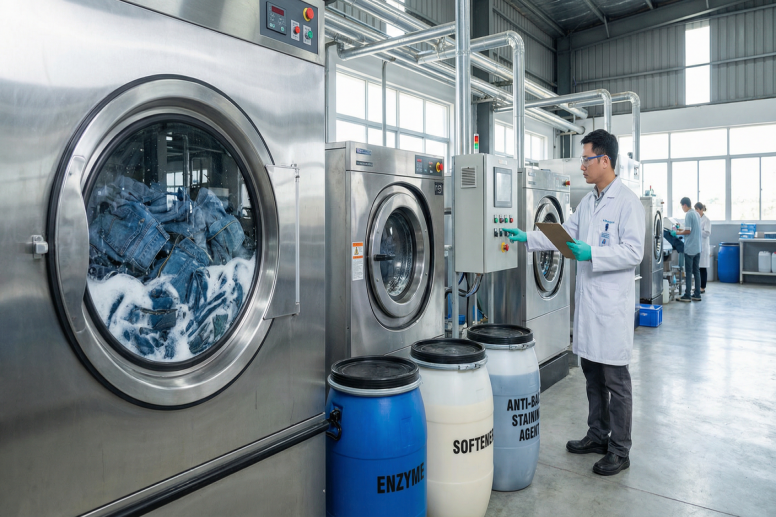
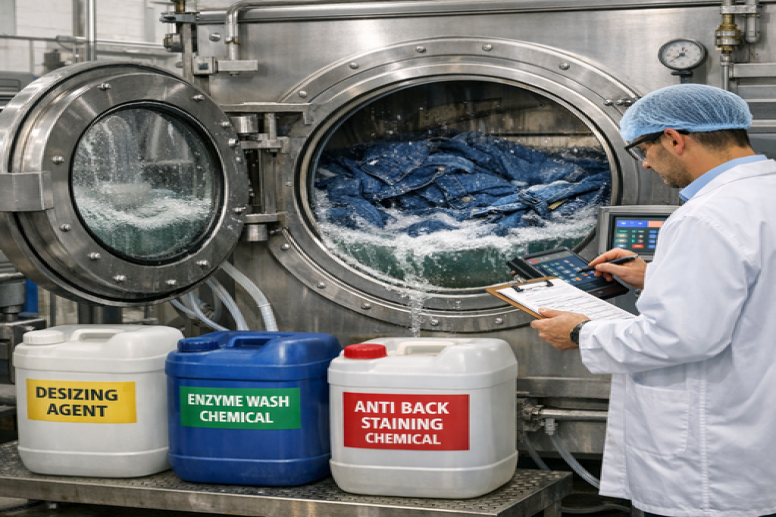
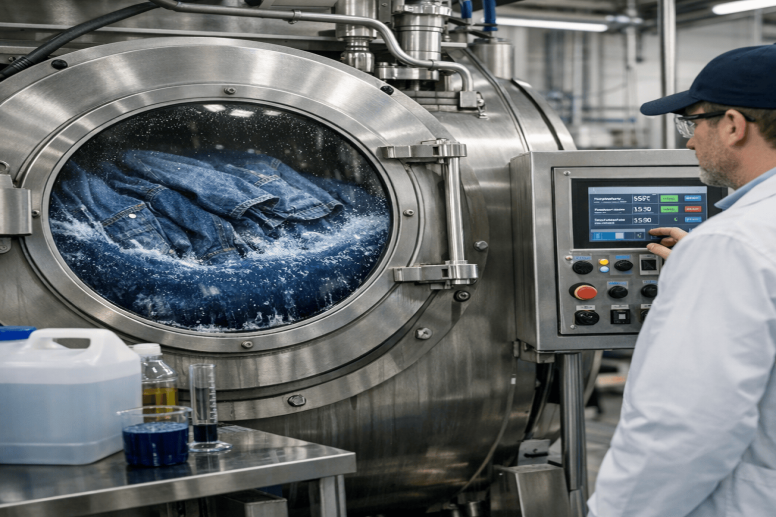
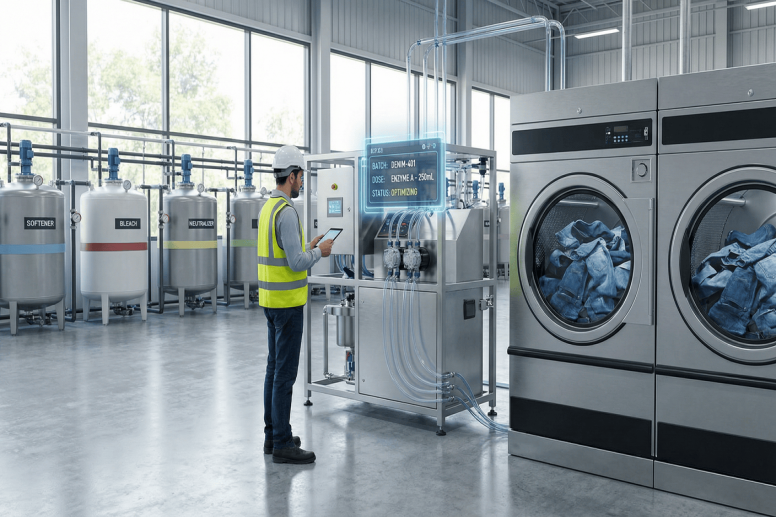
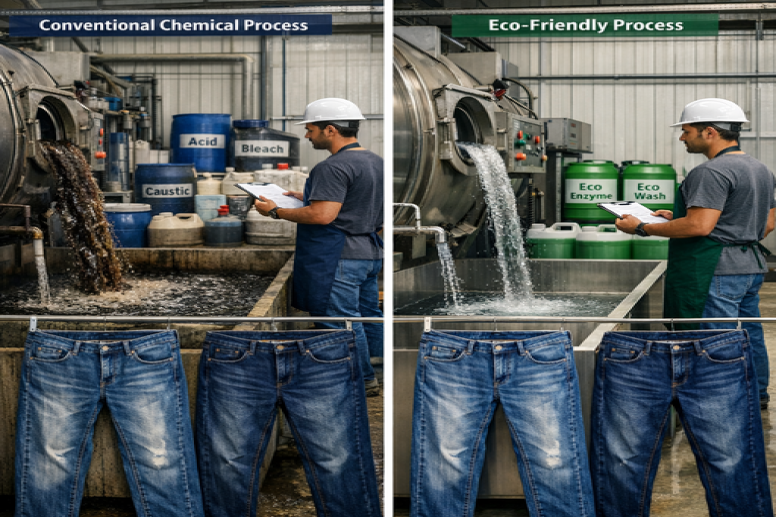
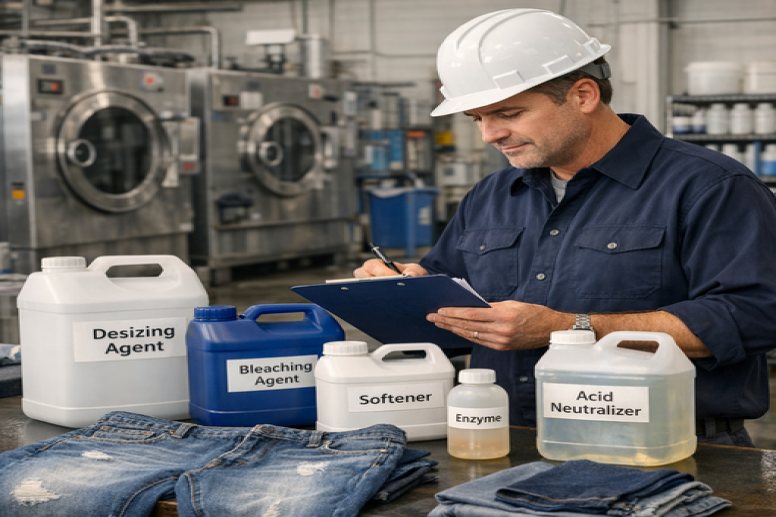
Denim garment washing requires large volumes of water during desizing, enzyme treatment, rinsing, bleaching, and finishing stages. High water usage increases production cost and creates environmental pressure for washing factories.
Global apparel brands now demand sustainable manufacturing practices. Washing plants must improve efficiency and reduce resource consumption without affecting garment quality. Reducing water consumption in denim washing helps factories control operating cost while maintaining stable production.
Why Water Consumption Is High in Denim Washing
Several washing stages require large water volumes. Traditional washing methods often use high liquor ratios and multiple rinsing cycles.
Major water consuming steps include:
desizing of denim garments
the enzyme wash process for fading effects
bleaching and neutralization treatments
repeated rinsing after chemical treatments
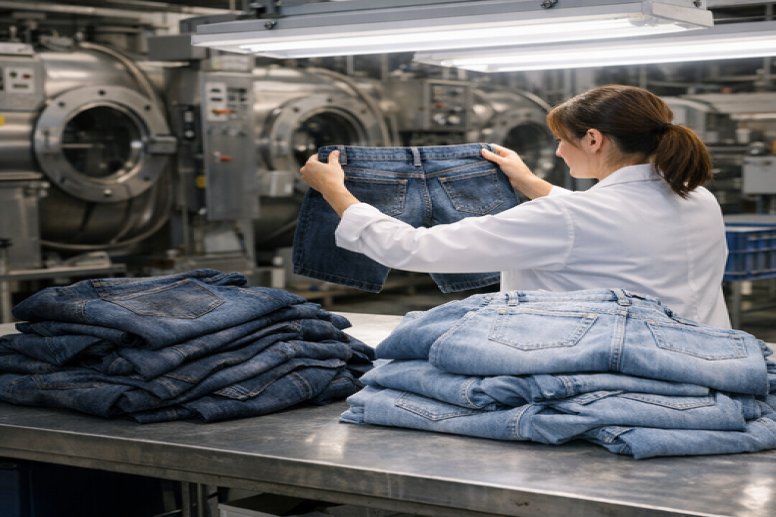
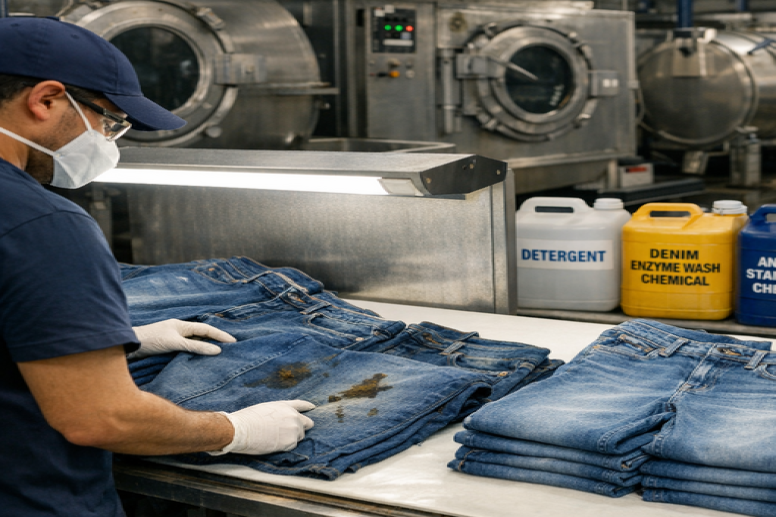
Without proper control, these processes increase water usage and may contribute to denim washing defects.
Role of Low Liquor Ratio Technology
Low liquor ratio washing represents one of the most effective methods to reduce water consumption. This technique reduces the amount of water used relative to garment weight during washing.
Benefits of low liquor ratio washing include:
reduced water usage
lower chemical consumption
faster heating of washing baths
improved washing efficiency
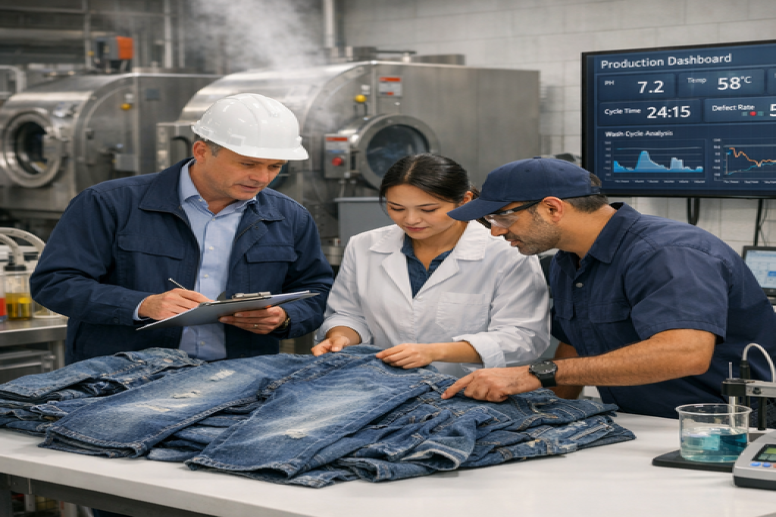
Proper process control ensures the enzyme wash process works efficiently under reduced water conditions.
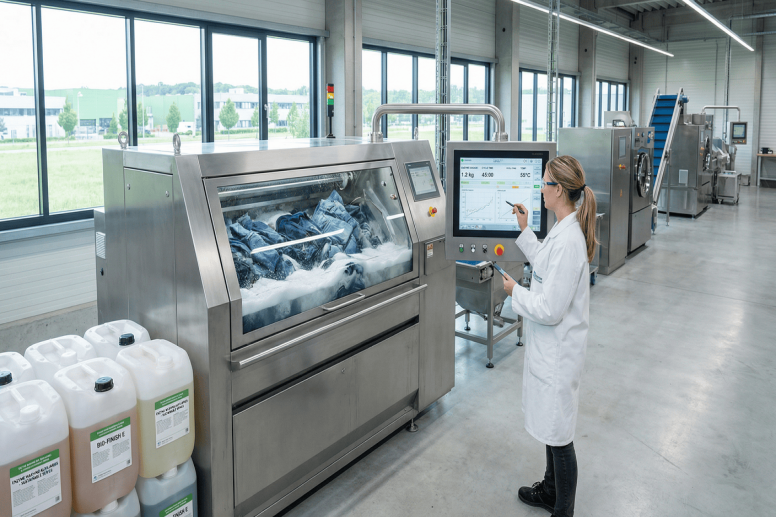
Optimizing the Enzyme Wash Process
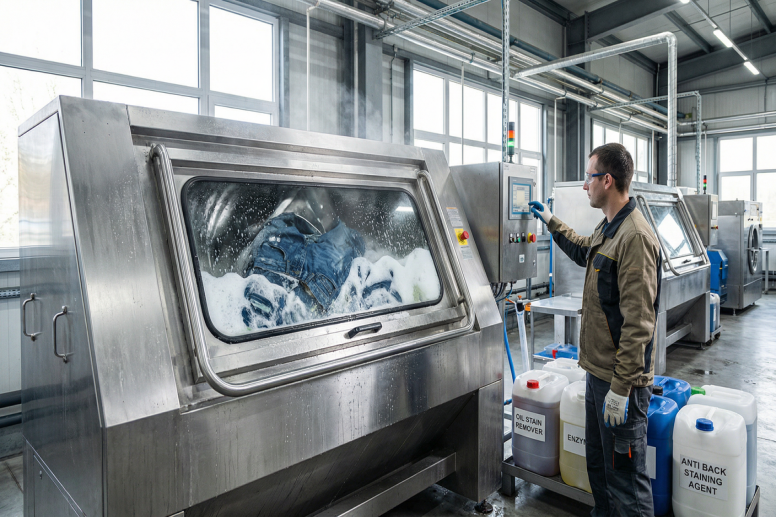
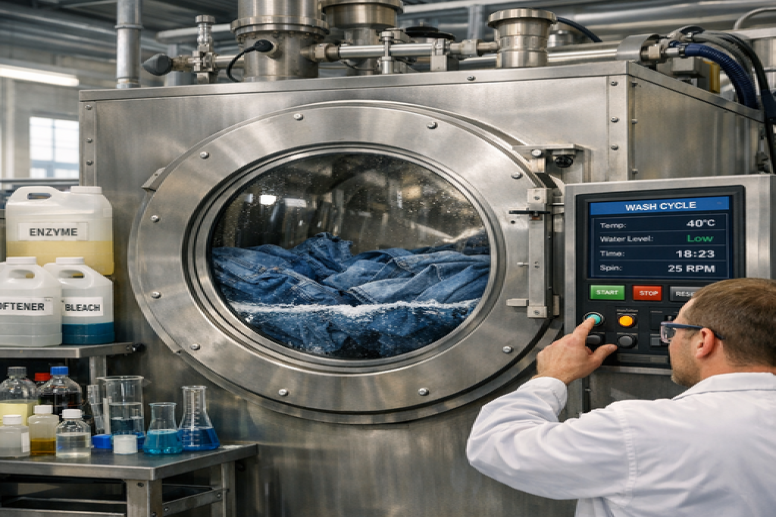
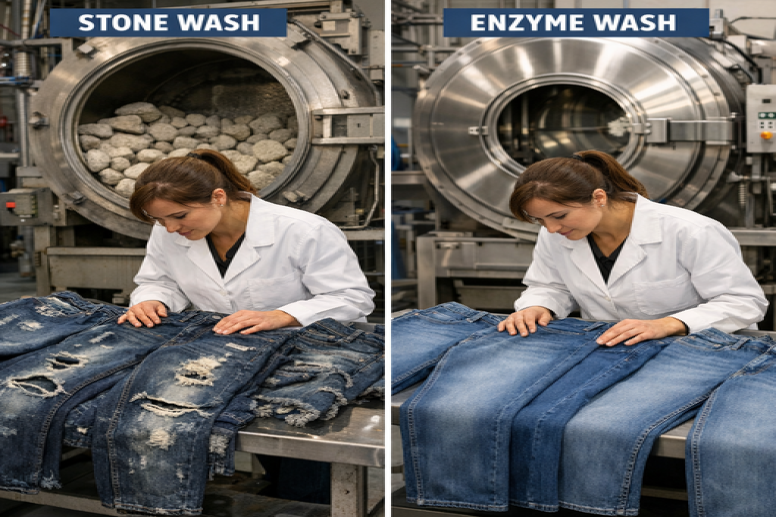
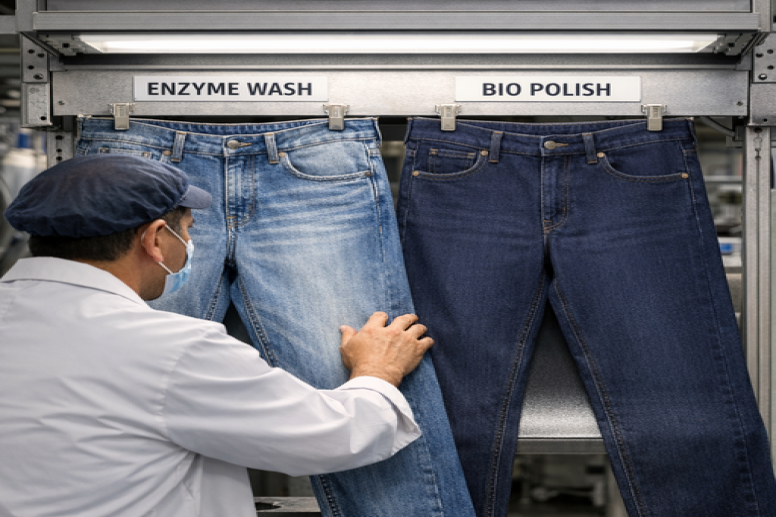
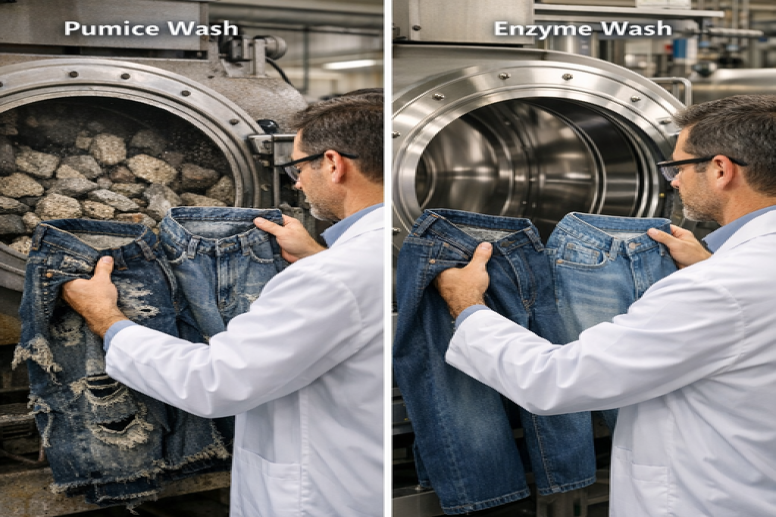
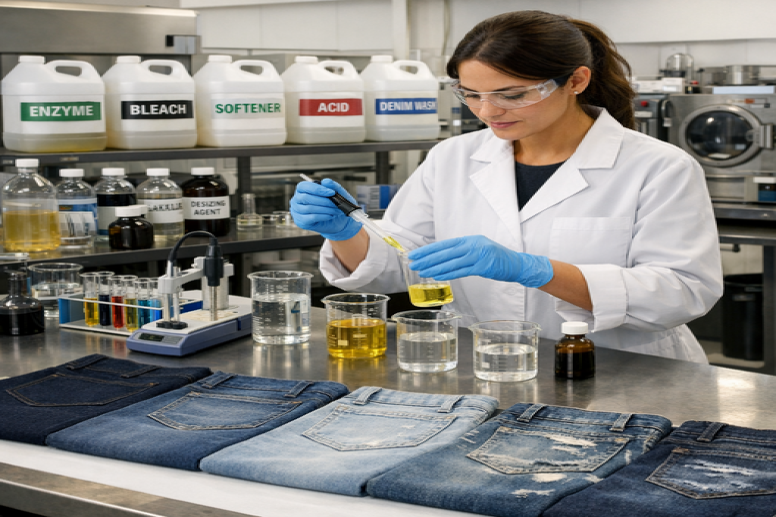
The enzyme wash process creates faded effects by removing surface fibers from denim fabric. Optimizing enzyme treatment improves washing efficiency and reduces unnecessary water usage.
Effective control methods include:
accurate enzyme dosage
controlled washing temperature
proper washing time
efficient mechanical agitation
These adjustments maintain washing quality while preventing indigo dye washing problems.
Efficient Rinsing Techniques
Rinsing removes loose dye particles and residual chemicals from garments. Inefficient rinsing increases water consumption.
Factories improve efficiency by:
using controlled rinse cycles
applying counter flow rinsing systems
optimizing washing machine load capacity
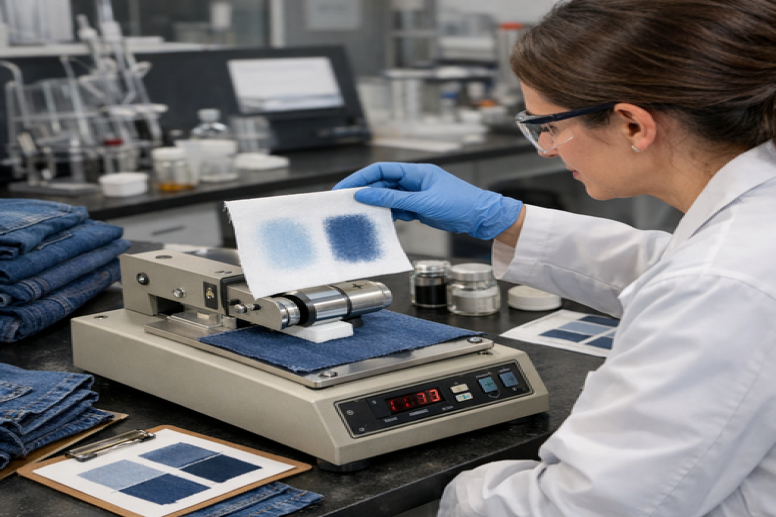
Proper rinsing helps reduce denim washing defects caused by redeposition of dye particles.
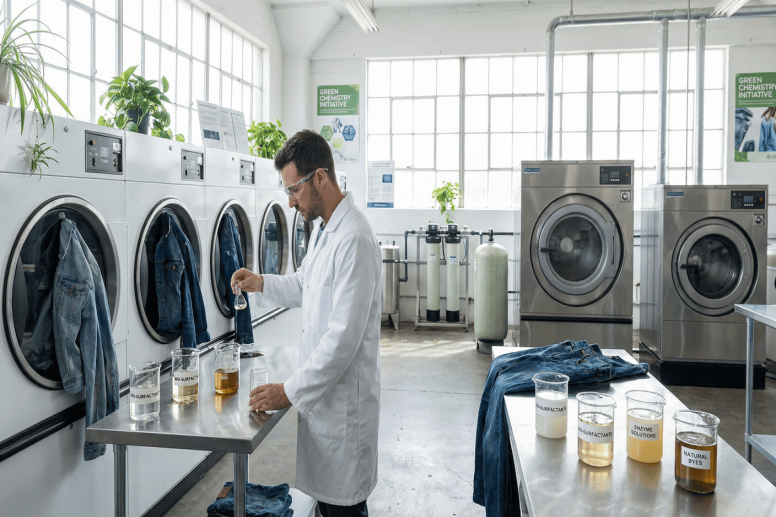
Chemical Solutions for Water Efficiency
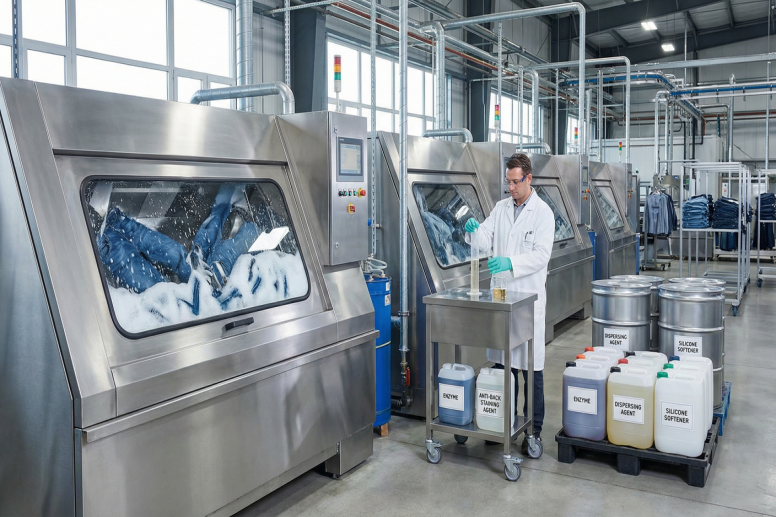
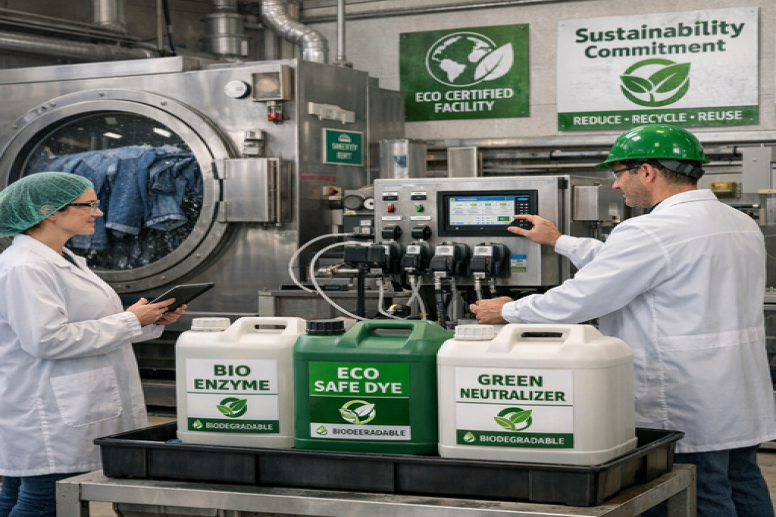
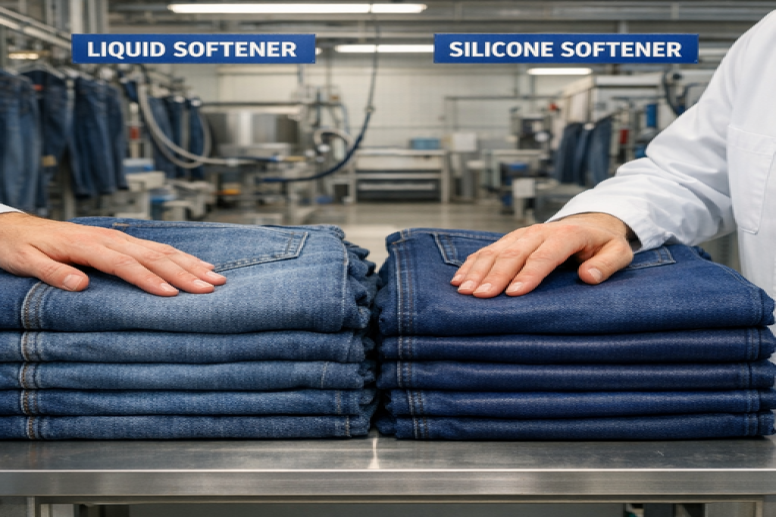
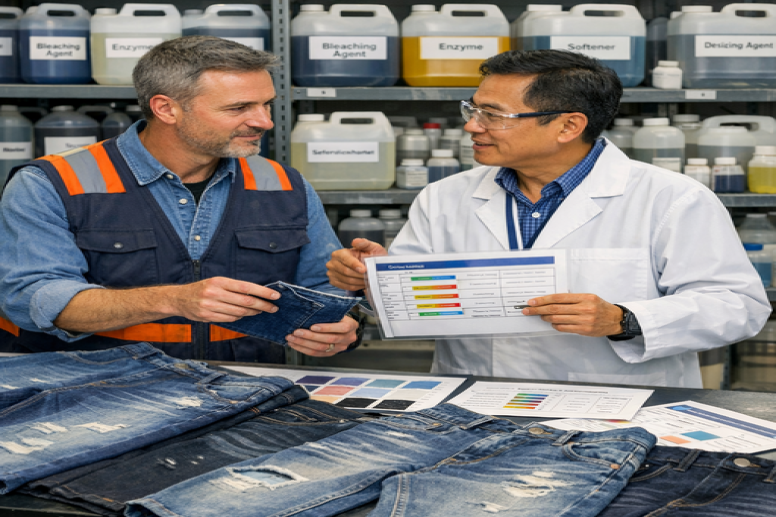
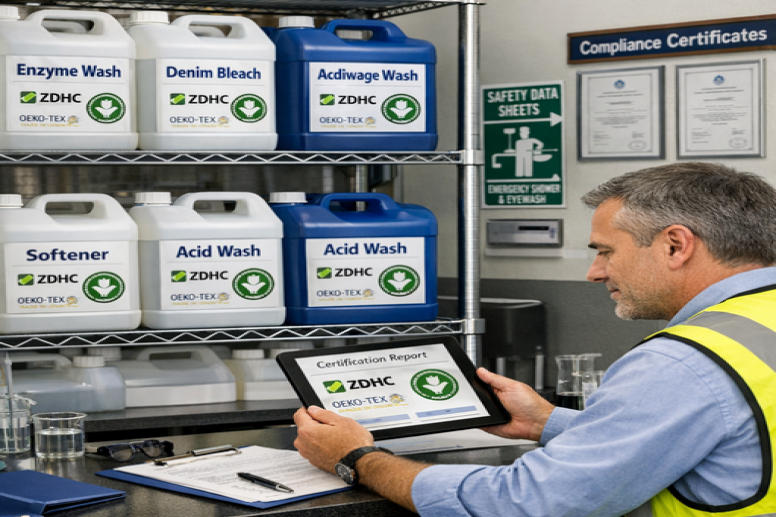
Modern textile auxiliaries support efficient washing processes and reduce resource consumption.
Important chemical solutions include:
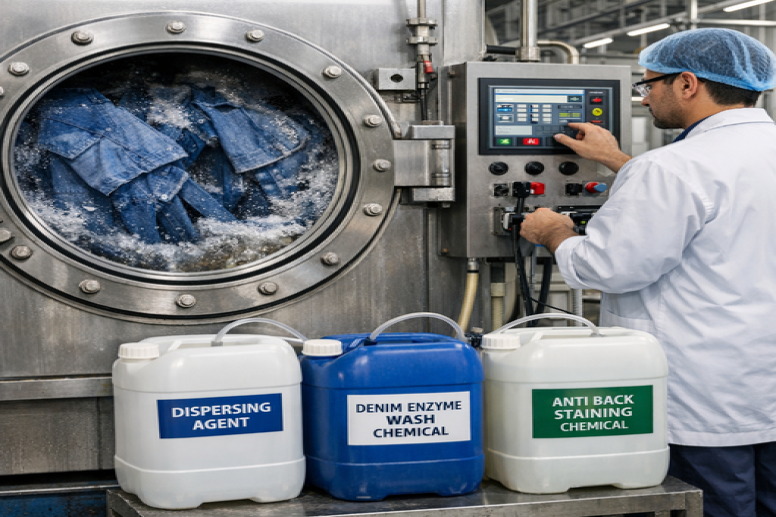
dispersing agents to prevent indigo dye redeposition
anti back staining chemicals during enzyme washing
efficient detergents for oil and impurity removal
enzyme systems designed for shorter washing cycles
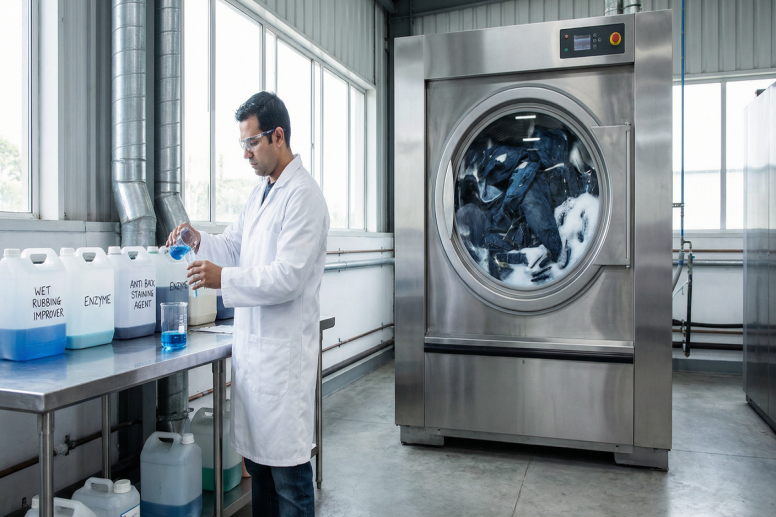
Correct chemical selection improves washing performance and reduces indigo dye washing problems.
Environmental and Production Benefits
Reducing water consumption provides several operational advantages for denim washing plants.
Key benefits include:
lower wastewater treatment cost
reduced energy usage
improved environmental compliance
stable washing quality
reduced denim washing defects
Efficient water management strengthens sustainable garment production.
Conclusion
Water efficiency represents a major priority in modern denim garment washing. By applying low liquor ratio techniques, optimizing the enzyme wash process, and using efficient textile auxiliaries, washing factories significantly reduce water consumption.
These improvements support sustainable manufacturing practices while preventing indigo dye washing problems and maintaining high garment quality.