12 Mar
Anti Back Staining Agent in Denim Washing. Function, Benefits, and Application
Learn how anti back staining agents work in denim washing. Complete guide covering functions, benefits, and application of anti back staining chemicals in garment washing.
Anti Back Staining Agent in Denim Washing. Function and Benefits
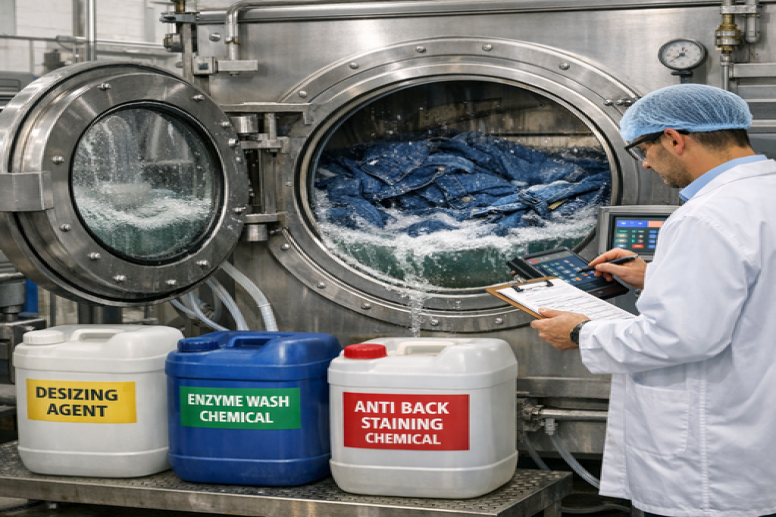
Back staining remains one of the most common problems in denim garment washing. During enzyme washing, indigo dye particles separate from yarn surface and float in wash liquor. These dye particles often redeposit on garments and create unwanted stains.
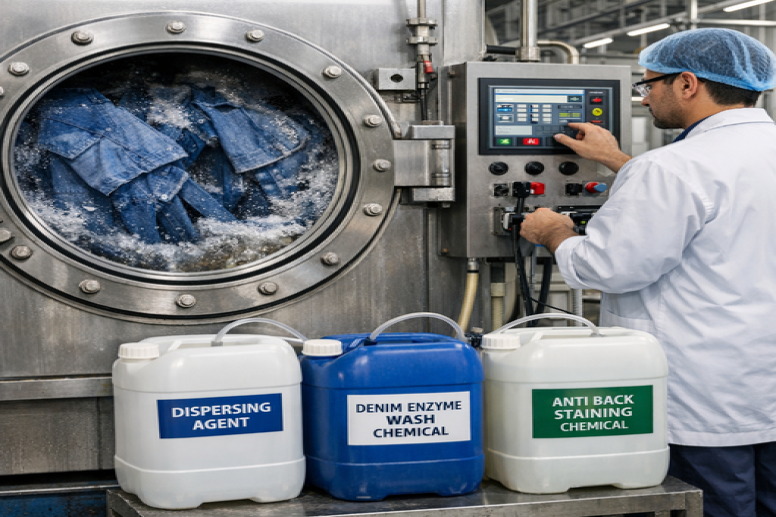
An anti back staining agent in denim washing prevents this issue. This textile auxiliary keeps indigo dye particles dispersed in wash liquor and stops redeposition on fabric surface.
Garment washing factories use anti back staining chemicals to maintain clean denim appearance and consistent shade results.
What Is an Anti Back Staining Agent
An anti back staining agent refers to a specialized textile auxiliary used during denim washing. The chemical disperses loose dye particles and prevents them from attaching again to the garment surface.
This auxiliary plays an important role during enzyme washing because indigo dye releases from fiber surface during the process.
Main functions include:
prevention of dye redeposition
suspension of dye particles in wash liquor
protection of garment surface from staining
improvement of shade clarity
Most modern denim washing plants include anti back staining agents in their standard washing recipe.
Why Back Staining Occurs in Denim Washing
Back staining occurs due to the nature of indigo dye. Indigo dye remains attached to yarn surface rather than fully penetrating the fiber.
During enzyme washing:
Enzymes remove surface fibers.
Indigo dye particles detach from yarn surface.
Dye particles float in wash liquor.
Without chemical control, dye redeposits on fabric.
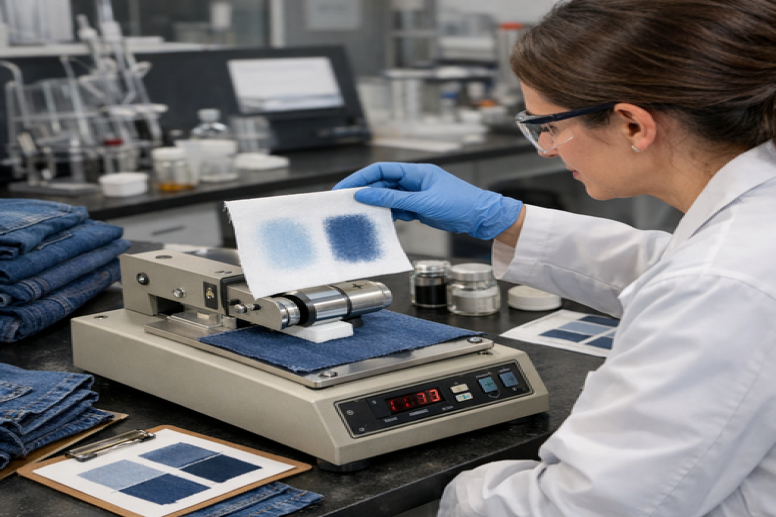
This redeposition creates uneven shade and dark stains on garments.
Back staining often appears on:
pocketing fabric
white stitching
inner garment areas
light shade denim
Proper chemical control prevents this issue.
Role of Anti Back Staining Agents in Denim Washing
Anti back staining auxiliaries control dye particles released during washing.
Key roles include:
Dye Particle Dispersion
The chemical disperses indigo dye particles and keeps them suspended in wash liquor. This prevents dye accumulation on garment surface.
Fabric Surface Protection
The auxiliary creates a protective layer around fabric fibers. This reduces the attraction between dye particles and the garment surface.Shade Clarity Improvement
By preventing dye redeposition, the chemical maintains the intended faded effect created during enzyme washing.Washing Uniformity
Anti back staining chemicals help produce uniform shade across all garments in the washing batch.Benefits of Anti Back Staining Chemicals
Garment washing plants achieve several advantages from these auxiliaries.Main benefits include:
clean denim surface appearance
reduced redeposition of indigo dye
improved shade clarity
consistent washing results
reduction of garment rejection
improved overall product quality
These advantages improve productivity in denim washing units.
Application in Denim Washing Process
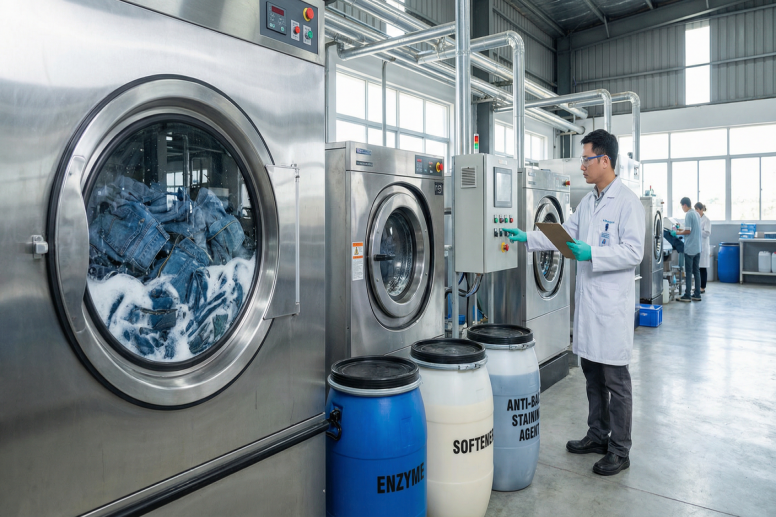
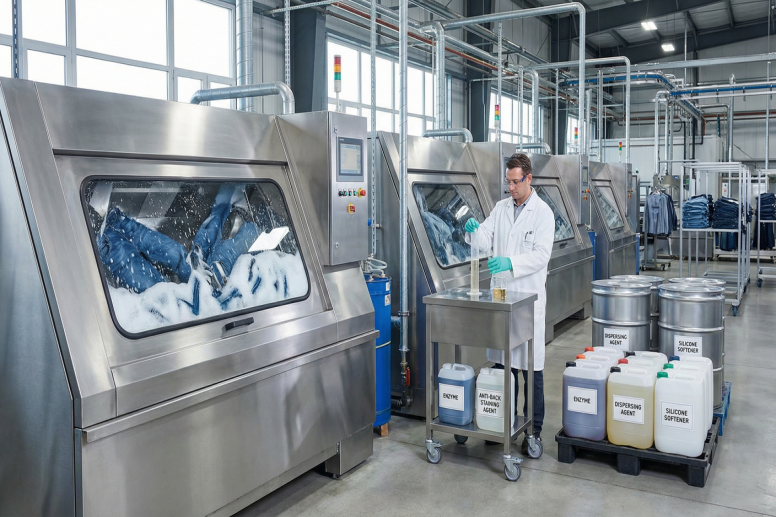
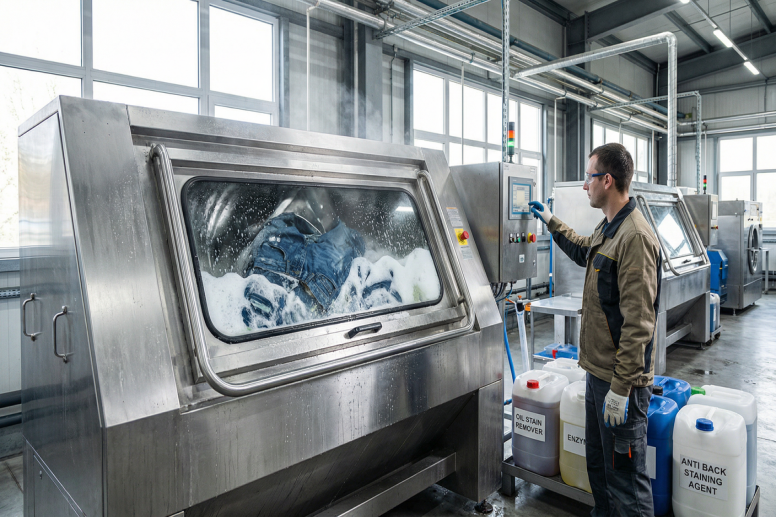
Anti back staining agents are commonly applied during the enzyme washing stage.Typical process sequence:
Desizing stage
Enzyme washing with anti back staining agent
Rinsing
Bleaching if required
Neutralization
Softening
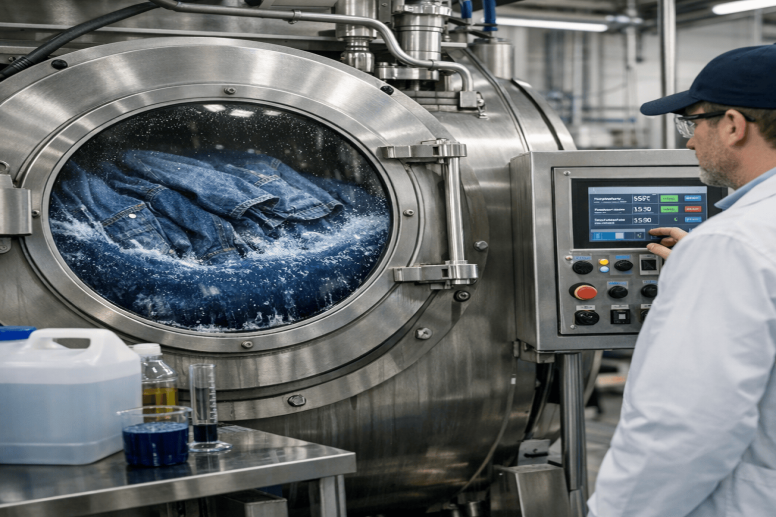
The chemical dosage depends on washing conditions and garment load.
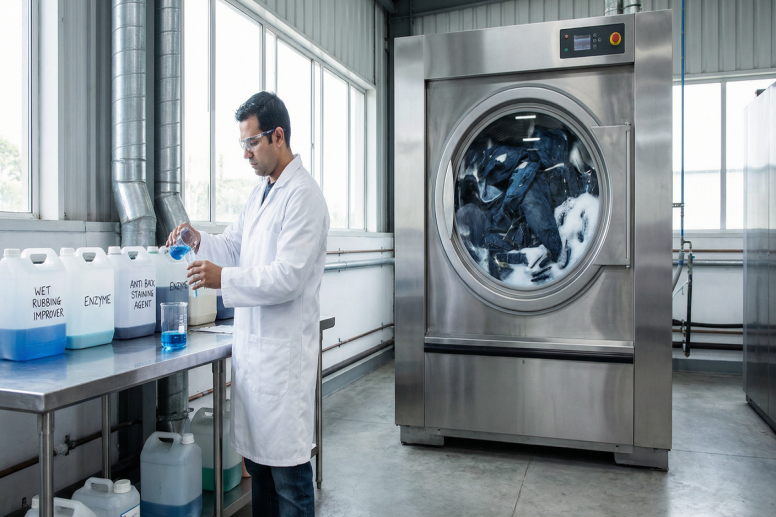
Proper mixing ensures uniform chemical distribution inside the washing machine.
Common Denim Washing Problems Without Anti Back Staining Agents
Garment washing plants often face quality problems when these auxiliaries remain absent.Typical issues include:
heavy back staining on garments
uneven fading effects
dark patches on light shade denim
staining on pocketing fabric
rejection of finished garments
These problems increase reprocessing cost and reduce factory productivity.
Factors Affecting Back Staining Control
Several processing parameters influence back staining behavior during denim washing.
Important factors include:
enzyme concentration
washing temperature
liquor ratio
washing time
auxiliary dosage
Proper control of these parameters improves chemical performance.
Conclusion
An anti back staining agent in denim washing plays an important role in garment finishing. This textile auxiliary prevents indigo dye redeposition during enzyme washing and maintains clean garment appearance.
Denim washing factories rely on these chemicals to produce uniform fading effects and reduce washing defects. Proper auxiliary selection and process control ensure stable washing performance and improved garment quality.