16 Mar
Chemical Dosing Optimization in Garment Washing for Higher Efficiency
Learn how chemical dosing optimization in garment washing reduces cost and improves quality. Control the enzyme wash process and prevent denim washing defects.
Chemical Dosing Optimization in Garment Washing
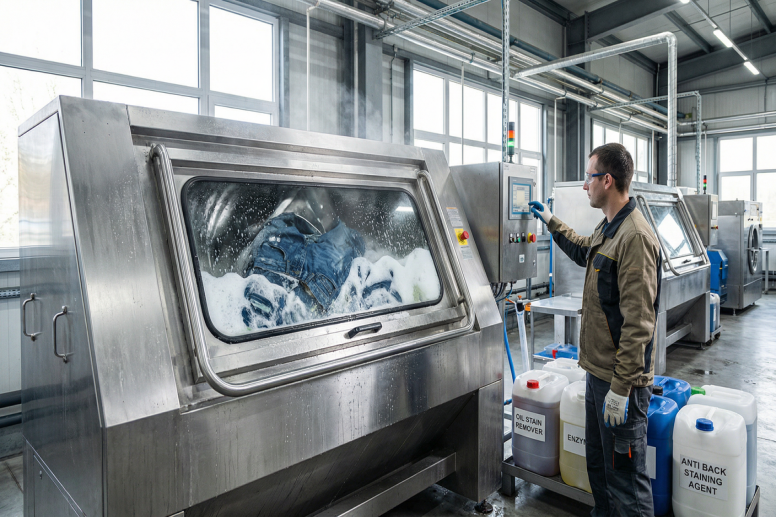
Chemical cost and process stability directly affect profit in garment washing factories. Overdosing increases expenses. Underdosing creates quality problems.
Chemical dosing optimization in garment washing helps production managers control consumption, maintain consistent results, and improve operational efficiency. Accurate dosing reduces waste and supports stable washing performance.
Proper chemical control also helps prevent denim washing defects and indigo dye washing problems during processing.
Importance of Accurate Chemical Dosing
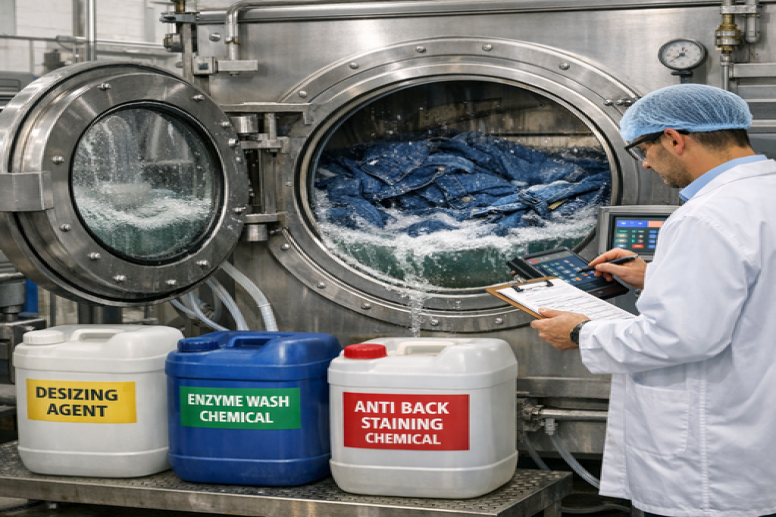
Chemical reactions during washing depend on correct concentration levels. Enzymes, dispersing agents, detergents, and softeners must follow recommended dosage ranges.
Improper dosing leads to:
uneven fading
back staining
excessive shade loss
fabric damage
increased reprocessing cost
Controlled dosing improves the enzyme wash process and ensures predictable results.
Key Areas for Dosing Optimization
Production managers should focus on critical stages in denim washing.
Enzyme Treatment Stage
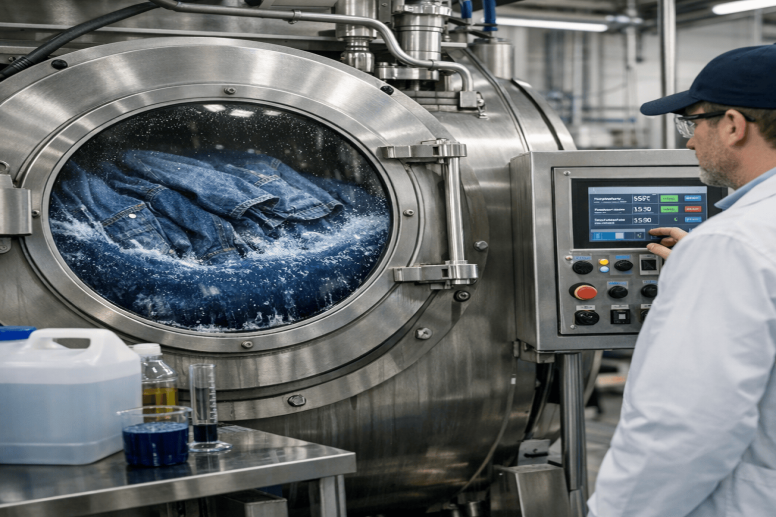
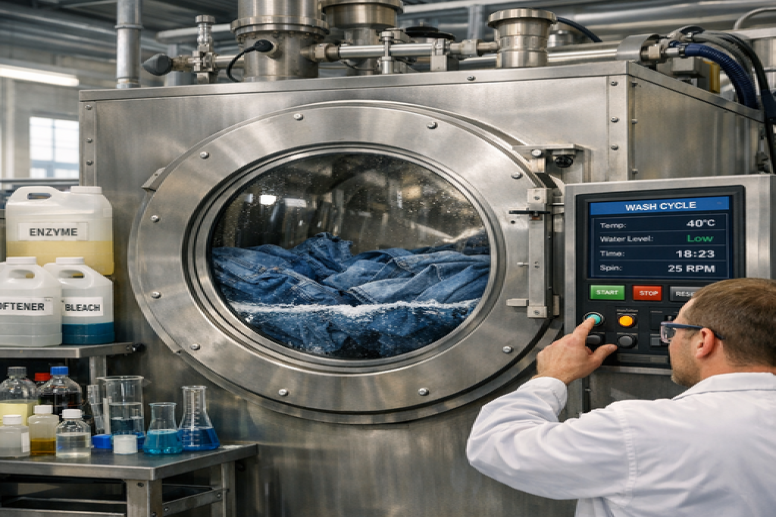
The enzyme wash process requires precise enzyme concentration. Excess dosage increases cost and may damage fabric. Low dosage reduces fading performance.
Anti Back Staining Stage
Correct dosage of anti back staining chemicals prevents dye redeposition. Balanced application avoids unnecessary chemical waste.
Softening Stage
Overuse of softeners increases cost and affects fabric performance. Optimized dosing improves hand feel with minimal consumption.
Methods for Chemical Dosing Optimization
Washing plants can apply several practical methods to improve dosing control.
Use Automated Dosing Systems
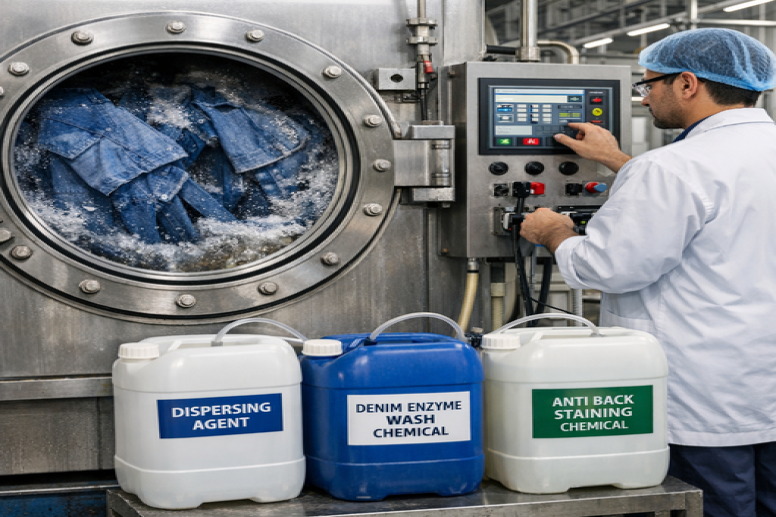
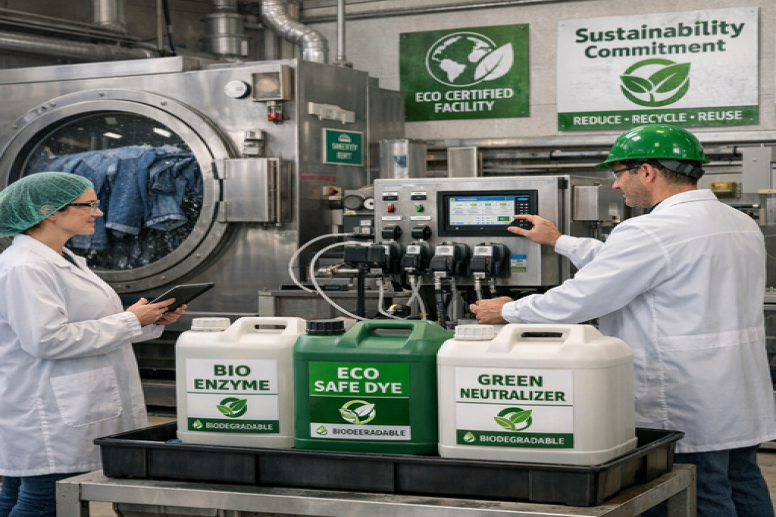
Automated pumps deliver accurate chemical quantities during each washing cycle. This method reduces human error and improves consistency.
Prepare Standard Operating Procedures
Clear instructions for each washing process ensure uniform chemical usage across shifts.
Conduct Regular Calibration
Dosing equipment requires periodic calibration to maintain accuracy and prevent overuse.
Monitor Batch Records
Recording chemical consumption per batch helps production managers analyze trends and control costs.
Benefits for Production Managers
Chemical dosing optimization provides measurable advantages.
Key benefits include:
reduced chemical cost per garment
improved process consistency
lower denim washing defects
better control of indigo dye washing problems
higher operational efficiency
improved profit margins
Efficient dosing strengthens factory performance and buyer confidence.
Connection with Sustainable Production
Optimized chemical usage also supports environmental goals.
Benefits include:
reduced wastewater load
lower chemical discharge
improved compliance with international standards
better resource management
Efficient dosing aligns cost control with sustainability objectives.
Conclusion
Chemical dosing optimization in garment washing improves production efficiency, reduces cost, and enhances quality control. Accurate management of enzymes, dispersing agents, and finishing auxiliaries ensures stable washing results.
By controlling the enzyme wash process and maintaining proper chemical concentration, factories reduce denim washing defects and prevent indigo dye washing problems while improving profitability.
Production managers who implement systematic dosing control achieve consistent quality and stronger business performance.