12 Mar
Oil Stain Remover in Denim Washing: Functions, Benefits, and Application
Learn how oil stain removers work in denim washing. Complete guide covering functions, benefits, and application of oil stain remover chemicals in garment washing.
Oil Stain Remover in Denim Washing: Function and Benefits
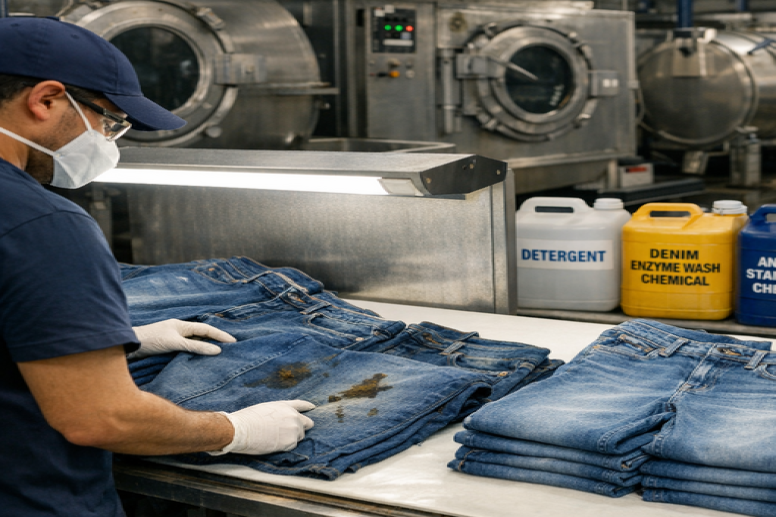
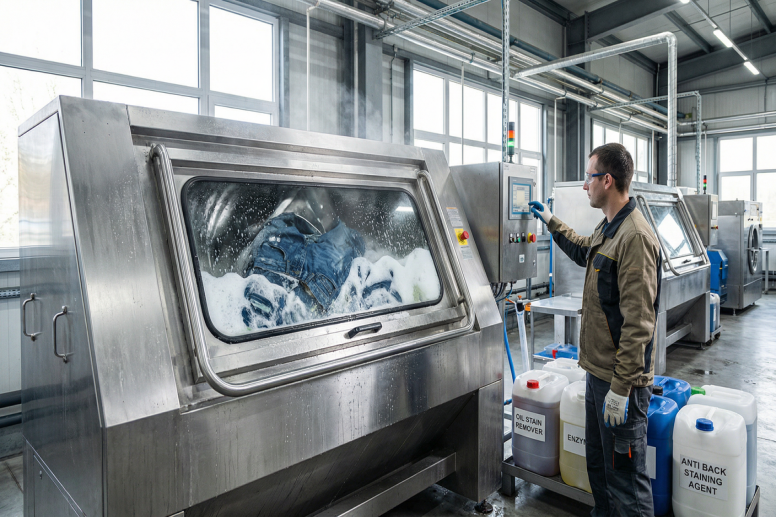
Oil and grease stains often appear on denim garments during production. Sewing operations, fabric handling, and machine lubrication can leave marks that water alone cannot remove. An oil stain remover in denim washing addresses this problem efficiently.
These textile auxiliaries dissolve and remove oil contamination while preventing permanent marks, ensuring clean garment surfaces and consistent quality. Garment washing factories use oil stain removers as a critical part of their washing recipe.
What Is an Oil Stain Remover
An oil stain remover is a specialized chemical used in denim washing to eliminate oil and grease contamination. The auxiliary works by emulsifying oils in the wash liquor, making them easy to rinse away.
Primary functions include:
dissolution of oil and grease stains
prevention of permanent marks on garments
protection of fabric appearance
improved washing efficiency
This chemical is particularly important in light shade denim where oil marks are highly visible.
Causes of Oil Stains in Denim Washing
Oil stains typically originate from:
sewing machine oil
fabric handling equipment
lubricants in conveyor belts
residual finishing oils
If left untreated, these oils can cause dark spots or uneven appearance on garments, leading to increased rework or garment rejection.
Role of Oil Stain Removers in Denim Washing
Oil stain removers improve garment appearance and washing efficiency through:
Emulsification
The chemical emulsifies oil particles in the wash liquor, allowing them to disperse and rinse away without redepositing.
Fabric Surface Protection
The auxiliary prevents oil particles from adhering to yarn and fabric surfaces, preserving the intended shade and surface quality.
Compatibility with Other Auxiliaries
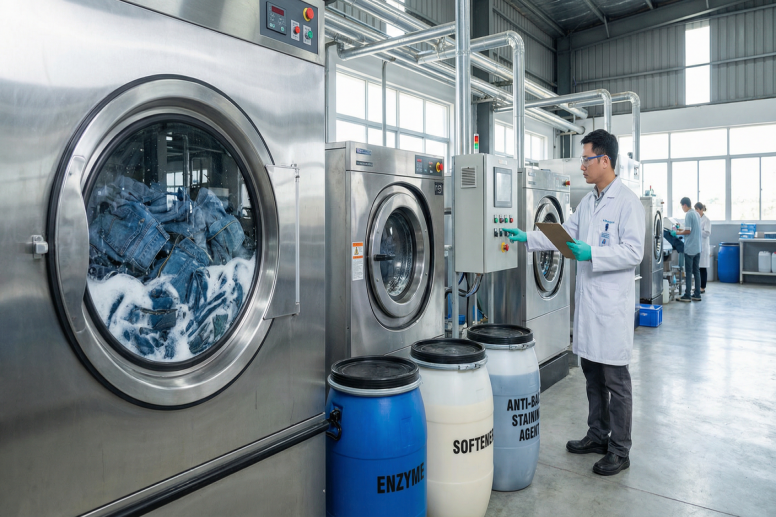
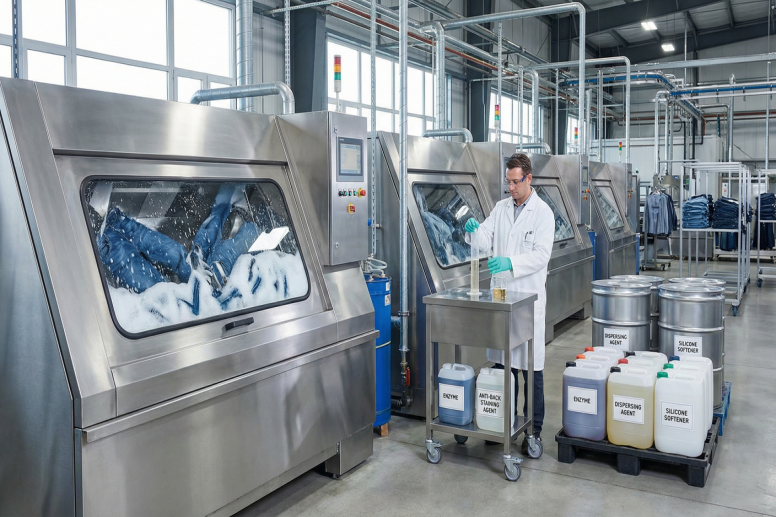
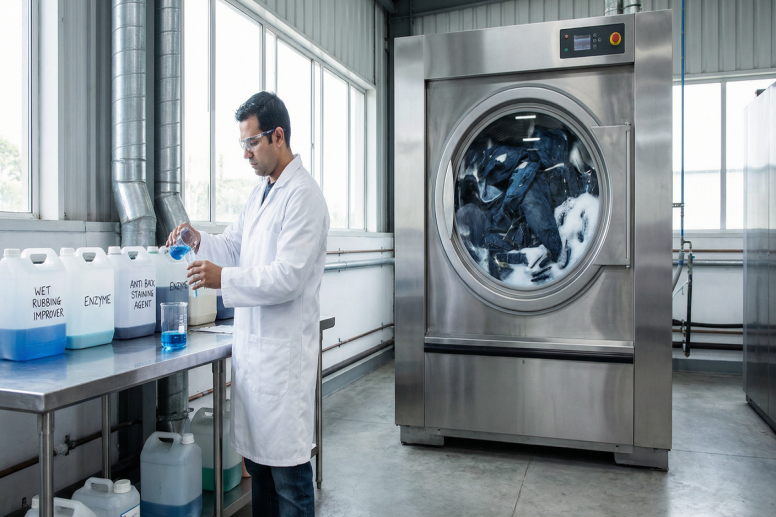
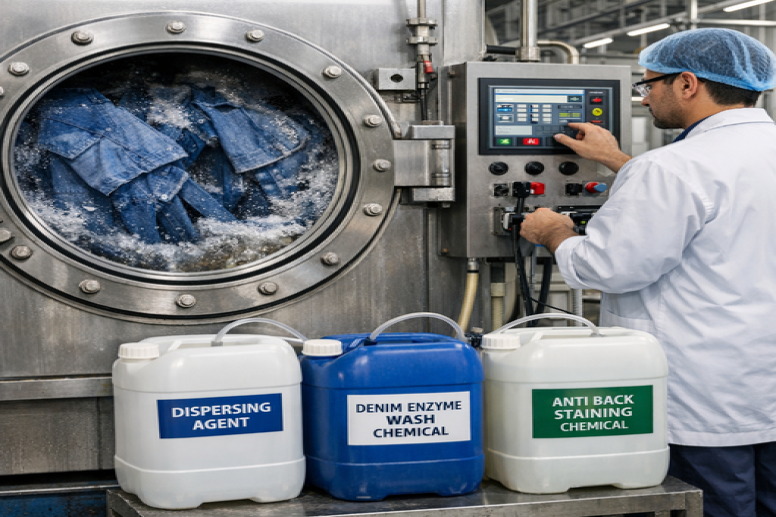
Oil stain removers work alongside enzymes, anti back staining agents, and softeners without affecting their performance.
Benefits of Using Oil Stain Removers
Garment washing plants experience multiple advantages from these auxiliaries:
clean denim surface free of oil marks
uniform shade across garments
reduced garment rejection and rework
improved washing efficiency and consistency
enhanced final garment quality
Proper use reduces production cost and improves customer satisfaction.
Application in Denim Washing Process
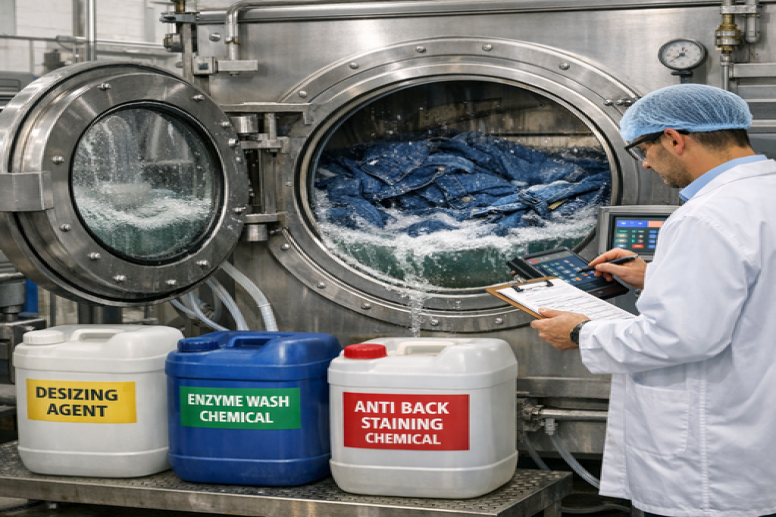
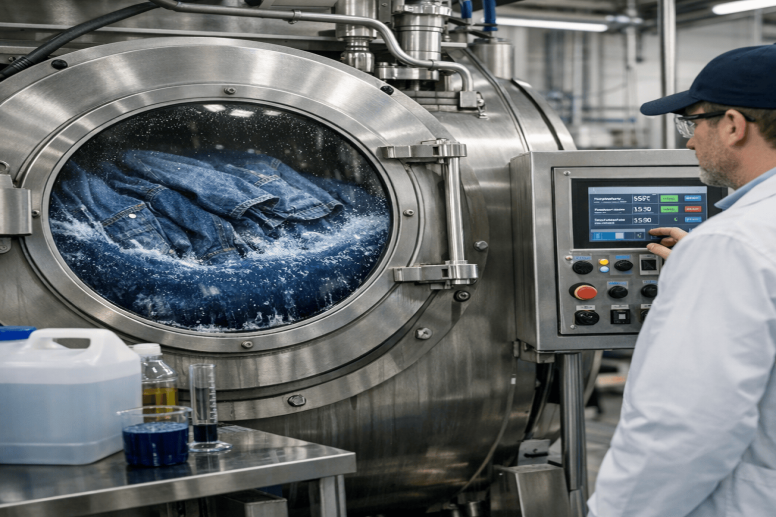
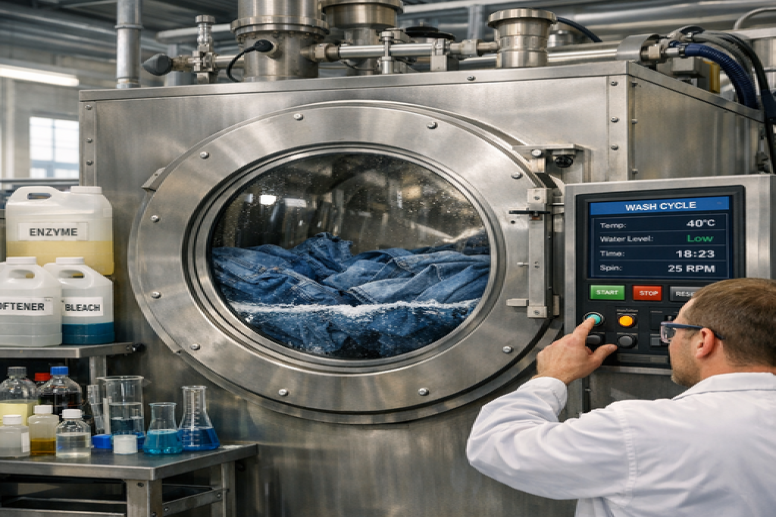
Oil stain removers are typically applied during the early washing stages, often immediately after desizing.
Typical process sequence:
Desizing stage
Oil stain remover application
Enzyme washing with anti back staining agent
Rinsing
Bleaching if required
Neutralization and softening
Dosage depends on the level of oil contamination, washing machine type, and batch size. Even distribution in wash liquor ensures effective cleaning.
Common Problems Without Oil Stain Removers
When oil stain removers are not used, denim washing factories may face:
dark spots and stains on garments
uneven shade development
increased reprocessing costs
lower product quality
rejection of garments in quality inspection
These issues increase operational costs and reduce factory productivity.
Conclusion
Oil stain remover in denim washing is a critical textile auxiliary for maintaining garment cleanliness and appearance. By emulsifying oil and grease stains, it prevents redeposition and preserves shade quality.
Factories that use oil stain removers alongside other auxiliaries such as enzymes and anti back staining agents achieve stable washing results, improved garment quality, and consistent production efficiency.