16 Mar
Low Liquor Ratio Denim Washing Techniques for Efficient Garment Processing
Learn low liquor ratio denim washing techniques. Understand how the enzyme wash process works with reduced water usage while preventing denim washing defects.
Low Liquor Ratio Denim Washing Techniques
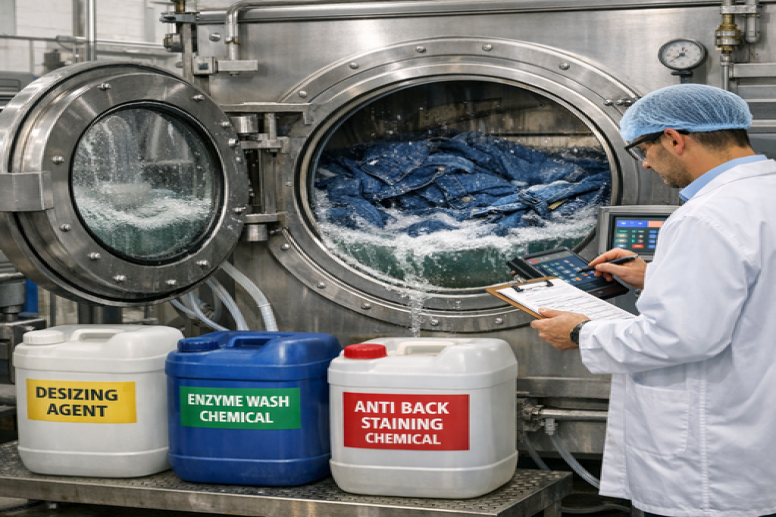
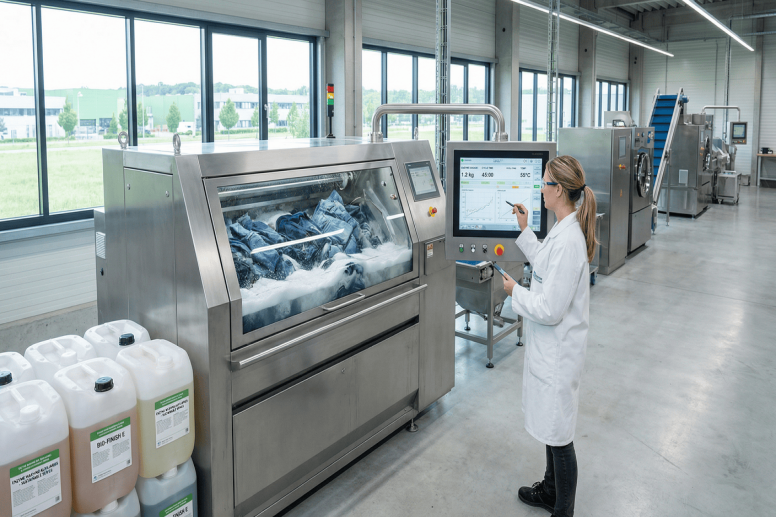
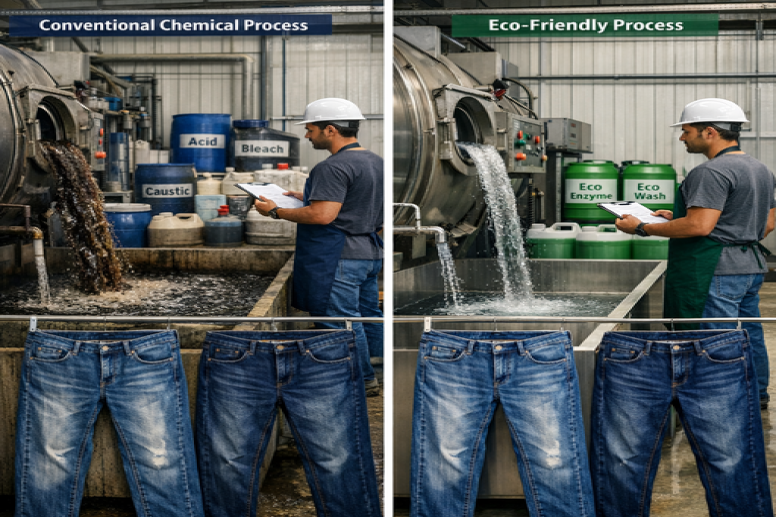
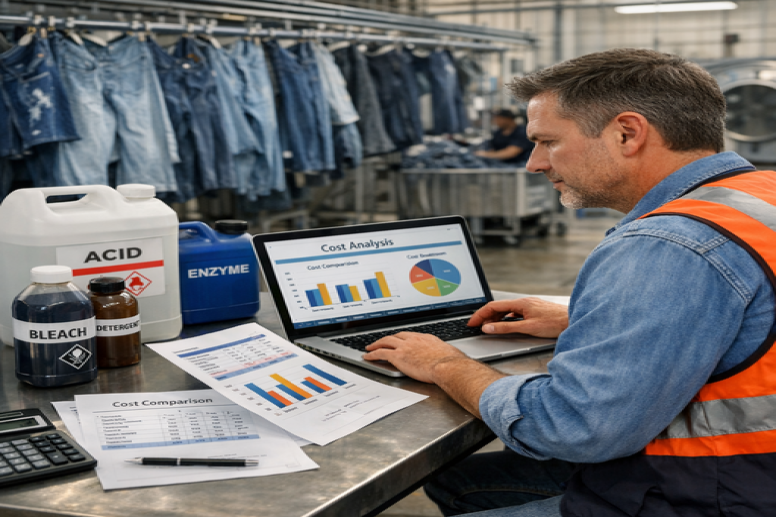
Water consumption represents a major concern in denim garment washing. Traditional washing processes require large volumes of water, which increases production cost and environmental impact. Modern washing plants adopt low liquor ratio denim washing techniques to reduce water usage while maintaining garment quality.
Low liquor ratio systems use smaller amounts of water in relation to garment weight during washing. When managed correctly, this approach improves chemical efficiency, reduces washing time, and lowers operating costs without increasing denim washing defects.
What Is Liquor Ratio in Denim Washing
Liquor ratio refers to the proportion between water volume and garment weight used during washing.
Example:
Liquor ratio 1:10 means 10 liters of water for every 1 kilogram of garments
Liquor ratio 1:5 means 5 liters of water for every 1 kilogram of garments
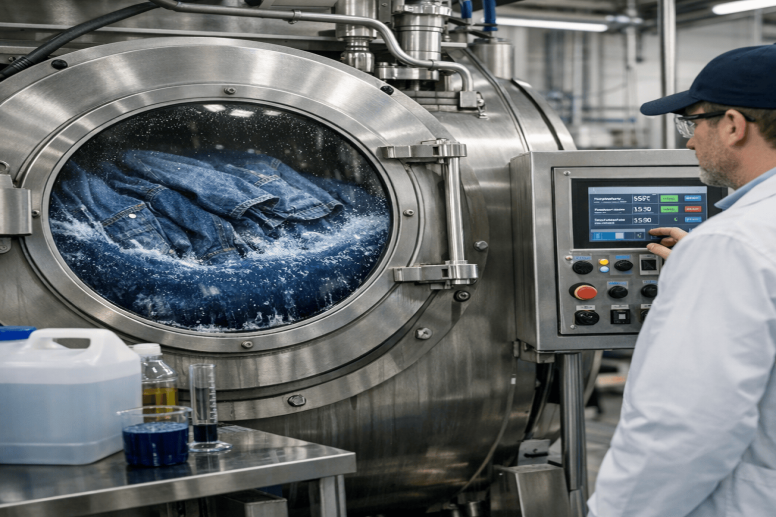
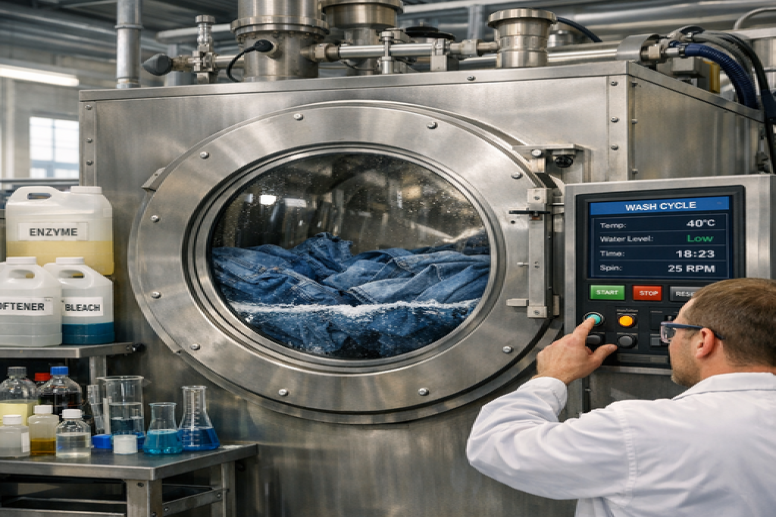
Low liquor ratio washing uses smaller water volumes while maintaining proper agitation and chemical performance.
Importance of Low Liquor Ratio Washing
Denim washing factories adopt low liquor ratio techniques to improve production efficiency.
Major advantages include:
reduced water consumption
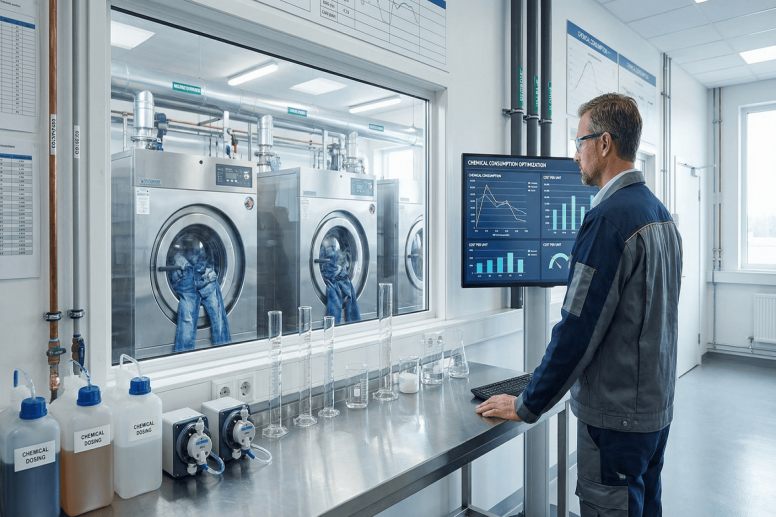
lower chemical usage
faster heating of washing baths
reduced energy cost
improved sustainability in denim processing
Efficient liquor control also helps stabilize the enzyme wash process.
Low Liquor Ratio in Enzyme Washing
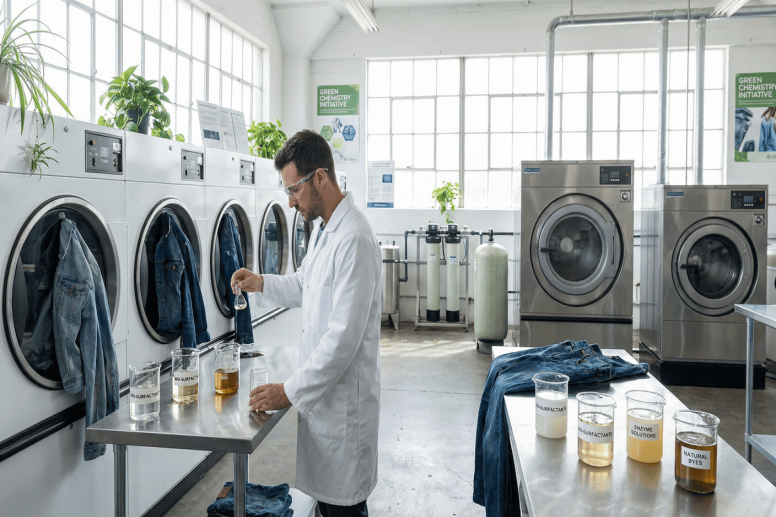
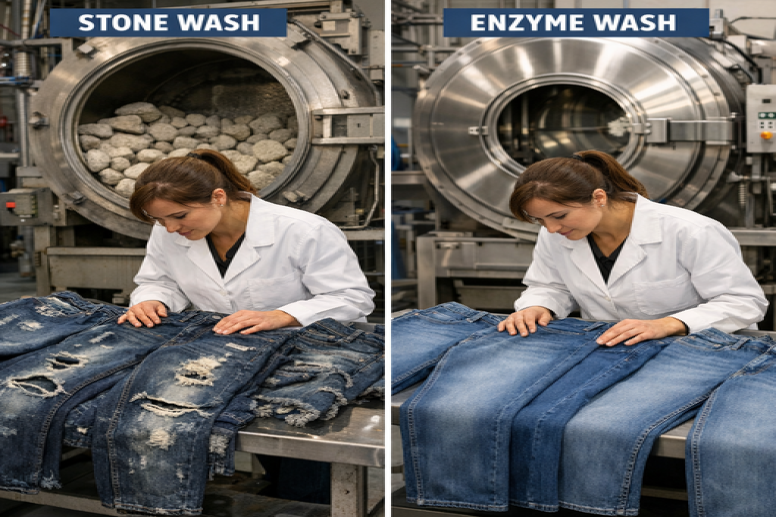
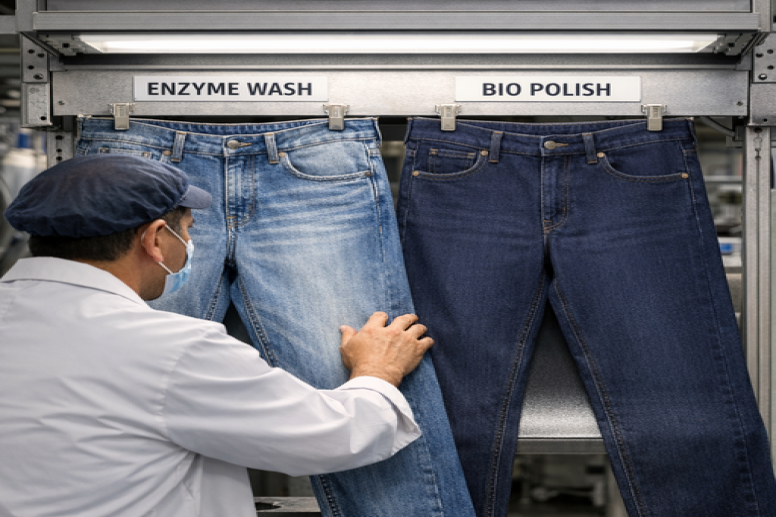
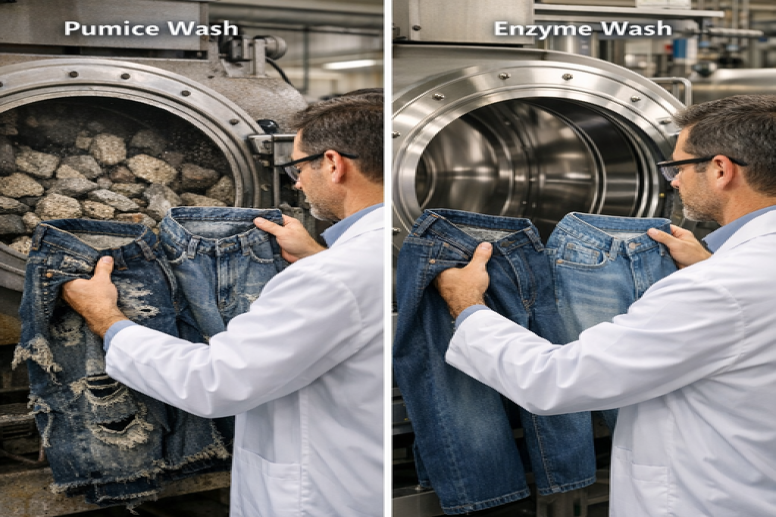
The enzyme wash process performs effectively under controlled liquor ratios. Enzymes react with cotton fibers on the denim surface to create fading effects.
Under low liquor ratio conditions:
enzyme concentration becomes higher in the washing bath
reaction efficiency increases
washing time may be reduced
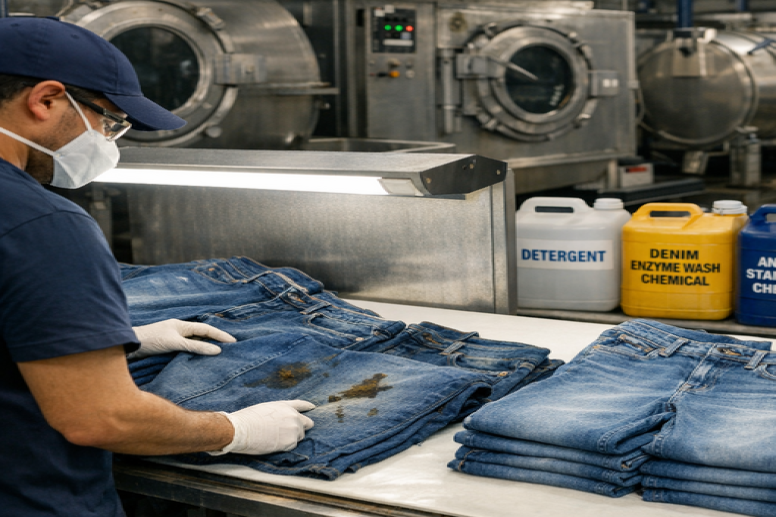
However, improper control can create indigo dye washing problems such as back staining and uneven fading.
Challenges of Low Liquor Ratio Denim Washing
Despite its advantages, low liquor ratio washing requires careful process management.
Common challenges include:
increased dye concentration in wash liquor
higher risk of indigo dye washing problems
potential redeposition of dye particles
uneven chemical distribution during washing
Without proper control, these conditions may lead to denim washing defects.
Techniques to Control Washing Quality
Denim washing factories apply several technical methods to maintain quality during low liquor ratio washing.
Proper Chemical Dispersion
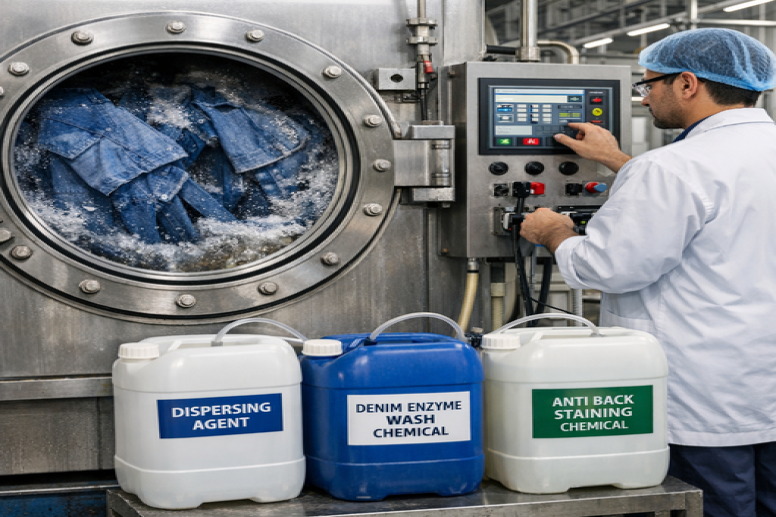
Use dispersing chemicals to keep indigo dye particles suspended in the washing bath.
Anti Back Staining Chemicals
These auxiliaries prevent loose dye particles from redepositing on garment surfaces.
Controlled Enzyme Dosage
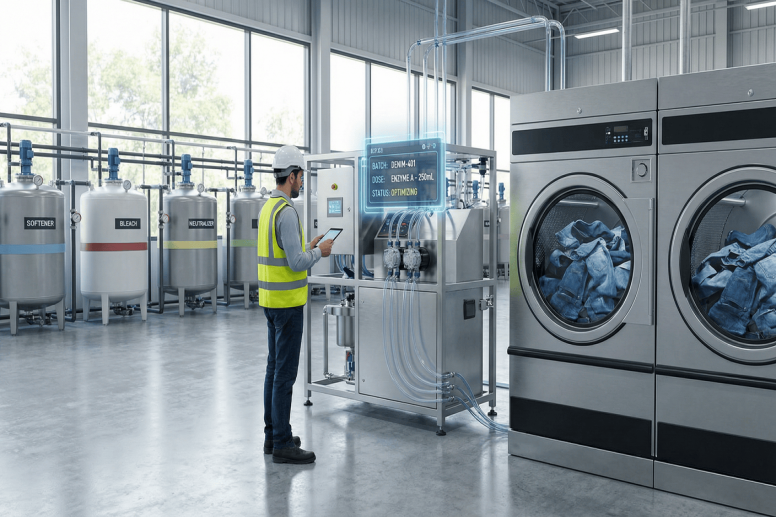
Careful adjustment of the enzyme wash process ensures uniform fading without excessive dye release.
Efficient Mechanical Agitation
Proper washing machine movement helps distribute chemicals evenly across garments.
Adequate Rinsing
Thorough rinsing removes released dye particles and prevents staining problems.
Benefits of Low Liquor Ratio Washing
When applied correctly, low liquor ratio washing offers several operational benefits.
Important advantages include:
lower water consumption in garment washing
reduced chemical and energy cost
improved washing efficiency
controlled enzyme wash process performance
reduction of denim washing defects
These benefits support sustainable denim production practices.
Conclusion
Low liquor ratio denim washing techniques improve resource efficiency and reduce production costs in garment washing factories. By using smaller water volumes, manufacturers reduce chemical consumption and energy usage while maintaining washing performance.
Successful implementation requires proper control of the enzyme wash process and effective management of indigo dye washing problems. With the correct washing parameters and chemical auxiliaries, factories achieve high quality denim finishing with reduced environmental impact.