18 Mar
Denim Processing: Enzyme Wash vs. Bio Polish
Compare enzyme wash vs bio polish in denim processing. Improve quality, reduce denim washing defects, and control indigo dye washing problems.
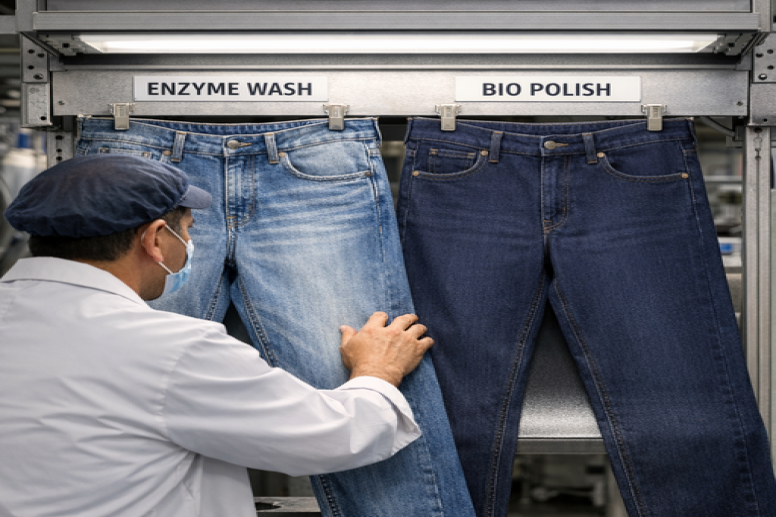
Enzyme Wash vs Bio Polish in Denim Processing
Denim finishing requires controlled treatments to achieve desired appearance and fabric performance. Two widely used methods are enzyme wash and bio polish. Production managers must understand the difference to select the correct process for each product type.
A clear comparison of enzyme wash vs bio polish helps improve quality, reduce reprocessing, and control denim washing defects during garment washing.
What Is Enzyme Wash
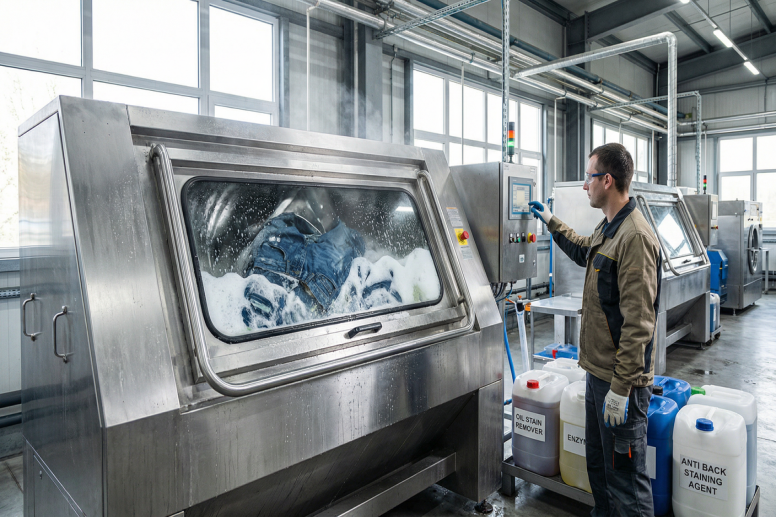
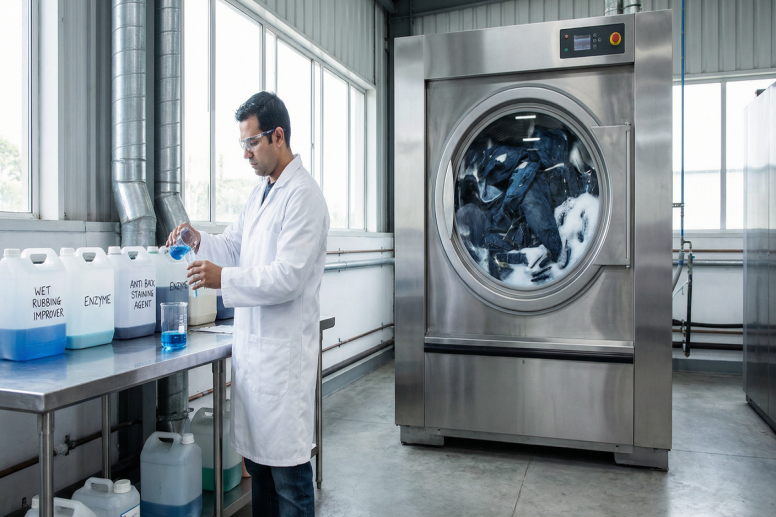
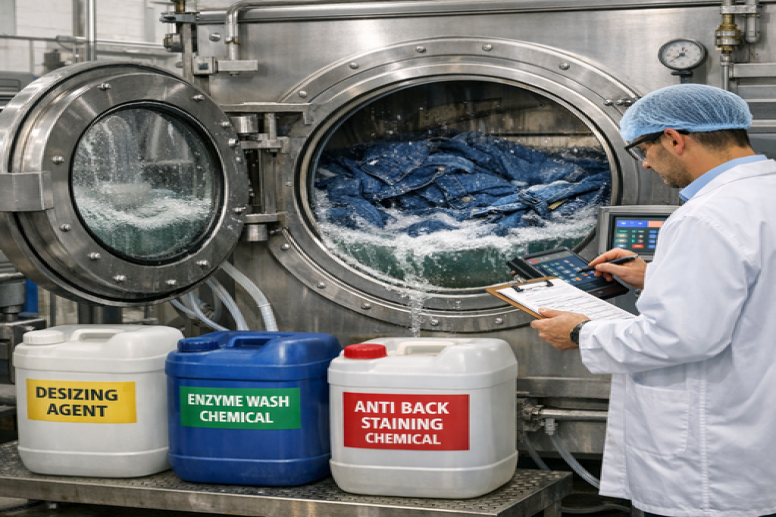
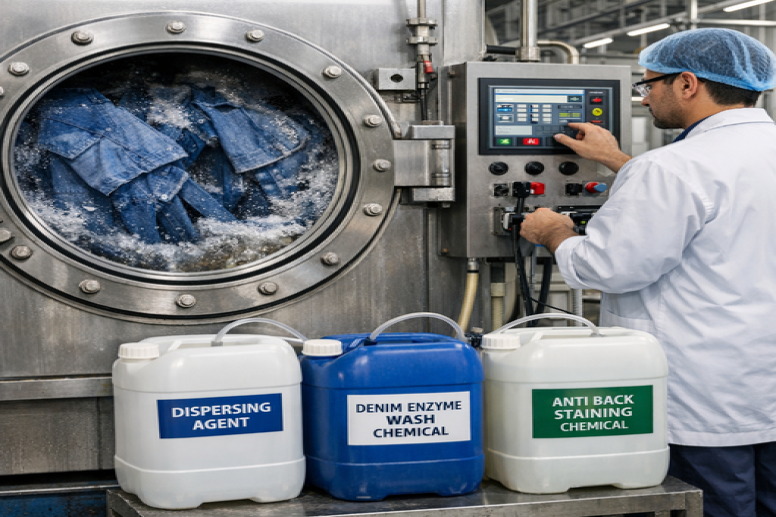
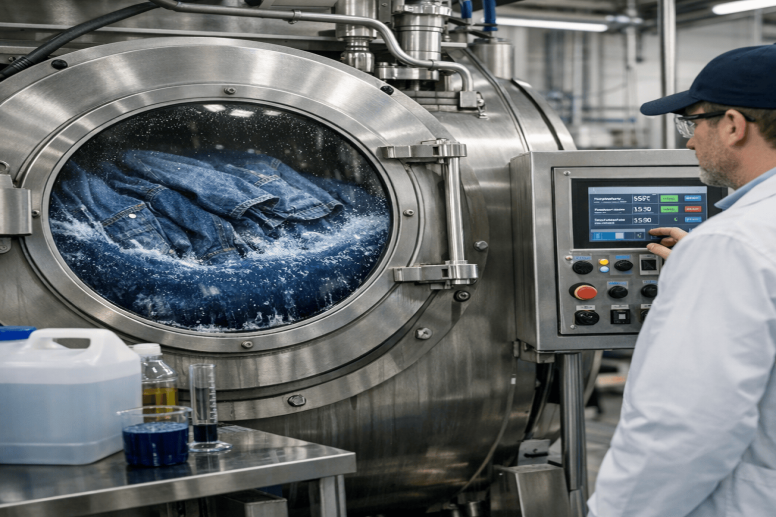
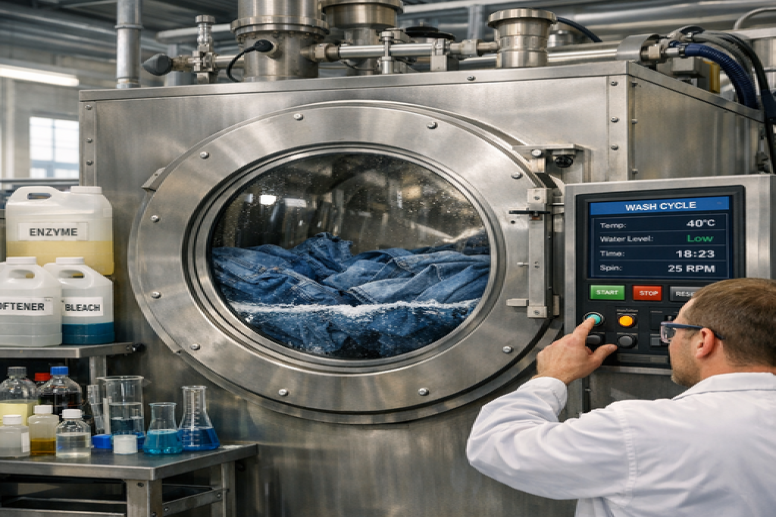
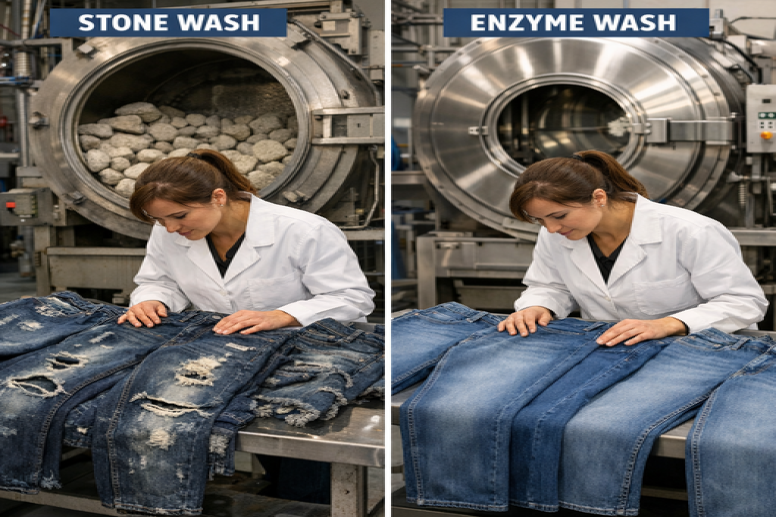
The enzyme wash process uses cellulase enzymes to create fading effects on denim garments. These enzymes break down surface fibers and remove indigo dye from raised areas.
Key characteristics
produces faded and vintage look
removes surface fibers
improves fabric softness
creates visible shade variation
widely used in denim garment washing
This process plays a major role in fashion finishing of denim products.
What Is Bio Polish
Bio polishing uses enzymes to clean the fabric surface by removing loose fibers and fuzz. The process improves smoothness without significantly changing the garment shade.
Key characteristics
removes surface hairiness
improves fabric smoothness
reduces pilling tendency
maintains original shade
improves fabric appearance
Bio polish focuses on surface finishing rather than fading.
Key Differences Between Enzyme Wash vs Bio Polish
Purpose
Enzyme wash creates fading and visual effects
Bio polish improves surface smoothness and cleanliness
Shade Impact
Enzyme wash changes garment shade
Bio polish maintains original color
Fabric Surface
Enzyme wash removes fibers for faded look
Bio polish removes fuzz for smooth surface
Process Intensity
Enzyme wash involves stronger action
Bio polish uses mild treatment conditions
Application Stage
Enzyme wash used for fashion effect
Bio polish used for final finishing improvement
Impact on Denim Washing Defects
Improper control of either process leads to defects.
Enzyme wash risks
excessive shade loss
back staining
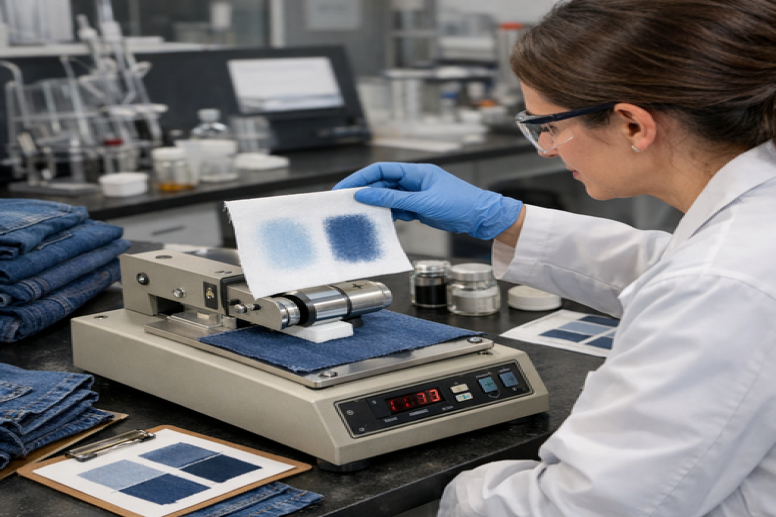
indigo dye washing problems
Bio polish risks
uneven surface cleaning
insufficient effect due to low enzyme activity
Correct process control reduces denim washing defects and ensures consistent results.
Process Control Guidelines
Production managers should apply proper controls for both treatments.
For Enzyme Wash
control enzyme dosage
maintain correct temperature
monitor washing time
use anti back staining chemicals
For Bio Polish
apply mild enzyme dosage
maintain stable pH and temperature
ensure proper rinsing
These controls improve efficiency and reduce indigo dye washing problems.
When to Use Each Process
Use enzyme wash when
faded or vintage look required
fashion effect is the priority
shade variation is acceptable
Use bio polish when
smooth surface required
original shade must be preserved
improved fabric quality needed
Production managers should align process selection with buyer requirements.
Conclusion
The comparison of enzyme wash vs bio polish shows clear differences in purpose and results. The enzyme wash process creates faded effects and defines garment appearance. Bio polish improves fabric surface quality without altering shade.
Proper selection and control of these processes help reduce denim washing defects and minimize indigo dye washing problems while improving overall garment quality.