11 Mar
Role of Chelating Agents in Textile Dyeing Process
Learn how chelating agents control metal ions in textile dyeing, improve dye solubility, and ensure stable dye bath performance in knit dyeing mills.
Role of Chelating Agents in Dyeing
Water quality strongly influences textile dyeing performance. Industrial water sources often contain dissolved metal ions such as calcium, magnesium, and iron. These ions interfere with dyes and auxiliaries during processing.
Chelating agents control these metal ions and maintain dye bath stability. Textile engineers rely on chelating agents to prevent unwanted chemical reactions and ensure consistent dyeing results.
Proper application of chelating agents improves dye solubility, increases dye uptake, and protects fabric quality.
What Are Chelating Agents
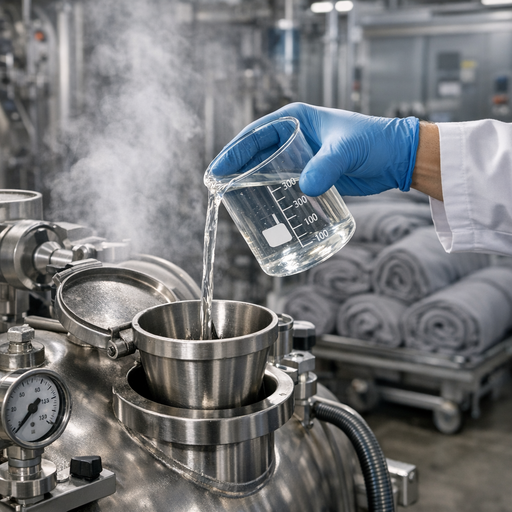
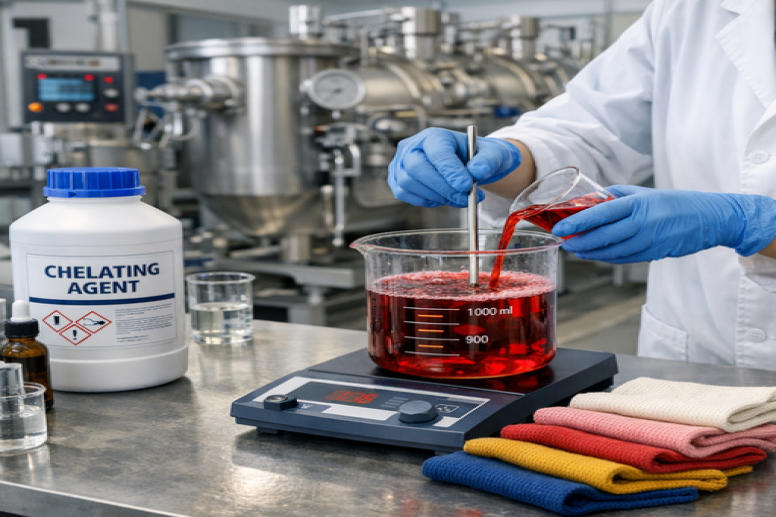
Chelating agents represent chemical compounds designed to bind metal ions present in water. These compounds form stable complexes with metal ions and prevent them from reacting with dyes or textile auxiliaries.
Common metal ions controlled by chelating agents include
Calcium
Magnesium
Iron
Copper
Once bound, these ions remain inactive inside the dye bath.
Difference Between Chelating and Sequestering Agents
Chelating agents and sequestering agents serve similar functions in textile processing.
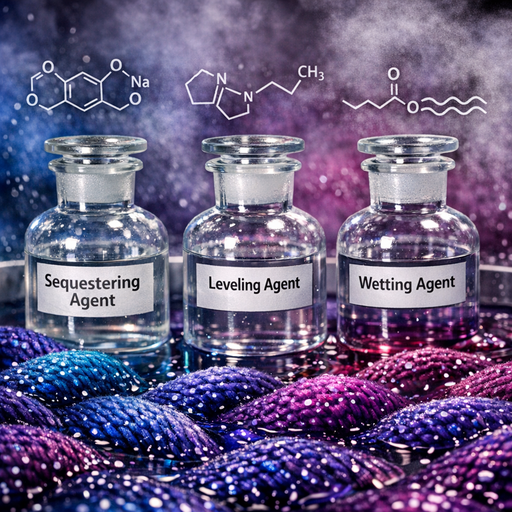
Chelating agents form stronger chemical bonds with metal ions and create stable complexes. Sequestering agents trap metal ions and keep them suspended in the dye bath.
In many textile formulations, chelating agents act as advanced sequestering agents with stronger binding efficiency.
Importance in Reactive Dyeing of Cotton
Reactive dyeing processes remain sensitive to metal ions present in water. Hardness ions often cause several dyeing problems.
Common effects include
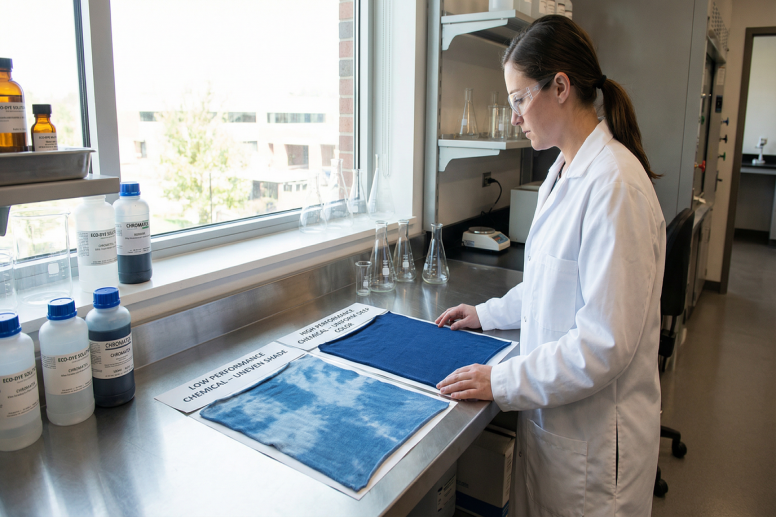
Uneven dye absorption
Reduced dye solubility
Shade variation
Dye precipitation
Chelating agents neutralize metal ions before these reactions occur.
This ensures stable dye bath conditions and uniform dye distribution.
Role During Pretreatment Processes
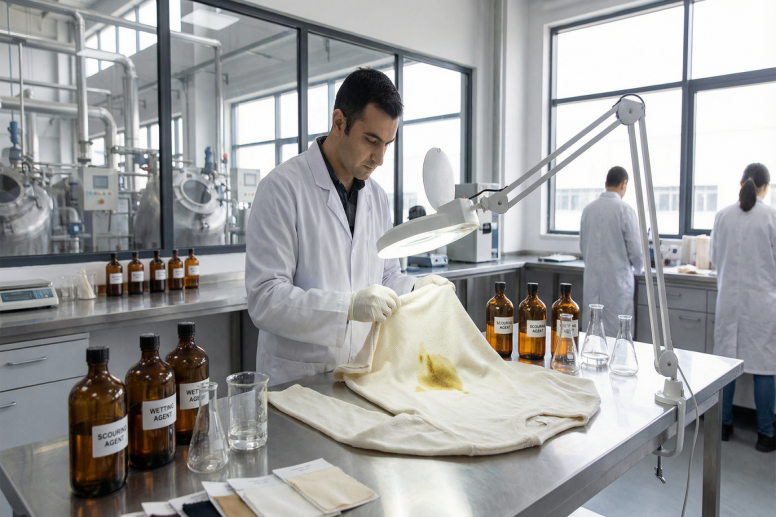
Chelating agents also support pretreatment stages such as scouring and bleaching.
During scouring, metal ions react with detergents and reduce cleaning performance. Chelating agents remove these ions and allow detergents to function effectively.
During peroxide bleaching, metal ions accelerate peroxide decomposition. Chelating agents stabilize hydrogen peroxide and maintain controlled bleaching reactions.
This improves fabric whiteness and prevents fiber damage.
Benefits in Dyeing Operations
Chelating agents deliver multiple technical advantages in textile dyeing processes.
Key benefits include
Improved dye solubility
Higher color yield
Uniform shade development
Stable dye bath chemistry
Reduced chemical precipitation
These improvements lead to consistent dyeing quality.
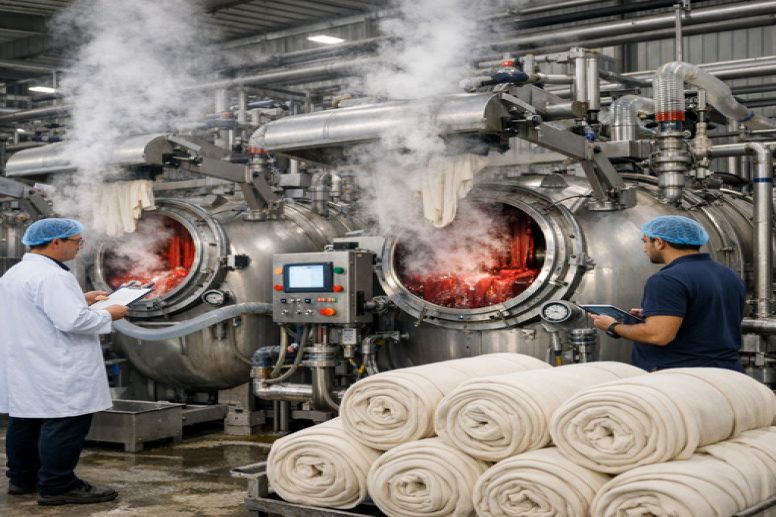
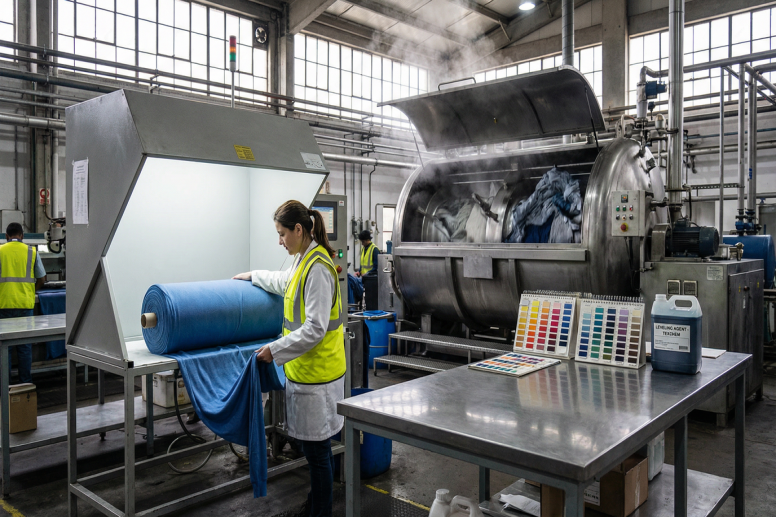
Application in Knit Dyeing Mills
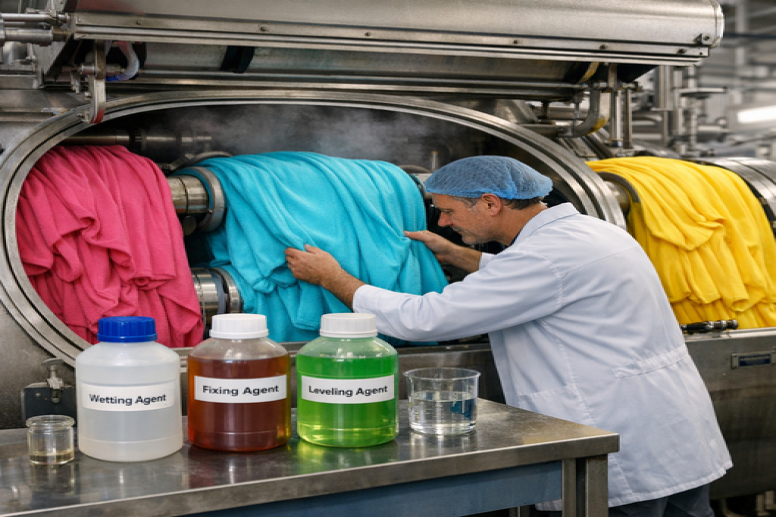
Textile engineers typically add chelating agents during several process stages.
Common application points include
Pretreatment bath preparation
Dye bath preparation
Washing and soaping processes
Proper dosage depends on water hardness level and process requirements.
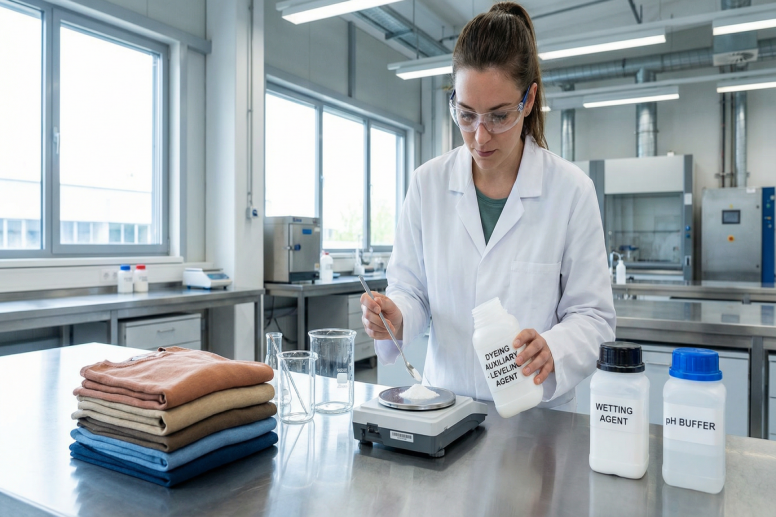
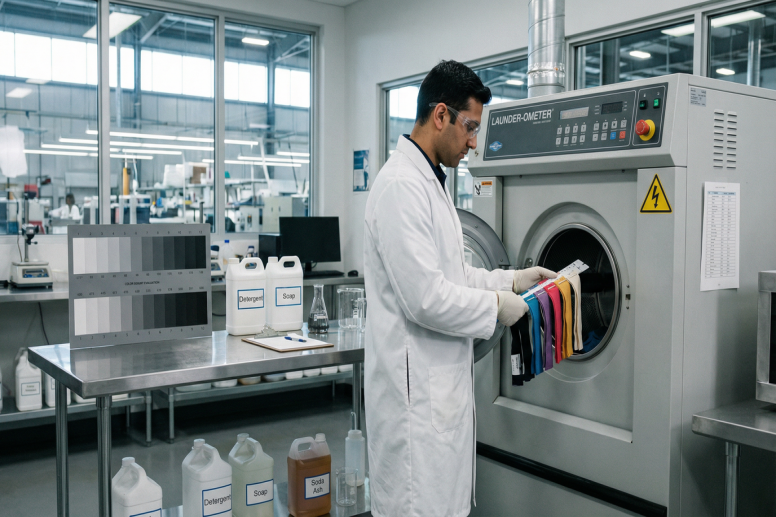
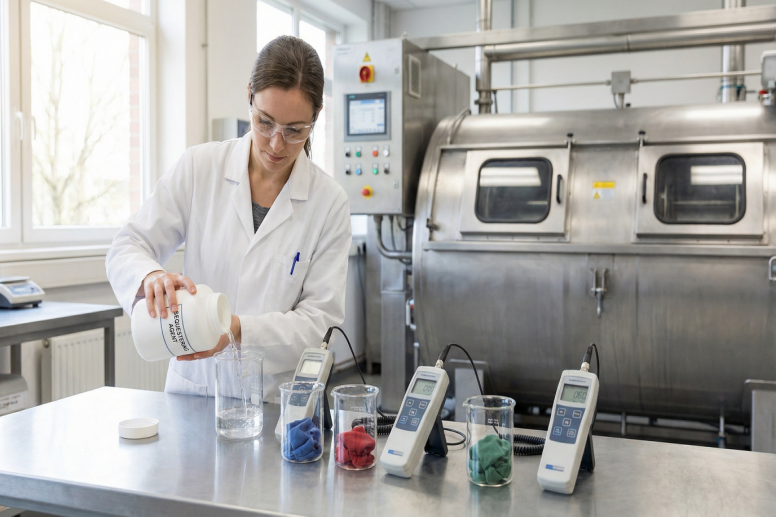
Laboratory trials help determine suitable chemical concentration.
Recommended Engineering Practices
Effective use of chelating agents requires proper process control.
Important practices include
Regular testing of process water hardness
Early addition of chelating agents in dye bath preparation
Monitoring compatibility with other auxiliaries
Maintaining correct chemical dosage levels
These practices support stable dyeing operations.
Benefits for Textile Dyeing Mills
Effective metal ion control improves both technical performance and production efficiency.
Major advantages include
Reduced dye wastage
Improved shade reproducibility
Lower machine deposits
Reduced chemical interference
Improved overall dyeing productivity
These results strengthen operational stability for dyeing mills.
Conclusion
Chelating agents play a critical role in textile dyeing processes by controlling metal ions present in water. These chemicals protect dyes and auxiliaries from unwanted reactions and maintain stable dye bath conditions.
Textile engineers rely on chelating agents to improve dye solubility, increase color yield, and ensure consistent shade quality during knit dyeing operations.
Proper chemical selection and controlled application support efficient and reliable textile dyeing production.