10 Mar
Fixing Agent in Knit Dyeing, Function, Benefits, and Dosage for Reactive Dyeing
Learn the role of fixing agents in knit dyeing. Understand how these textile auxiliaries improve wash fastness and color durability in reactive dyeing.
Fixing Agent in Knit Dyeing
Reactive dyes form chemical bonds with cotton fibers during dyeing. Despite strong dye fiber reaction, a portion of dye remains loosely attached to the fabric surface. These loose dye molecules create color bleeding and poor rubbing fastness.
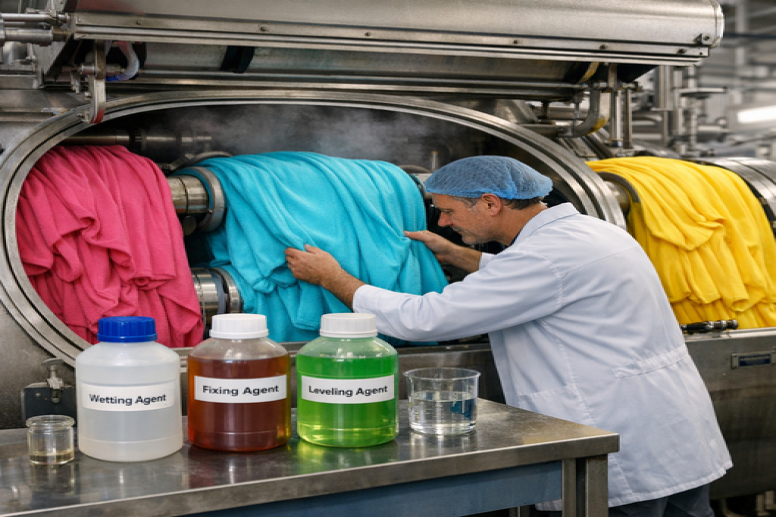
Fixing agents help improve dye fixation on cotton fibers. Textile dyeing mills use fixing agents after dyeing and washing stages to improve color durability and fabric performance.
Use of fixing agents improves wash fastness and reduces color transfer during garment use.
What Is a Fixing Agent
A fixing agent refers to a textile auxiliary designed to improve dye fixation on fibers. The chemical forms a protective layer around dye molecules attached to the fiber surface.
This protective layer increases dye resistance against washing, rubbing, and perspiration.
Fixing agents remain widely used in reactive dyeing processes for cotton knit fabrics.
Why Fixing Agents Are Important in Knit Dyeing
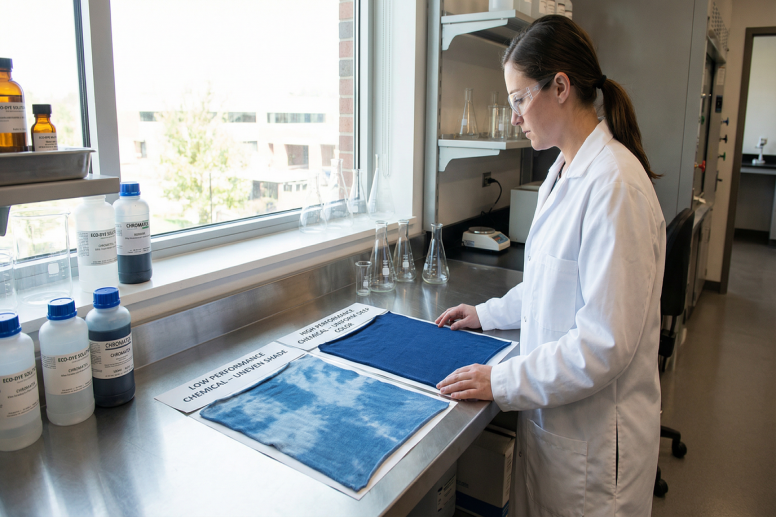
Even after proper washing and soaping, small amounts of unfixed dye remain on the fabric surface. These dye particles cause several quality issues.
Common problems include
Color bleeding during washing
Poor rubbing fastness
Staining of other fabrics
Reduced garment durability
Fixing agents improve dye stability and reduce these problems.
Functions of Fixing Agents
Fixing agents perform several technical roles during textile processing.
Dye Bond Protection
The chemical forms a protective layer around dye molecules attached to cotton fibers.
Improvement of Wash Fastness
Fixing agents increase dye resistance against repeated washing.
Rubbing Fastness Improvement
The chemical reduces color transfer during fabric friction.
Color Stability
Dyed fabrics maintain shade strength during garment use.
These functions improve fabric quality and product reliability.
Application Stage in Knit Dyeing
Dyeing mills apply fixing agents during the after treatment stage.
Typical application process includes
Completion of dyeing process
Washing and soaping treatment
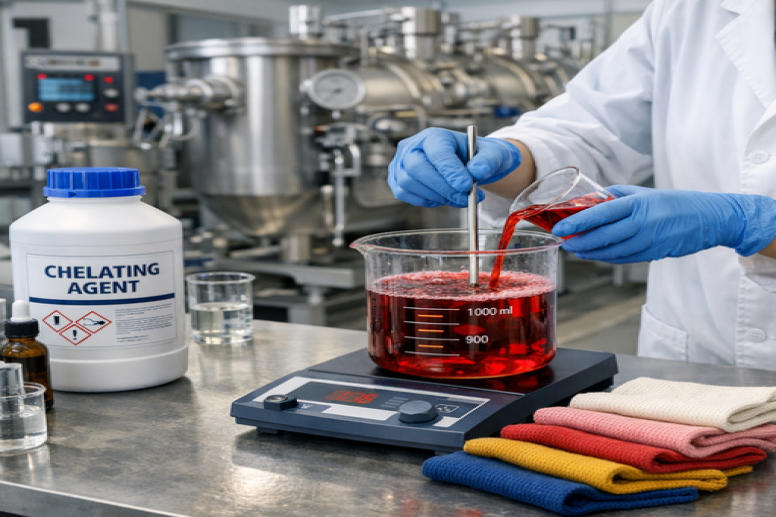
Preparation of fixing agent bath
Fabric treatment at controlled temperature
The chemical bonds with the dyed fiber surface during this stage.
Typical Dosage in Knit Dyeing
Fixing agent dosage varies depending on dye type and shade depth.
Typical dosage range
1.0 to 2.0 g/l
Dark shades often require higher dosage to achieve strong fastness performance.
Correct dosage improves dye stability and prevents color bleeding.
Benefits for Textile Dyeing Mills
Use of fixing agents improves production quality and garment durability.
Major advantages include
Improved wash fastness
Better rubbing fastness
Reduced color bleeding
Higher garment quality
These benefits support consistent textile production and customer satisfaction.
Selection Criteria for Fixing Agents
Technical teams evaluate several factors before selecting fixing agents.
Important criteria include
Strong dye bonding ability
Compatibility with reactive dyes
Stability during washing process
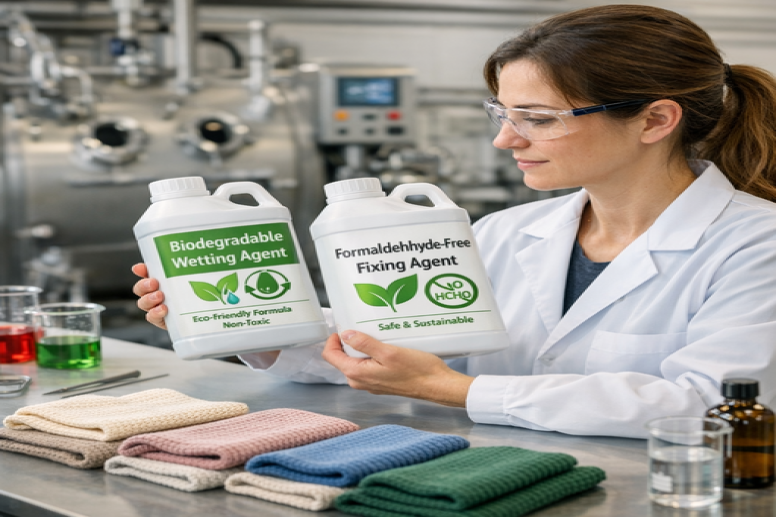
Environmental compliance
Proper chemical selection ensures effective dye fixation.
Environmental and Compliance Standards
Global textile brands require safe chemical use during production. Dyeing mills must follow international environmental standards.
Common chemical compliance certifications include
ZDHC approved chemicals
OEKO TEX certification
GOTS approval
Bluesign standard
Certified auxiliaries support responsible textile manufacturing.
Conclusion
Fixing agents play an important role in knit dyeing operations. These auxiliaries improve dye fixation on cotton fibers and increase wash and rubbing fastness performance. Proper use of fixing agents reduces color bleeding and improves garment durability.
Dyeing mills maintain consistent fabric quality when technical teams apply correct fixing agents and control chemical dosage during the after treatment stage.