10 Mar
How to Fix Uneven Dyeing in Knit Fabric, Causes and Chemical Solutions
Learn the causes of uneven dyeing in knit fabric and chemical solutions used by textile dyeing mills to achieve uniform color and stable dyeing performance.
Uneven Dyeing in Knit Fabric
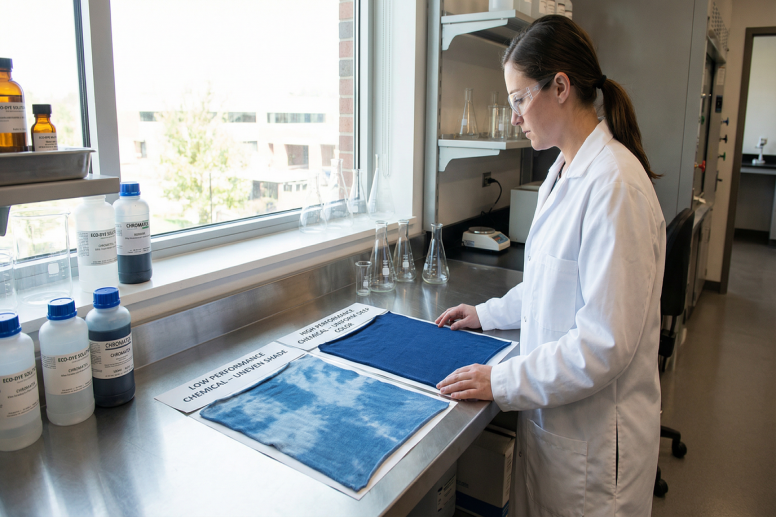
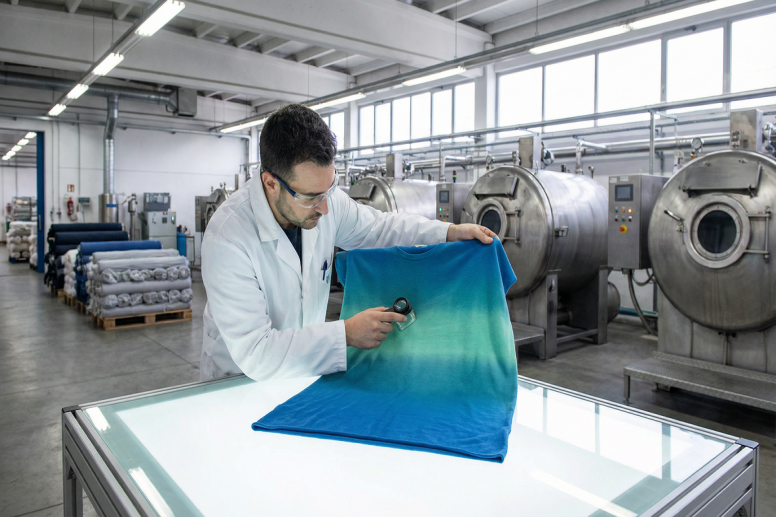
Uneven dyeing remains one of the most common problems in knit fabric dyeing. This defect appears when color distribution across the fabric surface becomes irregular. Some areas show darker shades while other areas remain lighter.
Uneven dyeing reduces fabric quality and creates serious problems during garment production. Dyeing factories must identify the root cause of this problem and apply proper chemical and process solutions.
Correct use of textile auxiliaries and proper process control helps dyeing mills achieve uniform color results.
What Is Uneven Dyeing
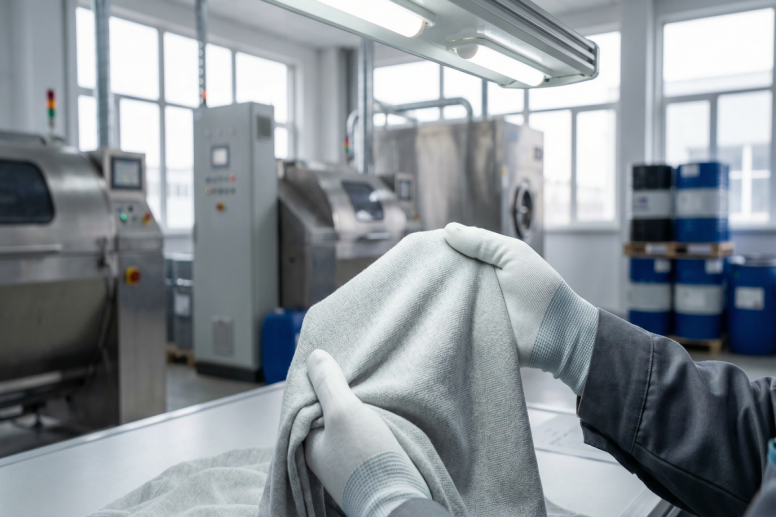
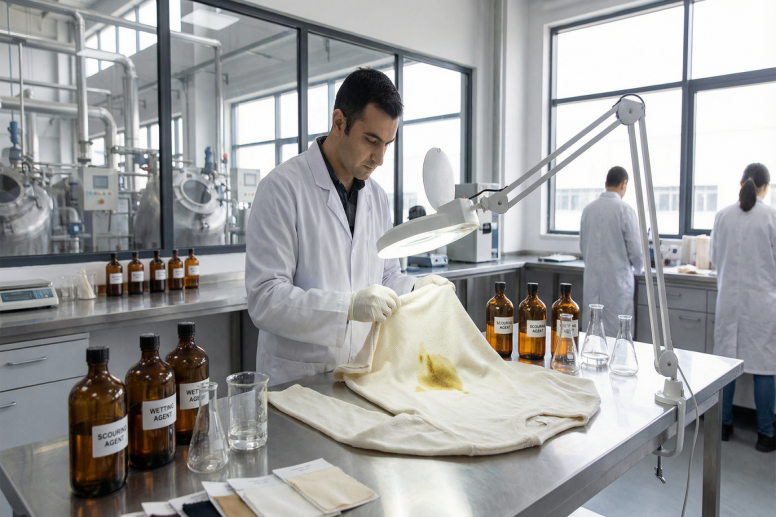
Uneven dyeing refers to irregular color distribution on fabric after dyeing. The defect appears as shade variation, patchy areas, or dye streaks across the fabric surface.
This problem occurs when dyes do not penetrate the fabric structure evenly during the dyeing process.
Knit fabrics remain more sensitive to this issue because their structure allows rapid dye absorption.
Main Causes of Uneven Dyeing
Several technical factors create uneven dyeing during textile processing.
Rapid Dye Absorption
Reactive dyes react quickly with cotton fibers. Fast dye uptake often produces darker patches in certain fabric areas.
Poor Fabric Wetting
If fabric absorbs water unevenly during pretreatment, dyes penetrate irregularly during dyeing.
Incorrect Chemical Addition
Improper addition sequence of salt, soda ash, or dyes creates shade variation.
Poor Fabric Movement
Limited circulation inside dyeing machines reduces dye distribution across the fabric.
Hard Water Contamination
Metal ions in water disturb dye bath stability and influence dye performance.
Chemical Solutions for Uneven Dyeing
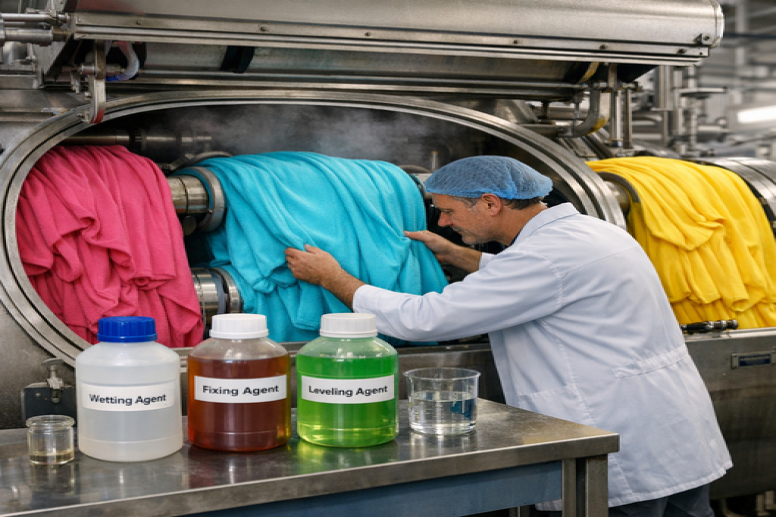
Textile auxiliaries help control dye absorption and improve dye distribution during the dyeing process.
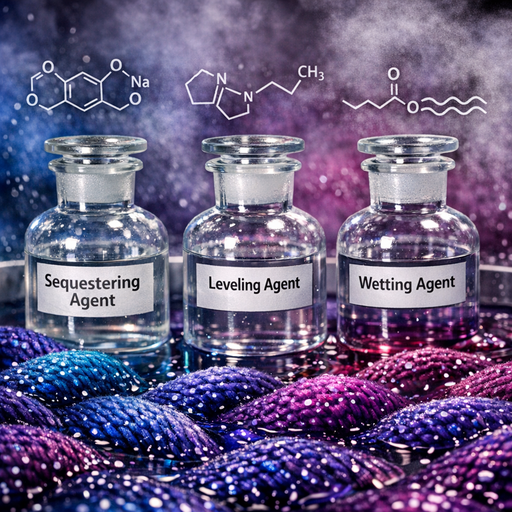
Leveling Agents
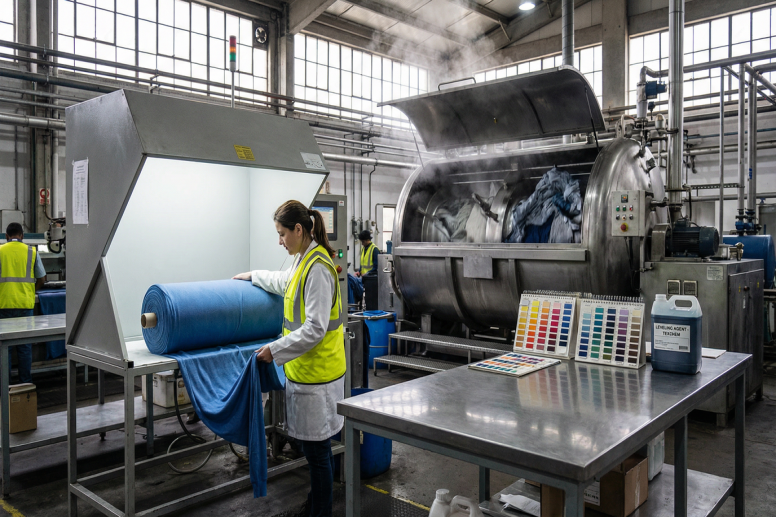
Leveling agents regulate dye absorption and allow dyes to migrate evenly across the fabric surface.
Benefits
Balanced dye penetration
Reduced shade variation
Improved dye distribution
Wetting Agents
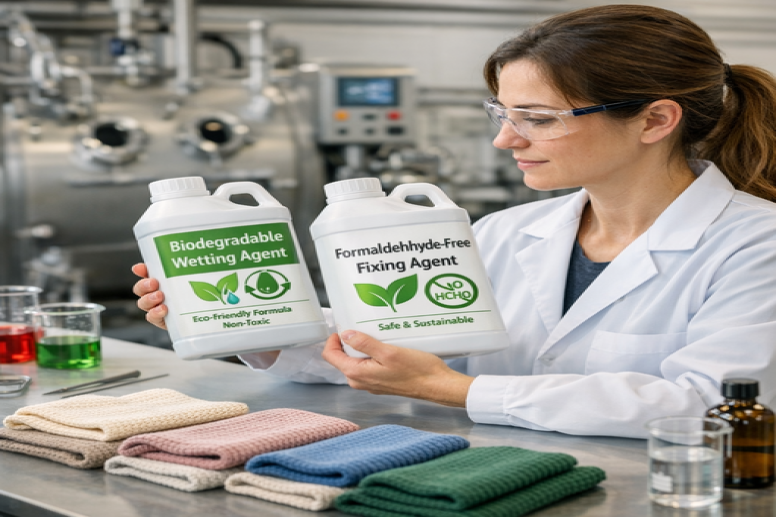
Wetting agents improve water penetration into cotton fibers during pretreatment and dyeing.
Benefits
Uniform fabric absorbency
Balanced chemical penetration
Reduced patchy dyeing
Sequestering Agents
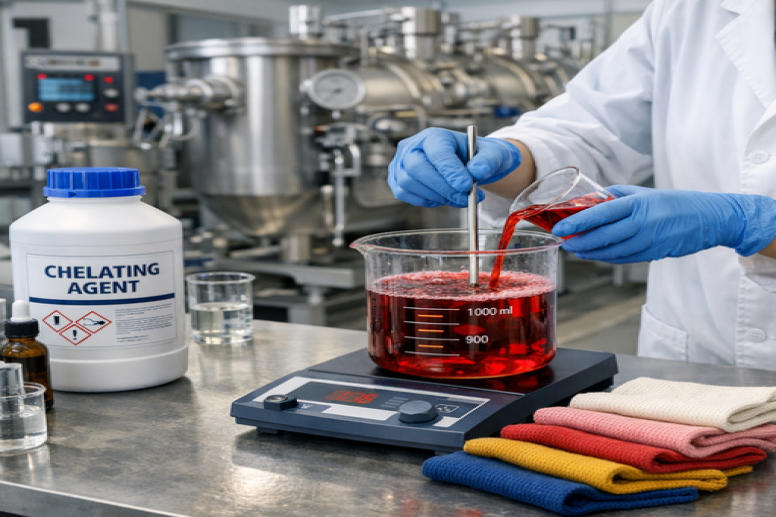
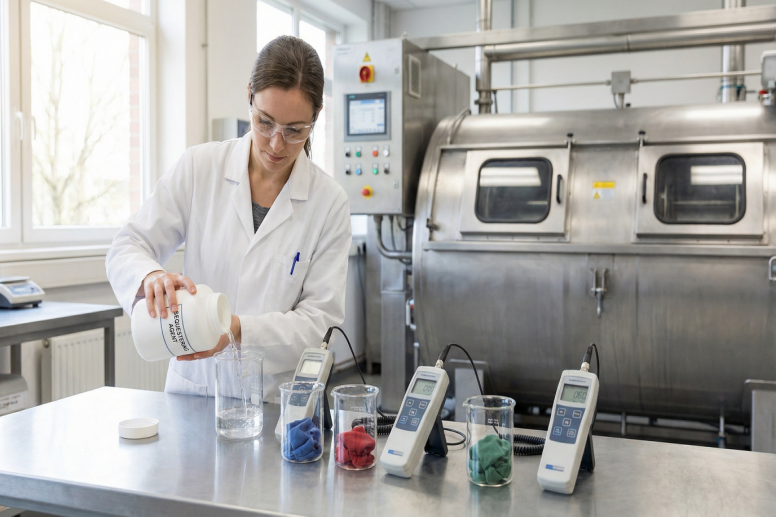
Sequestering agents control metal ions present in process water.
Benefits
Stable dye bath conditions
Improved dye performance
Prevention of chemical precipitation
Anti Creasing Agents
Anti creasing agents improve fabric movement during dyeing.
Benefits
Reduced fabric folding
Better dye bath circulation
Uniform dye penetration
Process Control for Uniform Dyeing
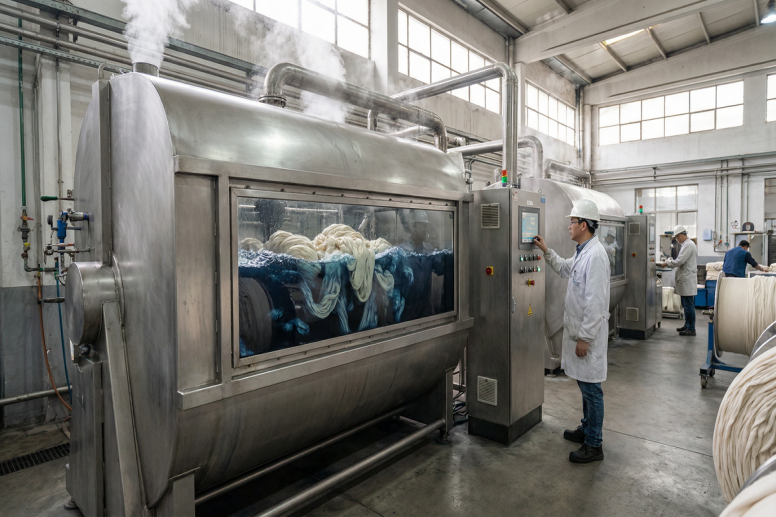
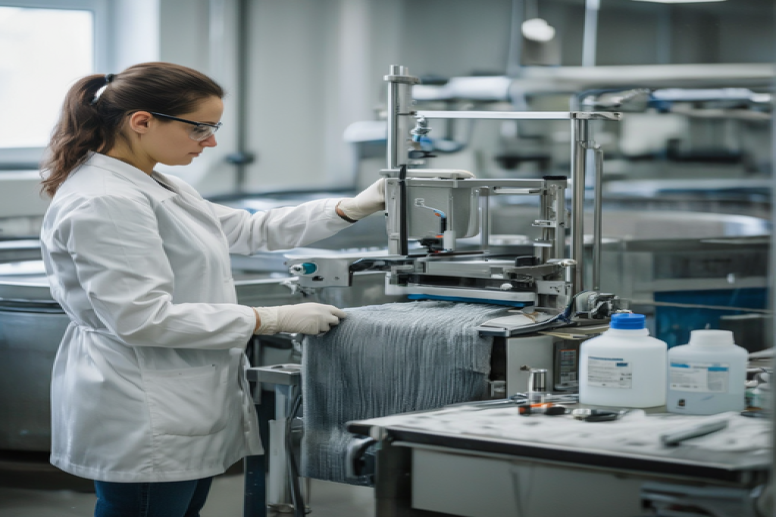
Chemical use alone does not solve dyeing problems. Dyeing mills must maintain proper process control during production.
Important control factors include
Correct chemical dosage
Gradual addition of salt and alkali
Proper dye bath temperature control
Balanced fabric loading inside machines
These measures help maintain stable dyeing conditions.
Prevention of Uneven Dyeing
Dyeing factories apply preventive practices to maintain consistent production quality.
Effective prevention steps include
Proper pretreatment of grey fabric
Use of high performance textile auxiliaries
Regular water quality testing
Controlled dye addition sequence
These practices reduce dyeing defects and improve shade consistency.
Impact on Textile Production
Uneven dyeing creates major production losses in textile factories.
Negative effects include
Fabric rejection during inspection
Additional reprocessing cost
Production delays
Reduced fabric value
Proper chemical selection and technical supervision prevent these losses.
Conclusion
Uneven dyeing in knit fabric results from several chemical and mechanical factors. Rapid dye absorption, poor wetting, incorrect chemical use, and machine conditions contribute to shade variation problems.
Textile auxiliaries such as leveling agents, wetting agents, sequestering agents, and anti creasing agents help control these issues. Dyeing mills achieve uniform shade results when technical teams combine proper chemical selection with strong process control during dyeing operations.