12 Mar
Case Study: Wet Rubbing Improvement in Reactive Dyeing of Cotton Knit Fabrics
Learn how a knit dyeing mill improved wet rubbing fastness in reactive dyeing through process optimization and wet rubbing improver application.
Case Study: Wet Rubbing Improvement in Reactive Dyeing
Wet rubbing fastness represents a critical quality parameter in reactive dyed cotton knit fabrics. International garment buyers often require minimum wet rubbing grades to ensure color stability during garment use and washing.
Many knit dyeing mills face wet rubbing problems during dark shade reactive dyeing. Poor rubbing fastness leads to customer complaints, fabric rejection, and additional finishing costs.
This case study explains how a knit dyeing mill improved wet rubbing fastness through process optimization and proper chemical selection.
Background of the Dyeing Mill
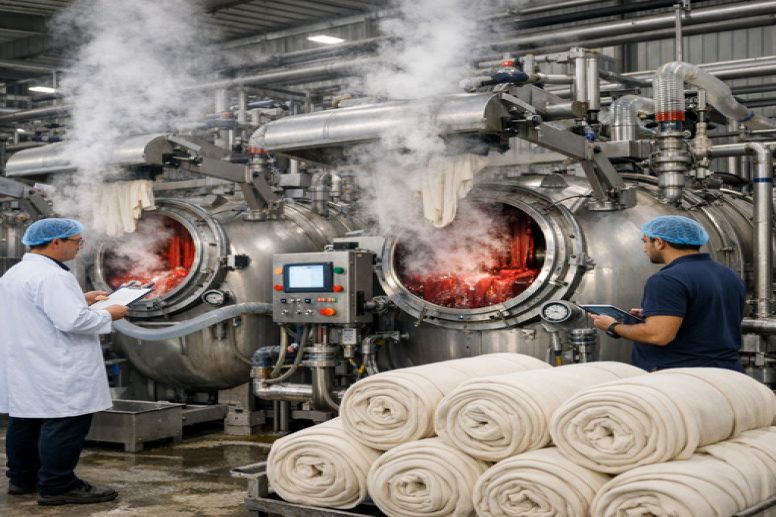
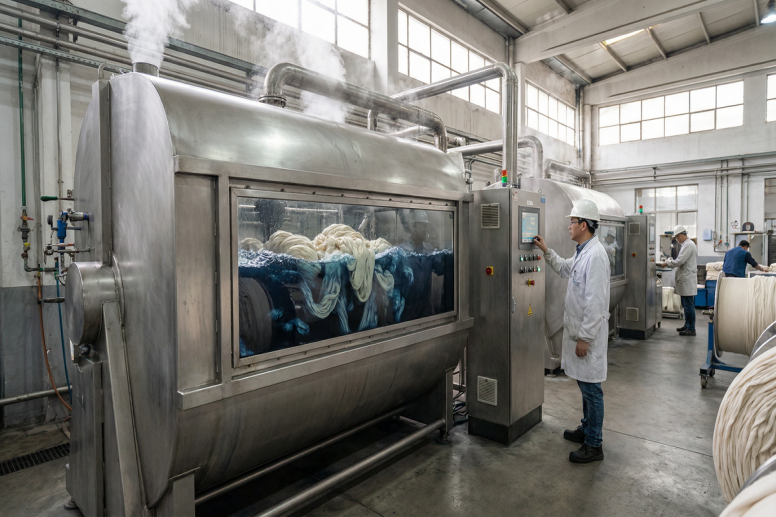
A knit dyeing facility processed cotton single jersey fabrics used in export garments. The mill specialized in medium and dark shade reactive dyeing for fashion apparel brands.
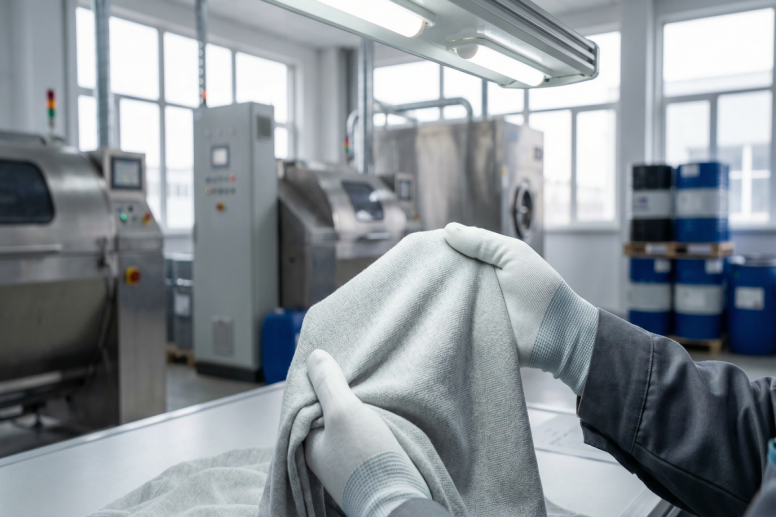
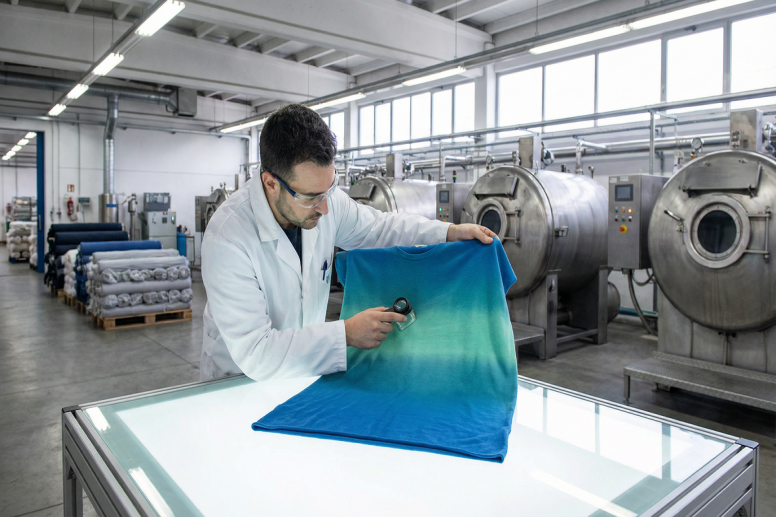
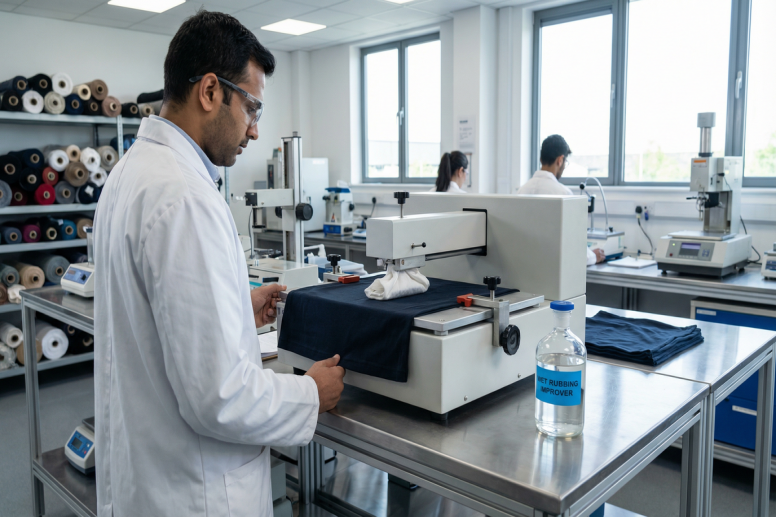
Quality inspection revealed consistent wet rubbing grades between 2 and 2.5 on dark shades such as navy, black, and deep red.
Buyer requirements demanded wet rubbing grades above 3.
The dyeing engineering team initiated a technical investigation to identify the root cause.
Root Cause Investigation
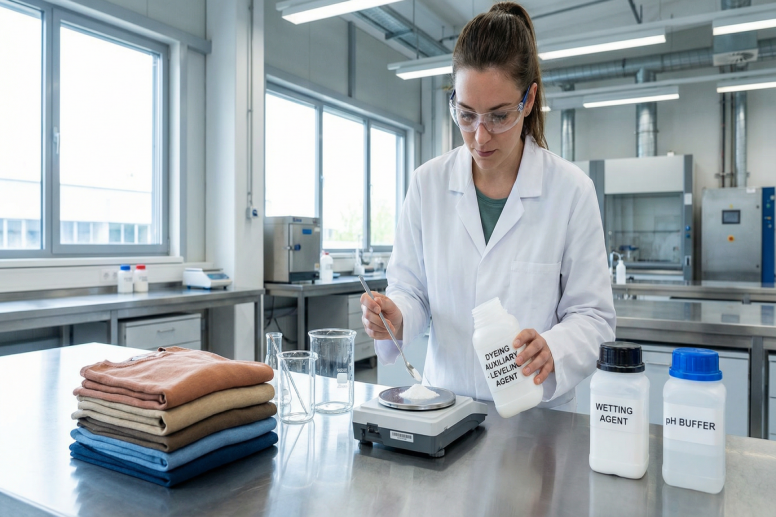
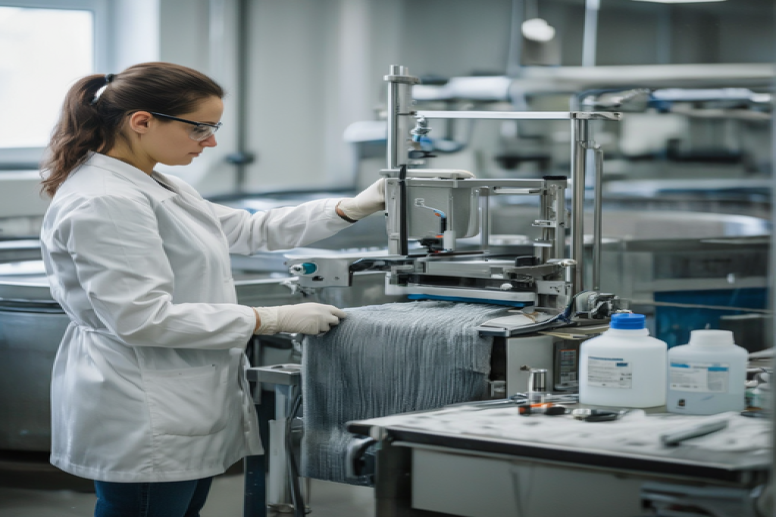
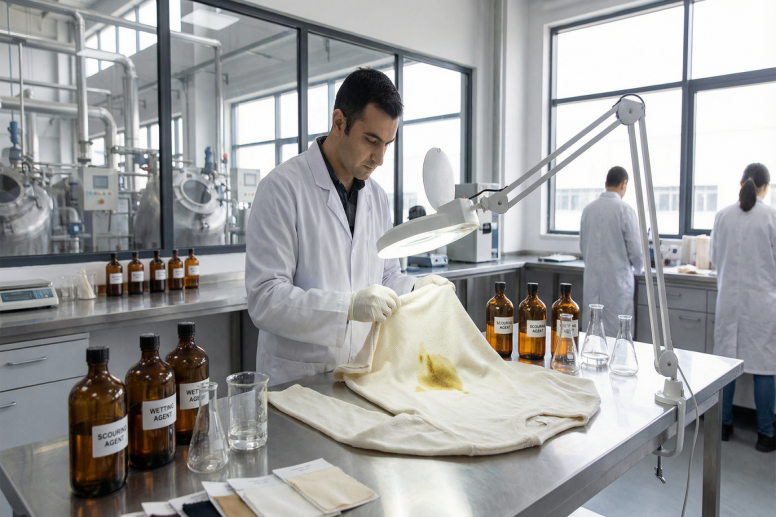
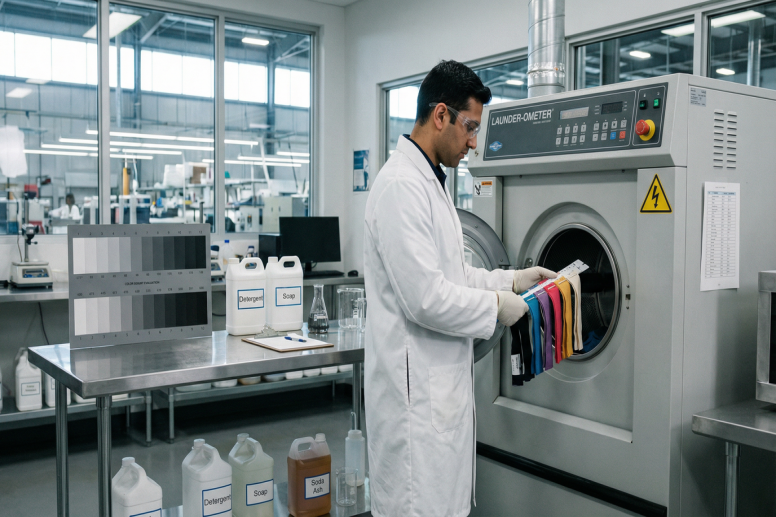
Laboratory testing and production analysis identified several factors contributing to poor wet rubbing performance.
Major observations included
incomplete dye fixation during dyeing
presence of unfixed hydrolyzed dyes on fiber surface
insufficient soaping efficiency during washing stage
These conditions allowed loosely bound dye particles to remain on the fabric surface.
During wet rubbing testing, these particles easily transferred to the rubbing cloth.
Process Optimization Strategy
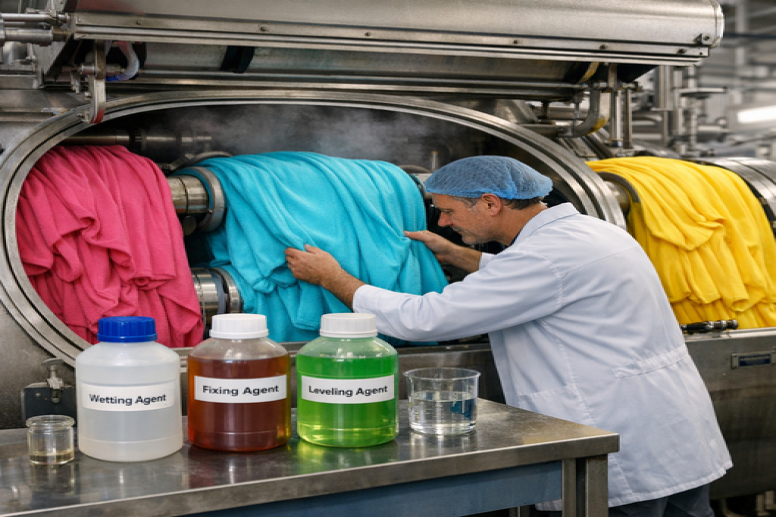
The technical team implemented several process adjustments to improve dye fixation and remove unfixed dye molecules.
Key actions included
optimized alkali dosing during fixation stage
improved temperature control during dye fixation
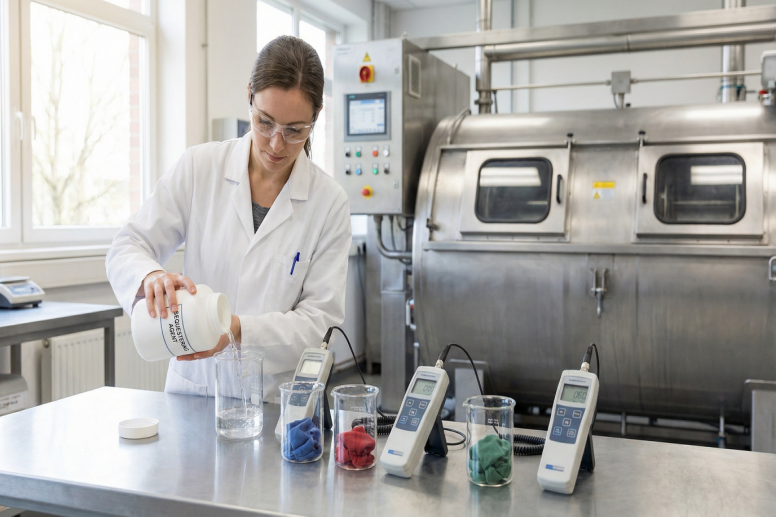
use of high efficiency soaping agent after dyeing
application of a specialized wet rubbing improver during finishing
These improvements enhanced dye fixation and removed surface dye residues.
Role of Wet Rubbing Improver
A cationic polymer based wet rubbing improver was applied during the finishing stage.
This chemical performed two important functions
fixation of loosely bound dye molecules on fiber surface
formation of a protective film layer on the dyed fabric
The treatment reduced dye transfer during wet rubbing conditions.
Production Results
After implementing the improved process and chemical treatment, the dyeing mill achieved significant quality improvement.
Observed results included
wet rubbing grades improved from 2–2.5 to 3–4
stable performance across dark shade production batches
improved buyer acceptance during fabric inspection
The mill reduced fabric rejection and avoided additional finishing reprocessing.
Technical Benefits of the Solution
The optimized process delivered several technical advantages.
Key benefits included
improved dye fixation efficiency
removal of unfixed hydrolyzed dyes
enhanced surface dye stability
improved rubbing fastness performance
These improvements strengthened dyeing quality control.
Engineering Lessons from the Case Study
Textile engineers can improve wet rubbing fastness by focusing on several process parameters.
Important control points include
correct alkali concentration during dye fixation
proper washing and soaping procedures
removal of hydrolyzed dyes from fabric surface
selection of effective wet rubbing improvers
Consistent monitoring of these factors ensures stable dyeing performance.
Conclusion
Wet rubbing fastness problems in reactive dyeing often result from incomplete dye fixation and residual dye particles on the fiber surface. Process optimization combined with appropriate chemical treatment significantly improves rubbing performance.
This case study demonstrates how knit dyeing mills achieve higher quality standards and reduce customer complaints through effective dyeing control and auxiliary selection.