09 Mar
Common Knit Dyeing Problems and Chemical Solutions for Dyeing Mills
Learn the common knit dyeing problems such as uneven dyeing, crease marks, patchy dyeing, and poor wash fastness with chemical solutions used in textile dyeing mills.
Common Knit Dyeing Problems and Chemical Solutions
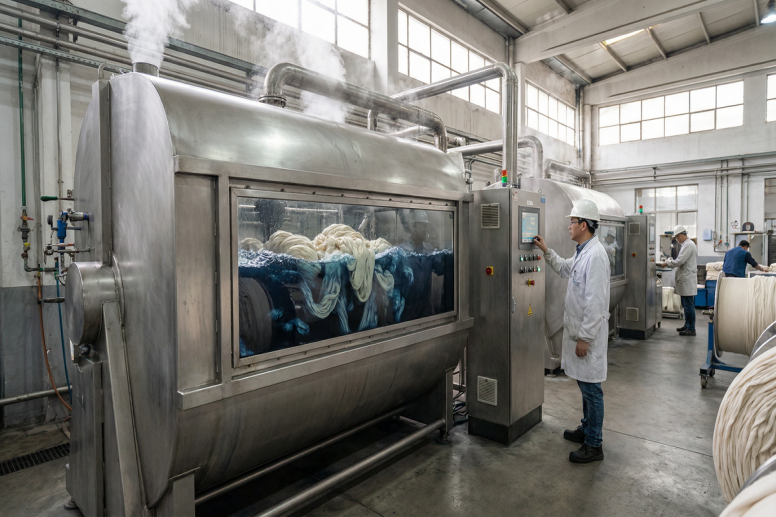
Knit dyeing factories face several technical challenges during production. Fabric structure, machine conditions, water quality, and chemical selection influence dyeing performance. Even small process variation leads to shade defects, poor fastness, or fabric damage.
Textile auxiliaries help control these issues. Correct chemical selection improves dye stability, fabric movement, and color fixation during the dyeing process.
Technical teams in dyeing mills study the root cause of each problem and apply suitable chemical solutions.
Uneven Dyeing
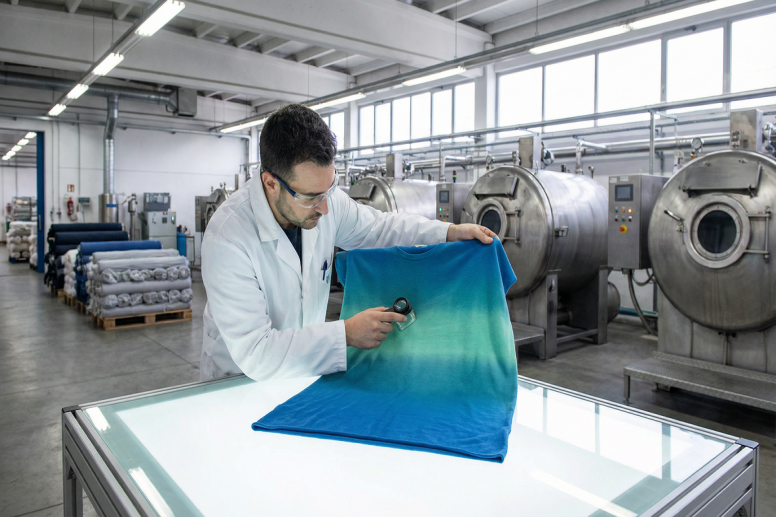
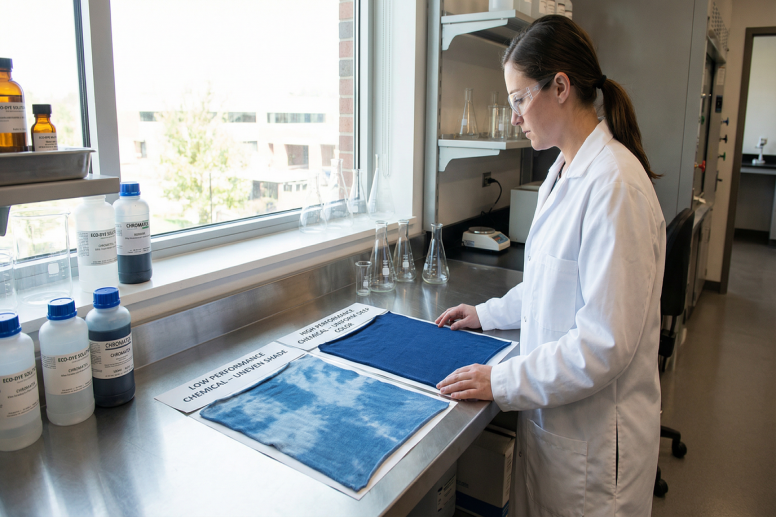
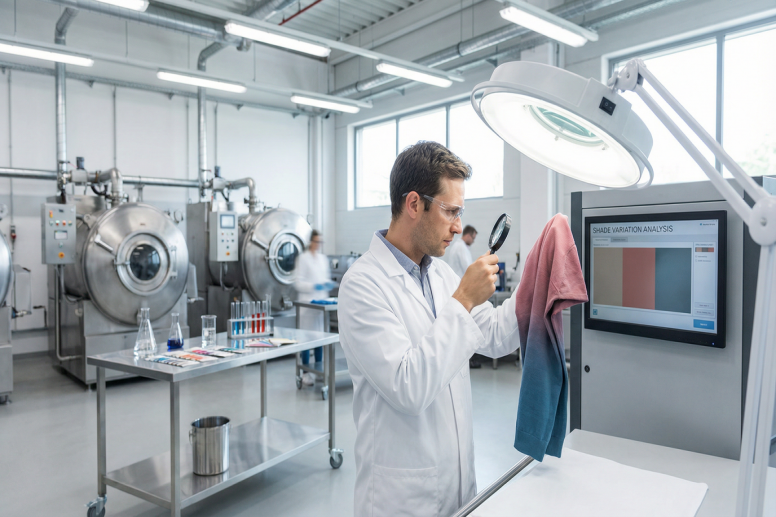
Uneven dyeing appears as shade variation across the fabric surface. Some areas absorb more dye while other areas remain lighter.
Causes
Rapid dye absorption
Poor fabric wetting
Incorrect salt addition
Insufficient dye bath circulation
Chemical Solution
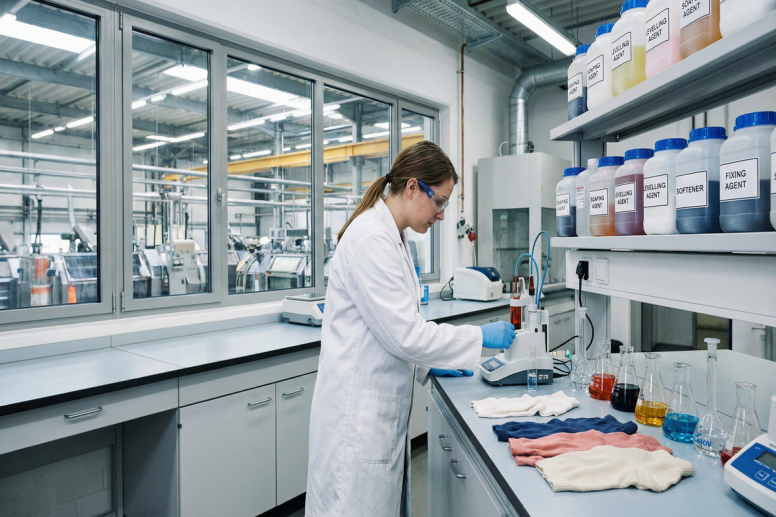
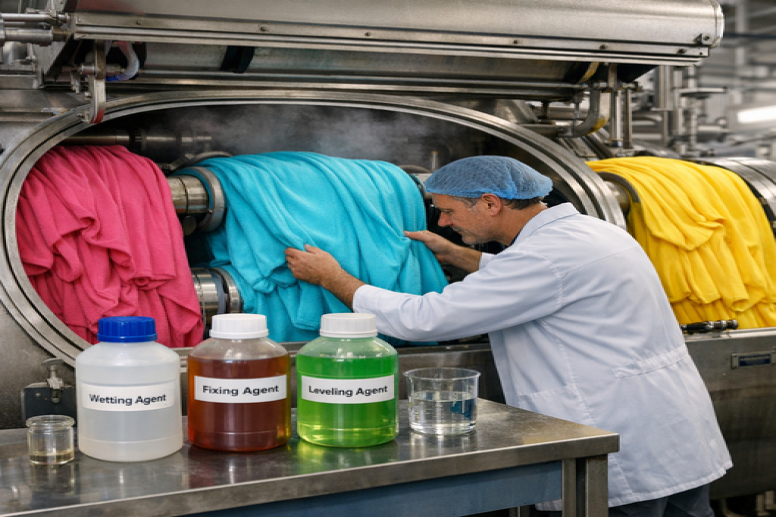
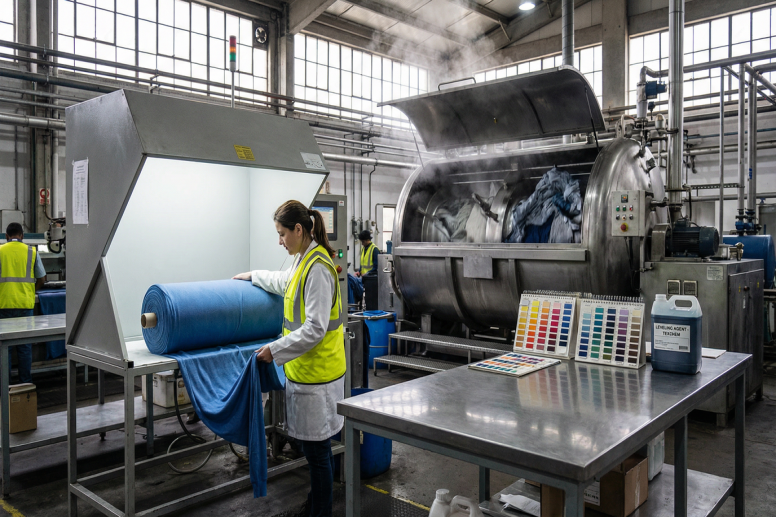
Leveling agents slow the dye absorption rate and support dye migration across the fabric.
Functions of leveling agent
Control dye uptake
Improve dye distribution
Reduce shade difference
Proper dosing of leveling agents improves shade uniformity in reactive dyeing.
Crease Marks
Crease marks appear as visible lines across dyed fabric. Knit fabrics form folds during dyeing due to mechanical pressure and high temperature.
Causes
Poor fabric movement inside machine
High fabric loading
Lack of lubrication in dye bath
Chemical Solution
Anti creasing agents reduce friction between fabric layers. These chemicals support smooth fabric movement during dyeing.
Benefits
Reduced crease formation
Smooth fabric circulation
Improved fabric appearance
Patchy Dyeing
Patchy dyeing appears as irregular color spots on the fabric surface. This problem reduces garment quality and leads to production rejection.
Causes
Poor fabric pretreatment
Uneven wetting
Chemical contamination in dye bath
Chemical Solution
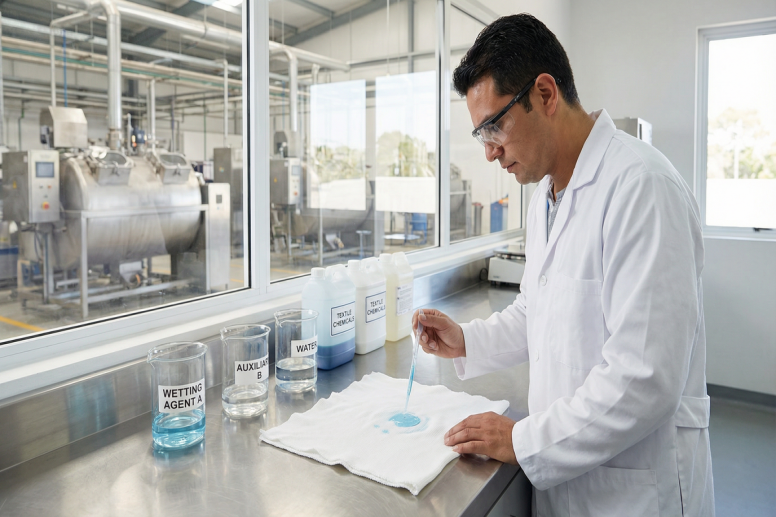
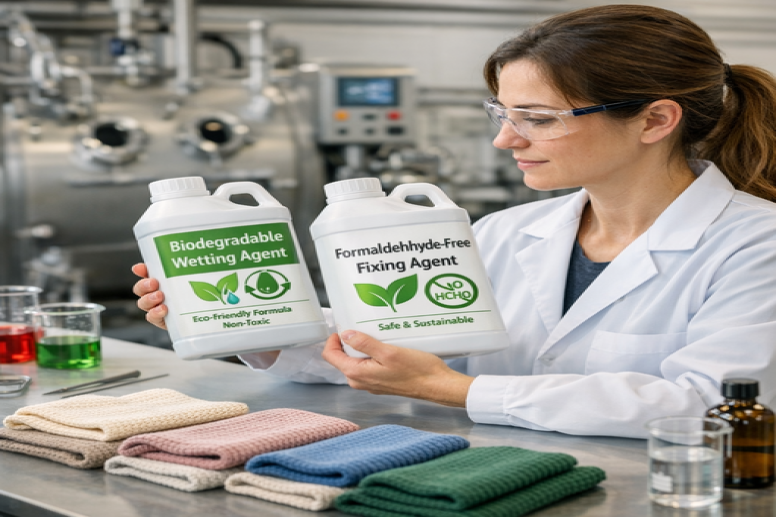
Wetting agents improve fabric absorbency and allow uniform dye penetration.
Benefits
Faster water absorption
Balanced dye distribution
Reduced patch formation
Poor Wash Fastness
Poor wash fastness results in color fading during washing. Unfixed dye remains on the fiber surface and washes away easily.
Causes
Insufficient dye fixation
Incomplete washing process
Residual hydrolyzed dye on fabric
Chemical Solution
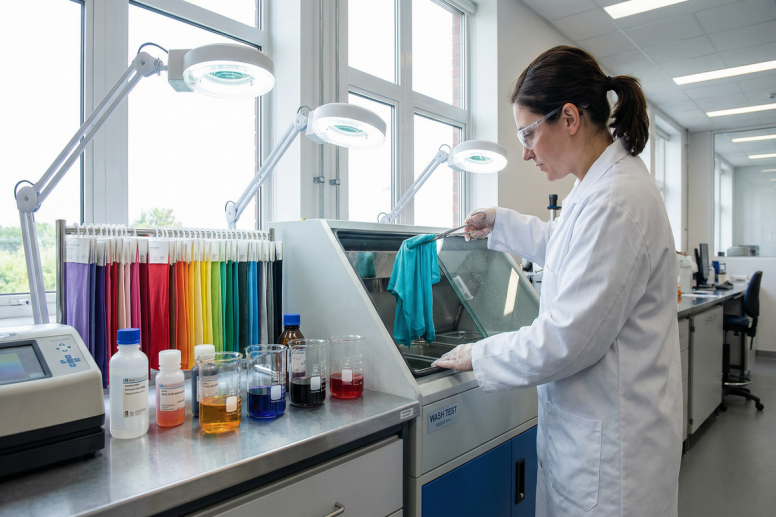
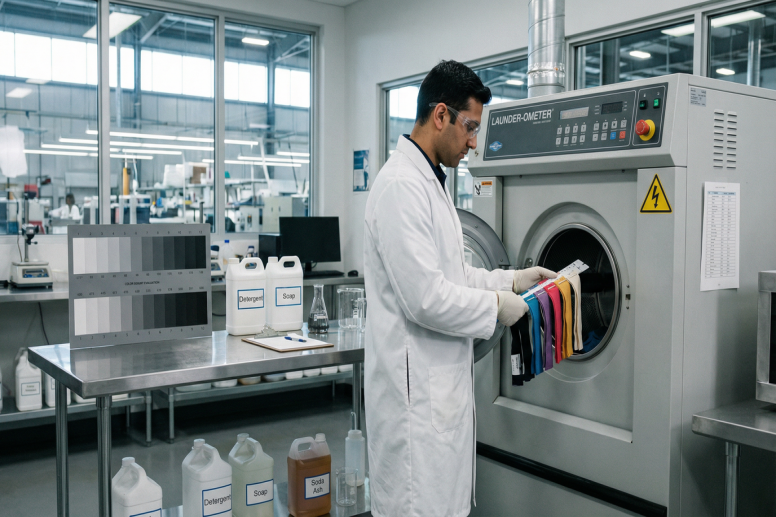
Soaping agents remove unfixed dyes from the fiber surface.
Benefits
Improved wash fastness
Cleaner shade appearance
Reduced color bleeding
Metal Contamination in Dye Bath
Hard water contains metal ions such as calcium and magnesium. These minerals interfere with dyes and other auxiliaries.
Causes
Hard process water
Metallic contamination from pipelines
Chemical Solution
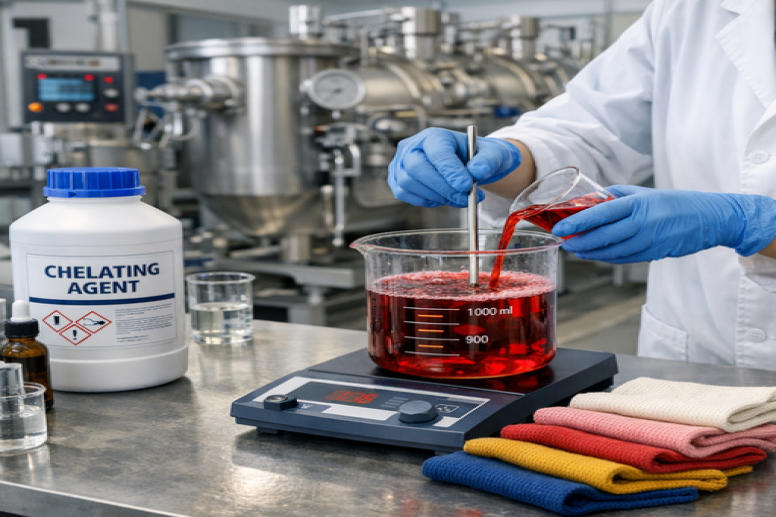
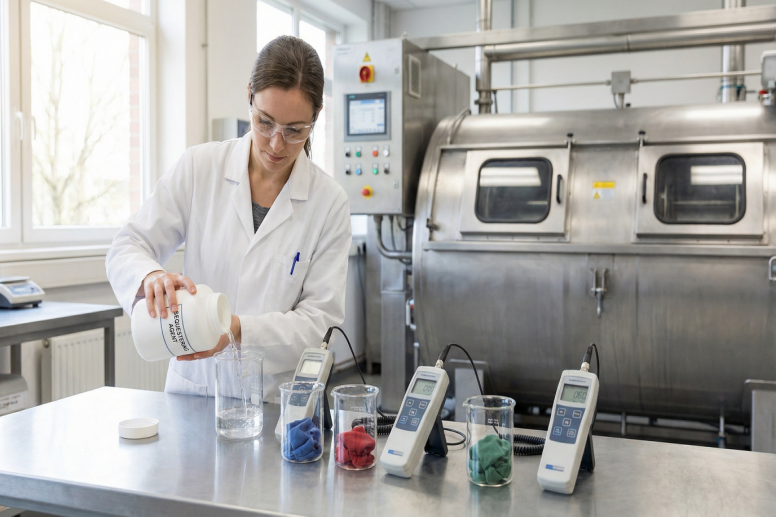
Sequestering agents bind metal ions and stabilize the dye bath.
Benefits
Stable dye bath condition
Improved dye performance
Prevention of dye precipitation
Foam Formation in Dyeing Machine
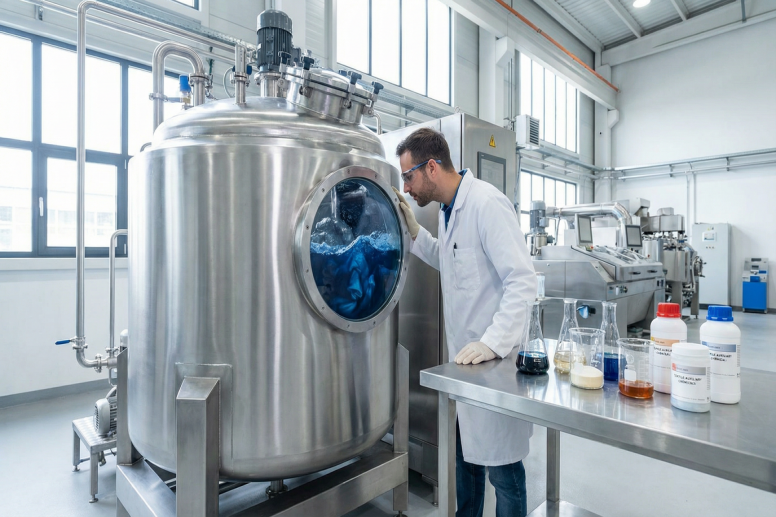
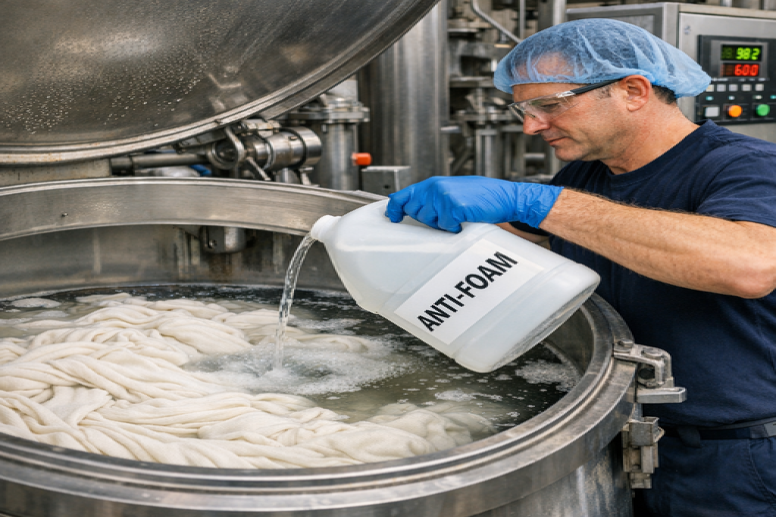
Foam develops during high agitation in dyeing machines. Excess foam disturbs dye bath circulation and fabric movement.
Causes
Surfactant chemicals
High mechanical agitation
Chemical Solution
Low foam wetting agents and controlled chemical selection reduce foam formation during dyeing.
Benefits
Stable dye bath movement
Improved dyeing efficiency
Oil Stain on Fabric
Oil stains appear on knit fabric due to knitting machine lubricants or contamination during fabric handling.
Causes
Knitting machine oil
Poor fabric storage
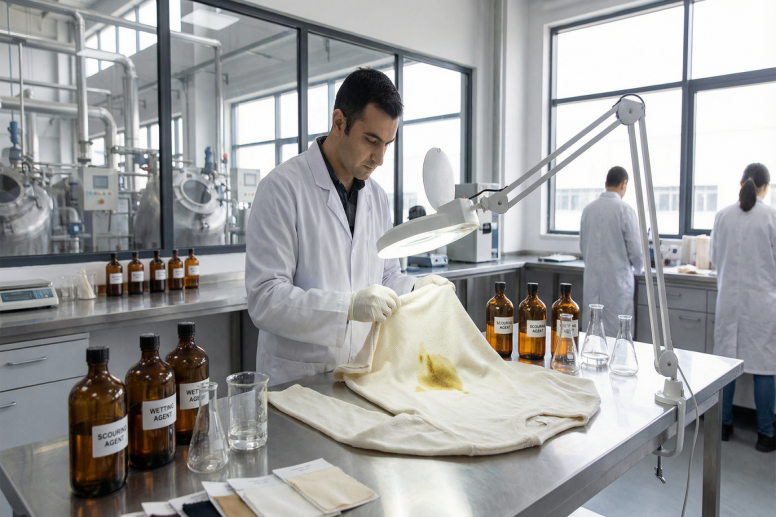
Incomplete scouring process
Chemical Solution
Strong scouring detergents remove oils and grease during pretreatment.
Benefits
Clean fabric surface
Improved dye penetration
Importance of Process Control in Dyeing Mills
Chemical solutions work effectively when dyeing factories maintain strict process control.
Important control parameters
Dye bath pH
Temperature profile
Chemical dosage
Liquor ratio
Machine loading capacity
Technical teams monitor these parameters to maintain stable dyeing results.
Conclusion
Knit dyeing production involves several technical variables. Fabric structure, water quality, machine movement, and chemical selection influence final dyeing quality. Dyeing mills prevent common dyeing defects through proper auxiliary selection and correct process control.
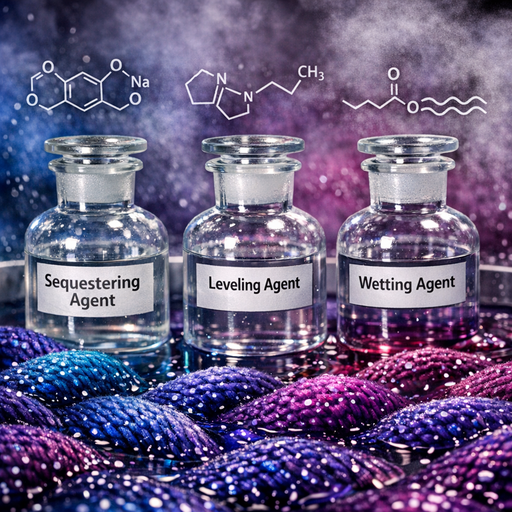
Textile auxiliaries such as leveling agents, wetting agents, sequestering agents, and soaping agents support stable dyeing performance and improve fabric quality in modern textile production.