03 Nov
Complete Guide to Textile Auxiliaries in Knit Dyeing, Role of Auxiliaries in Dyeing Process
Learn the role of textile auxiliaries in knit dyeing. Understand sequestering agents, leveling agents, wetting agents, and soaping agents used in dyeing mills for better fabric quality.
Complete Guide to Textile Auxiliaries in Knit Dyeing
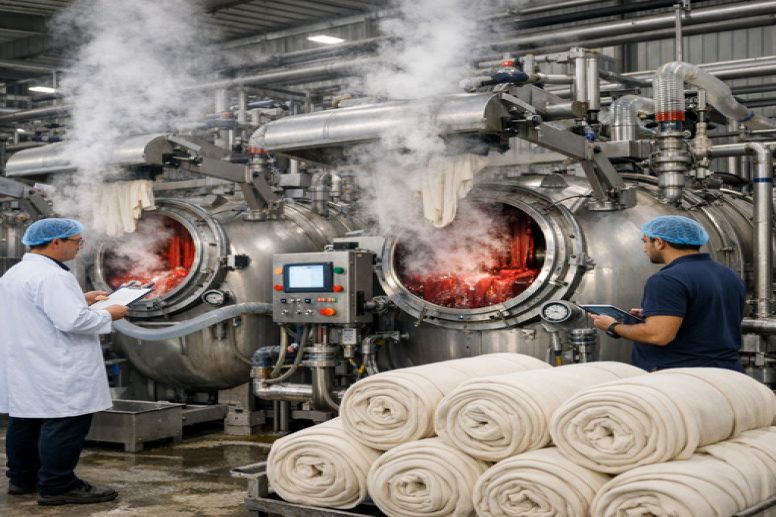
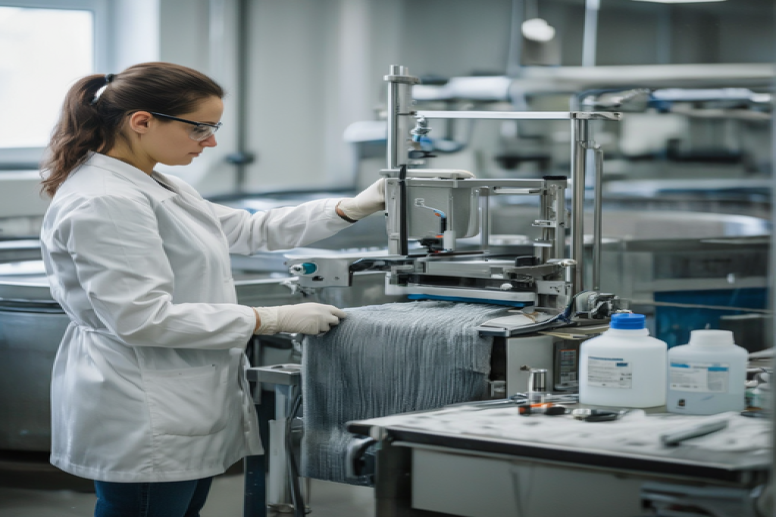
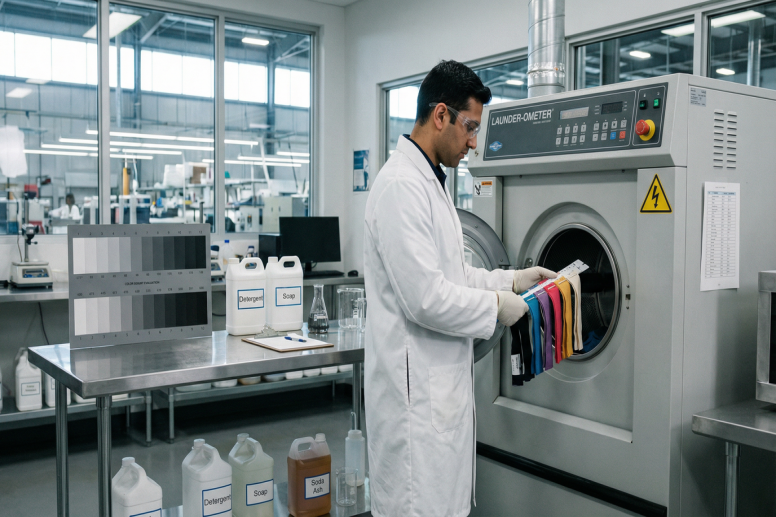
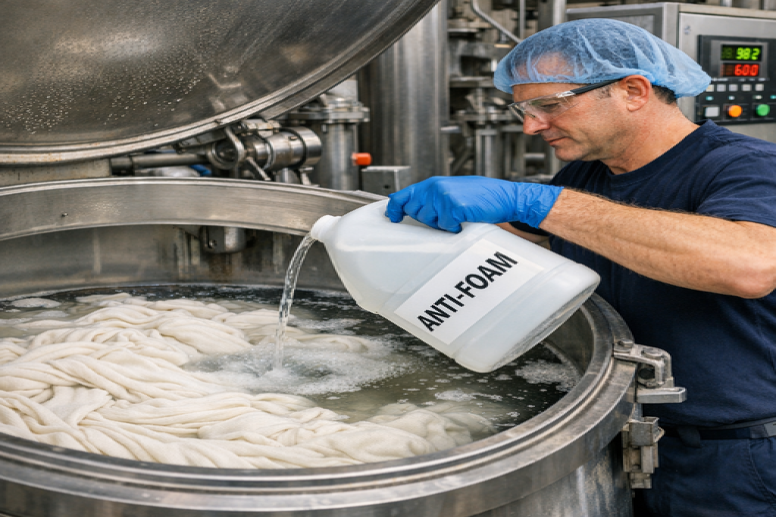
Knit dyeing factories depend on different chemicals to achieve uniform color, strong fastness, and smooth fabric quality. Dyes alone do not produce stable results. Textile auxiliaries support each stage of the dyeing process and control many technical factors such as water hardness, dye distribution, fabric movement, and washing efficiency.
Textile auxiliaries in knit dyeing improve color penetration, prevent dye defects, and protect fabric structure during processing. Dyeing mills rely on these chemicals to maintain production quality and reduce processing cost.
Role of Auxiliaries in Dyeing Process
Textile auxiliaries perform several technical functions during knit dyeing. Each auxiliary works at a specific stage of the dyeing process.
1. Water Conditioning
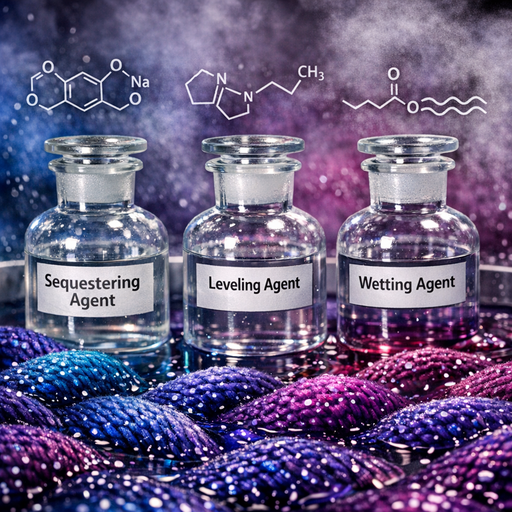
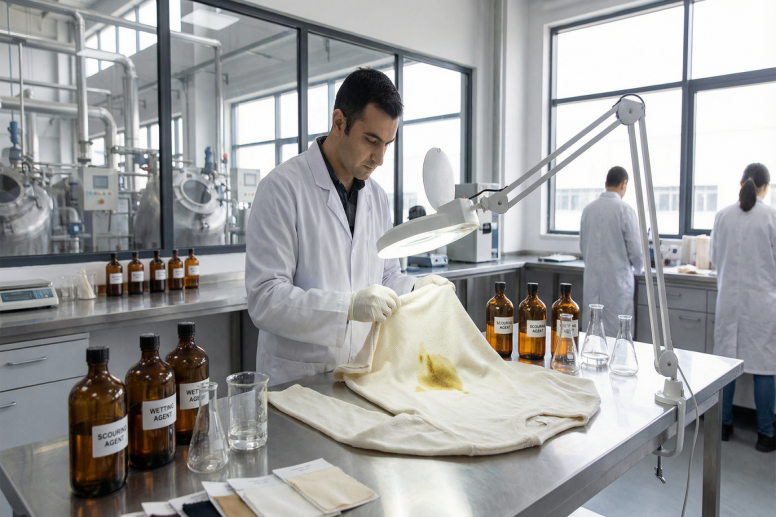
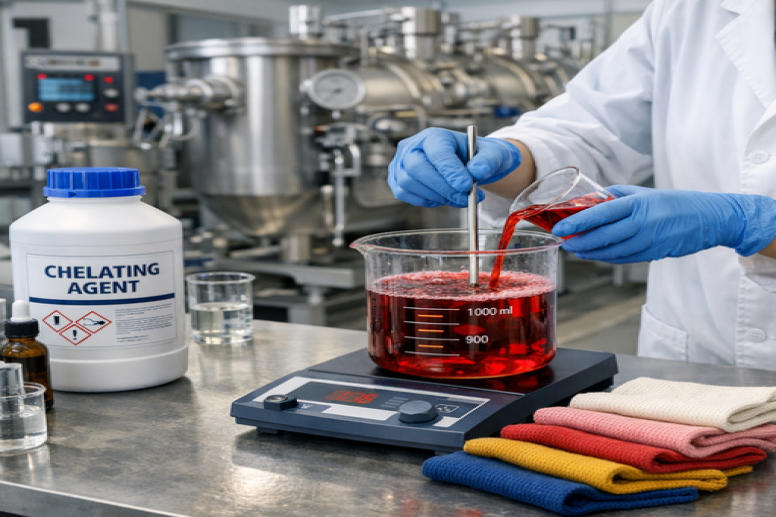
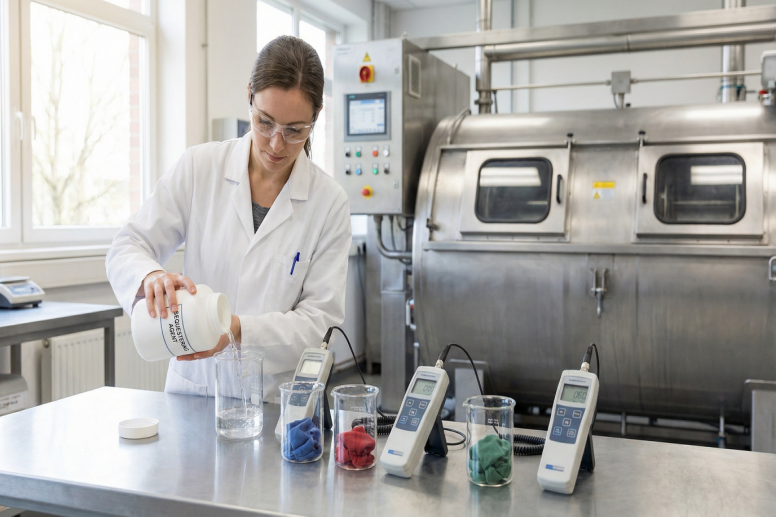
Hard water contains calcium and magnesium ions. These minerals react with dyes and reduce dye performance. Sequestering agents bind these metal ions and stabilize the dye bath.
Example
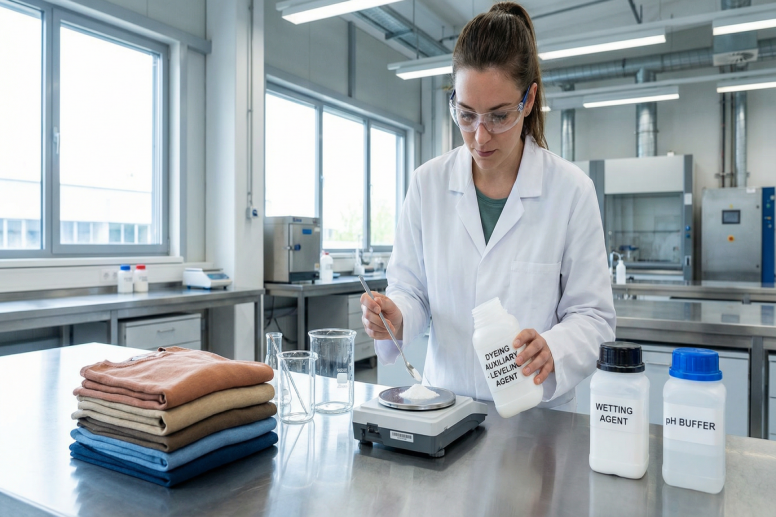
Typical dosage of sequestering agent ranges from 0.5 to 1.0 g/l depending on water hardness.
Benefits
Prevent dye precipitation
Improve color consistency
Protect dye bath stability
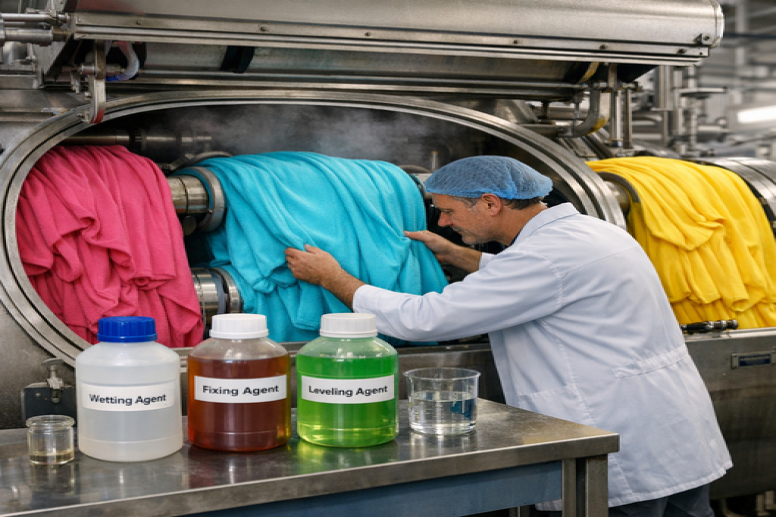
2. Improved Fabric Wetting
Cotton knit fabric contains natural oils and wax. These substances block water absorption during pretreatment and dyeing.
Wetting agents reduce surface tension of water. The fabric absorbs water quickly and evenly.
Benefits
Faster fabric penetration
Uniform dye absorption
Reduced processing time
3. Controlled Dye Distribution
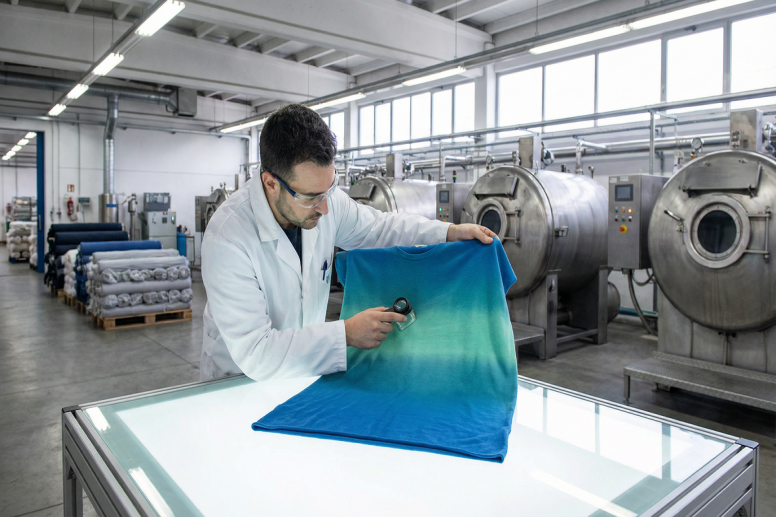
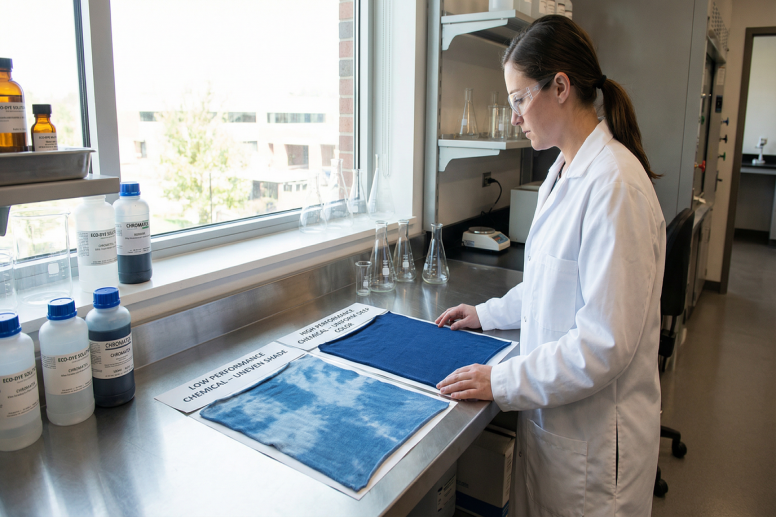
Reactive dyes must spread evenly across the fabric surface. Uneven dye distribution leads to shade variation and patchy dyeing.
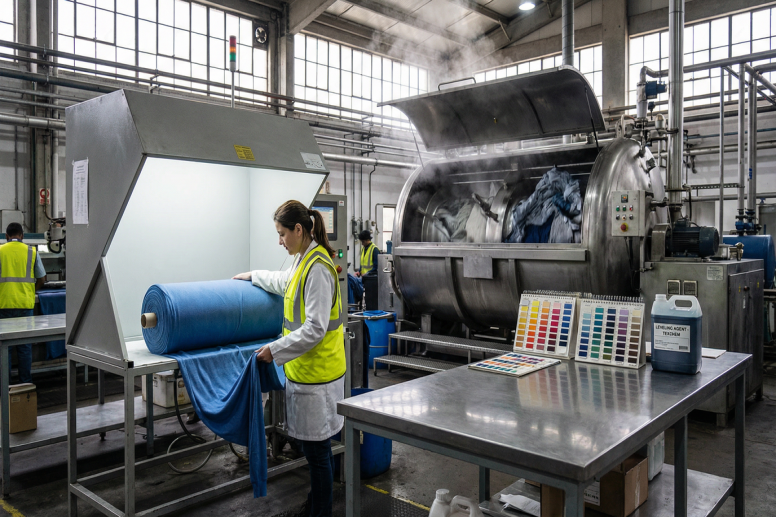
Leveling agents slow the dye absorption rate. This action allows dyes to migrate across the fabric before fixation.
Benefits
Balanced dye penetration
Reduced shade difference
Improved fabric appearance
4. Prevention of Crease Marks
Knit fabrics move inside dyeing machines during processing. High temperature and mechanical pressure create crease marks.
Anti-creasing agents lubricate fabric surfaces and reduce friction.
Benefits
Smooth fabric movement
Reduced crease marks
Improved fabric quality
5. Removal of Unfixed Dye
After reactive dyeing, some dye remains unfixed on the fabric surface. This loose dye causes poor wash fastness and staining during washing.
Soaping agents remove unfixed dye from the fabric surface.
Typical dosage
0.5 to 1.5 g/l
Benefits
Higher wash fastness
Cleaner fabric shade
Reduced back staining
6. Color Fixation Improvement
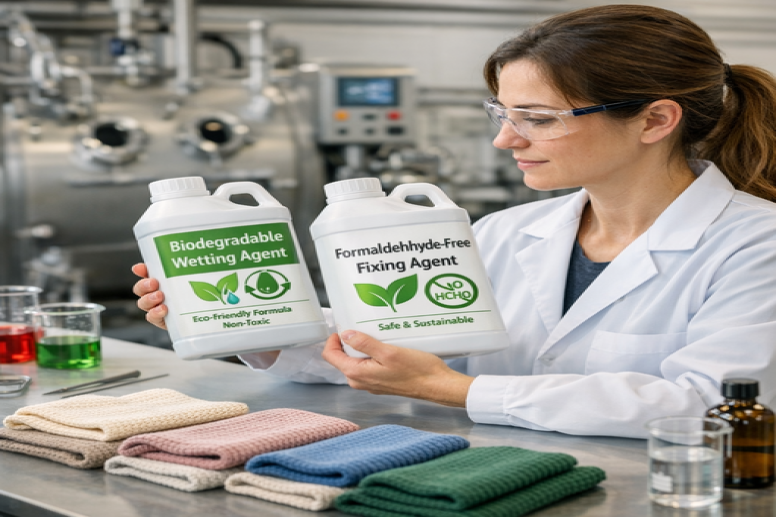
Fixing agents improve dye fixation on fiber molecules. These chemicals increase wash fastness and rubbing fastness of dyed fabrics.
Benefits
Improved color durability
Reduced color bleeding
Better garment performance
Why Knit Dyeing Mills Use Textile Auxiliaries
Modern dyeing factories focus on production efficiency and cost control. Textile auxiliaries support both goals.
Major benefits for dyeing mills
Stable dyeing process
Consistent shade reproduction
Reduced dye defects
Lower reprocessing cost
Improved fabric quality
Factories without proper auxiliary selection face common problems such as shade variation, uneven dyeing, and poor fastness performance.
Common Textile Auxiliaries Used in Knit Dyeing
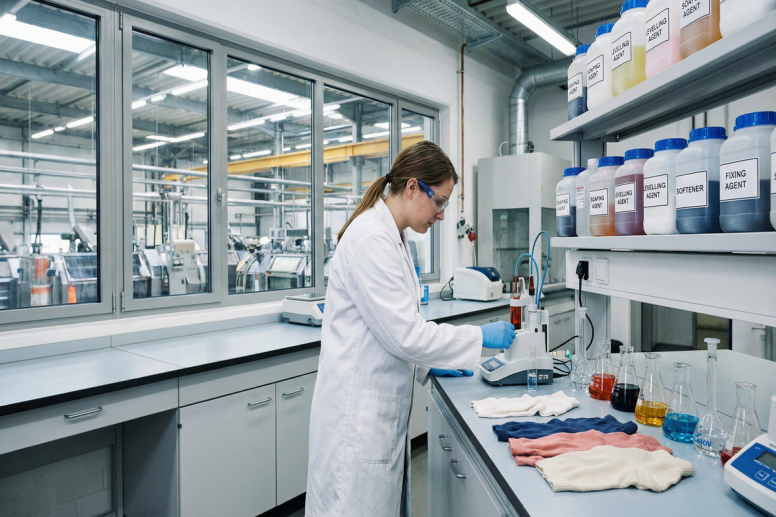
Dyeing mills use several categories of auxiliaries.
Pretreatment auxiliaries
Wetting agent
Sequestering agent
Detergent
Dyeing auxiliaries
Leveling agent
Anti-creasing agent
Dispersing agent
After-treatment auxiliaries
Soaping agent
Fixing agent
Silicone softener
Each chemical supports a specific stage of the dyeing process.
Selecting the Right Textile Auxiliaries
Dyeing performance depends on correct auxiliary selection. Textile mills evaluate several factors before selecting chemicals.
Important selection criteria
Compatibility with dyes
Fabric type
Dyeing machine type
Water quality
Environmental compliance
Certified chemicals with standards such as ZDHC, GOTS, and OEKO-TEX help mills meet export requirements.
Conclusion
Textile auxiliaries play a critical role in knit dyeing operations. These chemicals control dye behavior, stabilize processing conditions, and improve final fabric quality. Proper auxiliary selection leads to better shade consistency, stronger fastness performance, and lower dyeing cost.
Dyeing mills achieve stable production results when technical teams select the correct auxiliaries and maintain proper chemical dosage throughout the dyeing process.