09 Mar
Chemical Consumption Standard in Knit Dyeing Process for Cotton Fabric
Learn standard chemical consumption in knit dyeing including wetting agents, leveling agents, salt, soda ash, and soaping agents used in cotton knit dyeing mills.
Chemical Consumption Standard in Knit Dyeing Process
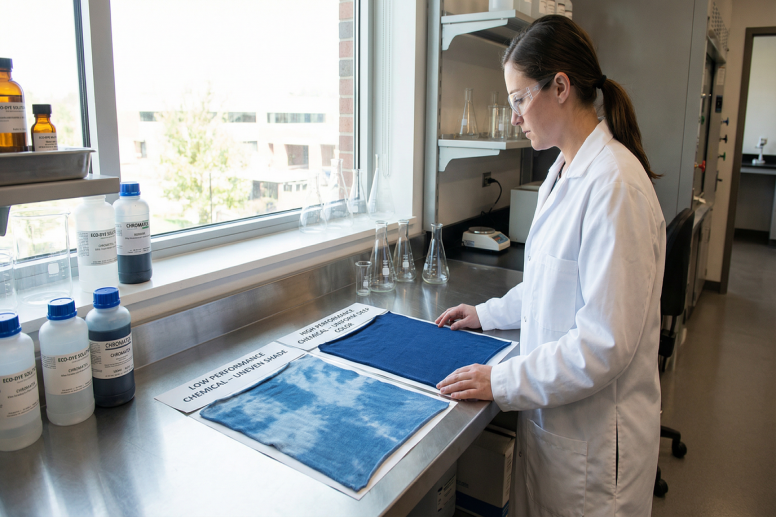
Chemical control plays a critical role in knit dyeing production. Correct chemical dosage supports stable shade development, strong dye fixation, and efficient dyeing performance. Excess chemical use increases production cost. Insufficient chemical use creates dyeing defects and poor fabric quality.
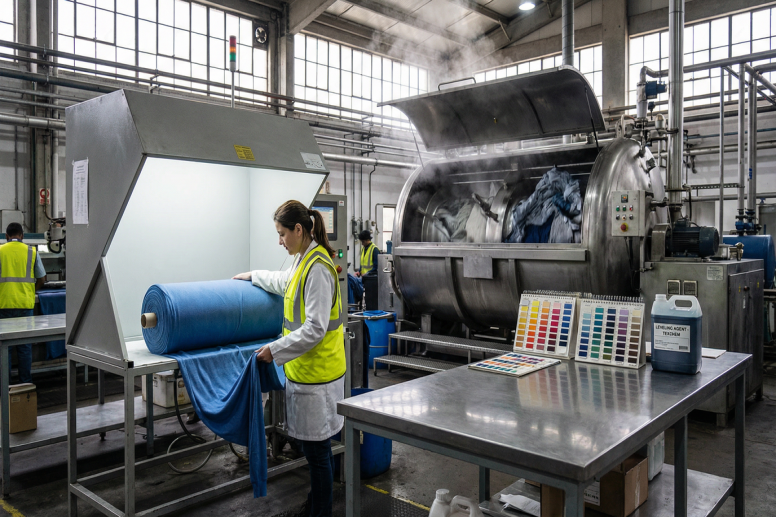
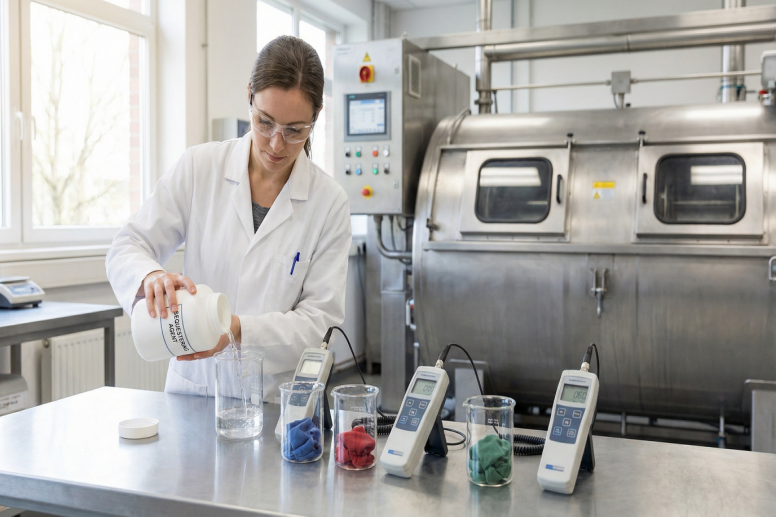
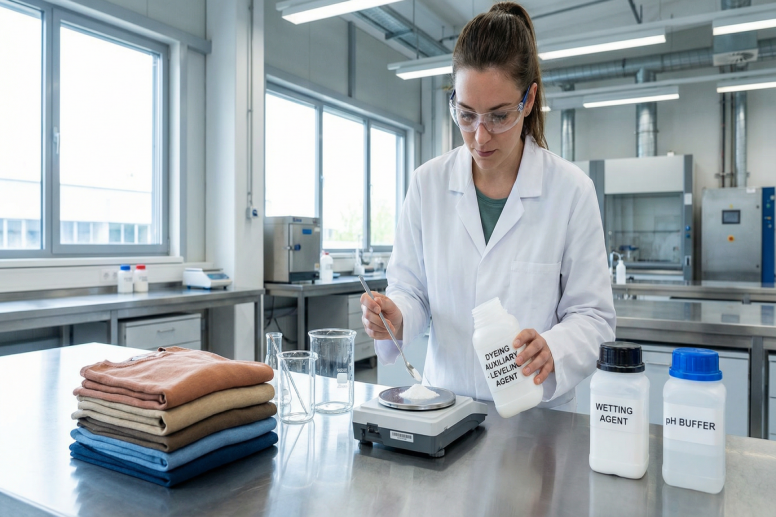
Dyeing mills maintain chemical consumption standards to achieve balanced production results. Technical teams calculate dosage according to fabric weight, machine capacity, liquor ratio, and dye class.
Standard chemical consumption helps factories reduce wastage and maintain consistent dyeing performance.
Major Chemicals Used in Knit Dyeing
Cotton knit dyeing includes pretreatment chemicals, dyeing auxiliaries, and finishing chemicals. Each chemical performs a specific function during the process.
Main chemical groups include
Pretreatment auxiliaries
Dyeing auxiliaries
After treatment chemicals
Finishing chemicals
Correct dosage ensures stable dye bath conditions.
Chemical Consumption in Pretreatment Stage
Pretreatment removes natural impurities from cotton fibers. Proper pretreatment improves dye penetration and shade uniformity.
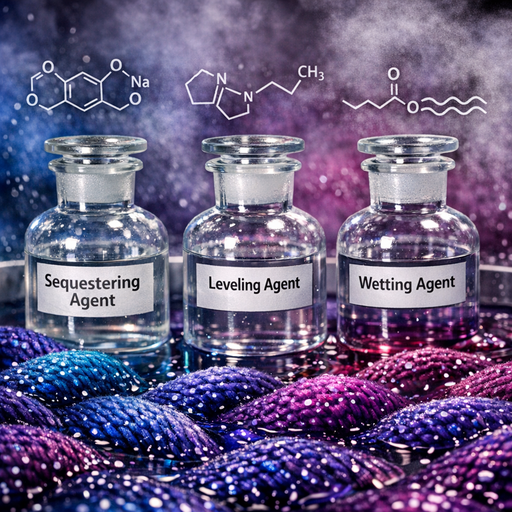
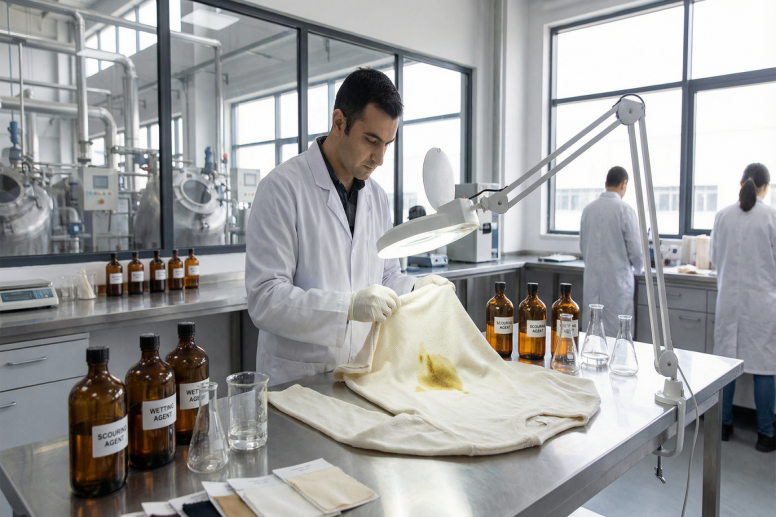
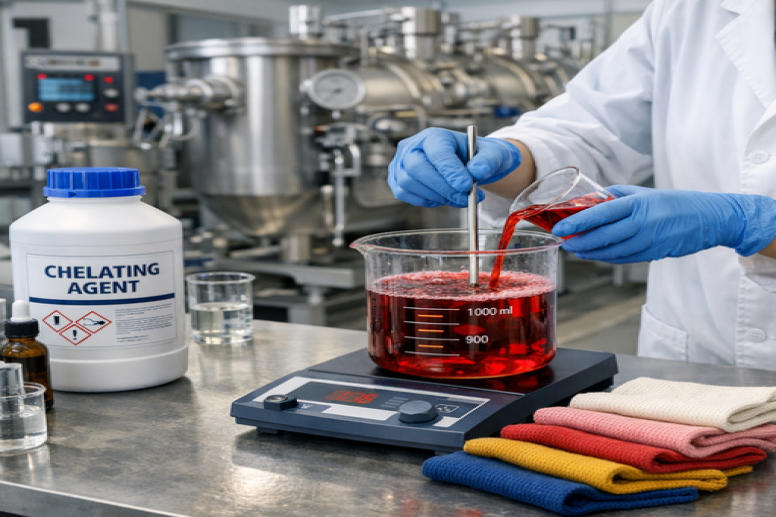
Typical chemicals used during pretreatment include wetting agents, scouring agents, sequestering agents, and bleaching chemicals.
Typical Pretreatment Chemical Dosage
Wetting agent
0.5 to 1.5 g/l
Scouring detergent
1.0 to 3.0 g/l
Sequestering agent
0.5 to 1.0 g/l
Caustic soda
2.0 to 4.0 g/l
Hydrogen peroxide for bleaching
2.0 to 5.0 g/l
Stabilizer
0.5 to 1.0 g/l
These chemicals remove oils, wax, and natural pigments from cotton knit fabric.
Chemical Consumption in Dyeing Stage
Reactive dyeing remains the most common method for cotton knit fabrics. This process requires several chemicals to control dye fixation and shade development.
Typical Dyeing Chemical Dosage
Reactive dye
1 to 5 percent based on fabric weight depending on shade depth
Leveling agent
0.5 to 1.5 g/l
Anti creasing agent
0.5 to 1.0 g/l
Salt or Glauber salt
30 to 80 g/l depending on shade depth
Soda ash
10 to 20 g/l
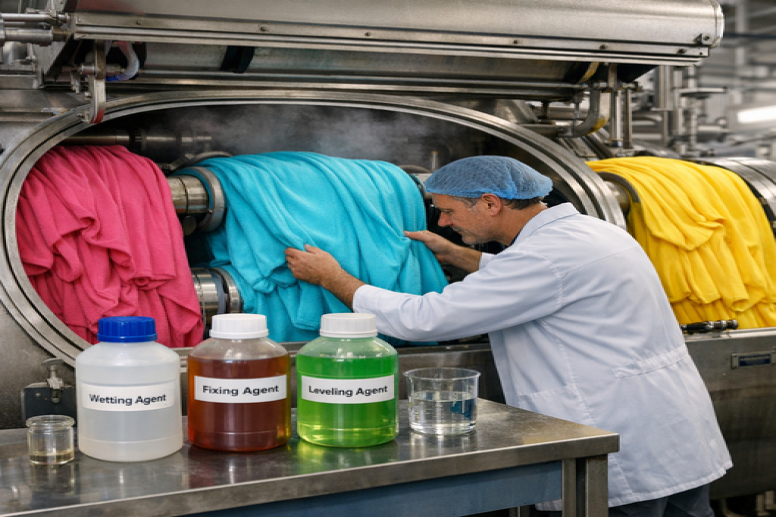
Leveling agents control dye migration while anti creasing agents support smooth fabric movement inside the dyeing machine.
Chemical Consumption in Washing and Soaping
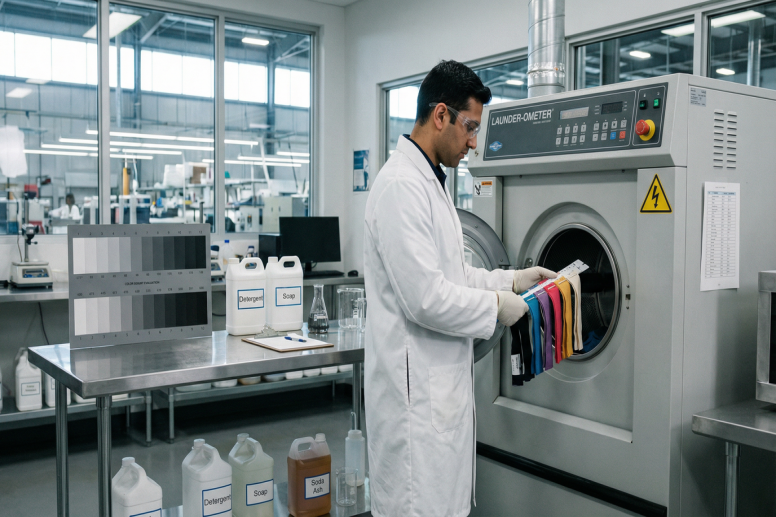
After dyeing, loose dyes remain on the fabric surface. Proper washing and soaping remove these dyes and improve wash fastness.
Typical Washing Chemical Dosage
Detergent
0.5 to 1.0 g/l
Soaping agent
0.5 to 1.5 g/l
Sequestering agent
0.5 g/l
These chemicals remove hydrolyzed dye particles and produce clean fabric shade.
Chemical Consumption in Finishing Stage
Finishing chemicals improve fabric softness and appearance.
Typical Finishing Chemical Dosage
Silicone softener
10 to 30 g/l depending on softness requirement
Finishing auxiliaries
5 to 15 g/l
Soft finishing improves fabric handle and garment comfort.
Factors Influencing Chemical Consumption
Several technical factors influence chemical dosage during knit dyeing.
Important factors include
Fabric weight and structure
Dye class and shade depth
Machine liquor ratio
Water hardness
Fabric absorbency
Technical teams adjust chemical dosage according to these factors.
Importance of Chemical Optimization
Chemical optimization improves dyeing efficiency and reduces production cost.
Benefits for dyeing factories include
Reduced chemical wastage
Stable shade reproduction
Lower dyeing defects
Improved process efficiency
Many dyeing mills run chemical optimization programs to control chemical consumption and increase production profitability.
Environmental Compliance in Chemical Use
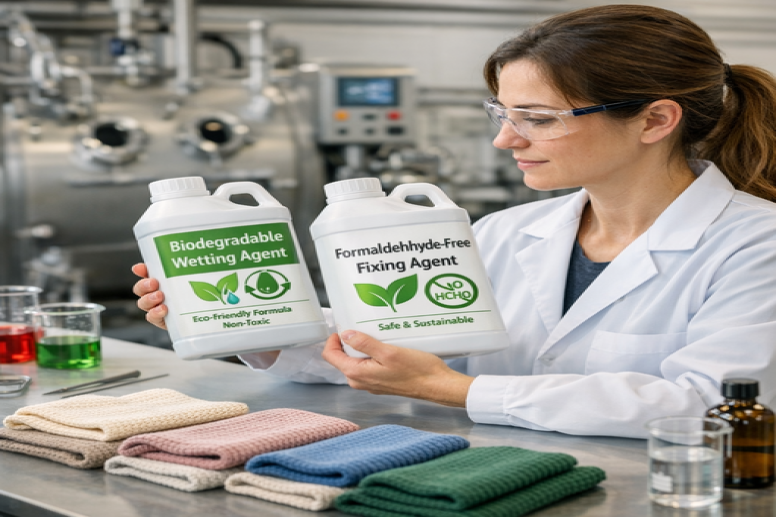
Global apparel brands require responsible chemical management in textile production. Dyeing factories must follow international chemical standards.
Common environmental standards include
ZDHC compliance
OEKO TEX certification
GOTS approval
Bluesign chemical standard
These standards promote safer chemical use and support sustainable textile manufacturing.
Conclusion
Chemical consumption control plays an essential role in knit dyeing production. Each stage of the dyeing process requires specific textile auxiliaries with proper dosage levels. Balanced chemical use improves dye fixation, shade uniformity, and fabric performance.
Dyeing factories maintain consistent production results through correct chemical selection and precise dosage control during every stage of the dyeing process.