11 Mar
Cheap Textile Chemicals vs High Performance Chemicals, Cost Comparison for Knit Dyeing Mills
Learn the cost comparison between cheap textile chemicals and high performance auxiliaries in knit dyeing. Understand how chemical quality affects dyeing cost and fabric quality.
Cheap Chemical vs High Performance Chemical in Knit Dyeing
Chemical selection has a direct impact on dyeing cost, fabric quality, and production efficiency. Many dyeing mills focus on the purchase price of chemicals without considering performance efficiency.
Low price chemicals often appear attractive during purchasing. In many cases these chemicals require higher dosage, produce unstable dyeing results, and increase reprocessing cost.
High performance textile auxiliaries often deliver better efficiency, stable dyeing performance, and lower total processing cost.
Understanding the real cost difference helps knit dyeing mills improve profitability.
What Are Cheap Textile Chemicals
Cheap chemicals refer to auxiliaries with lower market price and limited technical performance. These products often contain lower active ingredients or unstable formulations.
Common characteristics include
Higher dosage requirement
Lower dyeing efficiency
Higher foam generation
Reduced chemical stability
These factors often increase overall processing cost.
What Are High Performance Textile Chemicals
High performance chemicals contain optimized formulations with higher active ingredients and stable chemical structure.
These auxiliaries deliver strong technical performance and consistent results during dyeing.
Key characteristics include
Lower dosage requirement
Stable dye bath performance
Improved dye absorption
Reduced dyeing defects
High performance auxiliaries support efficient production.
Real Cost Comparison in Dyeing Mills
The purchase price of chemicals does not represent the total cost in textile dyeing.
Example comparison during dyeing of cotton knit fabric.
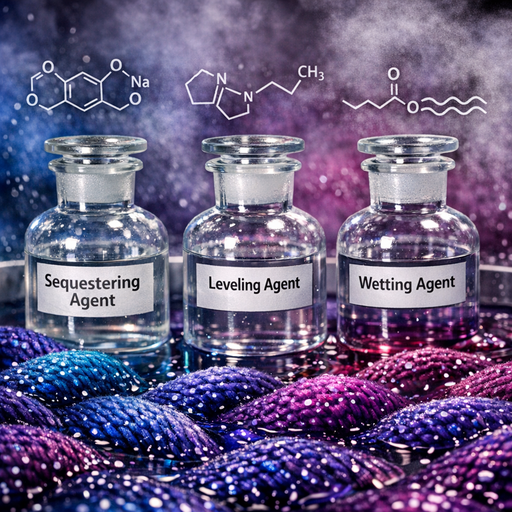
Cheap leveling agent
Purchase price lower
Dosage required 2.0 g/l
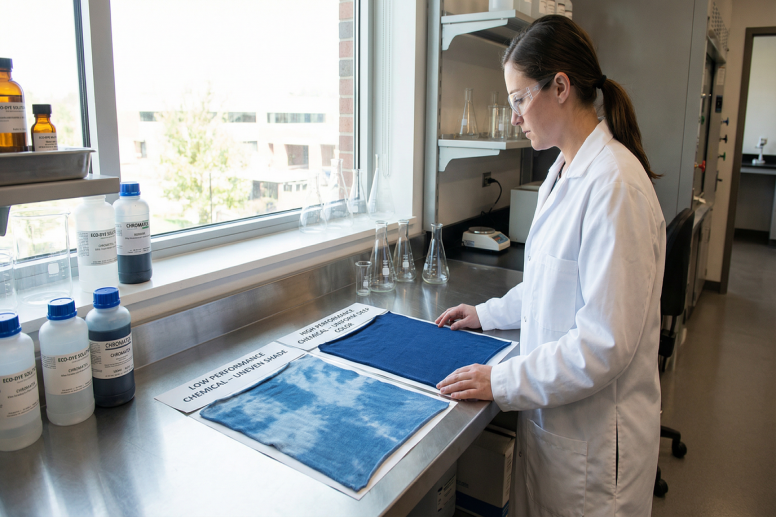
Uneven dyeing risk higher
Additional reprocessing cost possible
High performance leveling agent
Purchase price higher
Dosage required 0.8 g/l
Uniform dyeing performance
Reduced re-dyeing requirement
Despite higher price per kilogram, the high performance chemical reduces total processing cost.
Impact on Dyeing Quality
Chemical quality strongly influences fabric appearance and dyeing stability.
Cheap chemicals often create
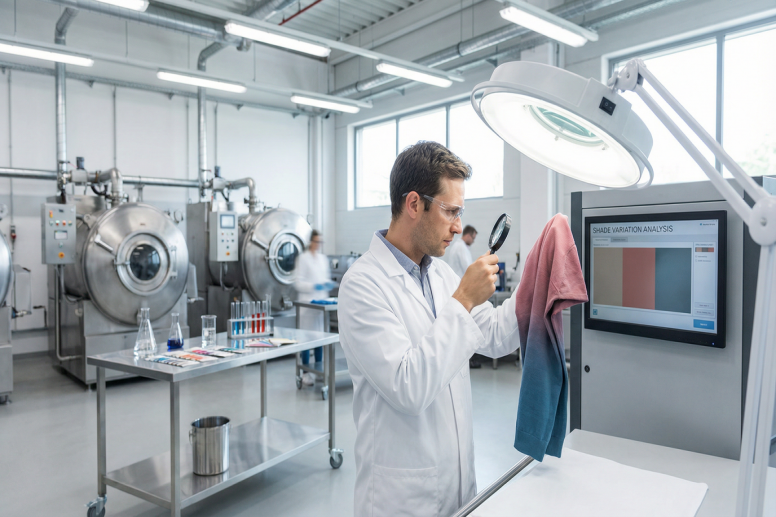
Shade variation
Foam problems
Chemical precipitation
Fabric defects
High performance chemicals improve
Shade reproducibility
Color yield
Fabric quality
Process stability
Better quality reduces fabric rejection during inspection.
Impact on Production Efficiency
Dyeing mills aim to maximize machine productivity and minimize downtime.
Cheap chemicals often lead to
Longer processing time
Frequent shade correction
Machine cleaning due to foam or deposits
High performance chemicals help achieve
Faster dyeing cycles
Stable machine operation
Reduced reprocessing
Improved efficiency increases production output.
Environmental Impact
Chemical performance also influences wastewater load and environmental compliance.
Cheap chemicals often create
Higher dye loss in wastewater
Increased chemical residue
Higher treatment cost
High performance auxiliaries improve dye fixation and reduce chemical discharge.
This supports compliance with standards such as
ZDHC chemical management
OEKO TEX certification
GOTS processing requirements
Why Technical Teams Prefer High Performance Chemicals
Experienced dyeing technicians often select chemicals based on performance instead of purchase price.
Important evaluation factors include
Active chemical concentration
Compatibility with dyes
Stability under high temperature
Effect on dyeing efficiency
These factors determine the real cost of dyeing operations.
Conclusion
Cheap textile chemicals often appear economical during purchasing but increase total dyeing cost due to higher dosage, unstable performance, and fabric defects.
High performance auxiliaries deliver stronger chemical efficiency, lower dosage, improved dyeing quality, and stable production processes.
Knit dyeing mills achieve better profitability when technical teams evaluate chemicals based on total processing cost rather than purchase price alone.