01 Apr
Woven Dyeing Process Flow and Chemical Use
Quick Answer for Decision Makers
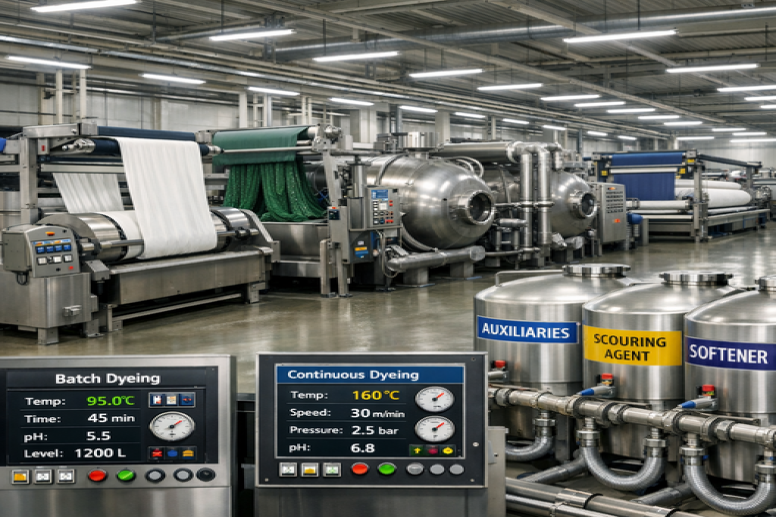
Woven dyeing follows five key stages. Each stage needs specific chemicals:
Desizing: enzymes or oxidizing agents remove size
Scouring: alkali and wetting agents remove oil and wax
Bleaching: hydrogen peroxide improves whiteness
Dyeing: leveling, sequestering, dispersing agents ensure uniform color
Finishing: softeners and fixing agents improve feel and fastness
Correct chemical control at each stage reduces defects, improves shade consistency, and lowers total production cost.
Why Process Flow Matters in Woven Dyeing
Woven fabric has tight structure and low absorbency before pretreatment. If early stages fail, dyeing results become unstable.
Proper chemical sequence ensures:
Uniform absorbency
Consistent dye uptake
Reduced reprocessing
Better fabric quality
Step-by-Step Woven Dyeing Process and Chemical Use
1. Desizing Process
Remove size materials such as starch, PVA, and binders from woven fabric.
Chemicals Used
Enzymatic desizing agents
Oxidative desizing chemicals
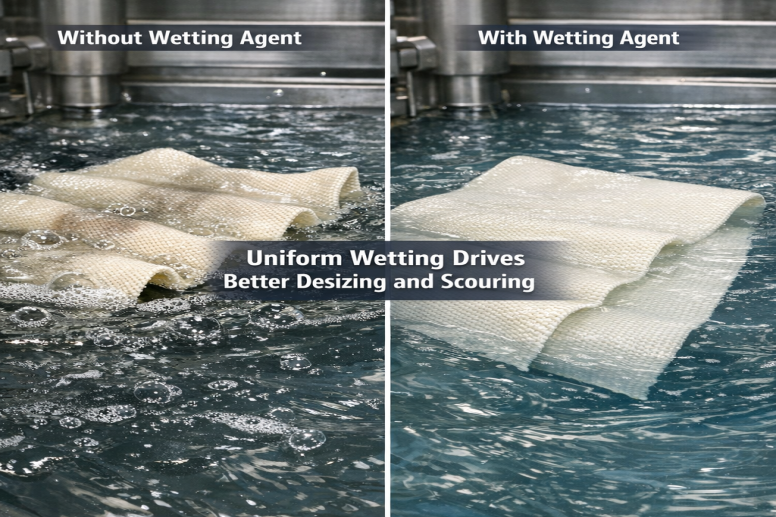
Wetting agents
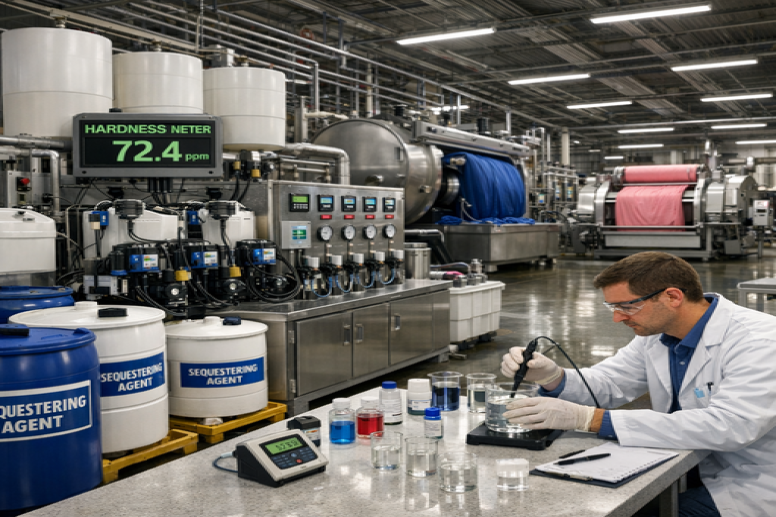
Sequestering agents
Key Functions
Break down size molecules
Improve water absorbency
Prepare fabric for scouring
Best Practice
Maintain proper temperature for enzyme activity
Ensure complete removal to avoid uneven dyeing
2. Scouring Process
Remove natural impurities like wax, pectin, and oils.
Chemicals Used
Caustic soda (alkali)
Wetting agents
Detergents
Sequestering agents
Key Functions
Clean fiber surface
Increase absorbency
Remove hydrophobic barriers
Best Practice
Control pH and temperature
Use strong wetting agents for tight woven fabric
3. Bleaching Process
Improve fabric whiteness and remove natural color.
Chemicals Used
Hydrogen peroxide
Stabilizers
Sequestering agents
Wetting agents
Key Functions
Destroy natural pigments
Prepare uniform base for dyeing
Best Practice
Maintain peroxide stability
Avoid fabric damage through proper control
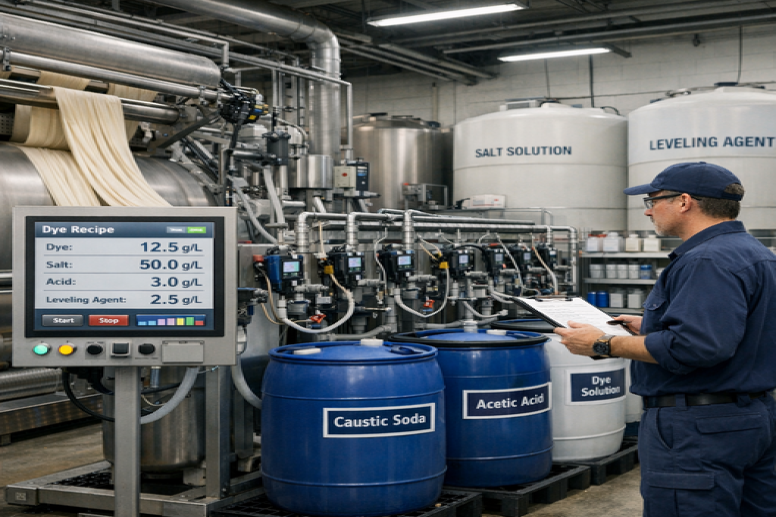
4. Dyeing Process
Apply color evenly across fabric.
Dye Classes
Reactive dyes for cotton
Disperse dyes for polyester
Vat dyes for high fastness
Dyeing Auxiliaries
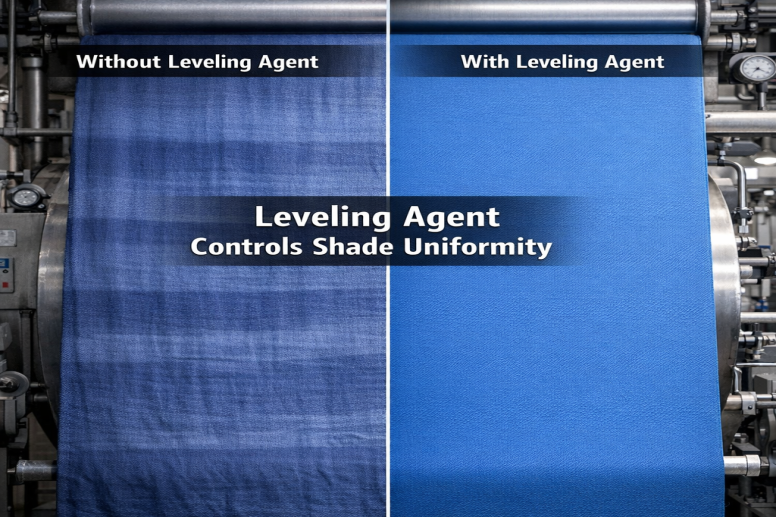
Leveling agents
Sequestering agents
Dispersing agents
Anti-creasing agents
Wetting agents
Key Functions
Control dye absorption
Ensure uniform shade
Prevent defects
Best Practice
Match auxiliaries with dye type
Control temperature rise and dosing
5. Finishing Process
Enhance fabric properties and performance.
Chemicals Used
Soaping agents
Fixing agents
Silicone softeners
Functional finishes
Key Functions
Improve wash fastness
Enhance softness
Add value to fabric
Best Practice
Use high efficiency soaping for reactive dye
Select softener based on end use
Chemical Selection Based on Fabric Type
Cotton woven: strong scouring and bleaching system
Polyester woven: dispersing agents and high temperature stability
Blended fabrics: balanced chemical system
Heavy fabric: high penetration wetting agents
Cost Control in Woven Dyeing Process
Practical Actions
Optimize chemical dosage at each stage
Reduce reprocessing through proper pretreatment
Use concentrated chemicals
Improve washing efficiency
Real Impact
Poor desizing or scouring increases dye consumption and rework cost.
Practical Industry Expertise
From mill-level operations:
Incomplete desizing leads to patchy dyeing
Weak scouring reduces absorbency by up to 30 percent
Poor bleaching creates uneven base shade
Technical teams that monitor pretreatment achieve stable dyeing results and lower cost.
Verified Data and Benchmarks
Desizing efficiency target: above 90 percent size removal
Scouring pH range: 10 to 12
Bleaching temperature: 85 to 98°C
Dyeing reprocess rate in inefficient mills: 3 to 10 percent
FAQ Section
What is the process of woven dyeing?
Woven dyeing includes desizing, scouring, bleaching, dyeing, and finishing. Each stage uses specific chemicals to prepare, color, and improve fabric quality.
Why is desizing important in woven dyeing?
Desizing removes size chemicals from fabric. Without proper desizing, dye penetration becomes uneven and causes patchy dyeing.
Which chemical is used for scouring?
Caustic soda is the main scouring chemical. Wetting agents and detergents support impurity removal.
What is the role of bleaching in textile dyeing?
Bleaching removes natural color and creates a uniform base. This helps achieve consistent dye shades.
What chemicals are used in dyeing stage?
Leveling agents, dispersing agents, wetting agents, and anti-creasing agents control dyeing performance.
How does finishing improve fabric quality?
Finishing chemicals improve softness, wash fastness, and overall fabric appearance.
Need chemical solution for your woven dyeing plant. Contact our technical team for process optimization and cost reduction support.