02 Apr
Batch vs Continuous Dyeing: Chemical Selection Guide
Quick Practical Summary
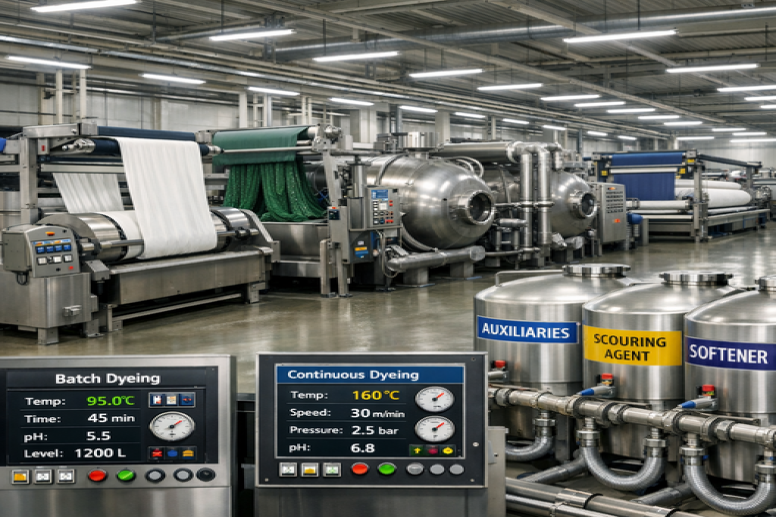
Batch dyeing and continuous dyeing follow different chemical control logic. Batch systems depend on liquor-based uniform chemical distribution. Continuous systems depend on pad application, fixation control, and drying accuracy. Chemical selection changes based on machine type, fabric structure, and fixation method. Pad dyeing demands low-foam, fast-penetration auxiliaries. Jigger dyeing requires controlled exhaustion chemicals. Winch dyeing depends on gentle leveling and anti-crease systems. Jet dyeing needs high-efficiency circulation stabilizers and low-liquor auxiliaries. Cost control depends on correct auxiliary selection per system and strict dosage discipline across production stages.
Batch Dyeing vs Continuous Dyeing Overview
Batch Dyeing Characteristics
Fabric processed in rope or open width form
Liquor-based dye and chemical distribution
Longer process time per batch
High flexibility for shade variation control
Suitable for small to medium production runs
Continuous Dyeing Characteristics
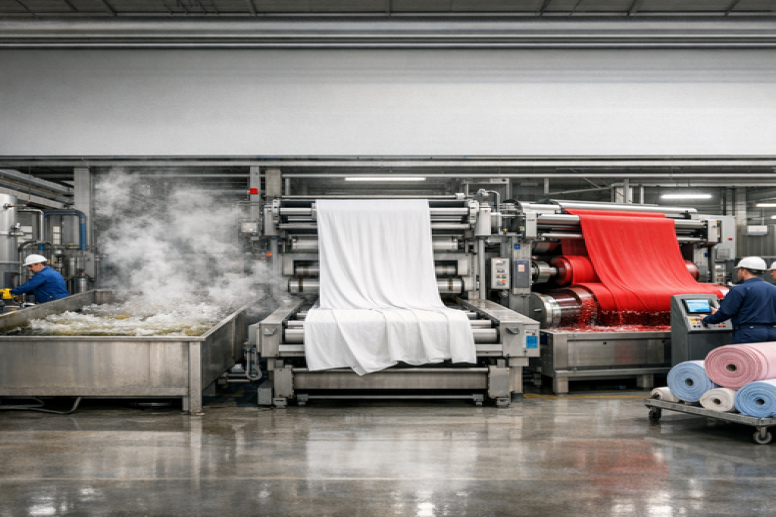
Fabric processed in continuous flow line
Padding, drying, fixation sequence
High production speed
Low liquor consumption
Strong dependency on chemical stability
Chemical Selection Guide (System-Based)
Key Selection Rules
Batch systems require exhaustion control chemicals
Continuous systems require padding stability chemicals
Foam control, wetting, and leveling chemistry changes by machine type
Fixation control dominates continuous systems
Leveling control dominates batch systems
Pad Dyeing Chemicals (Continuous System)
Chemical Requirements
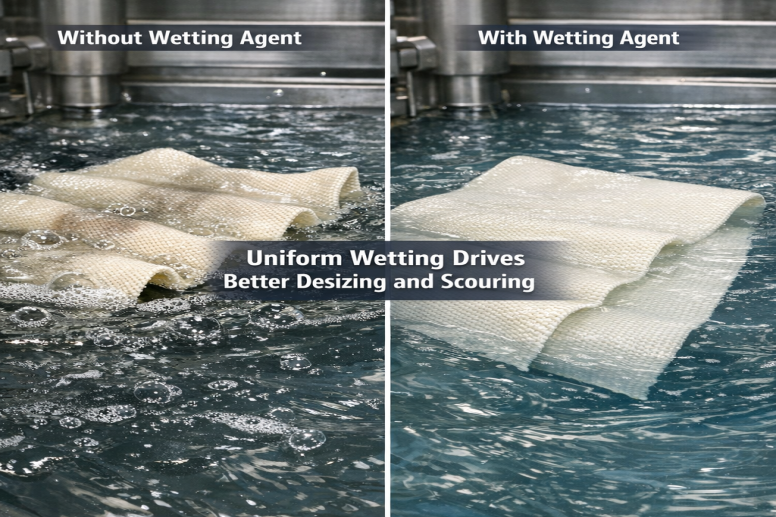
Low-foam wetting agent for uniform padding
High penetration surfactant system
Migration inhibitor for shade uniformity
Fixation promoter for rapid dye fixation
Anti-crust agent for pad bath stability
Process Focus
Padding pick-up control
Drying uniformity
Fixation consistency across width
Jigger Dyeing Chemicals (Batch Open Width System)
Chemical Requirements
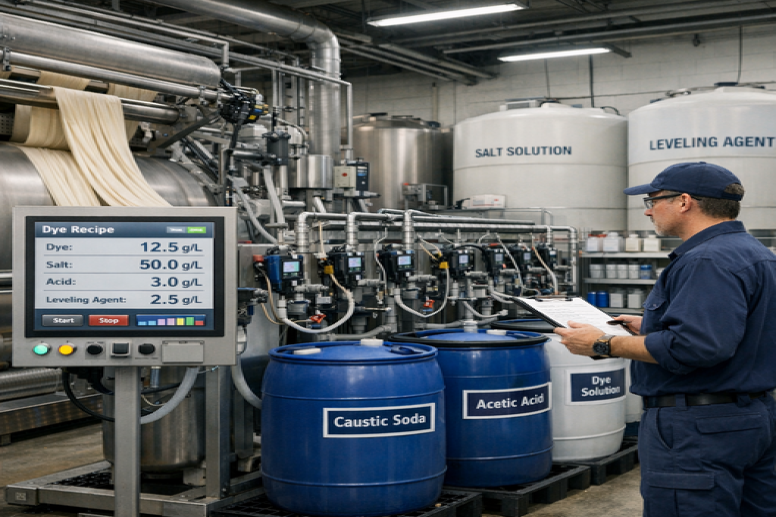
Controlled exhaustion dyeing auxiliaries
pH stabilizer for shade consistency
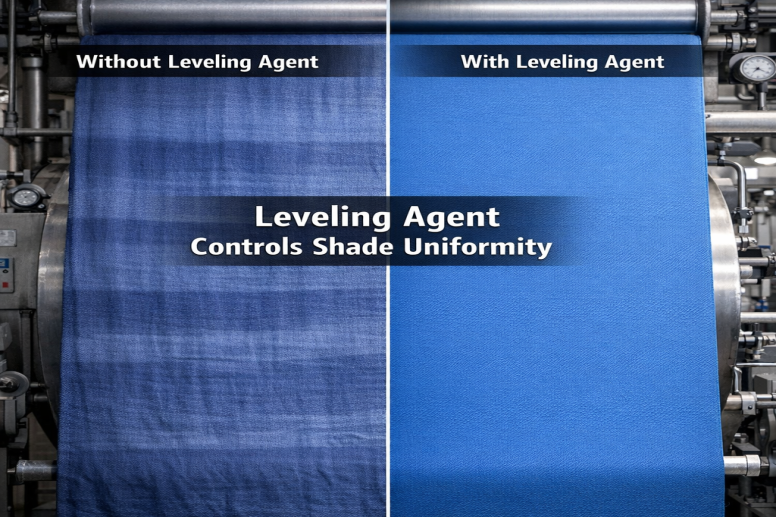
Leveling agent for migration control
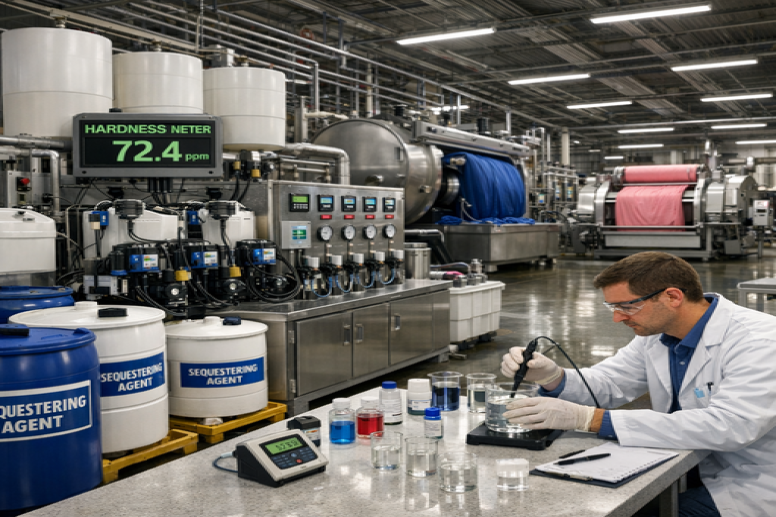
Sequestering agent for hard water stability
Mild surfactant for fabric lubrication
Process Focus
Even liquor circulation
Shade consistency across fabric length
Controlled dye uptake rate
Winch Dyeing Chemicals (Rope Form Batch System)
Chemical Requirements
High lubrication anti-crease agent
Gentle leveling system for rope fabric
Low-foam wetting agent
Fiber protection additive
Temperature stabilizer for long cycle processing
Process Focus
Rope movement protection
Crease prevention
Gentle dye penetration
Jet Dyeing Differences (High Pressure Batch System)
Chemical Requirements
High circulation stability dispersing agent
Low foam auxiliary system
High-efficiency leveling agent
Lubricant for fabric transport under pressure
Anti-tangle additive for rope flow
Process Focus
High-speed liquor circulation
Fabric movement under pressure
Uniform dye penetration in short liquor ratio
Batch vs Continuous Chemical Selection Matrix
Batch dyeing: exhaustion control dominates chemical design
Continuous dyeing: fixation control dominates chemical design
Pad system: stability and migration control dominate
Jet system: circulation and foam control dominate
Winch system: mechanical protection dominates
Industrial wet processing systems classify dyeing chemistry based on liquor ratio, fabric movement style, and fixation mechanism. Chemical selection directly aligns with these parameters.
Mill-scale production shows reduced shade variation when system-specific auxiliaries replace generic chemical programs. Jet and pad systems show highest sensitivity to foam and migration errors.
Textile wet processing standards emphasize separation between batch exhaustion chemistry and continuous fixation chemistry for stable production outcomes.
Controlled dosing, validated chemical recipes, and machine-specific auxiliary selection reduce reprocessing rates and improve first-pass shade accuracy.
FAQ
What is difference between batch dyeing and continuous dyeing
Batch dyeing processes fabric in liquor-based batches. Continuous dyeing processes fabric through padding and fixation lines.
Which chemicals suit pad dyeing process
Low-foam wetting agents, migration inhibitors, and fast fixation promoters support pad dyeing performance.
Why jet dyeing needs special chemicals
High-pressure circulation demands low-foam stabilizers and high-efficiency leveling systems for uniform dye penetration.
What chemicals control winch dyeing defects
Anti-crease agents, lubricants, and gentle leveling systems reduce rope marks and uneven dyeing.
How jigger dyeing chemicals differ from jet dyeing
Jigger dyeing depends on exhaustion control chemistry. Jet dyeing depends on circulation stability and foam control chemistry.